@recraftai
Recraft Studio adds three models
The update brings two video models and one image model into the same workspace.

Recraft added Flux 3 Video Max for quick video drafts, Kling 4.0 for scenes of up to 30 seconds with sound, and Bria’s Fibo 2 for images. Recraft says Fibo 2 was trained only on licensed data.
@tri_dao · via @AlpinDale
A demo packs BF16 weights into 12 bits without loss
Tri Dao shared AlpinDale’s demonstration of a 12-bit lossless representation for BF16 model weights based on Together AI’s NyoomFloat12. The post shows weight compression and gives no measurements of end-to-end inference memory or speed.
@PixVerse_
PixVerse turns a drawn line into a fly-through
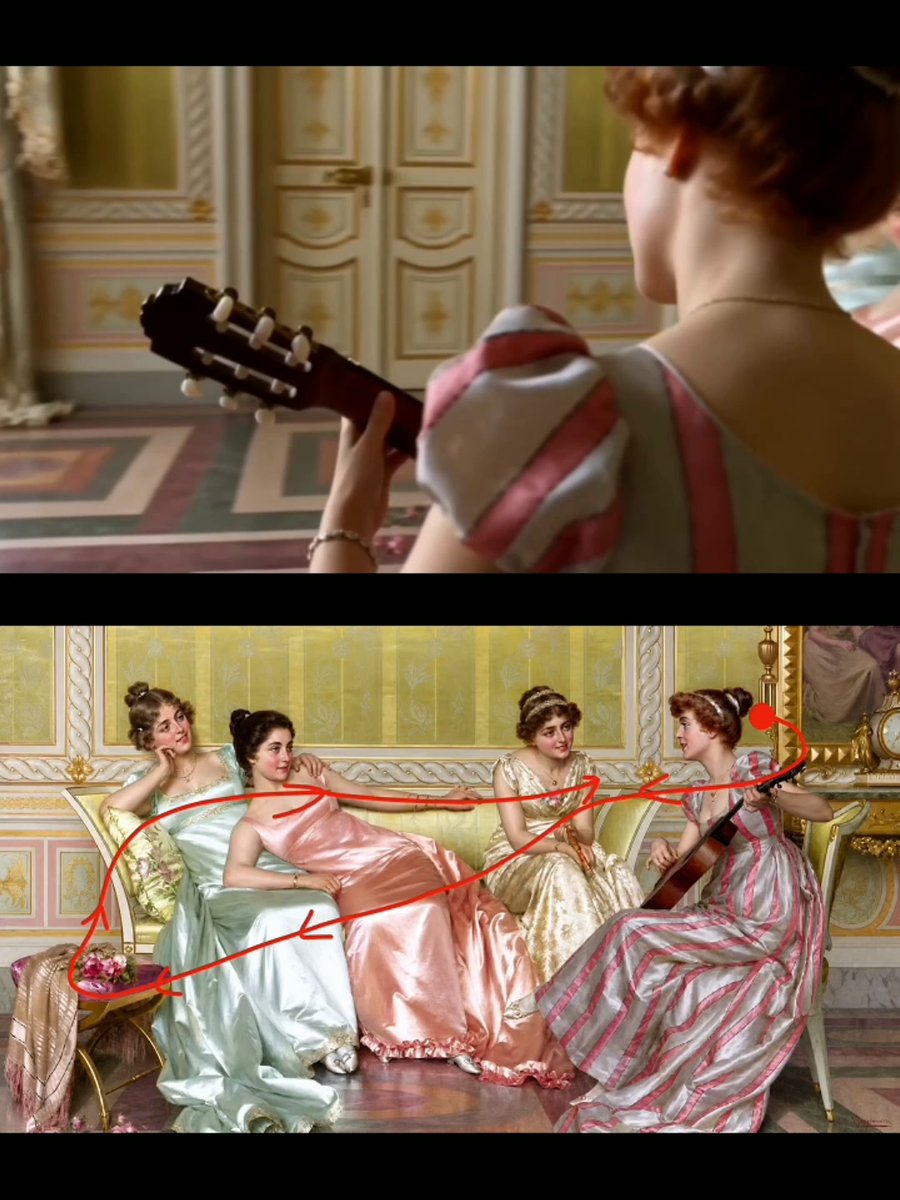
Users draw a red line on a still image to guide a first-person camera move. PixVerse’s demo turns that path into a fly-through without manual keyframing.
@lateinteraction · via @DSPyOSS
ShipStation’s IT agent draws on Slack history
In an AWS case study shared by DSPy, ShipStation’s AI help desk uses dspy.RLM to draw context from its Slack history, letting the agent refer to earlier team discussions when handling IT questions.
@robertskmiles
Whose assistant should operate a website?
“I want to use my AI assistant on your website.”
AI safety educator Robert Miles argues for letting people use their own browser-based assistants to operate websites.
A plugin author reports DeepSeek Harness usage
The creator of Guizang’s design plugin says the DeepSeek Harness team recommended his plugin and reports that the product passed 1.54 million daily active users. The figure comes from his account.
Perplexity’s founder explains the Teammates harness
Aravind Srinivas points to two design choices in Teammates: agent workflows run largely in code, and the harness is designed to work across models.
Grok Bot token-efficiency fixes are in progress
Elon Musk says work is under way to improve Grok Bot’s token efficiency and behavior. He gave no release date or measurements.
Latent Space discusses GitHub in the agent era
The podcast looks at how GitHub’s workflows and platform design may change as agents take on more software development work.
Give reviewers evidence they can inspect
Using a comment bug as an example, Dotey argues that agents should hand over screenshots or recordings showing the key steps and result so people can verify the fix.
Agent APIs still have to account for training data
Teortaxes shares a tentative finding: for a frozen model, familiar interface patterns may work better than a new API designed around agents. It is a personal observation.
Tinker shares a training migration case
Tinker says a researcher had spent $4,600 renting GPUs without finishing a project and made faster progress after switching. The anecdote gives no like-for-like cost comparison.
An indie developer revisits site localization with AI

Levelsio says the overhead of wrapping copy in translation functions put him off localization. He is now using AI to tackle that kind of site overhaul.
A skeptic shares a Claude Code debugging anecdote
A self-described AI skeptic says Claude Code solved a poorly documented problem in under an hour. The post describes one experience.
A closer look at Claude’s research sessions
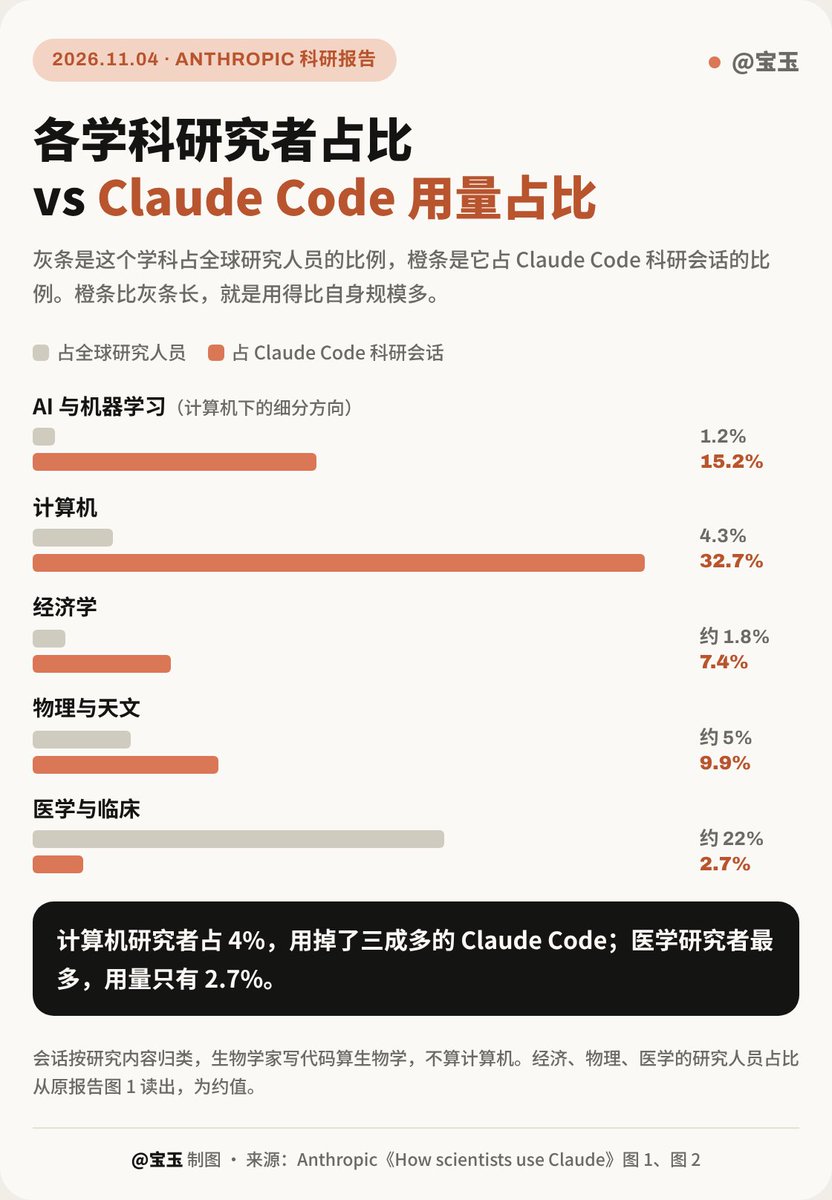
Dotey recaps Anthropic’s analysis of about 207,000 research-related Claude sessions. Data analysis and paper writing were common; generating research ideas was less frequent.
How Claude revisits memories between sessions
Anthropic previously explained why cross-session memory is difficult: an agent must choose what to keep before it knows what will matter. Dotey’s recap focuses on the background “dreaming” step for reviewing and organizing memories afterward.
A researcher weighs in on Inkling 2’s return to ViT
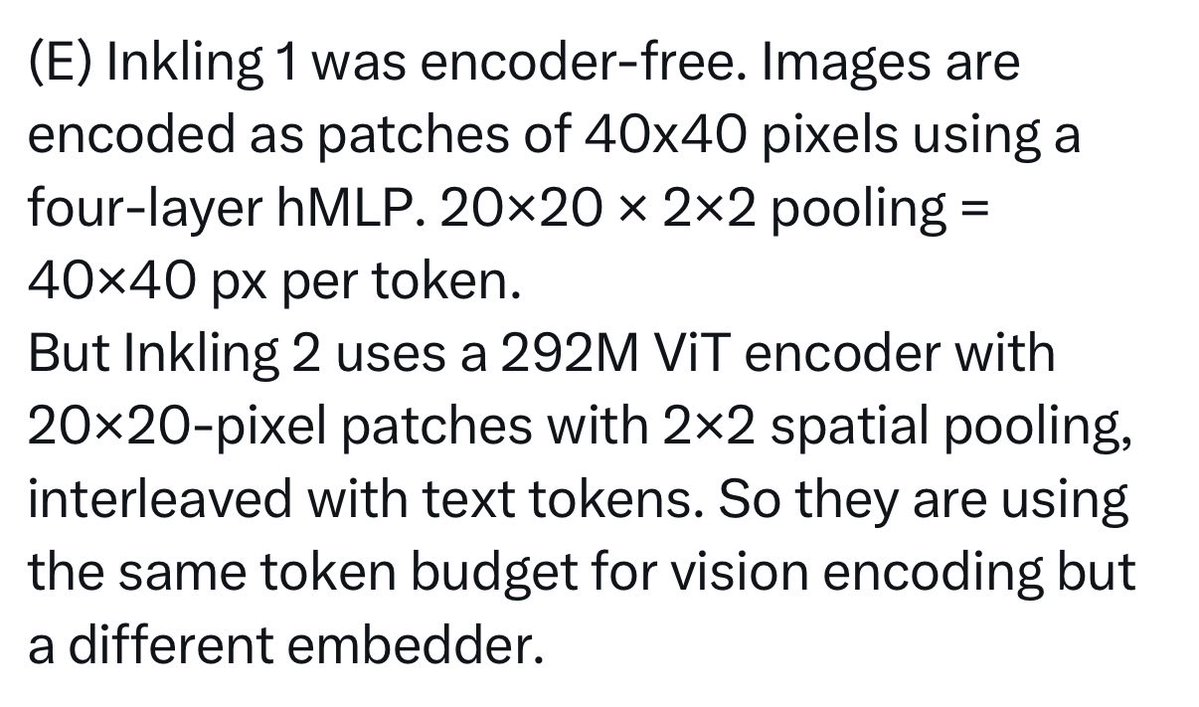
Giffmana welcomes Inkling 2’s vision transformer encoder, arguing that the earlier design spent multiple layers processing patches without looking across them.
Tencent’s DSpine draws attention to speculative decoding
Teortaxes shared a favorable assessment of Tencent’s DSpine and pointed readers interested in speculative decoding to the technical discussion. The post gives no comparative performance figures.
SGLang announces summit breakouts
The LMSYS-hosted SGLang Summit is scheduled for November 12–13 at Fort Mason in San Francisco. Breakout sessions are open to Expo Pass holders.
LeCun clarifies the prediction in JEPA
LeCun notes that the P in JEPA stands for “predictive” and points back to the distinction between joint embeddings and generative modeling.
The Bitter Lesson enters the debate on self-improvement
Graham Neubig offers his reading of Sutton’s essay: he sees it as compatible with recursive self-improvement and disputes its use as a blanket defense of brute-force scaling.
LeHami offers a case study in physics-informed world models
The Turing Post uses LeHami to discuss how physical knowledge might improve world models. LeCun shared the write-up.
Using a model to sanity-check peer review
François Fleuret suggests giving a model the paper and draft review to flag criticisms that might not hold up, leaving the reviewer to check them.
Fleuret questions what lower cross-entropy tells us
Fleuret argues that models can rely on statistical shortcuts rewarded by the training objective and asks what they can learn despite their inductive biases.
Shizuku-Duplex targets two-way character voice
Shizuku AI Labs introduced a full-duplex audio synthesis model designed for AI characters that can handle both sides of a spoken interaction at once.
RGBMoCap extracts 3D body motion from phone footage
A creator showed a workflow that estimates SMPL or SMPL-X body meshes from single-camera footage without wearables, then passes the motion into a controllable video pipeline.
Motion capture meets a character-swap LoRA
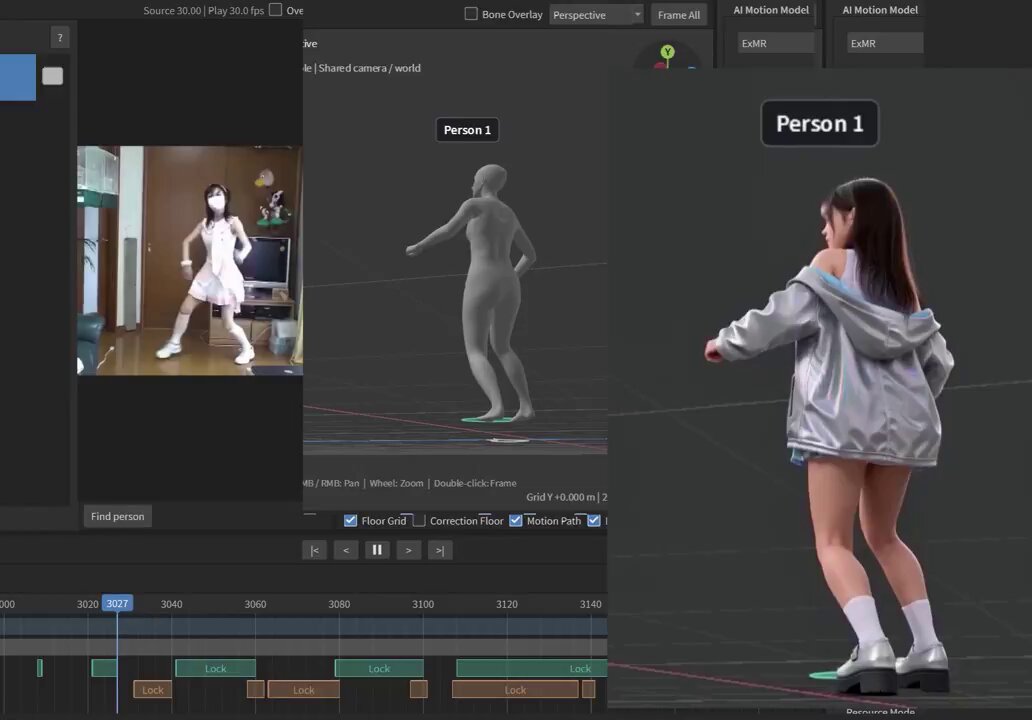
A separate demo chains RGBMoCap with an H3 character-swap LoRA, using motion from real footage as input for character replacement.
Infinite Slop TV ends its run

Levelsio announced the end of the project, which fed messages from a public chat into a continuously generated AI video stream.
A creator shares week-two figures for an AI animation project

The creator reports 11 videos and more than 130,000 views, and is preparing tutorials on sound design, Seedance 2.5, and short-video hooks.
Block the camera move in Blender before generating video
A creator suggests using Claude to help build a scene and animate its camera in Blender, then exporting a reference clip for Seedance 2.5.
A developer connects Blender MCP and vork
Teortaxes describes an integration experiment using a plugin and connector to make Blender MCP work with vork.
CoffeeVectors shares an AI music video
The creator shared a music video made with Seedance 2.5, Astra, and Suno.
Nvidia says SimReady downloads have reached one million
NVIDIA Omniverse says its SimReady 3D assets reached one million downloads on Hugging Face. The assets are intended for reuse in compatible simulation tools.
Jim Fan previews an autonomous robot demo
Jim Fan teased a real-time, uncut demonstration of a physical robot operating autonomously. The teaser does not show the result.
Figure shares footage of its F.03 humanoid
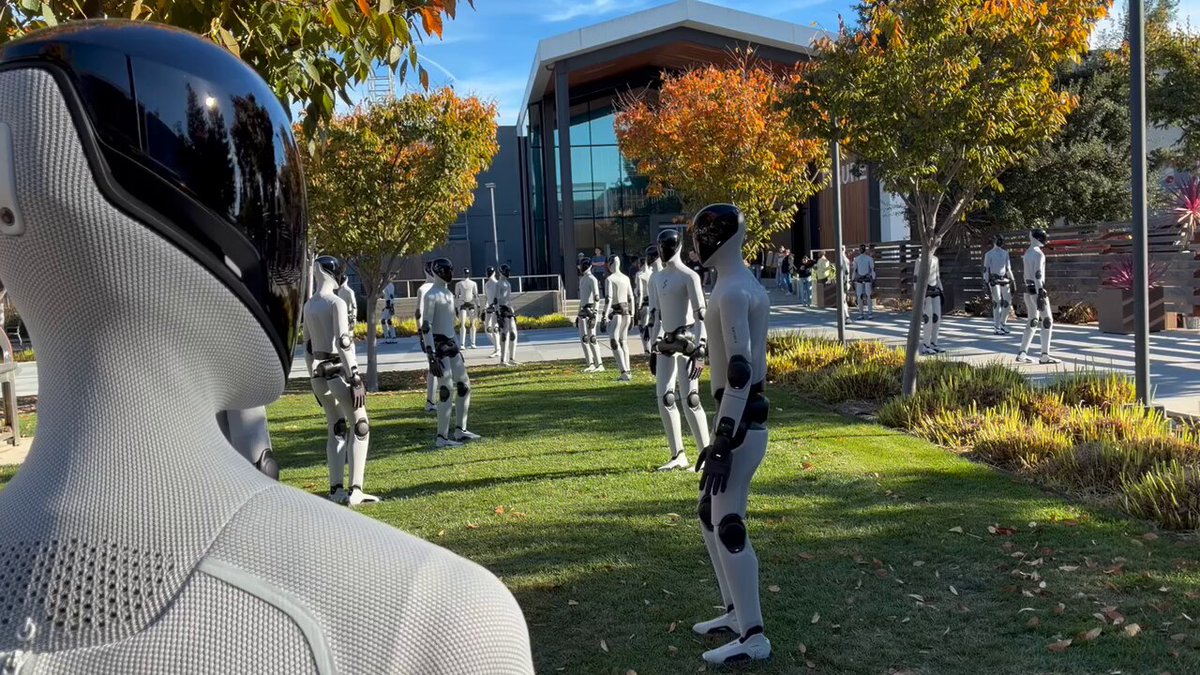
Figure founder Brett Adcock shared footage of the F.03. The post gives no details on task conditions or the degree of autonomy.
Could Gaussian splats render interfaces?
Pointing to spatial demos from research labs, Bekhovsgun asks whether Gaussian splats could render user interfaces as well as 3D scenes.
A browser-based Backrooms simulator built with Opus 5.5
The Dimension 9 project page describes an evolving Backrooms simulator that friends can explore together from desktop or mobile browsers.
A developer turns an iPhone into a Mac input device
A developer says Claude helped prototype an iPhone that serves as both a Wii-style motion controller and a Mac trackpad.
Yao Shunyu on product moats: data and context
In remarks shared by Dotey, Yao Shunyu told Zhang Yaqin that AI moats often sit at the product layer, especially in proprietary data and user context.
AlphaXiv maps funding and citations across new AI labs
AlphaXiv compiled funding and founder citation figures for 32 labs. It reports 8.35 million combined citations across the teams in its sample.
A creator tries Seedance 2.5 on Firefly
A creator who often generates clips across several platforms says Seedance 2.5 felt quick on Firefly. She did not share timings from a matched comparison.
An editorial fashion shoot from one photo
A creator demonstrates how a profile picture or an ordinary photo can serve as the starting point for a set of fashion editorial images.