Anthropic Uses Claude to Discover Cryptographic Weaknesses
Claude Mythos Preview helped researchers attack the HAWK signature scheme and a simplified AES, achieving 200–800× speedup over previous best — with no impact on production systems.
Researchers at Anthropic, working collaboratively with Claude, discovered novel attacks on two cryptographic algorithms. The first targets HAWK, a post-quantum digital signature scheme, effectively halving its security strength. The second attack improves on the best-known method against a simplified version of AES by 200 to 800 times. Neither result affects any deployed production system today. Each finding cost approximately one hundred thousand dollars in API calls, and the work was conducted in partnership with multiple university labs, demonstrating a new model for AI-assisted security research.
MCP Gets Its Biggest Protocol Update Since Launch
The Model Context Protocol goes stateless with the 2026-07-28 spec, dramatically simplifying remote server deployment and scaling across Claude products.
Anthropic released the MCP 2026-07-28 specification, the largest revision to the protocol since its introduction. The core change is a shift to a stateless architecture, making remote servers significantly easier to deploy, scale, and maintain. The update also introduces standardized extensions and stronger authentication mechanisms. Rollout across the Claude product line will happen gradually, starting in the coming weeks. Developers welcomed the change, noting that state management had been a persistent friction point in production MCP deployments since day one.
OpenAI Launches Two New Transcription Models
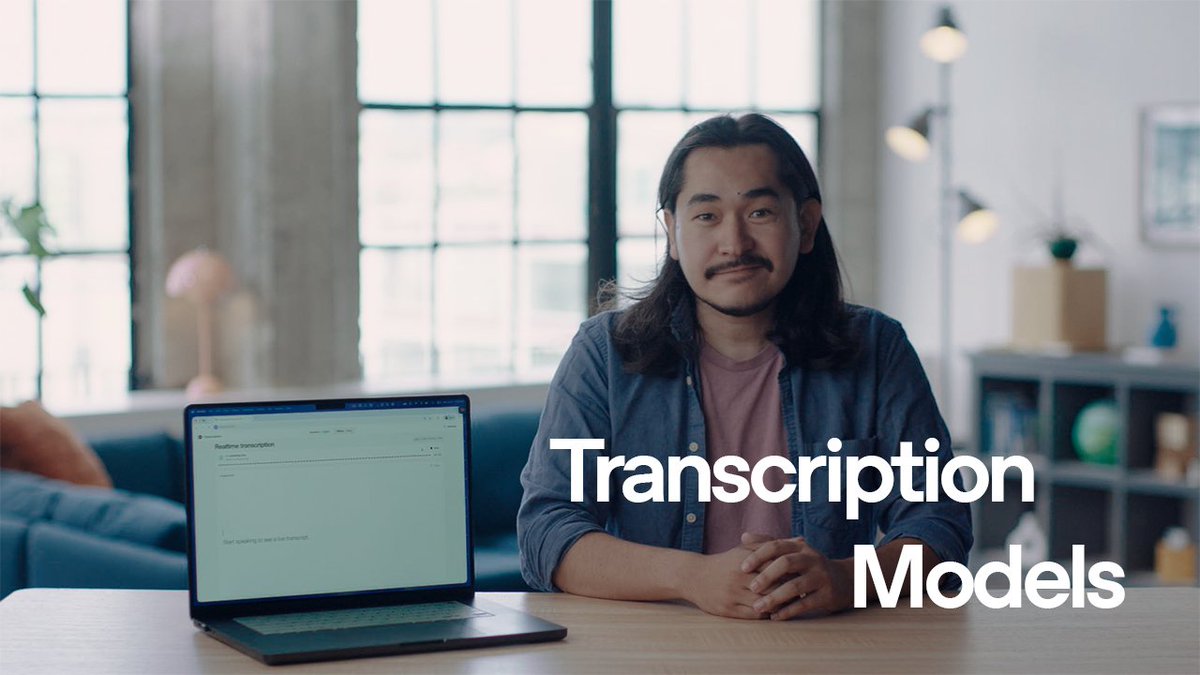
OpenAI introduced GPT-Live-Transcribe for low-latency real-time transcription and GPT-Transcribe for asynchronous batch workloads. Both models feature improved context understanding and are available immediately via the API, targeting use cases from live captioning to large-scale audio processing pipelines.
OpenAI Open-Sources Codex Security CLI
The new CLI tool supports cross-repository security scanning at the organization level, with history tracking, deduplication, and budget controls.
OpenAI released the Codex Security CLI as open source, enabling automated vulnerability scanning across entire codebases. The tool supports organization-wide scans, persistent result history, automatic deduplication, and configurable budget limits. It complements the existing Codex plugin ecosystem. Early adopters report some rate-limit interruptions during large scans, which the team is actively addressing with improved retry and recovery mechanisms. Plans are underway to support local LLM endpoints for air-gapped environments.
LLM as Robot Reasoning Brain Achieves 4× SOTA
Tri Dao reports that integrating an LLM directly into a robot achieves a fourfold improvement over state-of-the-art — with no additional training required. The approach signals that the era of language models controlling physical agents is arriving sooner than expected.
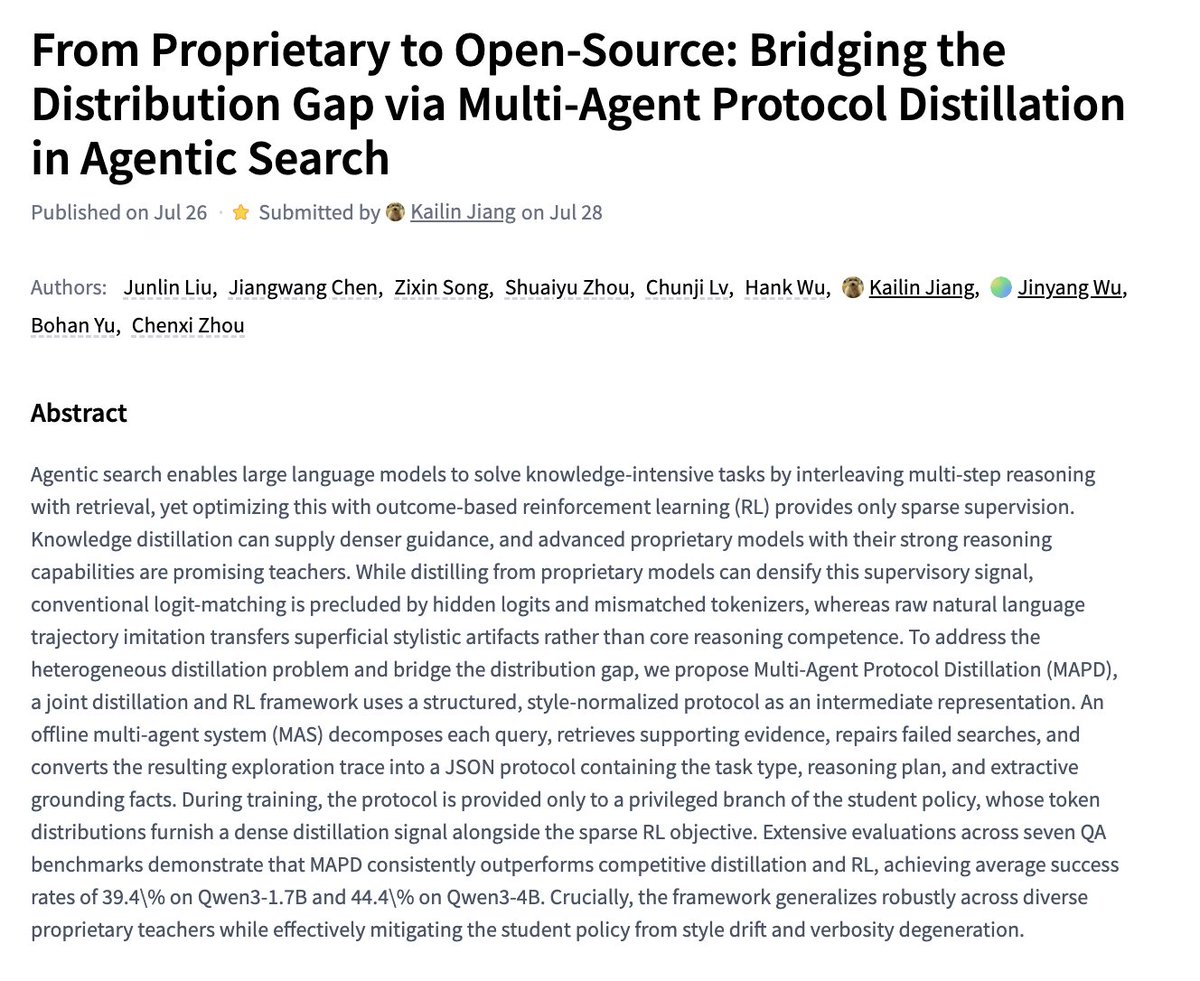
MAPD: Multi-Agent Protocol Distillation Bridges the Open-Source Gap
A new paper proposes MAPD, a framework that uses structured JSON protocols as an intermediate representation to distill knowledge from proprietary to open-source models. Combined with reinforcement learning, it achieves 39.4% and 44.4% average success rates on Qwen3-1.7B and 4B across seven QA benchmarks.
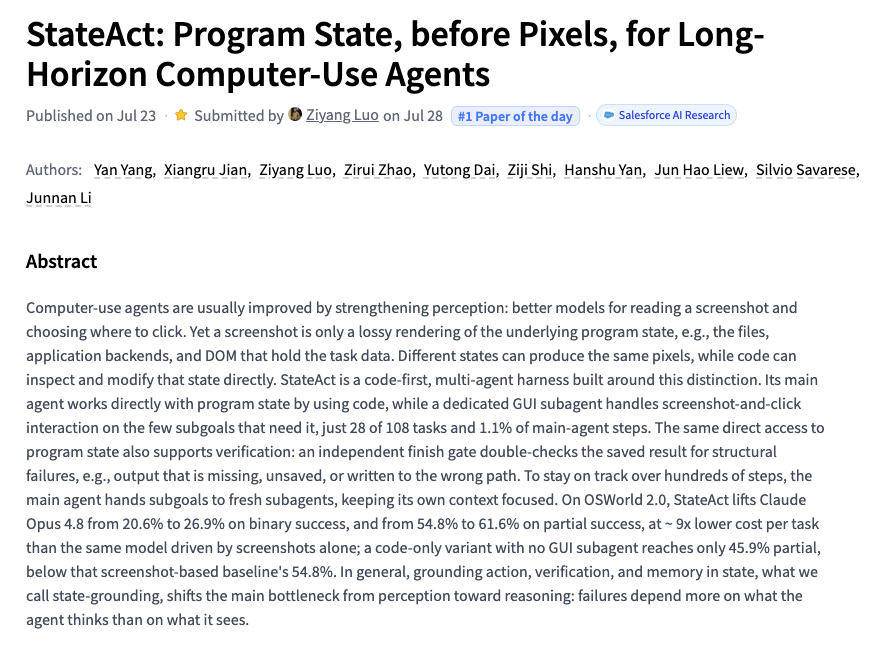
StateAct Proposes Code-First Computer Use Agents
StateAct takes a novel approach: operate on program state rather than pixel screenshots. Only 1.1% of steps require a GUI sub-agent, while the main agent manipulates files, application backends, and the DOM directly. The method excels on OSWorld 2.0 and includes built-in state-based verification gates.
OpenAI Reaffirms Mission to Balance AI Speed and Societal Readiness
OpenAI stated that future AI acceleration may require deliberate pacing to ensure powerful AI benefits everyone, framing it as a core mission responsibility.
Anthropic Executives Sign Petition for Paced AI Development
CEO Dario Amodei and senior staff signed a public petition advocating for societal preparation ahead of AI frontier progress, citing the company's own research on recursive self-improvement.
Runway Teases Seedance 2.5 Video Generation Model
The next iteration of Runway's video generation model is arriving soon, promising further quality improvements for the Seedance family.
Kimi K3 Now Live in LM Studio Bionic
The 2.8T MoE model with a one-million-token context window becomes available for local inference through LM Studio's Bionic release.
Perplexity Personal Computer Expands to Windows
The local agent harness tool now supports Windows, enabling users to orchestrate agents across local files, connected apps, and the web from one system.
Google Cloud Announces Day Zero SGLang Support for Kimi K3
A complete deployment guide was published for serving the 2.8T MoE model with SGLang on GKE, including DSPARK speculative decoding optimizations.
Replit Adds Model Selection, Integrates Kimi K3 First
Joining NVIDIA and Microsoft in supporting open-weight AI, Replit now offers model choice in its product, starting with Kimi K3 as the first alternative model.
Coding Agents Free Scientists to Focus on Breakthroughs
Coding agents now handle routine maintenance, targeted optimization, and complete system redesigns, while researchers define the problems and direction.
Cursor Launches Low-Cost Plan in India with Grok 4.5 Access
The new Cursor Start plan at 649 INR per month includes generous access to Grok 4.5 and Composer agents, lowering the entry barrier for Indian developers.
Perplexity Integrates Kimi K3 for Pro and Max Users
Kimi K3 goes live on Perplexity, hosted exclusively on US-based servers, available in both Search and Computer modes for Pro and Max subscribers.
Perplexity Launches Model Council Feature
Users can now run independent analyses across multiple frontier models inside Computer, receiving a single cited report on where models agree, disagree, and what each uniquely discovered.
Ideogram Partners with AMD for Large-Scale Deployment
The open-weight image model Ideogram 4.0 will run on AMD hardware for scaled serving, boosting inference efficiency through a supply chain partnership.
Adobe Firefly Launches AI Human Generator
The new tool generates lifelike human portraits and scenes from text descriptions, sketches, or reference photos, enabling instant digital self-creation within Firefly.
vLLM Joins the Open Secure AI Alliance
The vLLM project joins industry efforts to protect the open-source inference stack, emphasizing that security at the layer between model weights and production traffic depends on transparency.
Hugging Face Launches Training Agents Lesson 3
The latest installment in the Training Agents series teaches developers how to train local and open-weight agents using reinforcement learning techniques.
Kimi K3 Hits Top 5 Most-Liked Models on Hugging Face
Within 24 hours of release, Kimi K3 entered the top five most-liked models of all time on Hugging Face, surpassing Llama 3, Whisper, and many other established names.
StepFun Hosts Voice AI Night in Mountain View
StepFun teams up with SEAMATE, PLAUD, Firework, and Cresta for a builder-focused event on July 30 covering foundation models, AI hardware, video commerce, and enterprise AI.