SpaceX Acquires Cursor in $60 Billion All-Stock Deal
SpaceX's first major acquisition after going public integrates xAI supercomputers to further improve Cursor's coding models. The all-stock transaction values the Anysphere team at an extraordinary per-capita multiple.
SpaceX announced the acquisition of Cursor parent company Anysphere in a $60 billion all-stock deal. The two firms will combine computing resources and engineering capabilities to give Cursor a major boost. In April, SpaceX had already secured an option: either pay $10 billion for a partnership or $60 billion for outright acquisition. Over recent months, the SpaceX AI team has been fine-tuning coding models using xAI supercomputers.
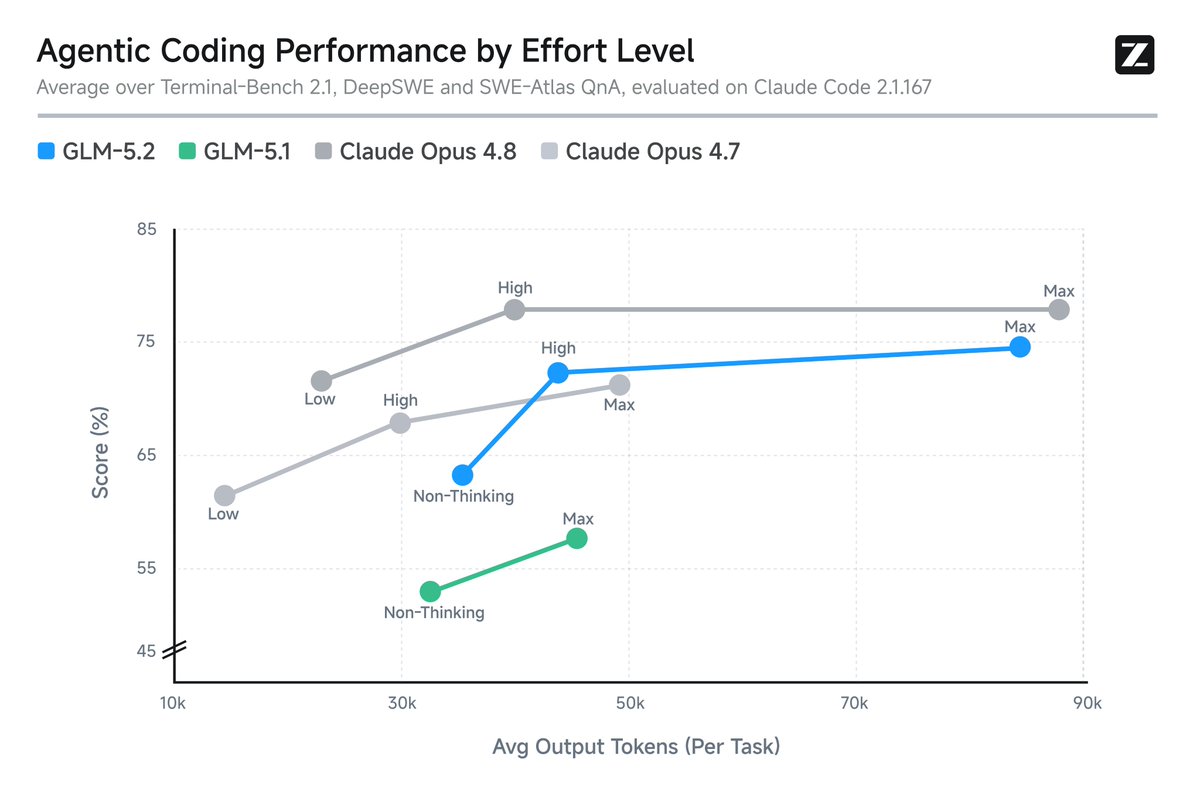
Zhipu Releases GLM-5.2: Open-Weight Frontier Model
Significant improvements in coding and agent tasks, with a 1M context window and two inference modes. The model ranks second on Code Arena and third on FrontierSWE, surpassing GPT-5.5.
GLM-5.2 is a 744B/40B MoE architecture under MIT license, built for long-horizon coding and agentic engineering. It offers two levels of reasoning effort: Max pushes the limits while High strikes a practical balance. Day-zero support shipped across Ollama, vLLM v0.23.0, SGLang, Fireworks AI, Baseten, DeepInfra, Parasail, and Exo 0.14.0. On Code Arena Frontend it scores 29 points above Claude Opus 4.7 (Thinking), ranked second only behind the now-unavailable Fable. On FrontierSWE it places third, behind Fable 5 and Opus 4.8 but ahead of GPT-5.5. On Terminal-Bench it is the first open-weight model to cross 80 percent. On Design Arena it jumped to first place with an Elo of 1360.
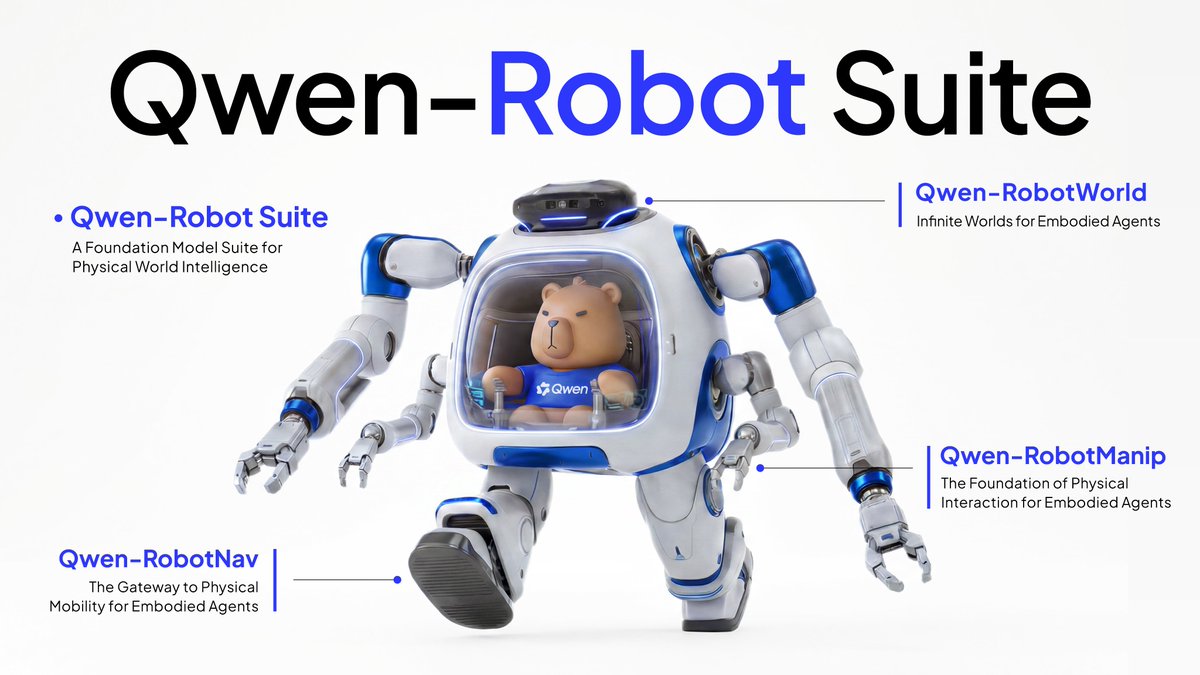
Alibaba Releases Full Qwen Robot Suite
Three foundation models covering navigation, manipulation, and embodied intelligence.
Alibaba's Qwen team introduced the Qwen-Robot Suite, a full stack for embodied intelligence. Qwen-RobotNav serves as the mobility gateway, unifying instruction following, point-goal, and other navigation tasks in one model. Qwen-RobotManip handles dexterous manipulation. Qwen-RobotWorld provides a world-model layer. The release marks a direct push into NVIDIA and Google DeepMind territory in robot foundation models.
Cursor Launches Origin: Code Storage and Git Hosting
Origin gives teams and agents a place to host, review, and collaborate on code. Available this fall.
Cursor announced Origin, its long-awaited Git competitor built for agent workloads. Scalable code hosting with API and MCP support, Origin includes built-in merge conflict resolution and cooperative failure agent resolution. The platform is extensible through its API and MCP protocol surface. Cursor's Tomas Reimers made the announcement at a Graphite event, positioning Origin as infrastructure for the coming wave of autonomous coding agents.
Codex Expands to Europe with Computer Use
OpenAI rolled out more of Codex across Europe this week, bringing Computer Use, the Codex Chrome extension, personalized memory, and Chronicle features to users in the EEA, UK, and Switzerland. New additions include Sites preview for creating hosted websites, Amazon Bedrock support, Appshots screenshot functionality, remote phone connections, Auto-review, and GPT-5.5 model access.
Midjourney to Launch First Hardware Product
Midjourney will announce its debut hardware project at an in-person launch event in San Francisco on Wednesday, June 17 at 6 PM PT, with a livestream broadcast. The company has been a leader in AI image generation and this move signals an expansion beyond software into physical products.
OpenAI Unveils Method for Predicting Model Behavior
OpenAI shared research on a new method for anticipating how models may behave in real-world use before release. By simulating deployment scenarios with recent de-identified user requests and studying candidate model responses, the approach predicts model behavior in real-world environments ahead of time.
The way we will create a future where powerful AI is open-source and available to all is by making AI radically more efficient — both in inference compute and, more importantly, in training data requirements. This is what symbolic learning will achieve.
François Chollet
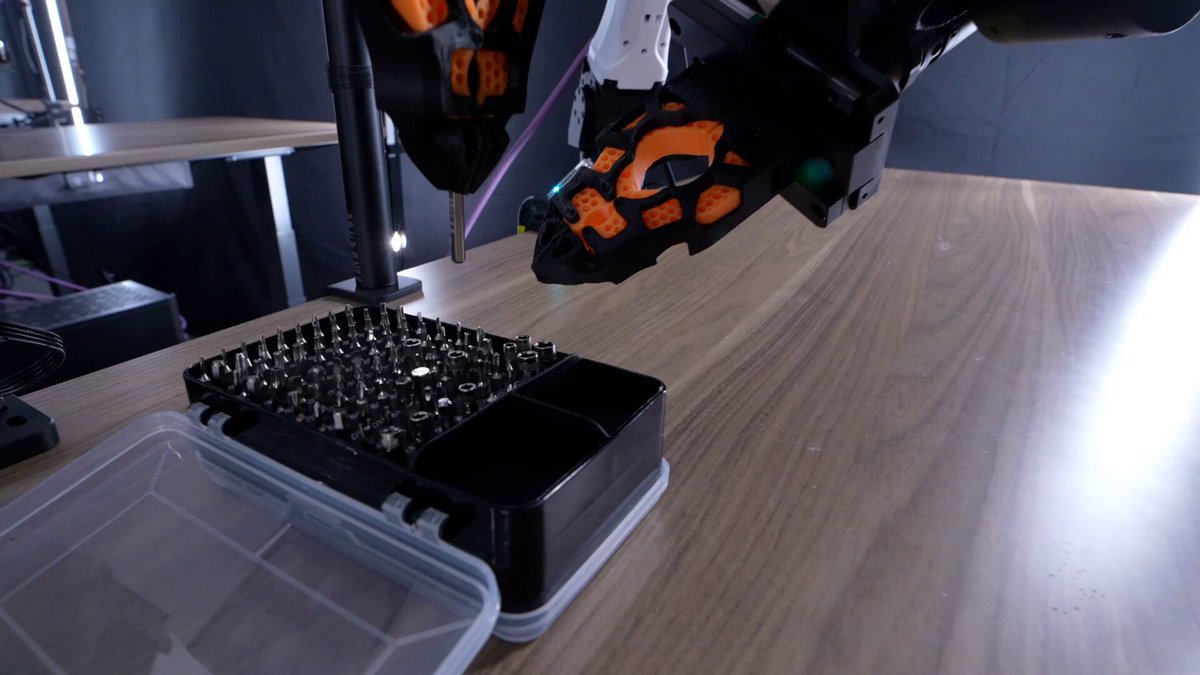

OpenAI Eval Team on Benchmark Saturation and Cheating
Tejal Patwardhan, who leads OpenAI's frontier evals team, spoke about why rigorous evaluation matters and what models need to be measured against. The discussion covered benchmark saturation, gaming, and the search for more effective evaluation methods as AI capabilities accelerate.
Anthropic Research Framework Tracks Claude Code Scaling
Anthropic published economic research introducing a framework for tracking Claude Code as it scales. The study focuses on three questions: who is using Claude Code and for what tasks, how task value changes over time, and how much domain expertise shapes whether a session succeeds. The title "Agentic Coding and Persistent Returns to Expertise" signals that domain knowledge continues to pay dividends even as agent capabilities grow.
NVIDIA Blackwell Sweeps MLPerf Training 6.0
The Blackwell platform delivered fastest performance and largest scale across MLPerf Training 6.0. Beyond raw benchmarks, capabilities like the Reliability, Availability, and Serviceability Engine and NVIDIA Resiliency Extension reduce interruptions and enable elastic scaling for large-scale training workloads.

NVIDIA and Coherent Expand Photonics for AI Infrastructure
Jensen Huang joined Coherent CEO Jim Anderson in Sherman, Texas to mark the expansion of U.S. manufacturing capacity for advanced photonics. The technology underpins lasers and optical interconnects critical to next-generation AI datacenter infrastructure. AI infrastructure, as Huang noted, runs on more than compute — it runs on light.
Practical Guide to Deploying Claude Managed Agents
Anthropic's Applied AI team published a blog post on how teams get agents into production. Claude Managed Agents addresses the core challenges of enterprise deployment: credential management, sandboxing, observability, and more. The guide draws on real production experience from Anthropic engineering.
GLM-5.2 Now Available on Ollama Cloud
GLM-5.2, the strongest open-source coding model yet, is now available on Ollama's cloud hosted in the US on NVIDIA Blackwell datacenter GPUs. It supports a full 1M-token context window with zero data retention privacy policy. The model is also available locally through Ollama for users who prefer on-device inference.
Ideogram Releases Top Open-Weight Image Model
The model punches above its weight — small enough to run on a consumer GPU, but competes head-to-head with Nano Banana and GPT Image for design tasks. The team shared technical insights on how they achieved this efficiency.
U.S. Commerce Dept. Orders Anthropic Not to Provide Fable 5 to Foreign Nationals
Commerce Secretary wrote to Anthropic's CEO ordering the company not to provide Fable 5 and Mythos 5 AI models to foreign nationals anywhere in the world without department permission, threatening action for non-compliance.
Open-Source Models Lag 8-12 Months; Defense Window Tightens
With open models trailing closed-source by about eight to twelve months in coding, the countdown to hardening IT systems against Mythos-class models is now at four to eight months. Having publicly available defensive models is urgent.
DeepSpeed Fixes Critical Mixed-Precision Bug
A long-standing bug where buffers that should remain in fp32 were incorrectly downcast by module.half() and module.bfloat16() has been fixed via PR #8066. The fix adds per-policy param_dtype and buffer_dtype parameters for granular control.
LlamaIndex: Document Optimization Saves AI Agent Costs Dramatically
By customizing skills to reduce Claude's repetitive reading in PDF parsing, time and expense dropped drastically. A custom skill was built teaching Claude to parse PDFs more efficiently, then real usage traces identified where agents were wasting time re-reading the same files over and over.
StepFun Releases Step 3.7 Flash Model
Designed for high-efficiency agent workloads, Step 3.7 Flash combines native multimodal understanding, strong agentic coding capabilities, reliable tool use, and web and visual search workflows for production AI systems.
IneffableLabs Picks NVIDIA Vera Rubin for Supercomputer
The Super Learner project uses one of the largest Vera Rubin NVL72 clusters on Google Cloud to power its mission toward superintelligence, learning from experience at enormous computational scale.
Podcast Surveys Post-Training Methods Across Frontier Models
Natolambert and Finbarr Timbers discuss the latest post-training recipes from GLM 5.1, Kimi K2.6, DeepSeek V4, Xiaomi MiMo V2.5, and Nemotron Ultra. Key trend: the industry has shifted toward multi-teacher on-policy distillation.
Replit Launches Domain-Specific Growth and Security Agents
Automatically discovers SEO issues and security vulnerabilities, with one-click agent fixes.
OpenAI Expands Support for Open-Source Maintainers
OpenAI renews and expands funding for maintainers of popular open-source projects.
Adobe Firefly Now Supports Text-to-Video Generation
Directly generates B-roll and visual concepts from text prompts without reference images.
MiniMax M3 Debuts at RSI Hackathon
Open-weight model M3 used for the first time in an RSI-themed hackathon for verifiable task environments.
Replit Named Databricks Annual App Partner
Replit receives partner award at Data and AI Summit and joins Databricks Marketplace.
AmapAI Launches DreamX-World 1.0 Based on Wan2.2
Supports 1-minute continuous generation and real-time interaction.
Vercel Ship 26: Voice AI Agents and Smart Documentation
ElevenLabs shows real-time voice AI agents; Mintlify demonstrates auto-generated documentation.
Grok Integrates PowerPoint Generation
Users can generate PowerPoint presentations with live data and app connections directly from prompts.
Cohere North Mini Code Engineer Preview
AI engineers allowed to test Cohere's code model before release and answer related questions.
vLLM v0.23.0 Day-0 Support for GLM-5.2
Supports 1M token context, optimized for long-context coding agents.
SemiAnalysis Deep Dives into RL Training System Efficiency
Matching trainer and generator throughput is key to RL efficiency.
Hermes and Ollama Named Best Local AI Desktop Tool
ZDNet review recommends the autonomous agent combo for tool configuration and multi-agent tasks.
GLM 5.2 Considered China's Strongest Model
Makes a leap on CritPt and begins building a universal reasoner.
DeepSeek V4.1 Flash Web Version Goes Live
Different style from previous versions, designed primarily as a tool-calling agent.
Cursor Mobile Launched
Mobile development environment now available on the go.
Three Ways Codex Controls Computers Explained
Computer Use is the broadest but slowest; the other two modes have different trade-offs.
Bland Raises $100M Series C for Automating Phone Tasks
AI phone agent company secures major funding for complex call automation.
Americans Spend 2× More Time with AI Companions Than Dating Apps
The gap is widening as AI companions become more sophisticated.
Anthropic Reverts Agent SDK Quota Restrictions
Users can still use Claude subscription quotas in third-party clients like CodePilot.
Fable Shutdown Possibly Caused by Simple Jailbreak
Disappointment over the jailbreak that reportedly led to Fable's closure.
GLM 5.2 Nears Closed-Source Performance
MIT licensed open-source with agent capabilities that may surpass Gemini.