Decision 3.0 Opens the Full Multimodal Stack, From 0.6B to 27B
A new open family of multimodal foundation decision models lands state-of-the-art, with every size from 0.6B to 27B released under an open license.
The vllm-sr team has shipped Decision 3.0, an open, state-of-the-art family of multimodal foundation models spanning 0.6B to 27B parameters. The release frames itself as a push toward truly open "decision models" — systems built to act, reason and choose across modalities rather than simply generate text.
Community reaction was swift. The vLLM team publicly congratulated the group within hours, and a distilled d3-lite build was already ported to Core ML for on-device use, triaging a thousand pull requests into vllm-sr workgroups at sub-second speed on an M5 Pro.
vLLM Adds NVIDIA Vera Rubin Support With a 7.8x Throughput Jump
vLLM now runs on NVIDIA Vera Rubin, and the early numbers are dramatic: more than 7.8x the throughput of GB200 on MiniMax M3 agent workloads. The benchmark, centered on agentic inference, suggests the next-generation platform could reshape serving economics for long-running, tool-heavy agents.
Sakana AI's MASS Targets the Supervision Bottleneck
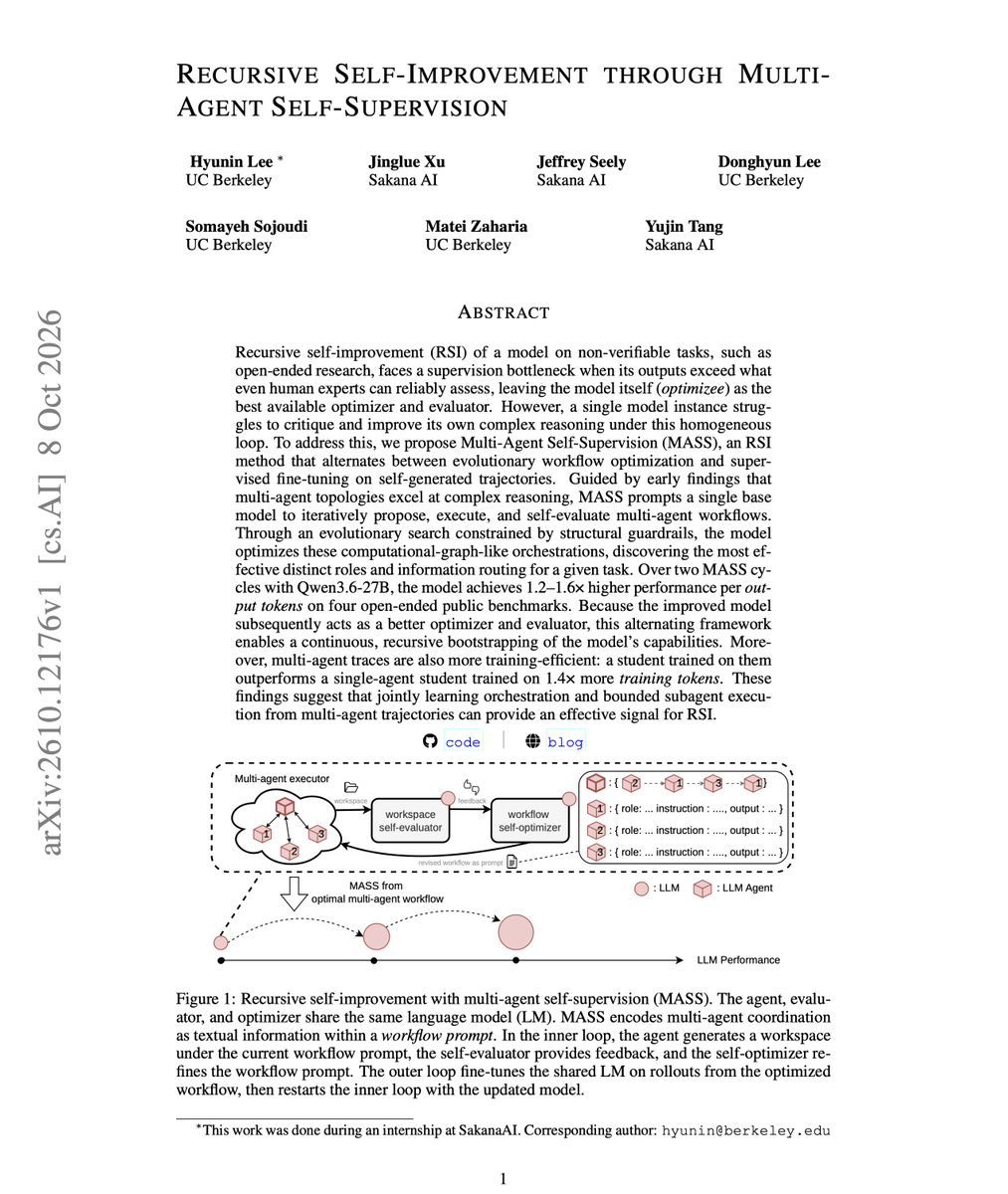
Sakana AI has released a paper on Multi-Agent Self-Supervision (MASS), a route to recursive self-improvement aimed at the moment when tasks grow too complex for humans to reliably evaluate. For open-ended research, the argument runs, human feedback eventually becomes the binding constraint — and self-supervision across multiple agents may be the way through.
On B200, NVFP4 Beats MXFP4 Across the Board
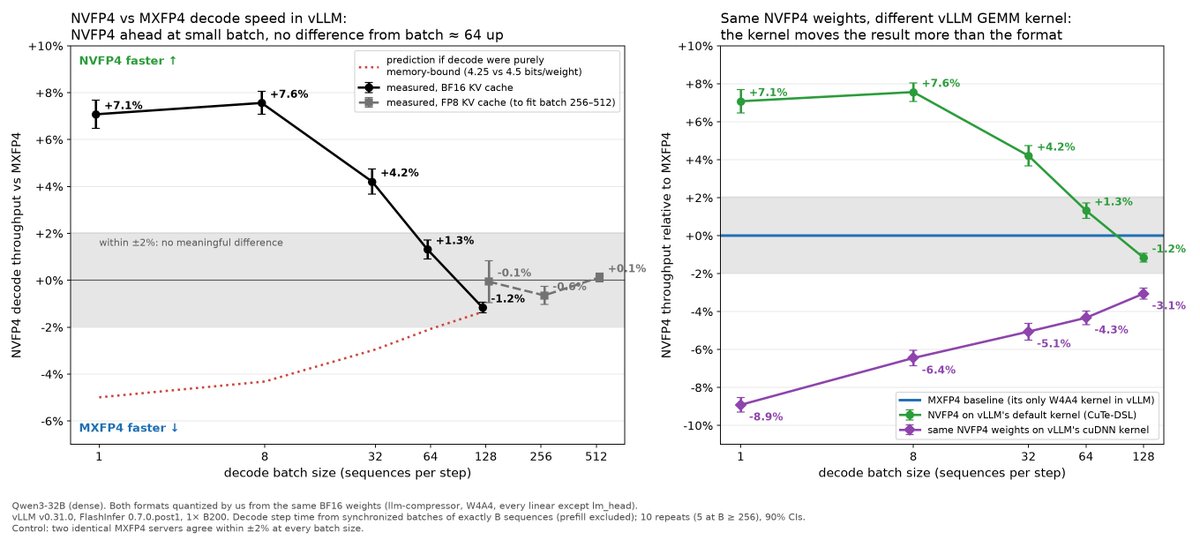
A real inference benchmark deploying Qwen3-32B on a B200 with vLLM finds NVFP4 generally outperforms MXFP4, with small-batch decode up to roughly 8% faster. The author's takeaway is blunt: on B200 you should probably default to NVFP4, by a meaningful margin.
vLLM-Omni Technical Report: One Runtime for Omni-Modal Generation
The vLLM team has published the vLLM-Omni technical report, describing a unified serving runtime for omni-modality generation — a single system for text, image, audio and video rather than a stack of per-modality silos.
It's now less "two groups of people speaking past each other" and more a sharp funnel.
Andrej Karpathy, on the widening gap in who actually understands LLM capability
Ideogram 4.5 Goes Live on OpenArt
Ideogram 4.5 is now available on OpenArt, letting users create from a prompt and keep refining — changing colors, adjusting lighting and iterating after generation.
Decision 3.0 Arrives on Core ML for Local Running
A distilled d3-lite build now runs on Core ML, triaging 1,000 pull requests into vllm-sr workgroups live on an M5 Pro at 0.12-second speed — a hint of what local decision models can do.
Ethan Mollick: "Cyborgs" Are Taking Over Math Research
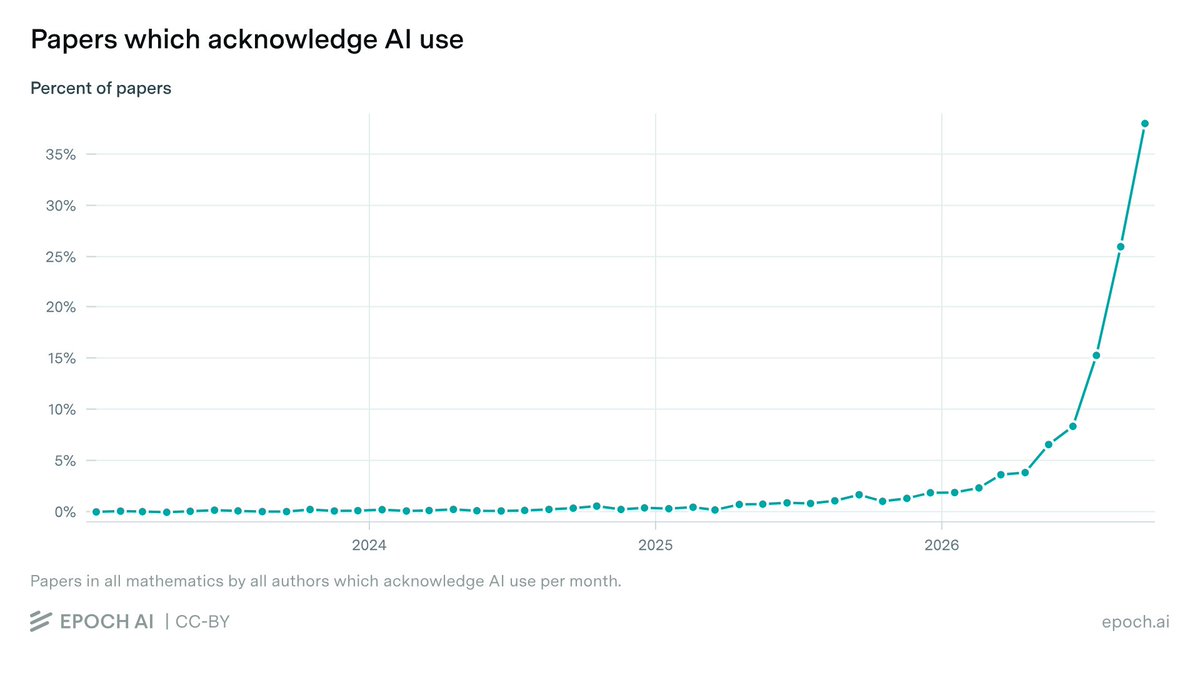
AI-assisted "cyborg" researchers have begun to dominate mathematics, Mollick observes — human-machine pairs now setting the pace in a field long thought to be the purest test of raw intellect.
XPeng's Iron Humanoid Robot Hits Mass Production
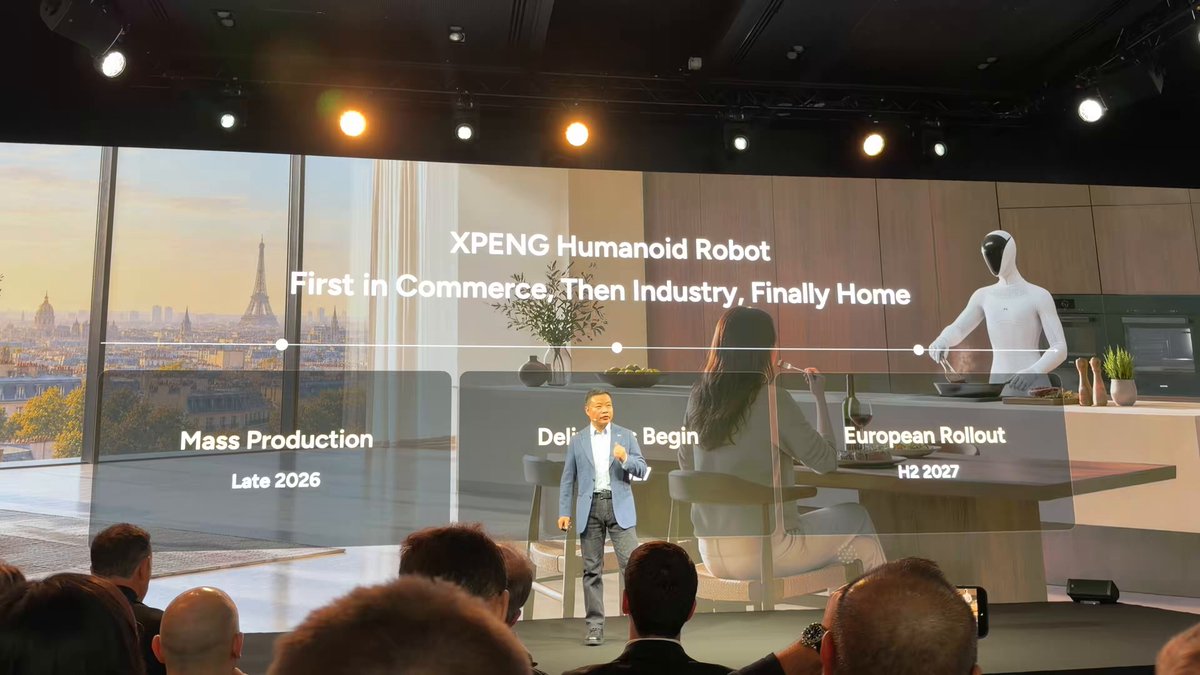
XPeng is now mass-producing Iron, its humanoid robot, with the factory already running and a European rollout planned for the second half of 2027. The move marks another step in the race to turn lab demos into manufacturing capacity, as Chinese firms increasingly treat humanoid hardware as a shipping product rather than a research prototype.
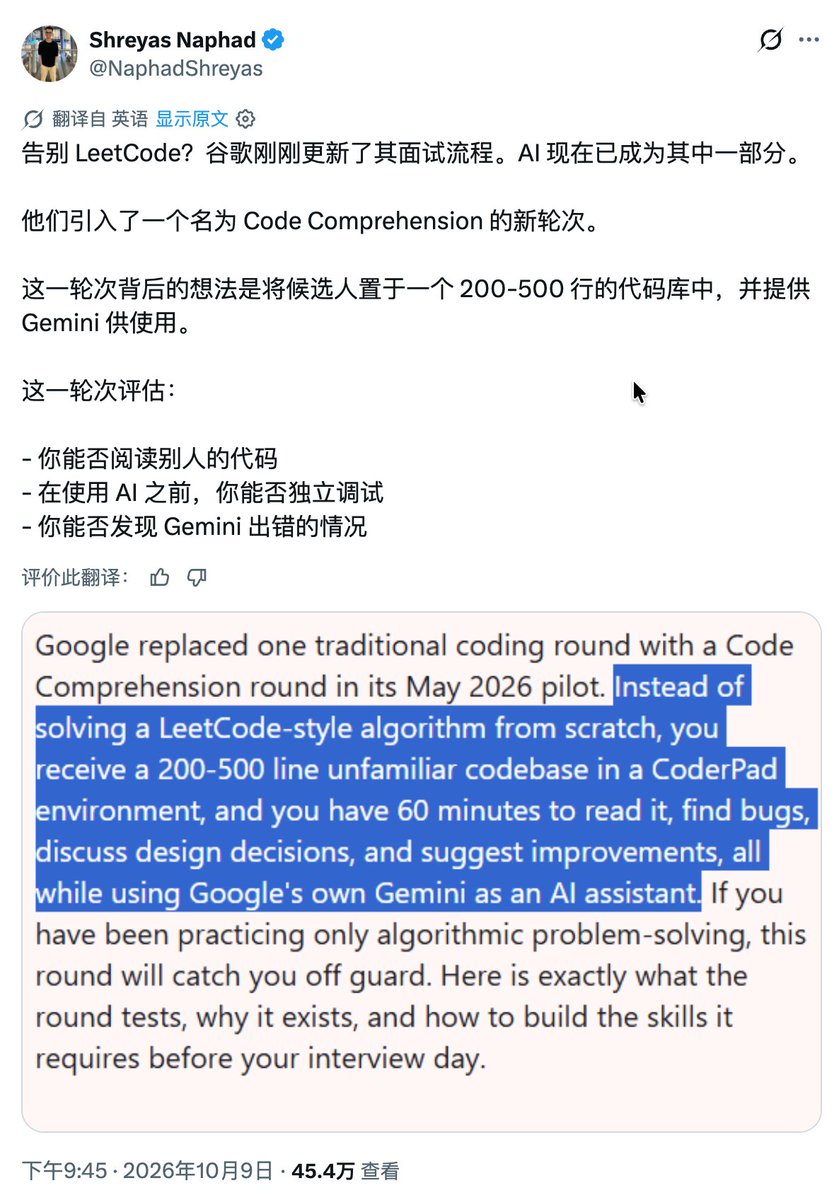
Google Starts Letting Candidates Use AI in Interviews
Google is piloting a new software-engineering interview in which candidates receive existing code and can use Gemini to read it, find bugs and optimize. Interviewers now assess whether candidates can use AI well — and, just as importantly, catch where the model is wrong.
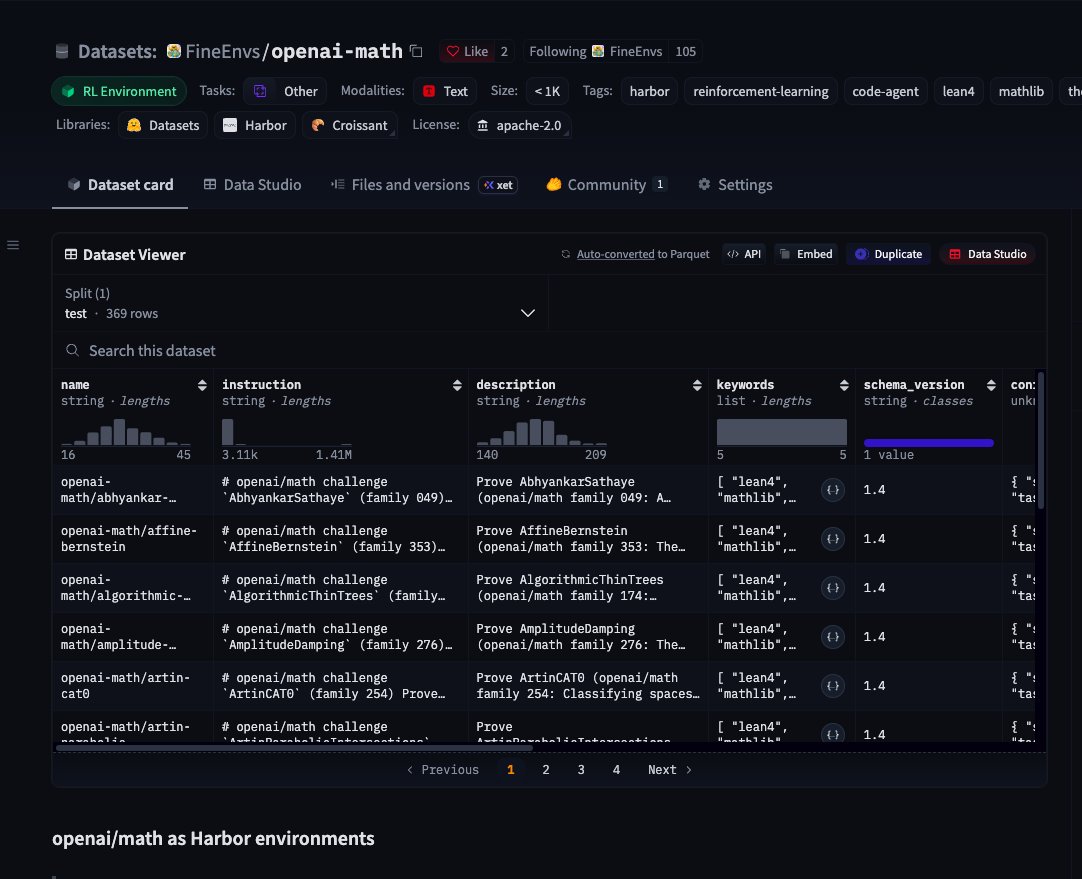
OpenAI's Math Problems Become Open-Source RL Environments
Hugging Face has turned OpenAI's math problems into open-source reinforcement-learning environments. The verifier is still crude — an equivalent proof can score zero if it is not in the exact original formalization — but it shows what a research release looks like once it becomes executable.
User Builds Local Search With EmbeddingGemma 2
A search app built on EmbeddingGemma 2 reportedly offers a better experience than macOS's default Spotlight.
Perplexity Computer Enriches Public-Domain Stories
Perplexity showed how Computer can add illustrations, embedded video and archival photos to public-domain texts such as Shakespeare's plays.
Coinbase Fine-Tunes an Open Model, Exceeding Expectations
Brian Armstrong says fine-tuning the open-weight Qwen3.5-9B on internal data outperformed existing options.
Three World-Model Representation Architectures Explained
Turing Post breaks down three world-model architectures based on different representations, explaining how models understand the world internally.
LLM Post-Training Experiments With KerasHub + JAX + TPU
François Chollet has been running a range of LLM post-training experiments on KerasHub, JAX and TPUs, and may open-source some of the results.
Diffusion Language Model Evaluation Needs Urgent Work
Sander Dieleman points to a new work that uses many slices to handle high-dimensional problems, arguing evaluation for diffusion language models urgently needs progress.
The Bitter Lesson Still Isn't Guiding Decisions
Hyung Won Chung argues that although the Bitter Lesson is now widely accepted, a clear gap remains between what people say and how they actually work.
So-Called "Engram Magic" Is Just Ordinary Overfitting
giffmana says the phenomenon is nothing new — just regular overfitting under clear epoch boundaries, unrelated to engram itself.
Infinite Test-Time Scaling and Prefix Sliding Shared
At the MIT NLP Seminar, Muennighoff discussed infinite test-time scaling and prefix sliding, saying models are nearing the ability to work autonomously.
ML Engineering Handbook Adds a GPU Spec Table
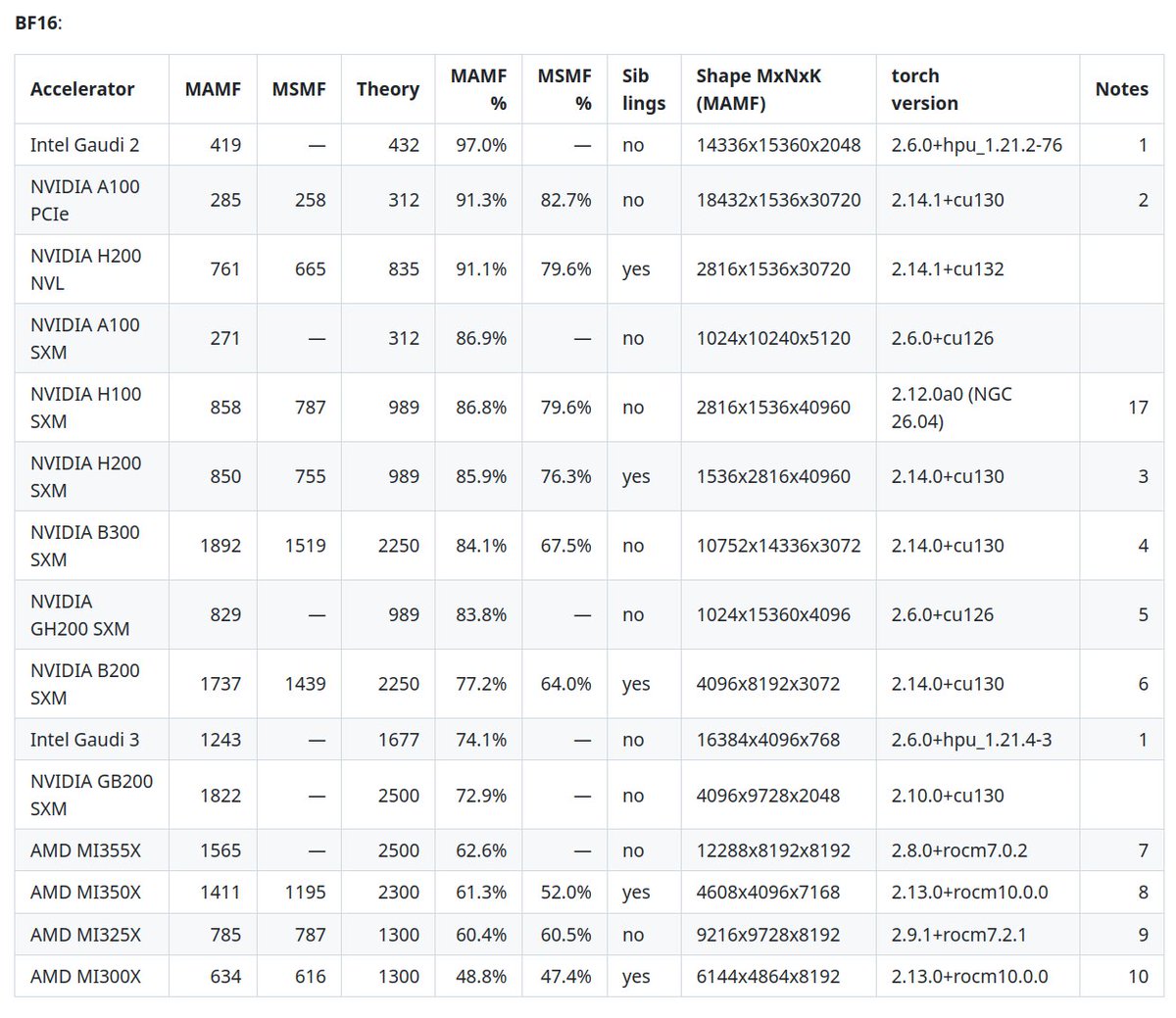
The MAMF/MSMF comparison table now includes measured entries for MI300X, H100, MI325X, H200 NVL and more.
Terence Tao's "Math 2.0" Lecture Slides Surface
Slides from Terence Tao's public "Math 2.0" lecture at Caltech are circulating, drawing attention across the AI-and-math community.
Advanced Model Capabilities Are Far From Fully Used
Ethan Mollick notes that the few thousand people in labs with access to advanced models mainly use them for cybersecurity, math and AI R&D, leaving vast areas untouched.
AI Detractors May Have Only Used the Free Tier
levelsio argues many who dismiss AI have only tried free or cheap plans and never experienced frontier models like Opus 5.5 or Astra.
levelsio Cuts Almost All SaaS Subscriptions
Business spending is now down to AI inference, Hetzner hosting, Cloudflare storage, Backblaze backup and taxes.
Hands-On With Midjourney 8.2 Thinking Mode
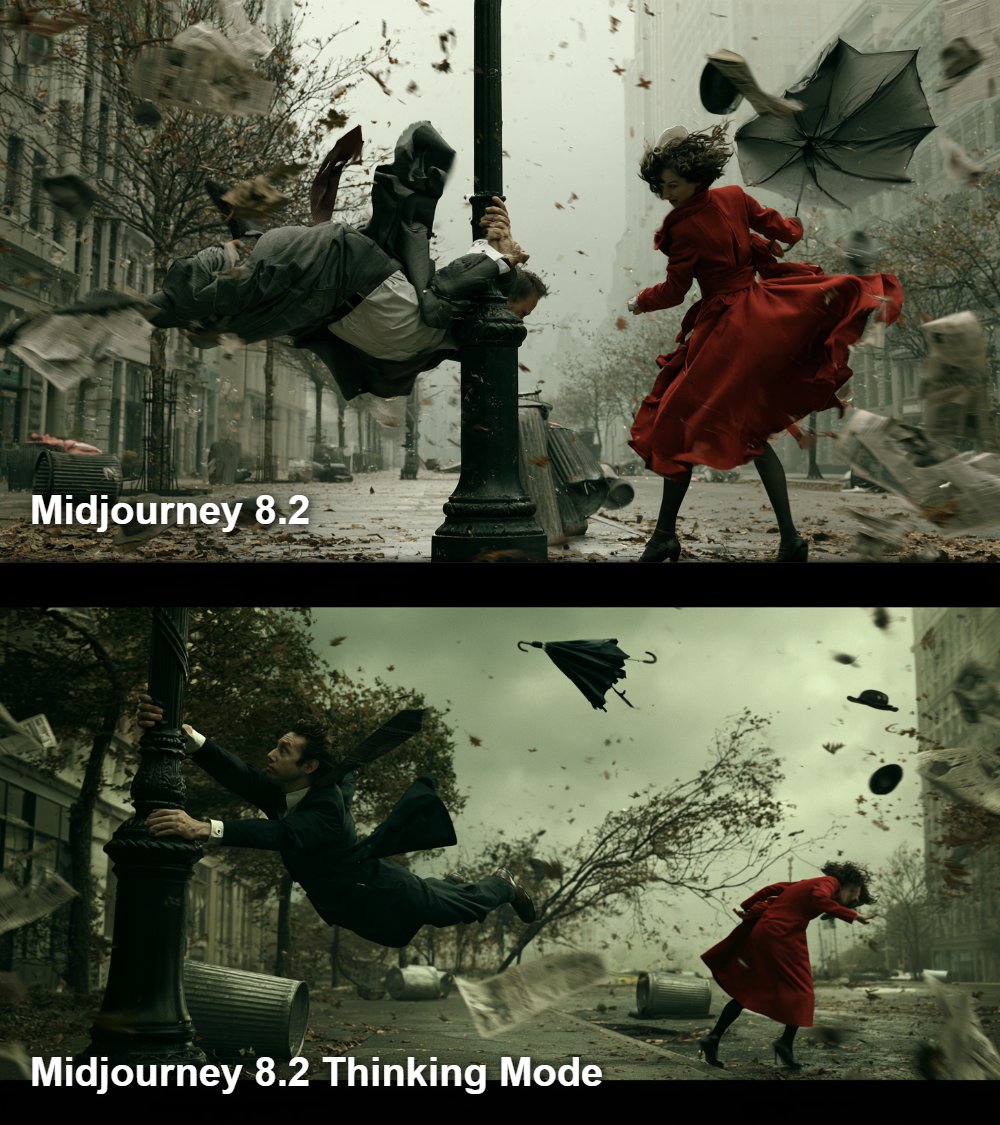
Midjourney 8.2's Thinking mode is now in alpha testing, with clear quality gains but still-imperfect results.
One Extra Question Makes a Coding Agent 6x Faster, 8x Cheaper
After a feature was written, asking "why not do it this way from the start?" led Astra to propose a solution that was 6x faster and 8x cheaper.
Reverse-Engineering With REA Nearly Replicates Claude Slides
dotey used Codex with REA to reverse-engineer Claude Slides' obfuscated code and restore almost the full core functionality of the editor.
Toyota-Style Kaizen: AI Savings Shouldn't Lead to Layoffs
Companies that lay off staff at the first mention of efficiency will never get employees to proactively figure out how to use AI well.
Internalizer: Portable Context-to-Parameter Mapping
A meta-learned hypernetwork maps context to parameters for very large models such as DeepSeek V4-Flash, placed on a shared-expert MLP.
Claude Code and Codex Differ in Harness, Not Just Tools
teortaxesTex argues the main gap comes from harness compatibility, and OpenAI's RL system for self-adjusting "thinking effort" remains unmatched.
Fine-Tuning Gemma 4 E2B With 16GB VRAM
A user fine-tuned Gemma 4 E2B with LoRA on an old gaming PC using Unsloth Studio.
Grok Bot Researches and Orders a LEGO Star Wars Set
Musk demonstrated asking Grok Bot to research a kid-friendly LEGO Star Wars set and place the order directly.
Switzerland's First Autonomous Shuttle Pilot Launches
SBB and imo have launched a four-vehicle autonomous shuttle project, each staffed by a safety attendant.
Trusting a Prediction Rests on Confidence Intervals
François Fleuret argues real-world model trustworthiness basically comes down to empirical-mean intervals from basic statistics.
Mathematicians Are Following the Linguists' Old Path
The math community is replaying what linguists faced a decade ago: AI wins, but mathematics is still studied.
SeeDance 2.5 Fixes Shot-Stitching Issues
SeeDance 2.5 appears to have solved the video stitching problem that plagued SeeDance 2.
Agent Reads Kodak Data to Recreate Film Looks
An agent read Kodak film and paper datasheets to reconstruct profiles for Portra 400 and Kodachrome 64.
A No-Decay Log Curve Hints RSI Is Already in Production
Linus Ekenstam argues the absence of decay on the log curve means recursive self-improvement is already heavily deployed in teams.
Opus 5.5 Builds a Whiteboard Explainer for a Full Podcast
Ren Xin used Opus 5.5 to generate a whiteboard explainer video for an hour-long podcast, consuming only about 2% of quota.
Zhipu and MMX Stocks vs. OpenAI Revenue Growth
oran_ge suggests reading Zhipu and MMX stock prices alongside OpenAI and Anthropic revenue growth — the contrast speaks for itself.
Next Token Podcast Discussed Open Source and Cracking Early
The podcast says it covered "everything will be open-sourced" and game cracking in detail days before the topics went viral.
Musk Recruits Chip Design and Volume Production Engineers
Musk invited world-class chip design and production engineers to join SpaceX or Tesla, citing rapid iteration and custom production lines.
Japan's AI Community Grows, Compiled Into a List
icreatelife says Japan's AI community is growing and has compiled a list of communities to make joining easier.