Anthropic Co-Founder Speaks at Vatican as Pope Issues Historic AI Encyclical
Pope Leo XIV released the encyclical “Magnifica humanitas” on artificial intelligence. Anthropic co-founder Chris Olah addressed the Vatican, outlining three critical areas where the Church and broader institutions must provide moral oversight.
On May 25, Pope Leo XIV published “Magnifica humanitas”—the first papal encyclical dedicated entirely to artificial intelligence. The document calls for AI to serve human dignity and warns against its use as a tool of domination or exclusion. Anthropic co-founder Chris Olah was invited to speak at the Vatican presentation, where he acknowledged the immense pressures facing AI laboratories—commercial, geopolitical, and technical—and argued that purely internal governance is insufficient. Olah identified three urgent areas requiring external moral engagement. First, AI risks large-scale labor displacement, and the global community must ensure benefits are shared across all societies rather than concentrated among a few. Second, the rapid integration of AI into daily life raises profound questions about human flourishing: what does meaningful work, family relationships, and community mean when machines increasingly mediate human interaction? Third, the internal structure of AI models remains deeply mysterious even to their creators, demanding continuous scrutiny and epistemic humility. Olah’s remarks signal a growing recognition among AI leaders that technical governance alone cannot address the societal implications of the technology they are building.

Google DeepMind Launches AlphaProof Nexus Agent Framework
An agentic framework that leverages multiple AI agents working collaboratively to advance research-level mathematical problem-solving.
Google DeepMind released AlphaProof Nexus, a new agentic framework designed to push the boundaries of research-level mathematics. The system orchestrates multiple AI agents that plan, execute, and verify mathematical proofs in an iterative loop, representing a significant step forward in automated reasoning. The framework builds on DeepMind’s earlier successes in formal mathematics and introduces a collaborative architecture where agents can decompose complex problems, distribute sub-tasks, and cross-validate results. Early results suggest the system has solved problems that previously resisted purely automated approaches, raising questions about how close AI systems are getting to genuine mathematical discovery. The release underscores the growing importance of agentic architectures that move beyond single-model inference toward multi-step reasoning pipelines, mirroring how human mathematicians collaborate on difficult problems. The framework is part of a broader trend at DeepMind toward systems that combine language model capabilities with symbolic reasoning tools.
MiniCPM5-1B Fully Open-Source, Tops 1B Leaderboard
The MiniCPM5-1B model is now fully open-sourced with weights, training data, and deployment code released. At just one billion parameters, it ranks first among models of its size on human evaluation benchmarks, showing that small, transparent models can compete with far larger proprietary alternatives when rigorously trained on high-quality data.
Replit Launches AI Agent 4: Build Apps from Natural Language
Replit introduced AI Agent 4, enabling users to generate applications, websites, and mobile interfaces using natural language without coding. The platform supports parallel task execution, real-time team collaboration, built-in authentication, databases, and hosting, integrating with over 100 services including OpenAI and Stripe. With SSO and SOC 2 compliance, it targets both individual developers and enterprise teams seeking rapid prototyping capabilities.
Kimi K2.6 Open-Source Model Tops 3D Design Leaderboard
Kimi K2.6 returned to number one on Design Arena’s 3D design leaderboard, with the open-source model taking the lead in 3D generation and surpassing proprietary competitors. The result underscores the growing competitiveness of open-weight models in specialized creative domains.
Hugging Face Releases LeRobotHF, a $2,500 Open-Source Humanoid Robot
Hugging Face launched LeRobotHF, a complete open-source humanoid robot hardware and software system that can be built for roughly $2,500. The full stack includes open hardware designs, software frameworks, and deployment tools, making humanoid robotics accessible to researchers and hobbyists worldwide.
LongCat Open-Sources Video Generation Model on Hugging Face
LongCat released its video generation model as open-source, now freely available on Hugging Face. The model reportedly delivers impressive video generation quality, adding to the growing ecosystem of open video AI models that challenge the dominance of proprietary systems from major labs.
Yann LeCun’s JEPA-WM Paper Accepted by TMLR with Reproducibility Badge
The JEPA-WM research paper from Yann LeCun’s team was accepted by Transactions on Machine Learning Research and received a reproducibility certification. A new version has been released with additional datasets and analysis, continuing the team’s work on world models and self-supervised learning architectures.
“Grok Build is still in beta for another month or so, but is already quite useful for production tasks.”
Elon Musk
Alibaba Cloud Qwen3.7-Max Enables Implicit Caching by Default
Qwen3.7-Max now defaults to implicit caching, automatically accelerating API responses and reducing costs without any configuration. Advanced users seeking higher deterministic hit rates can opt for explicit caching with cache tags in request headers, as detailed in Alibaba’s newly published best practices guide.
MiMo V2.5-Coder Released, Among Best Coding Models for Local Use
MiMo V2.5-Coder, a coding-focused language model, has been released and is considered among the best models that can run locally. Requiring 128 GB of RAM, it targets developers who need powerful code generation capabilities without relying on cloud APIs.
NayanaOCR Corpus: Over One Million Document Images Across 22 Languages
The NayanaOCR Corpus is now the largest open-source synthetic multilingual OCR dataset, containing more than a million document images spanning 22 languages. It serves as a critical resource for training and evaluating multilingual document understanding systems.
PhysX-Omni: First Unified Physics Simulation Generation Framework
PhysX-Omni is the first unified simulation-ready generation framework supporting rigid, deformable, and soft body physics. The framework represents a significant advance in Physical AI, bridging generative models with physics simulation for applications in robotics and embodied intelligence.
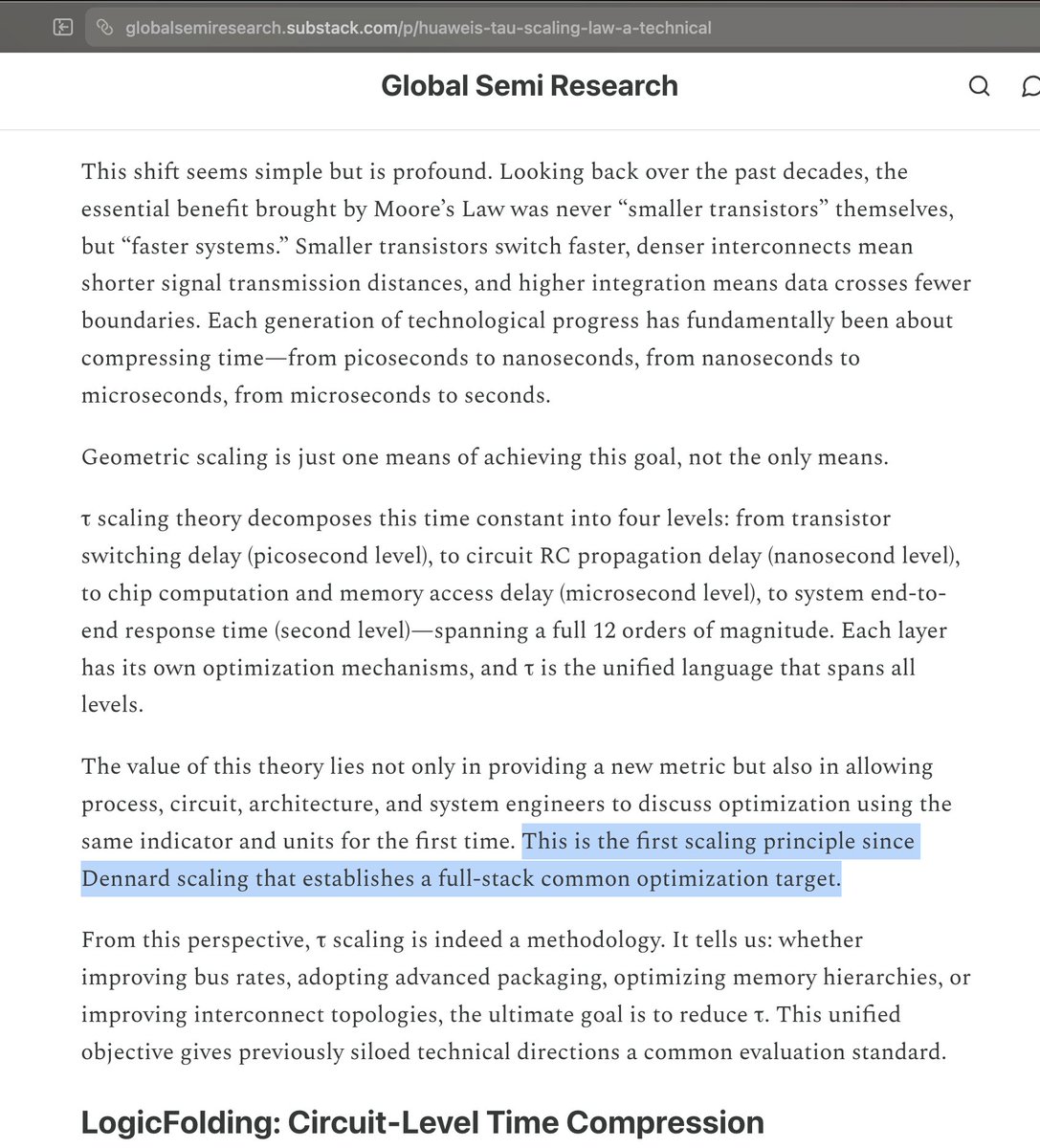
τ-Scaling: Inside Nvidia’s Super-Moore Performance Gains
τ-Scaling describes Nvidia’s integrated signal processing speed gains that outpace Moore’s Law by orders of magnitude. Jensen Huang has referenced this concept when explaining how Nvidia’s performance improvements exceed what transistor scaling alone would predict, particularly in chips like the upcoming Rubin Ultra architecture.

Single Supercomputer POD Could Reach One Zettaflops by 2030
Quantitative analysis of next-generation Nvidia architectures suggests a single SuperPOD could reach 1 Zettaflops by 2030. Current GB300 NVL72 achieves 1.44 EFLOPS FP4, while Rubin Ultra NVL576 is projected at 15 EFLOPS for inference. Reaching zetta-scale would still require 40,000 to 50,000 of those 2027-era chips.
Huawei Ascend Introduces HyperParallel-MoE Scheduling System
Huawei’s Ascend A3 platform introduces HyperParallel-MoE, a dedicated scheduling system for Mixture-of-Experts training. The system is optimized specifically for Ascend chips’ matrix and vector compute units, strengthening China’s domestic AI training infrastructure amid ongoing export restrictions.
DeepMind Math System Nears AGI Threshold, Sparks Label Debate
Commentators argue that Google DeepMind’s latest math system has solved enough novel research problems that if this does not yet qualify as AGI, a new label may be needed for the current class of capability. The system solved eight additional problems beyond its initial benchmarks, far exceeding aggregate approaches.
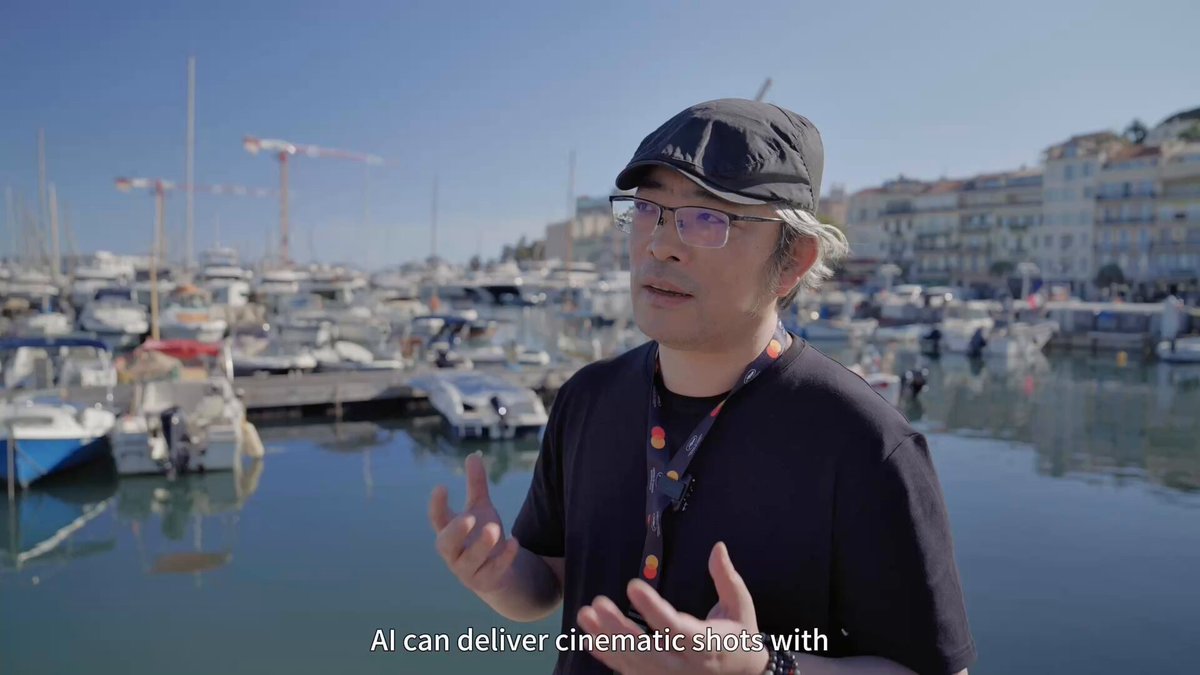
Kling AI Debuts at Cannes; Animation Director Praises AI Texture Capture
Kling AI made its debut at the 79th Cannes International Film Festival, signaling growing acceptance of AI tools in cinema’s most prestigious venues. Li Wei, chief director of “Jiang Ziya: Legend of Deification” and executive director of “Big Fish & Begonia,” praised the AI video generation tool’s capabilities at the festival. “The way AI captures texture has surpassed all our expectations as animators,” Li said, adding that he is actively learning how to collaborate with AI in the creative process. The appearance at Cannes highlights how AI video generation tools are moving from experimental curiosities to production-grade instruments in professional filmmaking, a shift that is reshaping conversations about creativity, authorship, and the future of visual storytelling.
Aleph 2.0: Universal Text Editing Model Adds Visual Prompting
Aleph 2.0, a new version of the generalist text-based editing model, now supports visual prompting for precise image edits. The model, one of the first in its category, represents a significant advance in making text-driven image manipulation more controllable and accurate for creative workflows.
Sakana AI Joins Japanese Prime Minister’s Roundtable on Industry AI
Sakana AI participated in a roundtable discussion at the Japanese Prime Minister’s official residence, presenting advanced AI implementations in sectors including finance. The discussion emphasized Japan’s need to develop autonomous AI capabilities while leveraging frontier models from global labs.
Luma Agents: Creative AI for Full-Process Content Generation
Luma Agents are creative AI agents capable of planning, generating, iterating, and refining content throughout the creative process. Acting as productivity multipliers for teams, they maintain full context across every stage of creative work, from initial concept through final delivery.
Reachy Mini Desktop Robot Supports Agentic Programming
Hugging Face’s Reachy Mini desktop companion robot supports agentic programming, takes only 3 hours to assemble, and is suitable for children and developers to extend with custom functionality.
On-Policy Distillation Becomes One of AI’s Hottest Buzzwords
On-policy distillation, a post-training technique where a student model replicates the output distribution of a teacher model using its own generated samples, has become one of the most discussed topics in AI research circles.
Stanford Method Predicts Model Performance Before Training Begins
Percy Liang’s team at Stanford proposed a method to predict whether a model will perform well before any training takes place, potentially saving significant compute resources in large-scale experiments.
Ax Agent Adds PEEK Module, Wraps Any DSPy Agent for Better Performance
Ax Agent now includes a PEEK module capable of wrapping any DSPy agent to boost performance. Ax is a TypeScript-based DSPy framework supporting over 15 model providers with structured output, verification, and agentic memory.
GEPA Goes Beyond Prompt Optimization to Efficient Hyperparameter Search
GEPA, initially viewed as a prompt optimization algorithm, is increasingly recognized as one of the most efficient general hyperparameter search algorithms available, with applications extending well beyond its original scope.
Adaption AI Opens AutoScientist Public Beta for Automated Research
Adaption AI opened public beta access for AutoScientist, an automated scientific research platform that applies AI agents to accelerate discovery workflows across multiple scientific domains.
Hugging Face CEO Analyzes How Coding Assistants Reference HF Products
Clement Delangue is testing how coding assistants mention Hugging Face products, using AI automation to analyze thousands of developer conversations across platforms like Claude Code and GitHub Copilot.
“House of David” Becomes Amazon Hit Series with AI-Assisted Production
The historical drama “House of David” drew nearly 50 million viewers in its first season. Showrunner Jon Erwin stated the production could not have been completed without AI assistance, signaling a hybrid future for filmmaking.
Agent Harness Is Commoditized; Vertical AI Solutions Are the Real Opportunity
A developer argues that building general agent harnesses has diminishing value as model upgrades rapidly obsolete them, but vertical domain solutions built on mature harnesses represent the true frontier for AI engineering.
Will Open-Source Models Surpass GPT-5.5 by Year’s End? Analysts Weigh In
Commentators believe open-source models will approach but may not fully surpass GPT-5.5-class frontier models by year-end, though advanced versions of K3 or V4 architectures could narrow the gap considerably.
Analysis: Huawei Chip Design Under DUV Restrictions May Narrow the Gap
Commentary argues that export restrictions on Huawei’s chip production are less severe than often portrayed, and that the gap with Nvidia in AI chip design capability may narrow more quickly than widely expected.
GPT-5.5 Pro Increasingly Used for Automated Fact-Checking Workflows
Developers report deploying GPT-5.5 Pro as a dedicated fact-checking layer in research and content pipelines, leveraging its broad knowledge and reasoning capabilities for verification tasks.