GPT-6 Astra is here —
the model that says it can do anything on your computer
OpenAI positions GPT-6 Astra as its best model yet for computer use, software engineering, and visual understanding. Sam Altman frames it as the start of a new generation of entrepreneurship, scientific discovery, and building.

OpenAI shipped GPT-6 Astra on September 3, closing a hype cycle that had consumed the industry for weeks. The pitch is deliberately blunt: anything you can do on a computer, Astra can do for you — fast. Sam Altman called it the best model in the world for computer use, professional work, science, coding, and cybersecurity, and said the team hopes it will enable "a new generation of entrepreneurship, scientific discovery, and building." OpenAI's developer arm was more specific, describing Astra as its strongest model to date for computer use, software engineering, and visual understanding.
The rollout was not seamless. Several major AI services went down on the same morning, and Altman acknowledged a "little snag" deploying the announcement blog post. But early-access testers flooded the timeline with demos — 3D worlds built in Unreal Engine, a playable first-person shooter, a floor plan turned into a ray-traced walkthrough — and a growing number of researchers described the jump in capability as a step-function change rather than an incremental release.

NVIDIA to acquire Hugging Face for $12.93 billion
The deal would make the open-model hub a cornerstone of NVIDIA's push to keep AI accessible, neutral, and open.
NVIDIA announced it has reached an agreement to acquire Hugging Face, the open-model platform that became the default home for the machine-learning community. The two companies say they will jointly expand the Hugging Face platform, strengthen its infrastructure, and broaden access to AI for developers and organizations worldwide. Jensen Huang framed open models as strengthening safety and cybersecurity while accelerating innovation and diffusion. Sundar Pichai, whose firm was an early investor, called it a "great outcome" that "will strengthen the open model ecosystem." Co-founder Clement Delangue pointed to the price itself — $12,930,300,000 — and the decade-long journey that led to it.
WeatherNext 3 forecasts from real-time observations
Google DeepMind and Google Research introduce WeatherNext 3, a model that learns directly from real-world, real-time observations to deliver more localized, highly accurate predictions faster.
Ant CLI now manages agents as code
A new "ant apply" command declares Claude-hosted agent resources — environments, agents, skills, memory stores, and deployments — as repository files and keeps API resources in sync.
Runway's GWM Worlds 2 goes real-time
A general world model generating interactive, real-time simulations in continuous 720p video at 24 fps with 48,000 Hz audio, responding to your input as you explore.
Astra jumps from 66% to near-perfect on ARC-AGI-3
François Chollet reports that GPT-6 Astra scores 66% on ARC-AGI-3 using the standard harness, and nearly 100% with a continuous conversation harness and custom compaction — at a cost of roughly $360 per game. He calls it a step-function change in capability for interactive reasoning problems.
Perplexity: Astra tops WANDR at $11.98 per task
GPT-6 Astra scored 0.682 on WANDR, the highest of any model Perplexity tested — 13.5% higher than Fable 5.1 at 6.1% lower cost, and 27.0% higher than Opus 5 at 3.3% higher cost.
Chain of Thought is our best current tool for safety and interpretability — losing it would be a major tragedy. Neel Nanda, on the push for monitorable reasoning
K2-Horizon: six open models up to 375B
IFM ships an Apache-2.0 family from 0.9B to 375B with 512K context, reasoning, and tool calling, with day-0 support in vLLM and SGLang.
Ant opens a finance-tuned 124B model
Ling-3.0-flash-Fin (124B total, 5.1B active) arrives with day-0 SGLang support, built alongside financial institutions and domain experts.
PyTorch 2.14 lands with NVGEMM and nccl2
2,995 commits from 487 contributors: a low-precision GPU math backend, fault-tolerant distributed nccl2, and native Metal kernels on Apple Silicon.
Bionic, an agent for work and code
LM Studio's Bionic creates documents, slides, PDFs, and software, running on local or frontier open models.
LlamaIndex ships Turbo document extraction
The VLM-powered Extract runs about 4× faster at comparable accuracy, with a 3.7-second median latency per page.
MiniMax-M3 powers an Arabic frontier model
HUMAIN-M3 is trained on more than 1 trillion Arabic tokens, spanning regional dialects, to bring frontier-level capability to Arabic.

Qwen's E-Commerce Bench lets an agent run a store for 365 days
Agents start with ¥100,000 and run online stores for a full year — handling sourcing, negotiation, pricing, promotions, inventory, and cash flow in a market driven by real e-commerce data. It is a long-horizon test of autonomous business operations.
A wave of AI outages hits launch day
OpenAI, Claude, xAI, Cloudflare, and Cursor all reported disruptions on the morning of the Astra launch.
arc-agi-3 is now saturated
Chollet's benchmark falls as frontier models push toward the ceiling.
Perplexity Portable Computer hits Linux
A fully local runtime for NVIDIA RTX GPUs with 24GB VRAM or more.
Replit adds database backups
Daily production snapshots and point-in-time restore to protect your work.
Claude Code limit reset, once a week
A manual limit-reset command for the five-hour cap arrives.
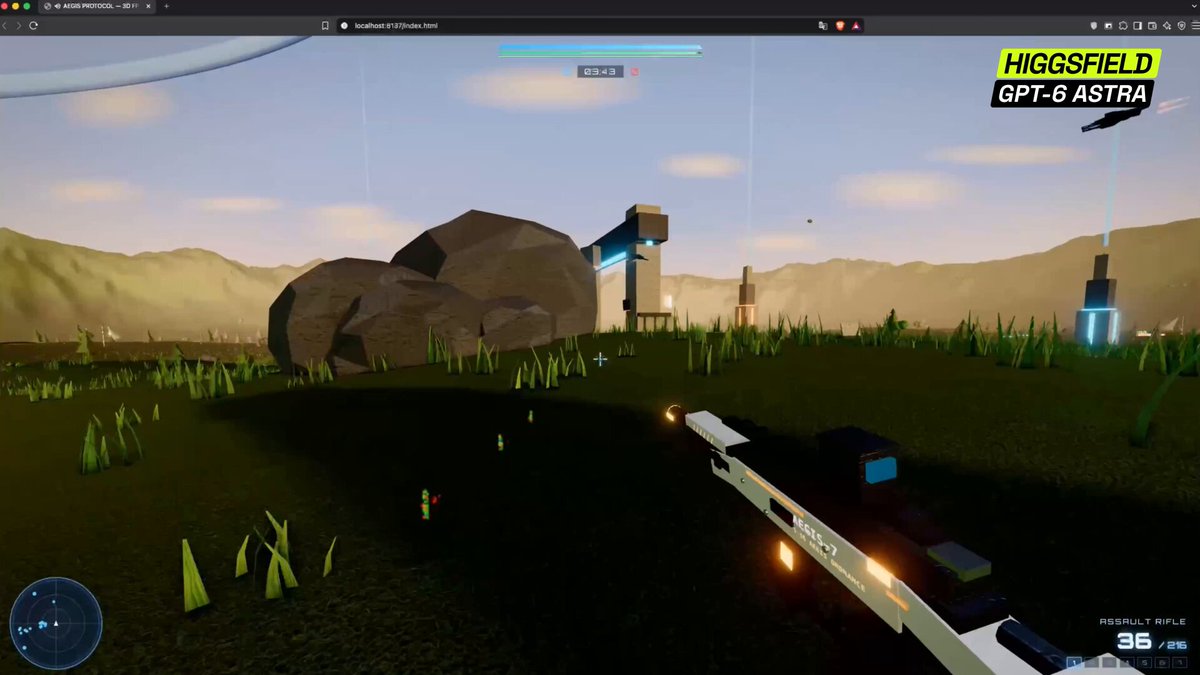
A playable FPS built end to end
Astra holds up on 3D and game logic, producing a working shooter on the Higgsfield Supercomputer.

A floor plan becomes a 3D walkthrough
Astra reconstructs the layout in Blender, furnishes every room, and renders a ray-traced tour.
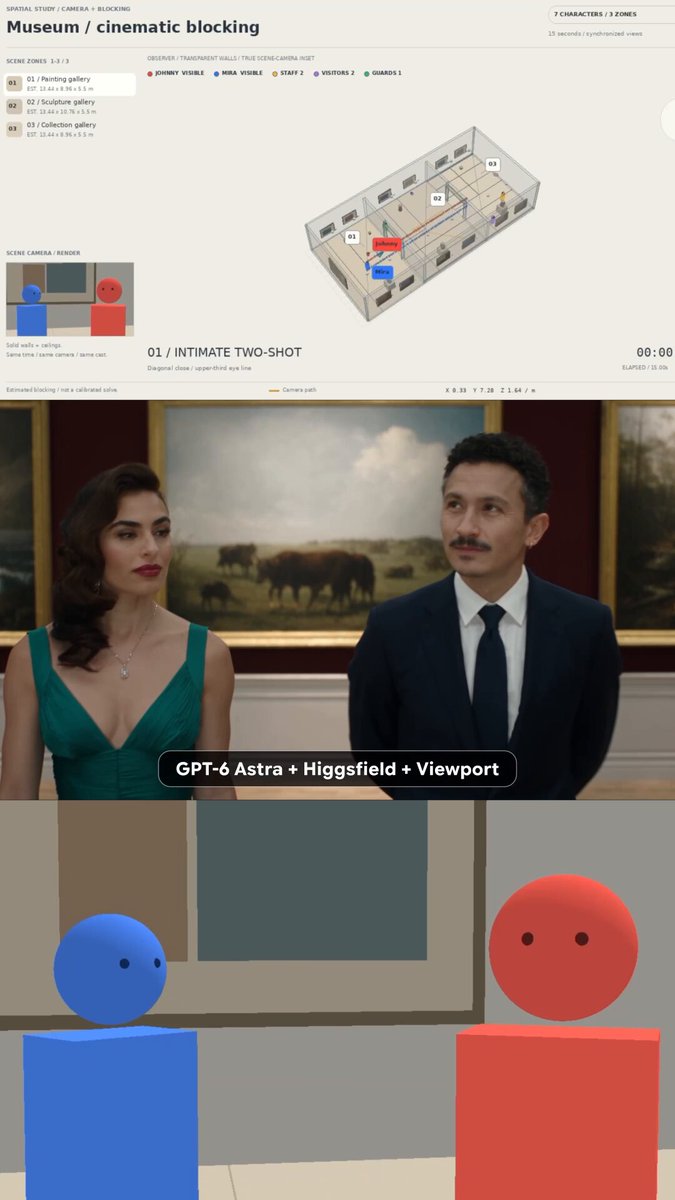
World-class spatial reasoning
Astra maps the museum, the cast, and the shot list; Seedance 2.5 renders every setup.
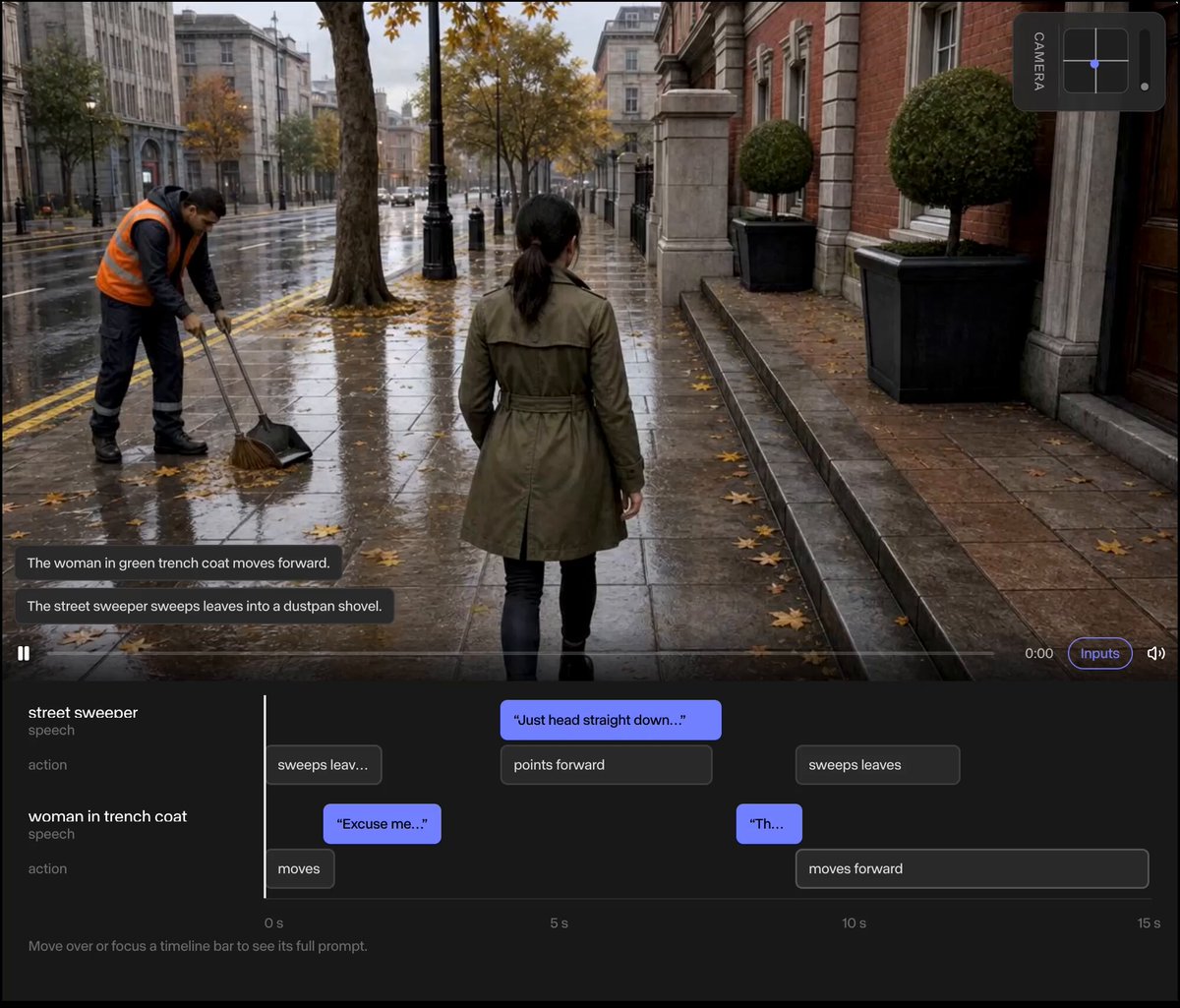
Interactive worlds in a single stream
GWM Worlds 2 streams full interactive simulations at 24 fps with 48,000 Hz audio.

A Library of Alexandria, simulated
Ethan Mollick had GPT-6 do complex work autonomously for days, including a historical simulation.
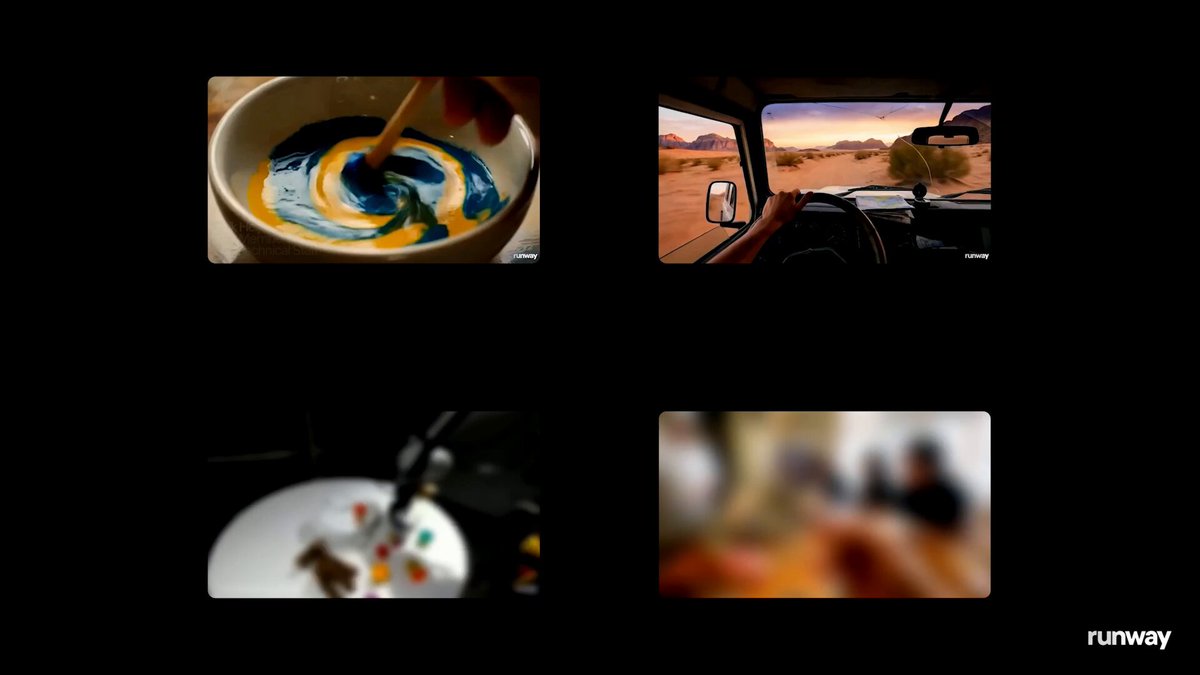
GWM Worlds 2, explained
Runway's latest general world model, built on its foundational audio-visual generation model.