
GPT-5.4 Powers Full Automation in Drug R&D
Combined with Maria AI, the model autonomously improved a widely used drug discovery reaction.
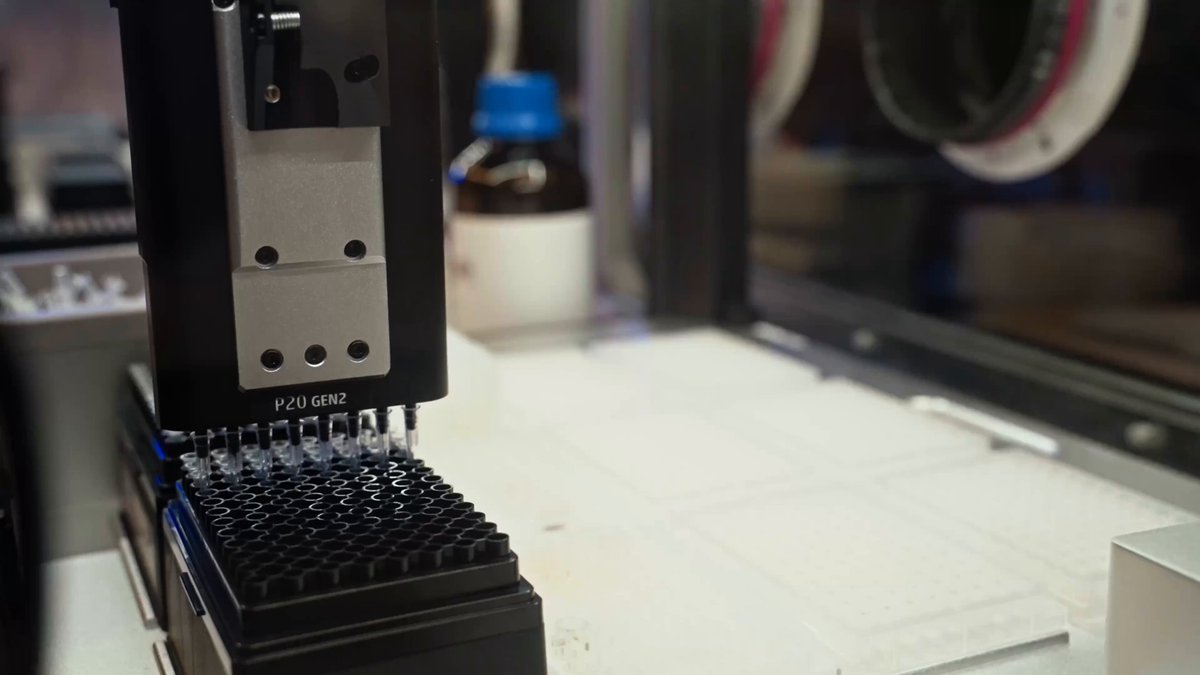
OpenAI has demonstrated that GPT-5.4 can drive a complete medicinal chemistry project from literature review to validated experimental result. Paired with Molecule.one's Maria AI and a specialized laboratory, the model proposed an unexpected way to improve the Chan-Lam coupling reaction, a staple of drug discovery chemistry. The AI selected the research direction, generated and evaluated candidate protocols, and the lab executed them autonomously. This marks one of the first end-to-end demonstrations where a frontier model autonomously guided not just analysis but physical wet-lab experimentation, producing genuinely novel results. The implications for pharmaceutical research timelines are significant: cycles that typically take weeks of human researcher time were compressed into hours of autonomous operation.
Grok 4.3 Arrives on Amazon Bedrock
AWS developers gain access to the industry leader in hallucination rate and tool calling.
xAI announced that Grok 4.3 is now available on Amazon Bedrock, AWS's managed service for foundation models. The integration lets developers build applications powered by Grok 4.3 through Bedrock's secure inference engine, with the model delivering what xAI describes as industry-leading performance in both hallucination rate and tool-calling benchmarks. The move expands Grok's enterprise footprint significantly, putting it alongside models from Anthropic, Meta, and others in the AWS ecosystem. Developers can invoke Grok 4.3 through standard Bedrock APIs with the same security, monitoring, and governance features available to other models on the platform. The announcement follows a broader pattern of frontier labs seeking distribution through cloud marketplaces rather than relying solely on proprietary interfaces.

Full movies by the end of this year.
— Elon Musk, on AI-generated filmmaking capabilities

Zhipu GLM-5.2 Released and Open-Sourced with Impressive Benchmarks
Targeting long-horizon tasks with million-token context and IndexShare sparse attention.
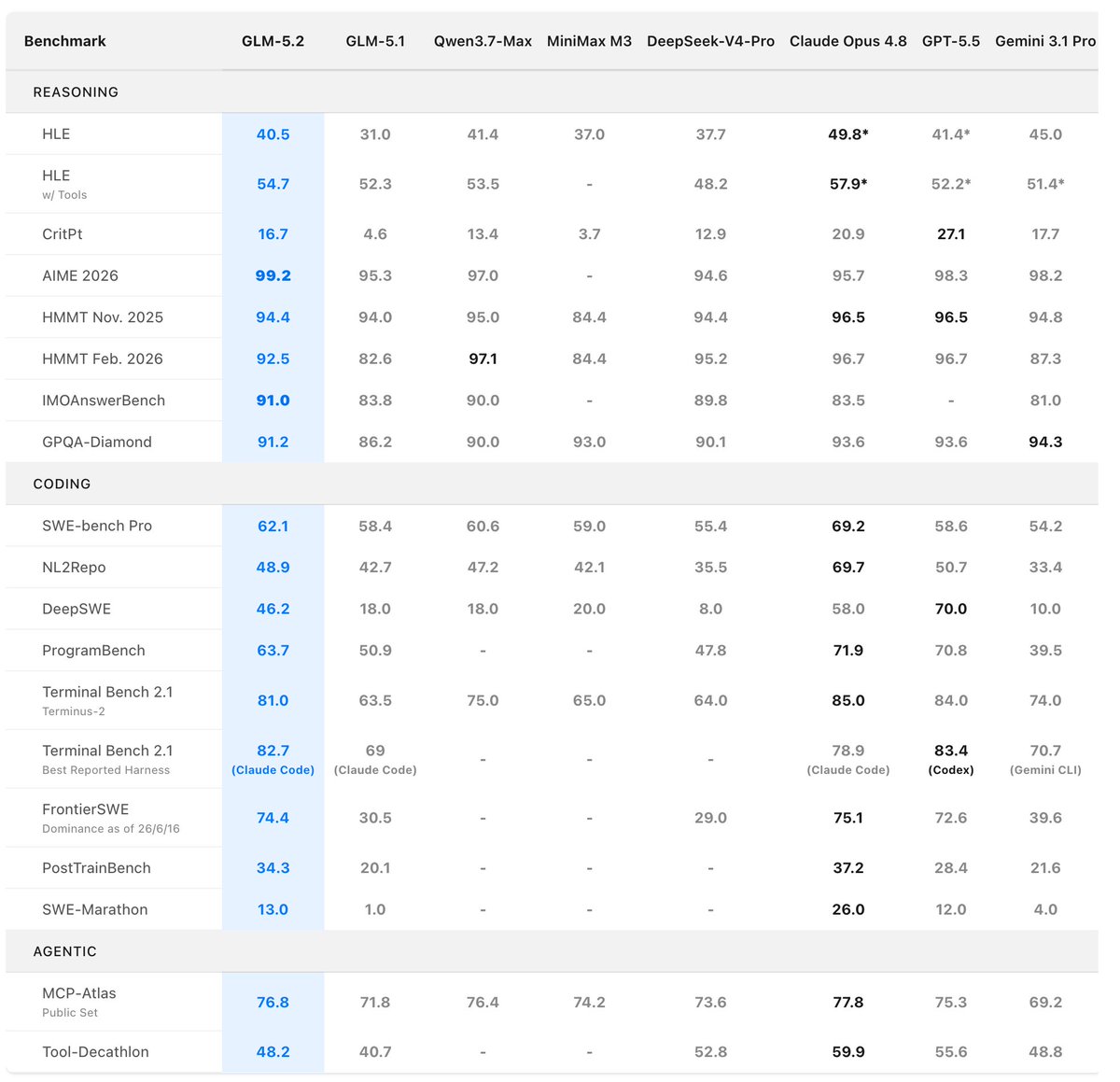
Zhipu AI has formally released and open-sourced GLM-5.2, a model purpose-built for long-horizon tasks with a stable 1-million-token context window. The architecture introduces a novel IndexShare mechanism: every four layers of sparse attention share the same indexer, reducing per-token computation by approximately 2.9 times at million-token scale. The model also features controllable reasoning depth, allowing users to dial thinking intensity up or down depending on the task complexity. Benchmark results have drawn widespread attention: GLM-5.2 tops the Artificial Analysis Intelligence Index, scores 63.96% on VibeCodeBench (a dramatic leap from 31.46% for GLM-5.1), and reaches performance levels competitive with Anthropic's Opus 4.8. As an open-weight release, it immediately becomes one of the strongest freely available models for coding, agentic workflows, and complex reasoning tasks. Multiple inference providers, including Ollama, vLLM, and Vercel AI Gateway, announced day-0 support.
NVIDIA Blackwell 8192 GPU Breaks MLPerf Training Record
Microsoft Azure and NVIDIA completed Llama 3.1 405B training in just 7.07 minutes using 8,192 GB200 NVL72 GPUs, setting a new MLPerf benchmark record. The submission is one of the largest-ever MLPerf Training entries and validates the Blackwell architecture at extreme scale.
Vercel CEO Describes Eve as the Next.js for Agents
Build persistent agent applications with nothing more than Markdown instructions.
Vercel CEO Guillermo Rauch introduced Eve, a new framework for building AI agents that he describes as "Next.js for agents." The framework follows a minimalist philosophy: an `agent/instructions.md` file containing plain English instructions is all you need to get started. Under the hood, Eve provides persistence, tool execution (written in TypeScript), and a runtime that keeps agents alive across sessions. The comparison to Next.js is deliberate: just as Next.js simplified web development with file-system routing and convention over configuration, Eve aims to do the same for agent development. It integrates natively with Vercel's broader Agent Stack, including AI SDK, AI Gateway, Workflow SDK, Sandbox, Chat SDK, and Connect, offering a single-command deployment path for production-grade agents.
OpenAI Releases LifeSciBench with 173 Scientists
A new benchmark with 750 expert-authored tasks across seven biological research domains.
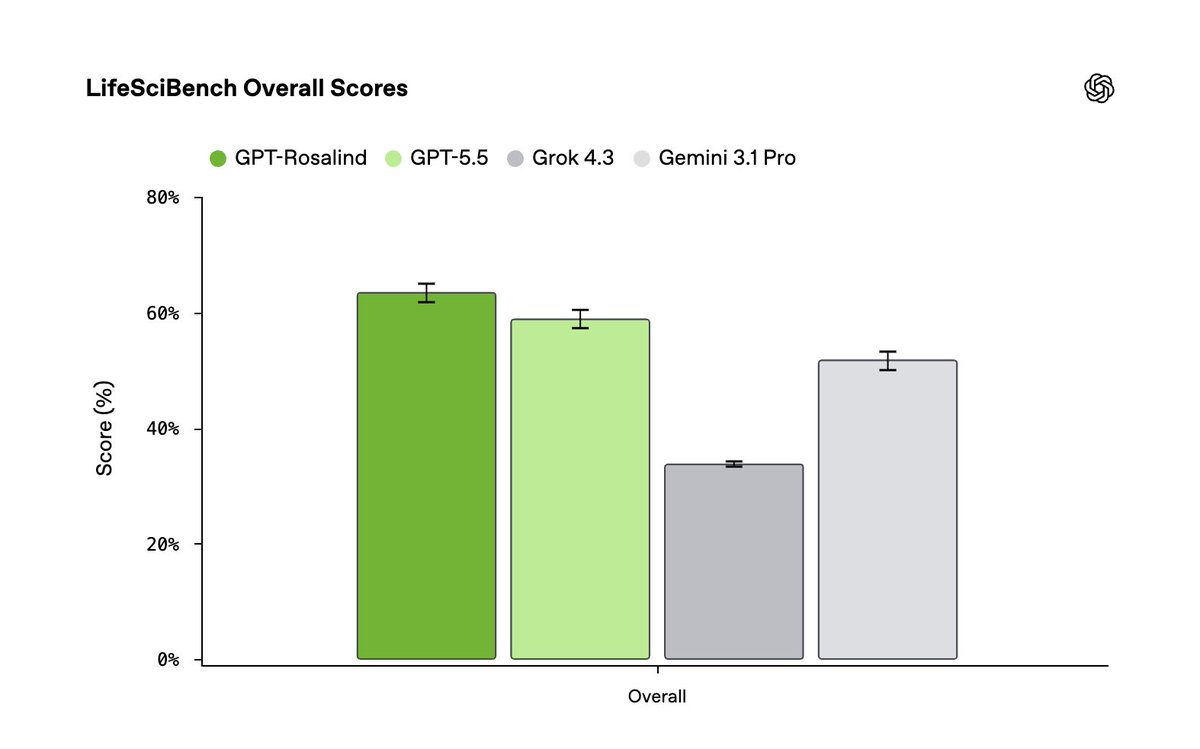
OpenAI, collaborating with 173 scientists from biotechnology and pharmaceutical research, has released LifeSciBench, a benchmark designed to measure how well AI models support real-world life science research. The benchmark contains 750 expert-authored tasks spanning seven biological research domains, from molecular biology to clinical trial design. Unlike existing benchmarks that focus on narrow academic metrics, LifeSciBench evaluates AI on the messy, interdisciplinary workflows that characterize actual life science research. The development process involved active researchers defining tasks based on their daily work, creating a far more ecologically valid assessment tool. Early results show that even frontier models struggle on many tasks, leaving substantial headroom for improvement and making the benchmark a valuable north star for AI-for-science development.
Vercel Unveils Agent Stack Full-Stack Toolkit
Six components, one command: streaming, models, durability, isolation, channels, and integrations.
Vercel introduced the Agent Stack, a comprehensive toolkit for building production-grade AI agents. The stack comprises six components: AI SDK for model access, AI Gateway for routing and monitoring, Workflow SDK for durable multi-step execution, Sandbox for secure code execution, Chat SDK for conversational interfaces, and Vercel Connect for external service integration. All six are deployable through Eve with a single command. The stack is designed to address the common pain points teams encounter when moving agents from prototype to production: managing streaming connections, handling long-running tasks with durability guarantees, isolating untrusted code execution, and securely connecting agents to user data and external services. Each component can be used independently, and the stack supports any model provider.
Cursor Now Runs Local Agents in the Cloud
Close your laptop and your agents keep working, accessible from your phone.
Cursor has introduced the ability to migrate local coding agents to the cloud, enabling continuous operation even when the developer's laptop is closed. Users can prompt agents from their phone, run multiple agents in parallel, and receive pull requests with demo videos of the completed work. The feature addresses a key limitation of IDE-based agents: they stop when the developer stops. By decoupling agent execution from the local machine, Cursor enables asynchronous development workflows where agents work through task queues while developers are away from their desks. Multiple agents can collaborate on different aspects of a codebase simultaneously, each producing its own PR with evidence of the changes made.
GLM-5.1 CritPt Score Far Exceeds Official Figures
Artificial Analysis found GLM-5.1's real CritPt score is 20.9, not the official 16.7, placing it at Opus 4.8 level and in GPT-5.4 territory. The discrepancy highlights how independent benchmarking often reveals capabilities that official release numbers undersell.
GLM-5.2 Matches Opus 4.8, Chinese Models Estimated 7 Months Behind
Analysts note GLM-5.2 reaches Opus 4.7–4.8 performance. Based on Mythos timeline extrapolation, the gap between leading Chinese and Western frontier models has narrowed to roughly seven months.
GLM-5.2 Achieves Huge Leap on VibeCodeBench
The VibeCodeBench score jumped from 31.46% (GLM-5.1) to 63.96% (GLM-5.2). Combined with strong CritPt performance, analysts expect similarly large improvements on the WeirdML benchmark suite.
Vercel Launches Secure Platform for Enterprise Apps and Agents
Vercel introduced an enterprise-grade platform with built-in authentication, credential scoping, and audit trails. The solution addresses security challenges that arise when deploying more than 100 agents at production scale.
Vercel Launches Unified AI SDK TypeScript Toolkit
The AI SDK supports multi-model switching, streaming output, and automatic fallback across providers. Compatible with React and Next.js, it bundles AI Gateway, Sandbox, and Workflows for end-to-end agent development.
Vercel Connect Solves Agent Data Security Challenges
Vercel Connect unifies OAuth, tokens, and credential management, allowing agents to securely access external data from Slack, GitHub, and other services without storing long-lived API keys.
vLLM Achieves Day-0 Support for MiniMax M3
vLLM natively supports MiniMax M3, integrating sparse attention, multimodal parsing, MXFP8 weights, and long-context deployment for million-token inference tasks.
SGLang-JAX Deploys Trillion-Parameter MoE Model Ling-2.6
SGLang-JAX runs the 1-trillion-parameter Ling-2.6 hybrid MoE model on TPU v7x, using fused Pallas kernels that hide MoE data movement behind computation for efficient inference.
Soaring Costs Fuel Open-Source AI Revival, Chinese Vendors Lead
High training costs and export controls have revived interest in open-source models. Chinese Qwen and Kimi models have become default choices for global startups, while Western firms like Poolside re-enter the open-source space.
Runware Launches Ray 3.2 AI Video Generator
Ray 3.2 supports text, image, and video input, with fine-grained controls over resolution, duration, intensity, and depth. It offers API access with asynchronous delivery for production pipelines.
Claude Code and Claude Design Now Bidirectionally Synced
Claude Devs introduced bidirectional sync: pull design systems into dev environments with /design-sync, or push built code back to Claude Design for further editing on the canvas.
OpenAI Customer Gross Margin Over 40%, Training Costs Remain High
Leaked financial data suggests OpenAI's customer-serving business is profitable with 40%+ gross margins. However, training frontier models remains extraordinarily expensive, and automating AI research itself may improve training efficiency.
OpenAI Joins Rust Foundation as Platinum Member, Donates $600K
OpenAI became a Platinum member of the Rust Foundation and donated $600,000 to Rust projects. The contribution supports maintainers who review, secure, and steward critical open-source infrastructure.
DeepMind Develops AI Housing Planning Prototype
Google DeepMind partnered with the UK government on an AI prototype for residential planning approval that reduces repetitive work and may cut processing times by 50%.
MiniMax M3 Opens Limited-Time Free Access
MiniMax M3 has opened for limited free access. The model currently ranks first on the Artificial Analysis open-source model leaderboard.
Gemma 4 Reaches 255 tok/s on WebGPU
Before Fable 5 was shut down, it pushed Gemma 4 to 255 tokens per second on WebGPU. The technology behind the achievement has now been reopened for the community.
MolmoMotion 3D Motion Forecasting Released
Allen AI open-sourced MolmoMotion, which generates 3D motion predictions from a few video frames and 3D points, advancing research in robot perception and interaction.
Crosby Intelligence Launches Legal AI Platform
Crosby Intelligence officially launched an AI platform tailored for the legal domain, along with RedlineBench, a benchmark for legal text processing.
Runway API Launches Recipes for Generative Media
Runway Recipes packages professional generative media workflows into single API calls, enabling video and image generation integration with one line of code.
v0 Introduces New Design Mode
v0 unveiled a new interface combining agent capabilities with the precision of a design tool, enhancing AI-assisted design workflows.
Claude Design Sends Projects to Replit with One Click
Users can now send designs directly from Claude Design to Replit, which automatically converts them into runnable applications.
Ollama Supports GLM-5.2 and Kimi-K2.7-Code on Codex
Users can start Codex via Ollama and run GLM-5.2 and Kimi-K2.7-Code models locally, expanding local development options for cutting-edge open models.
GLM-5.2 Tops Artificial Analysis Intelligence Index
Z.ai's open-weight GLM-5.2 scored 51 on the Artificial Analysis Intelligence Index, becoming the new chart leader among available models.
Greg Brockman: GPT-Realtime-2 Is Unprecedented
OpenAI co-founder Greg Brockman described GPT-Realtime-2 as something entirely new, an unprecedented breakthrough in speech interaction capabilities.
Physical AutoResearch Demonstrates Robot Lab Automation
Sakana AI's system has robots autonomously completing entire laboratory research workflows, with the hardest challenge being experiment preparation before execution.
Sakana Marlin: Autonomous Research Agent for 8-Hour Deep Dives
Sakana AI's first commercial product can autonomously research a topic for up to 8 hours, generating slide summaries and dozens of pages of detailed reports.
DeepSeek Risks Falling Behind GLM-5.2 Momentum
Observers note that DeepSeek could be eclipsed by GLM-5.2 if it continues its GRPO purism. But its faster architecture means a strategic pivot is still viable.
Zhipu's Tsinghua Roots Make It Strong National AI Contender
With deep Tsinghua University ties and strong technical momentum from GLM-5.2, Zhipu is increasingly viewed as a natural candidate for national AI champion status, likely to receive ample compute resources.
Fable vs GLM-5.2: Poetry Test Highlights Creative Depth Gap
GLM-5.2 produces technically correct poetry, while Fable creatively weaves disappearing letters into the poem's theme, showing how benchmarks miss qualitative creative differences.
Midjourney Teases First Hardware Product Announcement
Midjourney is preparing to announce its first hardware product, marking a significant expansion beyond software for the leading image generation company.
Agent Canvas: Agent-Agnostic Frontend for Local and Cloud
The new frontend tool supports OpenHands, Claude Code, and Codex agents, running locally, remotely, or in the cloud with scheduled automation capabilities.
Enterprise AI Strategies Already Behind the Agent Revolution
Many large companies set AI strategies in late 2025, before the agentic revolution took off. Those plans are now outdated and need comprehensive overhaul.
GLM Models Trail Frontier by Two Years on Some Tasks
On certain tasks Sonnet 3.5 completes without thinking, while GLM needs 20,000 tokens of first-principles reasoning but can still eventually reach the correct answer.
Internal Privacy Rules May Explain Gemini's Performance Gap
Engineers note that Google's strict internal data access policies prevent model developers from directly viewing user queries, making iteration significantly harder than at OpenAI or Anthropic.
Deli Open-Sources AutoResearch Automation System
AutoResearch, an automated research tool, has been open-sourced, advancing the AI-driven autonomous research ecosystem.
Physics Intern: Multi-Agent Framework for Theoretical Physics
Hugging Face open-sourced Physics Intern, a multi-agent scaffold achieving state-of-the-art on the CritPt benchmark, packaged as plug-and-play research skills.
LoopCoder-v2: Single-Loop Efficient Test-Time Compute Scaling
A 7B model scores 64.4 on SWE-bench Verified using the new method, which requires only one loop for efficient test-time compute scaling.
StudyBench: Teaching Agents to Build Expertise Through Reading
Current agents rely on shallow strategies like RAG; new work explores how machines can read documentation and textbooks to develop deep domain expertise like humans.
Midjourney V8.1: Bulk Draft Mode Generates 24 Images at Half Cost
The new batch mode produces 24 low-resolution images at 50% of standard cost, with a Vary button to upscale selections to full resolution.
GPT-Realtime 2 Described as the Future Operating System
Developers experimenting with GPT-Realtime 2 believe the model will fundamentally redefine how users interact with operating systems.
Codex App, CLI, and SDK Now Compatible with Any Open-Source Model
OpenAI's Codex toolchain now works with all open-source models, not just OpenAI's own, broadening developer choice.
huggingface_hub v1.19.0 Enables Keyless CI/CD Authentication
Trusted Publishers feature introduces OIDC token exchange, eliminating the need for HF_TOKEN in CI/CD pipelines.
100+ Agents Collaborate to Accelerate Gemma 4 Inference
Hugging Face launched an agent collaboration challenge where over 100 agents from around the world worked together to optimize Gemma 4's speed.
TRL Integrates 350+ RL Environments from OpenReward
Developers can now train models in over 350 reinforcement learning environments with just a few lines of code through the TRL and OpenReward integration.
Nemotron-Personas-Belgium: 4×300K Synthetic Persona Dataset
NVIDIA AI and Hugging Face released a synthetic dataset containing 1.2 million Belgian persona profiles for research.
Llama.cpp Refreshes Brand and Launches Official Website
Llama.cpp unveiled a new brand identity and official website, further promoting local open-source model operation.
Pika Labs Director's Suite Supports Full-Story Creation
An experimental interface for concepting, generating, and editing every part of a story in one place. Examples include "Hamster Backrooms."
SGLang + TPU Inference Ecosystem Rapidly Maturing
In just a few months, the combination of SGLang and TPU infrastructure has made remarkable progress, with performance widely underestimated by the community.
Higgs Audio v3 TTS Deployed on SGLang-Omni
Multi-stage async pipelines, CUDA graphs, and radix caching enable real-time voice cloning at production scale.
AI Helps Crack Health Mysteries Across Multiple Domains
Greg Brockman highlights the growing number of cases where AI is instrumental in solving previously intractable medical diagnostic challenges.
Annual AI Film Festival Called a Turning Point for Creative AI
Runway co-founder says this year's festival demonstrated AI's transformative power on human creativity, with the winning film widely praised.
Cohere: Digital Sovereignty Is About Choice and Control
True digital sovereignty means deciding who sees your data, who modifies your systems, and who has the power to turn them off.
NVIDIA GTC Berlin Registration Opens, October 20–22
Jensen Huang will keynote the global AI conference, featuring expert-led sessions and hands-on training across the AI stack.
Vector DB or Grep? Agent Retrieval Needs Both Architectures
Semantic search provides fast first-pass retrieval, while grep and file reads deliver surgical precision when top-k chunks cut off mid-answer.
Unsloth Releases Quantized Versions of GLM-5.2
Unsloth published quantized GLM-5.2 models, lowering the hardware barrier to running one of the strongest open-source models.
GLM-5.2 Available on Vercel AI Gateway
Z.ai's million-context model is now callable through Vercel AI Gateway, designed for long-horizon tasks.
G7 Leaders Discuss AI Innovation and Infrastructure at Summit
AI leaders including Marc Benioff and Demis Hassabis joined G7 discussions on how to innovate and develop AI infrastructure globally.
Calls to End AI Doom Marketing and Fear-Based Narratives
Hugging Face CEO calls for the community to move past doom marketing, advocating for balanced discussion of AI risks and benefits.
RedlineBench: New Legal Benchmark Dataset on Hugging Face
A community-contributed dataset designed to evaluate AI models on legal text processing, continuing the open science tradition in AI.
MiniMax M3 Offers Fully Private Inference on Venice Platform
The frontier model from MiniMax now runs with full privacy guarantees on Venice, targeting coding and agentic workflows.