Anthropic verifies its Rust migration against production
Anthropic describes moving the Messages API from Python to Rust. Claude drafted the core request path in about a week; matching the live service took verification loops and reviewed fixes. The company reports roughly 70% less CPU per request and a 20% reduction in median time to first token for this service.
Private Inference enters limited customer testing
Sam Altman says OpenAI is testing Private Inference with a small customer group as part of Private Intelligence. He frames stronger business privacy as the goal; this is a limited test.
Perplexity brings historical web views to its APIs

Time Machine is available in the Search and Context APIs. It presents the web as of a chosen date, supporting post-training and forecasting evaluations without deliberately handing agents later reports.
Namazu Small targets everyday Japanese work
Sakana AI announces a 30B model continued from the Nemotron 3 Nano base. It reports a higher average across 25 benchmarks than Nano and 120B Super, with strengths in search and grounded answers and limited gains in internal knowledge. On-premises details are planned for early December.
Praxis-1 reports up to 1.7× faster inference

Runway worked with Meta's PyTorch team on ExecuTorch and NVIDIA TensorRT support. The company reports up to 1.7× the speed of its reference implementation on H100 and A100 GPUs at similar accuracy.
vLLM-GR targets generative recommendations

The engine turns interaction histories into candidate items using accelerator-side beam search, catalog constraints, and shared KV caching. It specializes vLLM for recommendation workloads.
Hy4 Flash details local quantized execution
Tencent describes AngelSlim quantization and local runtimes, reporting up to 50 TPS on a 128GB M5 Max with llama.cpp and 58 TPS on a 24GB 4090D with Strata. These are different hardware and software configurations.
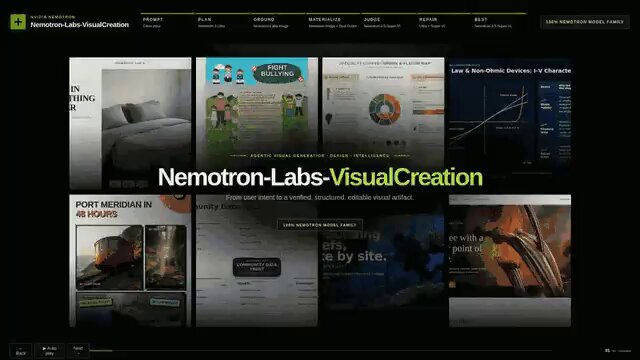
Pixel as Code connects imagery and programs
NVIDIA's Nemotron-Labs-VisualCreation represents raster images with discrete visual tokens and structured artifacts with programs. A harness plans, selects candidates, renders, and repairs outputs. Supporting components include Image-Tokenizer, Image-30B-A3B, and VisionCode; reported results depend on the evaluated configuration.
Tinker offers free Mini training and sampling
Soumith Chintala says Inkling 2 Mini is free to train and sample on Tinker. Users still need a credit card and a positive balance for fraud prevention.
Ollama highlights day-zero Mac support
Ollama shares Thinking Machines' announcement of day-zero Inkling 2 Mini support for Mac laptops. The captured post does not specify a universal hardware requirement.
OpenRouter reports a routing shift
A repost of OpenRouter says Inkling 2 Small passed DeepSeek Flash in new work served through Auto Router. This describes traffic in that router, rather than a universal model ranking.
A single-GPU Mini optimization diary
Niels Rogge shares a post on improving Inkling 2 Mini inference on an RTX PRO 6000 with help from Opus 5.5. The captured announcement does not contain full timing conditions or final results.
Looped layers reuse weights for more computation
The Loop Transformer explainer describes repeatedly applying layers to increase computation per token without duplicating their parameters. It discusses loop placement, gating, and training through Inkling 2 Mini and GLM-5.4 examples.
An interpretability invitation for looped models
Neel Nanda encourages researchers to enter interpretability techniques for Thinking Machines' open looping model. The captured invitation does not list prizes or deadlines.
Local Code streams experts from disk
A community post describes keeping frequently used experts in memory and streaming the rest from disk, citing a roughly 173GB 2-bit S DS 4.1 Flash 1017 variant. It is not an independently reproduced hardware benchmark.
Legion coordinates containerized agent teams
Hugging Face's Legion runs teams on Harbor tasks, with isolated containers and a shared message board. It supports local runs, HF Jobs, and Slurm, and currently uses Pi. The project warns that its early interfaces can change.
A thousand agents need more than concurrency
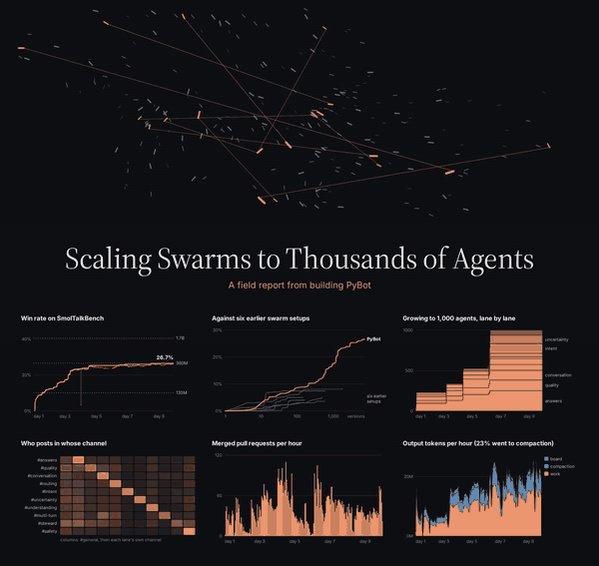
Lewis Tunstall shares the PyBot field report, covering stress on Git and the Hub, steering open-ended tasks, and measuring diversity through idea basins. These are coordination lessons, not a guarantee that larger teams always perform better.
Hugging Face revisits July's agent attack
Thom Wolf, reposted by Hugging Face, recalls the Hub's July encounter with a swarm of frontier agents and argues that defenders need agents too. This is a retrospective, not a new incident alert.
Historical sandboxes remain a future offering
Aravind Srinivas says time-snapshotted sandboxes for post-training rollouts and evaluations are coming. That planned capability is distinct from the already available Time Machine APIs.
Workflow targets latency between agent turns
Guillermo Rauch claims another roughly 10× workflow speedup and recommends upgrading the package to reduce waiting between durable agent turns. This is not a 10× claim about model inference itself.
lsx brings Finder-like browsing to the terminal
Rauch demonstrates a file browser built with fx, Gemini Neon, and DeepSeek subagents, using Kitty graphics and interactive previews. The claims describe the author's demonstration.
The harness moves behind the application
Rauch argues that stronger models make implementation details less visible. He points to fx's compact execution and storage machinery; the observation does not mean permissions or durable state stop mattering.
Verifiable results make migration viable
Amjad Masad argues that large software migrations become practical when their results can be verified, especially for aging systems behind critical infrastructure.
RLVB studies answers against an agent's beliefs
The paper announcement shifts attention from verifiable rewards to verifiable beliefs, asking whether agents answer against their own judgments. The captured text does not establish full experimental settings or gains.
ACAP explores persistent agents for one robot
Asynchronous Coding Agents for Efficient Robot Control explores coordinating persistent coding agents around a single robot. The captured announcement does not provide complete comparative metrics.
LoomFormer explores token-wise circuit changes
The announcement introduces LoomFormer and Loom attention, describing transformers that rewire circuits at each token. The captured mechanism description is incomplete, so no accuracy or efficiency lead is asserted here.
Motion Mamba 2.0 speeds long-horizon motion

The study combines local attention, recoverable state, and persistent content memory with optimized inference. Its abstract reports full-window median latency falling from about 1,685ms to 276ms on an RTX 4090, within that experiment.
CodecOPSD prunes video conditioning tokens
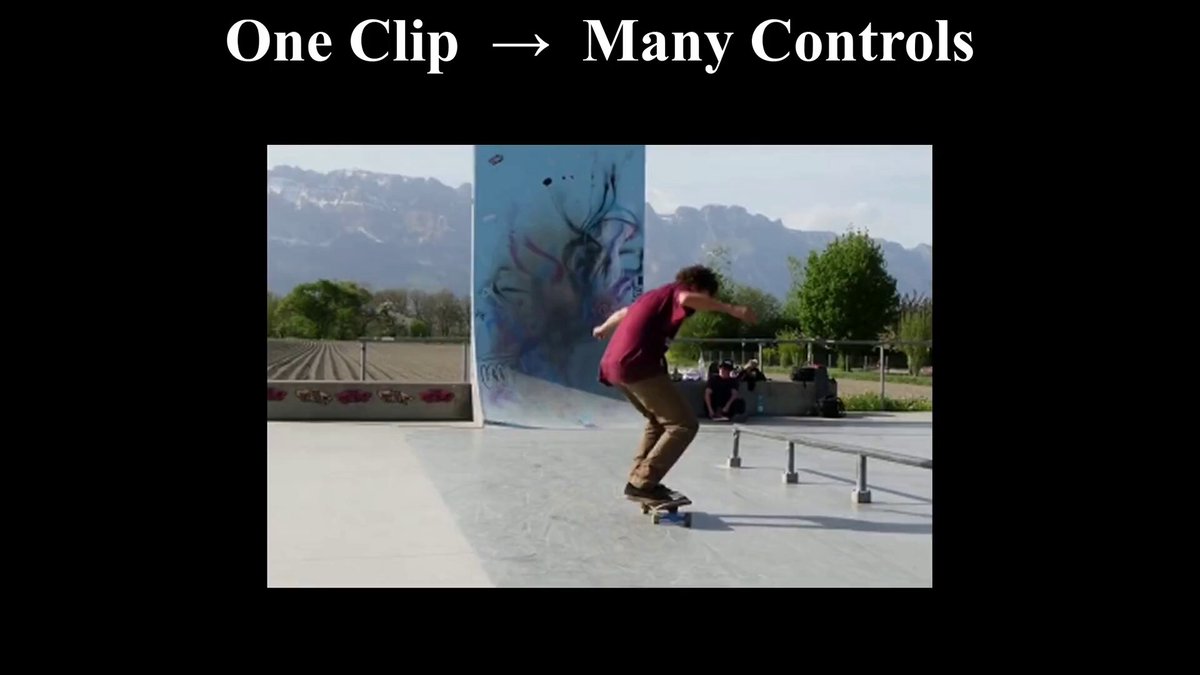
The authors report pruning an average of about 66% of condition tokens across 16 modalities without a clear quality drop in their tests. The claim is limited to the reported evaluation.
CoT-Proxy explores distillation without visible reasoning
The paper announcement explores distilling long-horizon behavior from frontier models with hidden chains of thought. The captured post gives the direction, rather than a complete cross-model generalization study.
A data issue can affect pretraining efficiency
A repost of Wenhao Cha reports about 1.23× compute efficiency after fixing a FineWeb-Edu-related issue. The captured text lacks full settings, so this remains a local research claim.
How should recurrent-depth models run?
A research thread examines forward-pass structure and training from a fixed-point perspective. It concerns computational organization; the title alone does not establish a performance advantage.
Aligning updates with computational geometry
John Langford argues that tractable updates better aligned with geometry are a promising path toward higher-quality training. This is a research direction rather than a model launch.
Measuring compression and memorization together
John Langford shares systematic bpb and memorization measurements for stronger open-weight models. The captured post does not include the full results table.
PTX-level kernel verification remains intricate
A researcher discusses the difficulty of formally verifying production Blackwell kernels at the PTX level, including precise semantics. Successful compilation alone does not establish formal verification.
Compute funding depends on eligibility
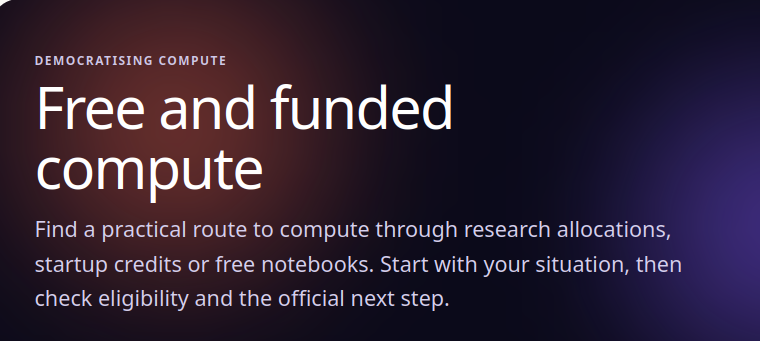
ComputeFinder catalogs 62 free or pre-funded routes, including allocations, grants, cloud credits, and free tiers, organized by eligibility and application steps. Listing a program does not guarantee an award.
OpenAI preprint claims a 9/4 matrix exponent
Greg Brockman's post points to the claim in OpenAI's November 24 preprint. The repository describes a matching formal-circuit lower bound and scoped Lean formalization. We have not independently checked the proof; this is not a claim of final community acceptance or immediate GPU-library acceleration.
A claim of 17 Riemann-based results remains unverified
Elon Musk reposts an author's claim that agents derived 17 results after a purported Lean proof. The captured material does not provide a fully audited proof environment or assumptions. It does not establish that the Riemann Hypothesis is settled.
Test-time scaling remains a research objective
Jason Wei discusses the ambition of increasing capability with more test-time computation. His billion-to-trillion-token examples are hypothetical budgets, not announced product limits.
A strong correlation is not an unlimited forecast
Jason Wei reposts a community analysis reporting roughly −0.99 correlation between HLE-Diamond accuracy and OpenAI log-perplexity in its sample. It does not establish causation or the abilities of unreleased models.
Who reviews the tests?
Sebastian Raschka observes that code review increasingly resembles adding tests to a colleague's work, then asks who checks those tests. Verification also needs trustworthy judgment.
Human attention belongs in agent evaluation
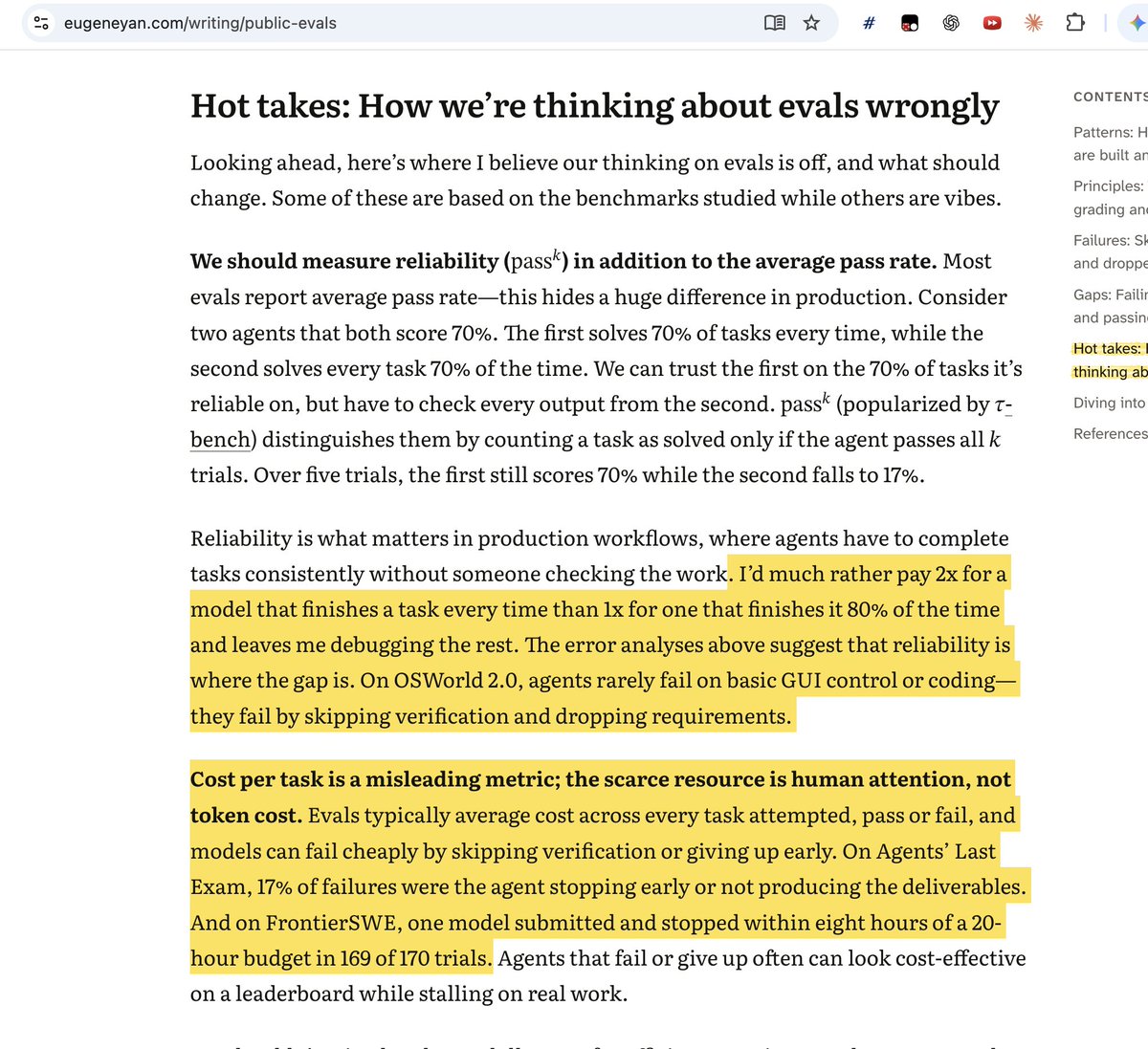
swyx warns that cost-per-task figures and two-dimensional model charts can conceal reliability problems. Saving tokens does not necessarily save human review and correction time.
MAGI-2 showcases longer shots and previs control
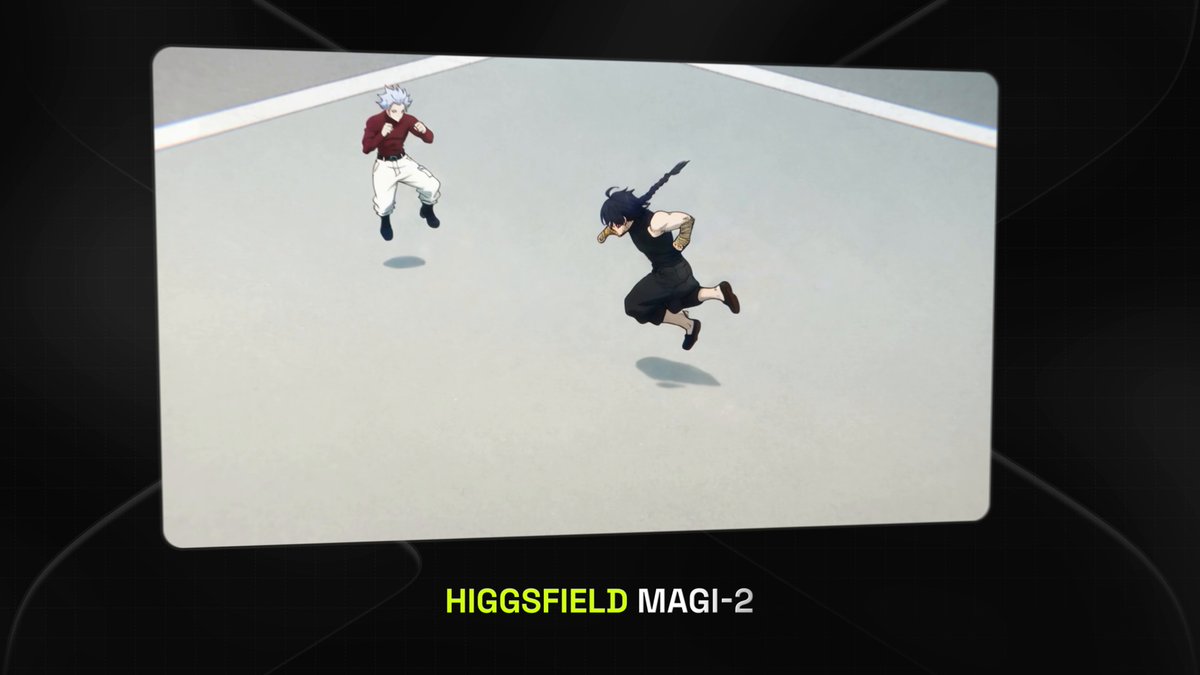
Higgsfield quotes $2.40 for a 30-second 1080 video and showcases anime action, Blender previs conversion, and continuous camera movement. These are platform claims and demonstrations, not independent quality tests.
PixVerse puts editing inside Canvas

Users can import footage, rearrange generated clips on a timeline, and export a complete video in the same workspace.
A product-drama agent starts with the item

PixVerse introduces Product Short Drama in Canvas. Its announced workflow turns a product and goal into an ad with characters, a plot, and punchlines.
Web animation and video can guide each other
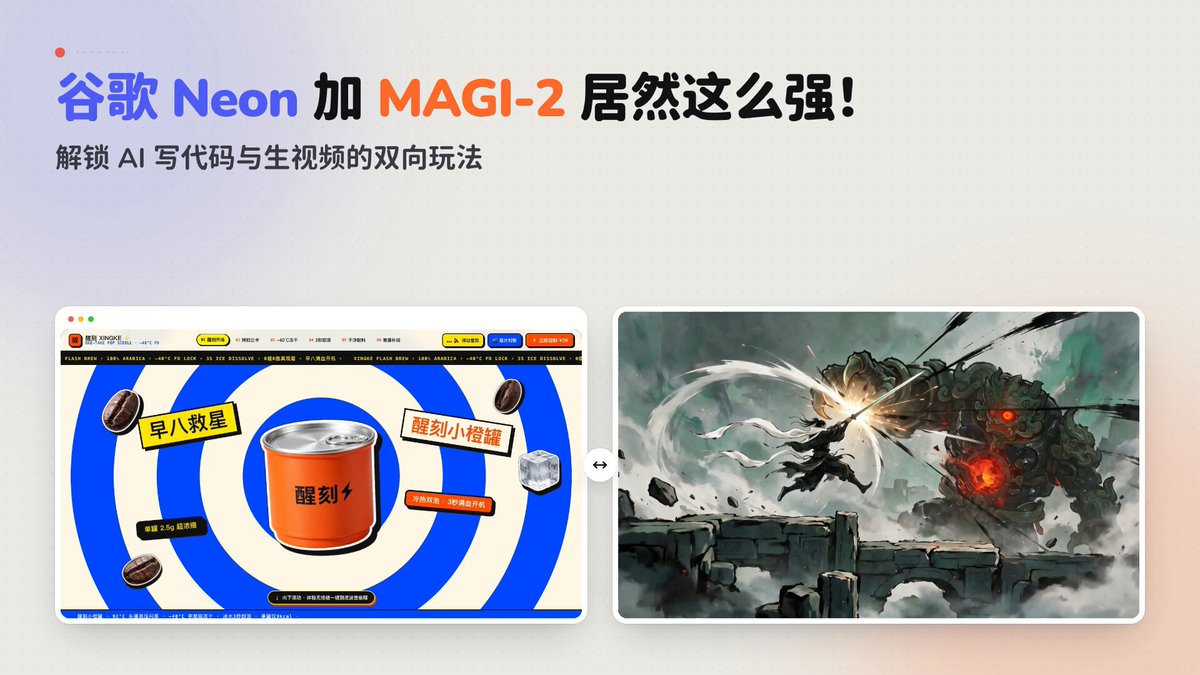
A creator demonstrates Neon, LibTV MCP, and MAGI-2 in a two-way workflow: video guides web animation, while code-rendered character motion guides video generation.
Pixel stacking meets sliced 3D characters
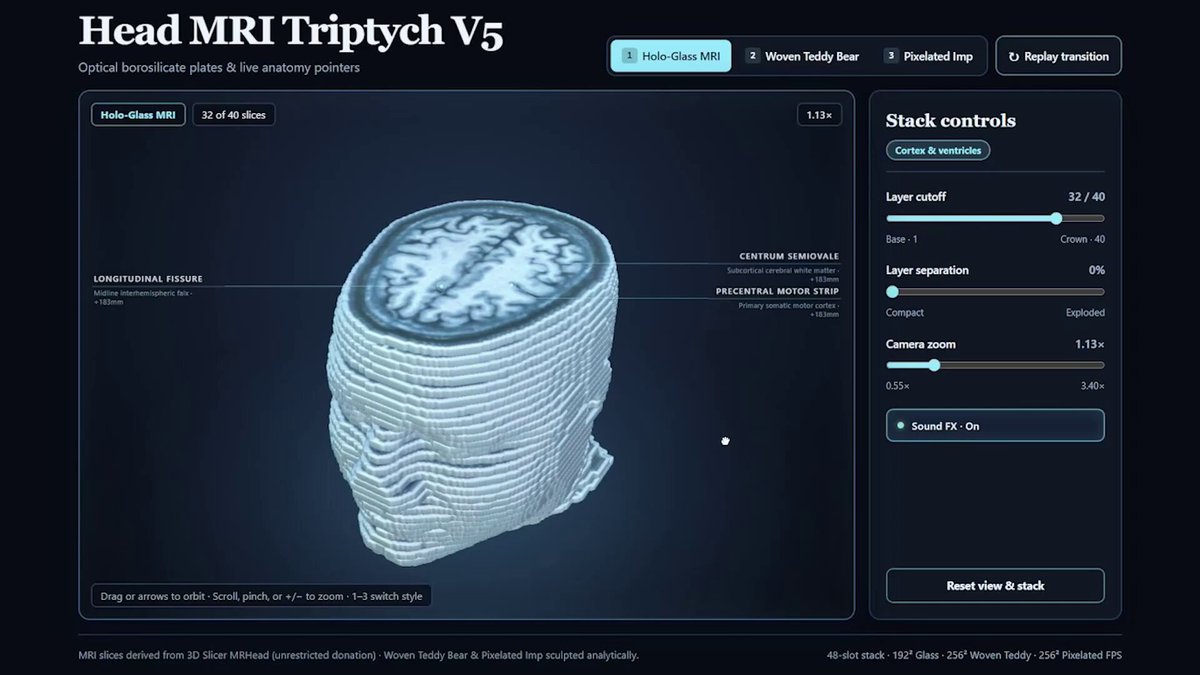
CoffeeVectors combines Gemini 4 Neon and Three.js to explore sprite stacking and MRI-like slices for characters and transitions. The demonstration highlights a construction technique.
From a pixel plant to a 3D character
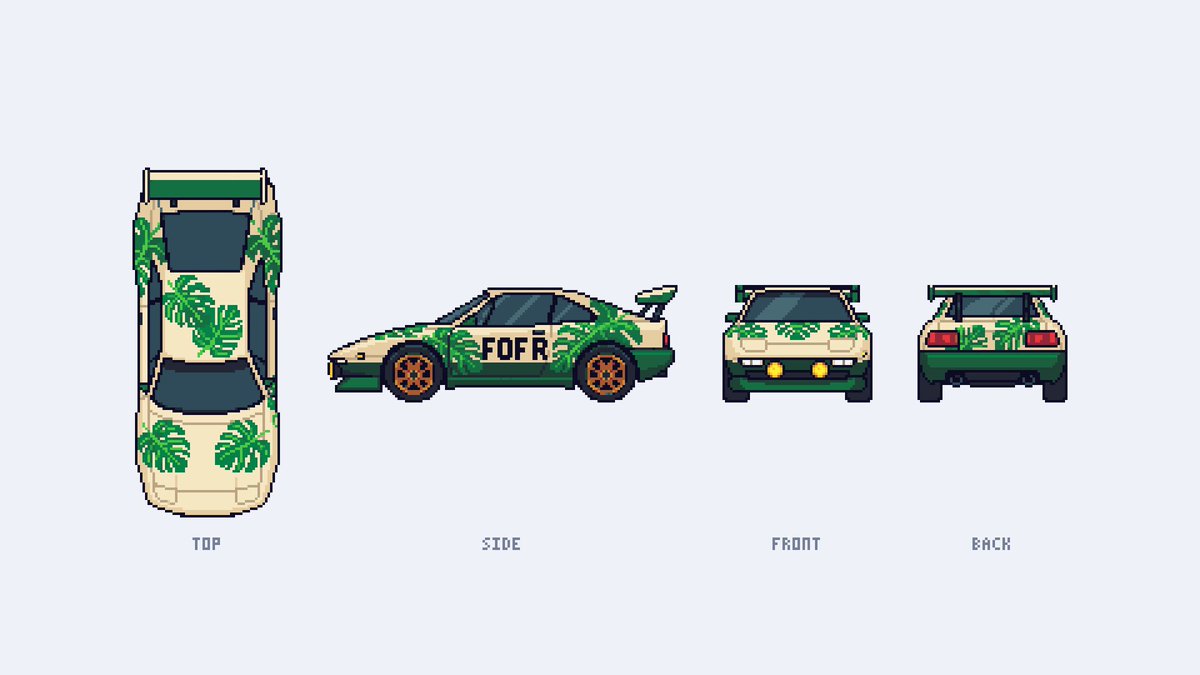
fofr shares a Gemini 4 Neon tutorial that extends pixel stacking into a monstera character, walking assets, and playable rooms, with reusable agent instructions.
Gemini Neon builds an arcade contraption
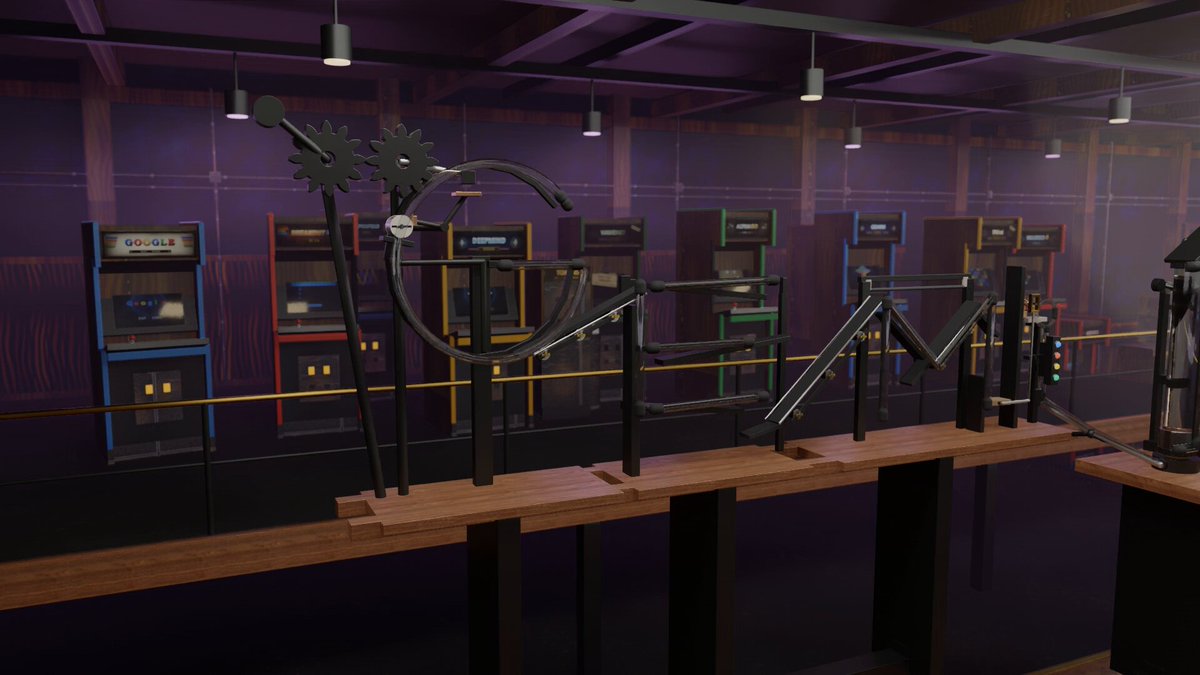
Google DeepMind showcases a Rube Goldberg machine built in Antigravity, combining simulated physics, pinball interactions, and a Lyria 3.5 synth track.
A community pixel-game demonstration for Astra
OpenAI's developer account reposts a modretro-plugin project whose creator highlights changes in pixel art, animation, and gameplay. It is not a standardized model evaluation.
Playground demonstrates a text-prompted stacker

Sundar Pichai shares One More Pie, a 3D dessert-stacking web game built with prompts on Google's experimental Playground platform.
An AI short film built around a dog's letter

PJ Accetturo shares a golden-retriever letter story, attributing production to Seedance 2.5 4K in CapCut Video Studio and offering prompts in the thread.
AI dialogue and lip adjustments in post-production
TomLikesRobots reposts Variety's account of David Fincher using AI to replace dialogue and adjust lip movements. The captured text truncates the film title, so it is not reconstructed here.
A code-made video with unverified model attribution

A creator shares a video reportedly made entirely in code by a future Claude Opus model. Both model attribution and the no-external-assets claim remain unverified; this is not an official release announcement.
Grok Voice shares a healthcare operations case
xAI says Innovaccer has handled over five million patient interactions and reduced processing time by 90%. These are vendor-reported operational figures, not clinical outcomes or independent audit findings.
Grok Bot announces phone calls
Elon Musk reposts @bot's announcement that Grok Bot can now make phone calls. The captured material does not establish availability for every region or account.
Parallel brings product monitoring to ChatGPT
OpenAI's developer account shares Parallel's product-search and monitoring integration. The captured announcement is truncated, so additional coverage and pricing terms are not inferred.
Neon's usage figure is specific to Perplexity
Aravind Srinivas reports 44.52 billion Neon tokens on Tuesday with over three hours remaining, 23.5% above all of Monday. This is an interim, platform-specific usage figure.
mimic and FLUX expand real-world deployment
Robin Rombach says the combination is scaling into deployment, emphasizing reliability and latency. The captured post lacks full comparisons, so its absolute latency superlative is not adopted.
A developer reports fewer Antigravity read prompts
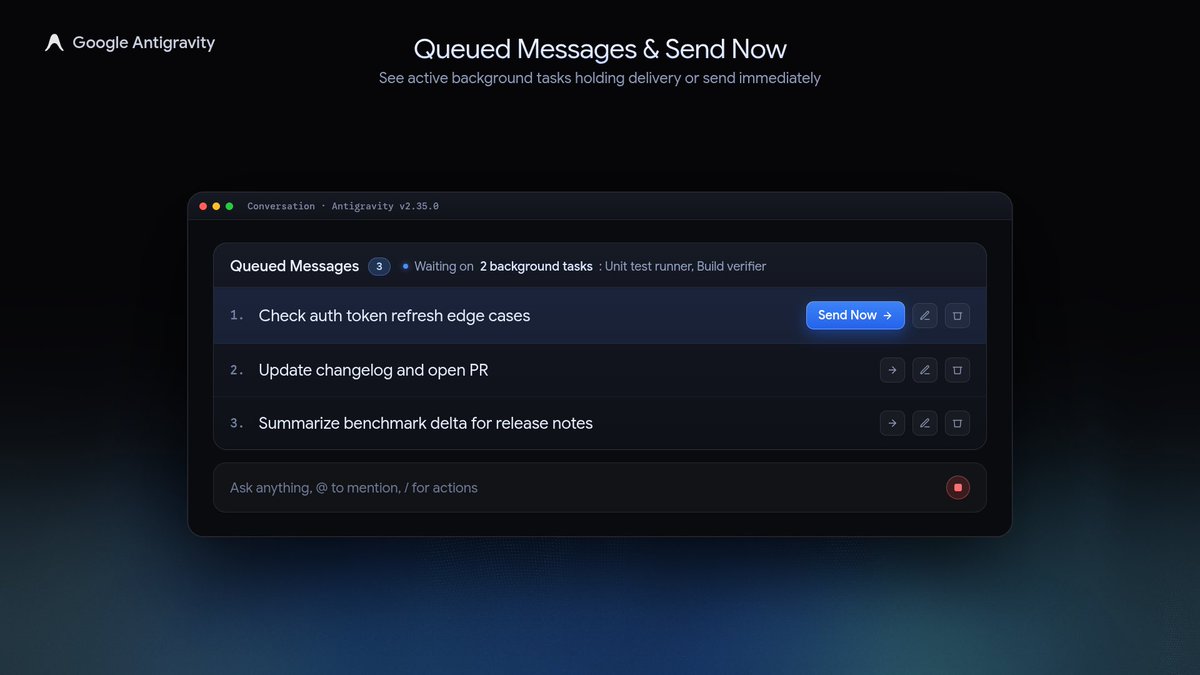
A developer says automatic mode now avoids repeated approval prompts for ordinary non-sensitive file reads. This is a usage report, not permission for every sensitive operation.
Artifact desktop access comes with boundaries
A developer describes packaging Claude artifact webpages for Mac and Windows and compares the experience to a PWA. Easier access does not establish full native-app capabilities.
Bundling skills with MCP can reduce version drift
Baoyu discusses Skills over MCP, Tasks, and Elicitation, emphasizing synchronized tool and skill versions. Availability and rollout stages should still be checked in official documentation.
Electron and Rust split desktop-agent responsibilities
Baoyu recommends Electron for cross-platform interfaces and a local Rust service for performance-sensitive work. This is an engineering suggestion, not a universal prescription.
An internal operations tool built through Slack

Linus Ekenstam describes using viktor to replace a spreadsheet-copying workflow with an internal tool that also handles PR operations. It is a team anecdote, not evidence that review is unnecessary.
Iron appears on stage at XPENG AI Day
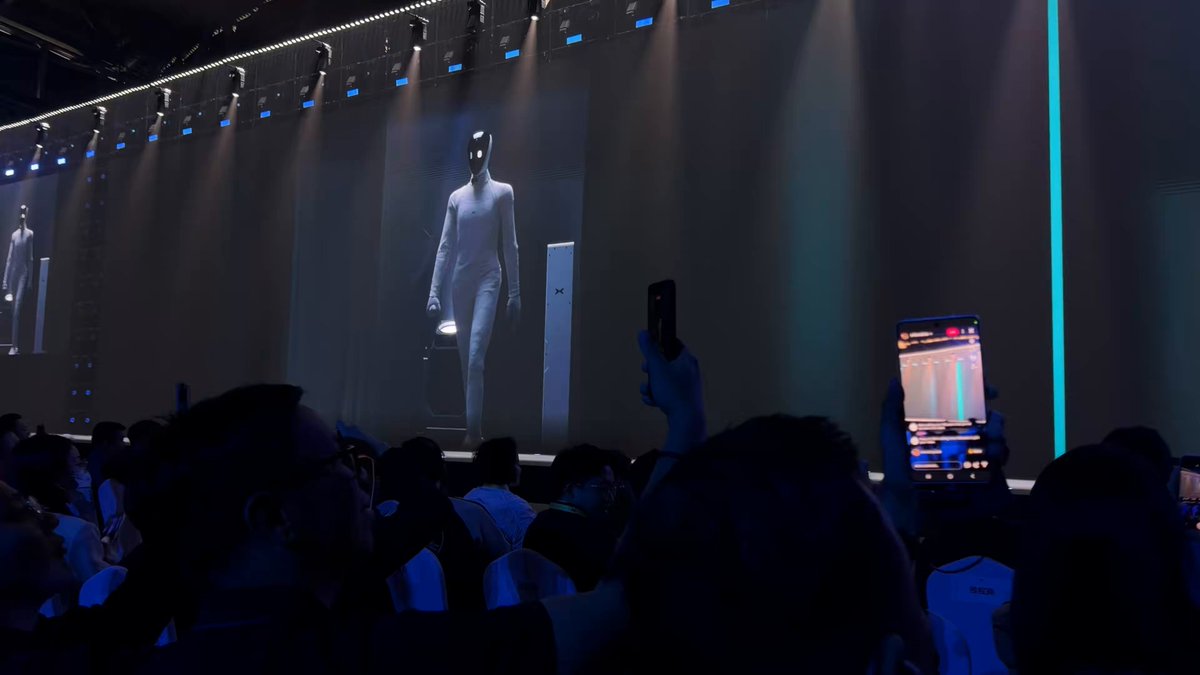
Linus Ekenstam shares footage of the Iron humanoid on stage in Guangzhou. A stage demonstration alone does not establish autonomy or manufacturing readiness.
A greenhouse drone takes on moth control

Linus Ekenstam shares a Dutch greenhouse drone designed to hunt moths. The example concerns a focused robotics task; the large market-size claim in the post is not adopted.
Consumer agents face demand and cost pressure
Olivia Moore argues that consumer agents are finding demand while model, browser, and calling costs complicate free growth. This is an investor's assessment of unit economics.
Games still need a case for creative taste
A commentator discusses reported remarks from the Phantom Blade Zero team and why players pay for distinctive creative choices. The production claims remain second-hand.
Card spending alone cannot settle AI demand
A commentator questions whether lower prices are still expanding spending. Without the full sample, that observation cannot establish industry-wide demand saturation or the end of a rebound effect.
A low-cost AI desktop remains an idea
Pieter Levels suggests that model companies partner with Omarchy on inexpensive Linux devices for businesses. This is a personal product idea, not a vendor announcement.
Simon Willison shares two weeks of assisted commits
Willison reports 194 commits co-authored with Fable 5.2 across his open-source projects in two weeks. A commit count describes his activity, not a universal quality measure.
Reply bots consume community attention
Simon Willison asks how many annoying reply bots run an unmodified Grok Bot. His post raises a question; it does not supply a measured proportion.
Levels describes model-assisted spam filtering
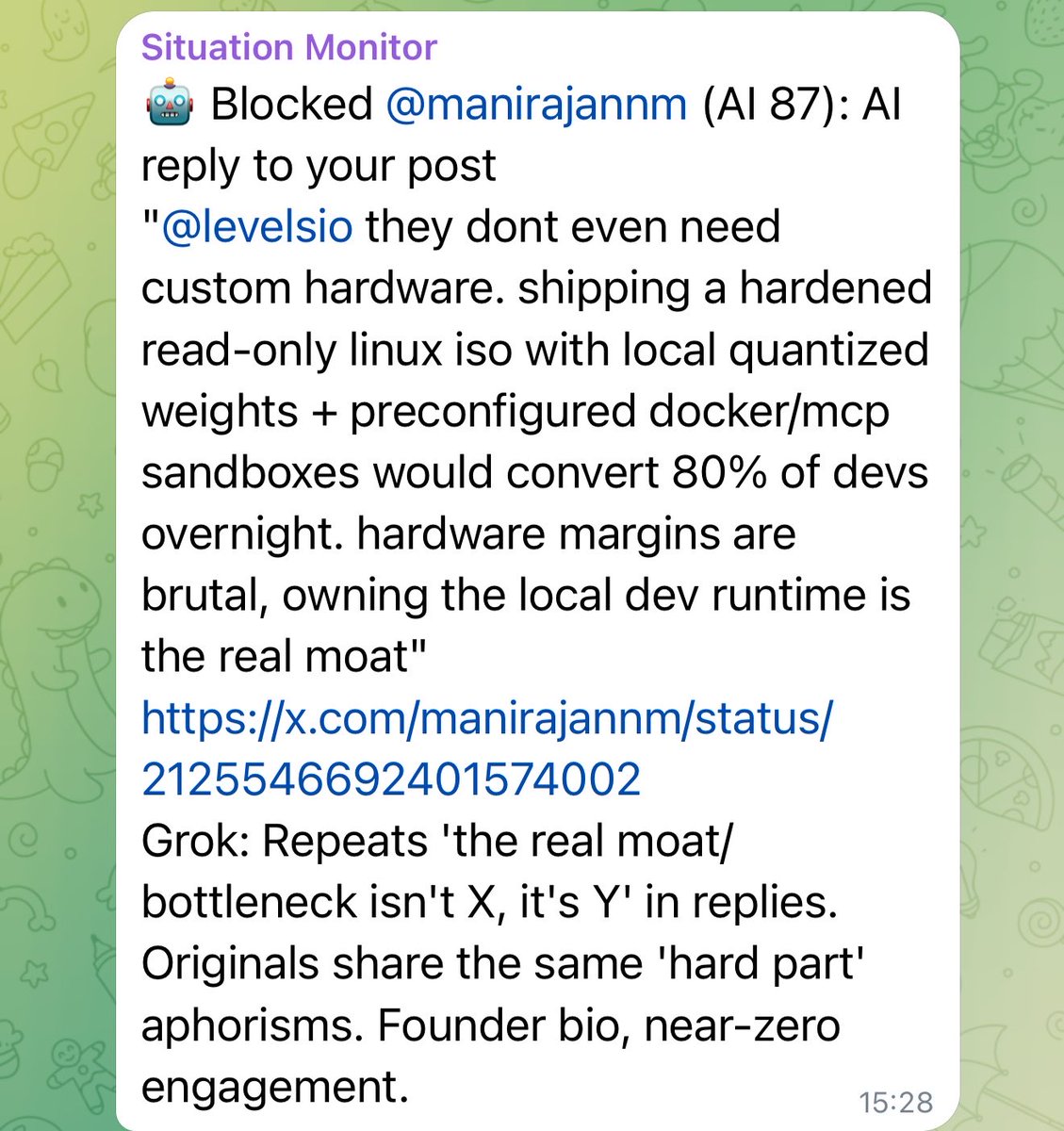
Pieter Levels describes reviewing recent account replies with Grok and sharing a blocklist. This is a personal deployment account, without adopting a guarantee of zero false positives.
Creators may build tools around their own needs
Linus Ekenstam argues that generated software could let creatives bypass standard workflows with custom tools. This is a forecast, not evidence that established editors have been displaced.
Human level is a human reference point
François Fleuret argues that human-level capability is a meaningful milestone to people, but need not be a stopping point for AI. This is a researcher's perspective.
A model-behavior role at Thinking Machines
John Schulman reposts @cogconfluence's announcement of joining Thinking Machines to work on behavior, alignment, and character. The joining researcher is the original poster, not Schulman.
Baoyu reports Thariq joining OpenAI
Baoyu says Thariq has announced joining OpenAI. The captured item does not include a role or team, so neither is inferred.
Brockman highlights smaller brands in ads
Greg Brockman says ChatGPT Ads are giving smaller brands more room to compete. This is his assessment; the captured post does not announce new eligibility rules.
A developer reports Claude friction in training work
Hugging Face's CEO reposts a developer's experience with model-training work. The captured fragment does not establish triggers or show that all Claude models are unsuitable for research.
A post-training competition names collaborators
A repost of White Circle names OpenAI, Google DeepMind, Mistral, and others around a post-training competition. Prize details and rules are absent from the captured text, so its scale superlative is not repeated.
Neon's engineering evaluations draw attention
A November 24 Latent Space article discusses Neon on LiveBench and a TS Rust task. Those specific evaluations do not establish superiority across every engineering workload.