@cursor_ai
Cursor publishes findings on malicious extension
The company traced the incident to a storage access key issued to Fireworks. The breach later reached some of Cursor's internal tools.
Cursor says an attacker used stolen credentials to place a tampered copy of Claude Code in the Cursor extension marketplace cache on October 29. The build was removed about 11 hours later. Up to 5,000 users who requested specific cached versions could have received it; that figure is not a count of confirmed installations. Cursor says it revoked the vendor key, rotated credentials, rebuilt the extension marketplace, and contacted affected customers directly.
@demishassabis · via @mirrokni
Google reports new results from research agents
Google Research described collaborations between scientists, Gemini 4, and Antigravity's /teamwork. For the Courtade–Kumar conjecture, the team reduced the problem to a 14-variable optimization. Models helped partition the search space and derive bounds, and the team formalized the proof in Lean 4. Google is also making the relevant tools available to outside researchers and developers through Antigravity.
@dotey · via @mtrainier2020
FBI details abuse of ARTEX penetration testing agents
The FBI's November 13 alert says attackers have used the open-source framework to automate multiple stages of intrusions with external language models. The original repository was taken down in October, but forks and mirrors remain available. The alert lists indicators of compromise and mitigation steps.
@_lewtun
Gradio and Hugging Face launch a paper reproduction challenge
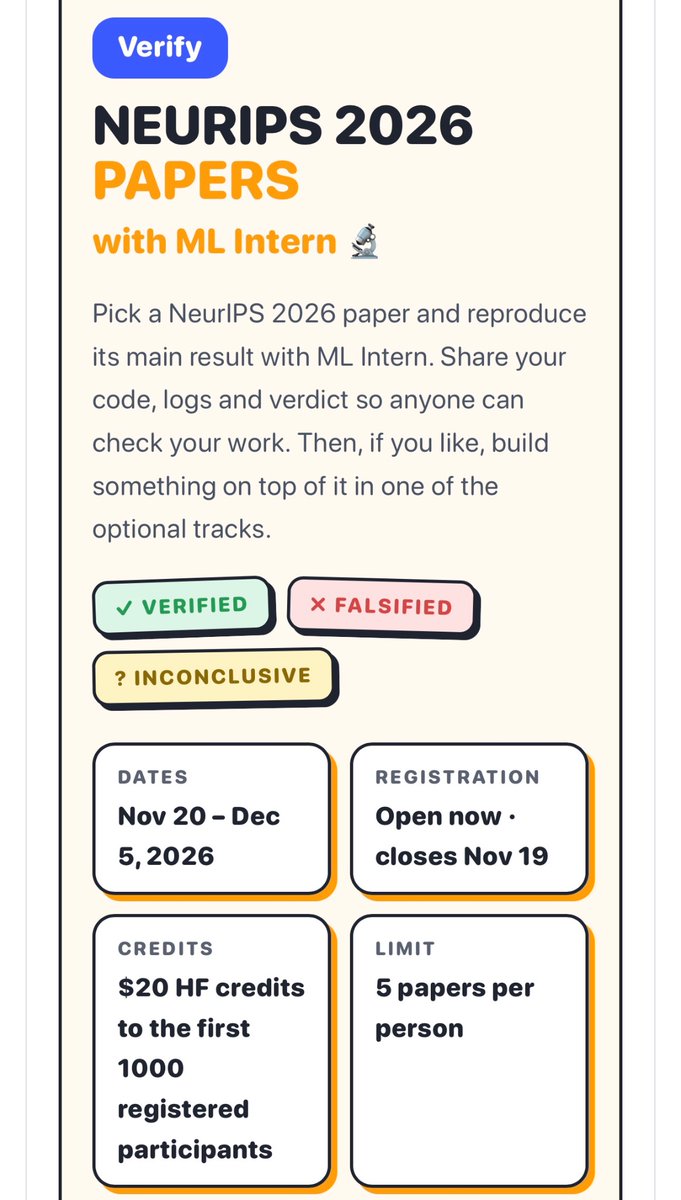
Participants can pick a result from a NeurIPS 2026 paper, run experiments with ML Intern or another agent, and share code, logs, and a verdict. The challenge runs from November 20 to December 5, with registration closing November 19. Turning a paper into a reinforcement learning environment is an optional track.
SatBench tracks how quickly benchmarks saturate
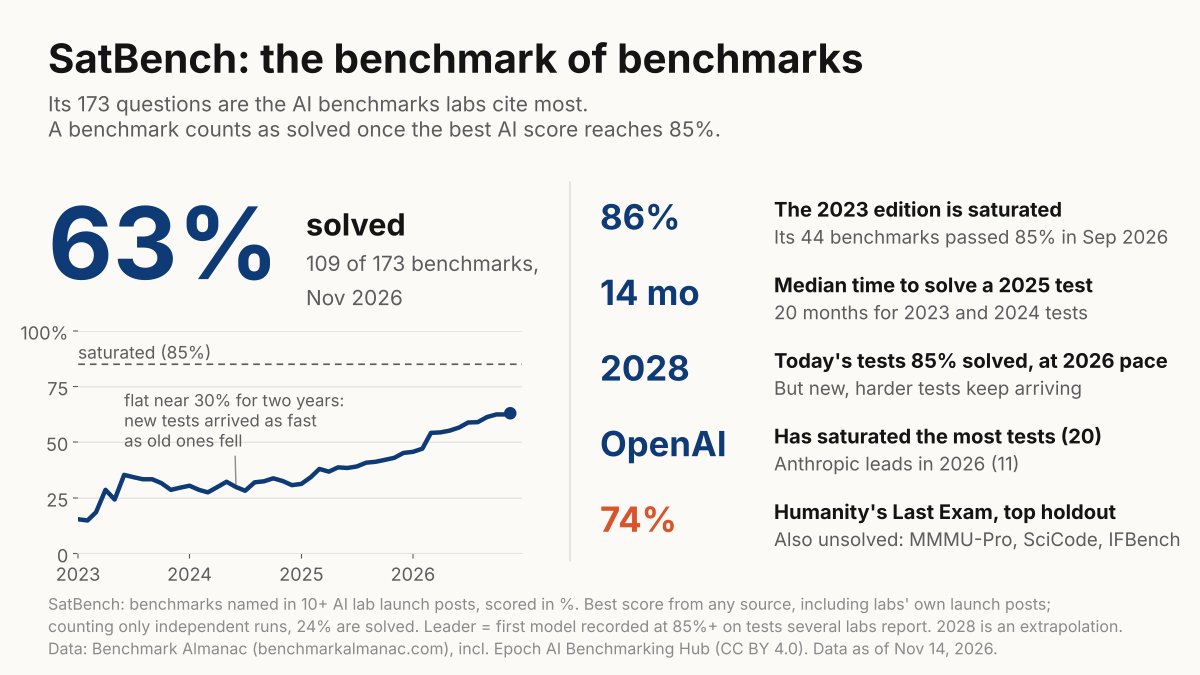
Ethan Mollick says 63% of the 173 benchmarks his project collected from lab citations dating back to 2023 meet his definition of saturation. The figure describes that sample.
Deepnote tests when an agent should step in
The Agent Initiative Benchmark puts 12 models through 50 workplace scenarios inside a simulated company. Ten scenarios call for silence. GPT-6 Astra led on overall score and stayed silent in eight of those ten. The results reflect this set of tasks and grading rules.
Hydrogen gets a bug hunt across two repositories
Paweł Huryn replanted 105 real defects in two production repositories, then tasked models in their respective agent CLIs with finding and fixing them. The Gemini 4 Hydrogen results describe those repositories and run settings.
Miles and SGLang demonstrate RL across GPU vendors
ai& trained with Miles on B300s while SGLang generated rollouts across B300, H200, MI355X, and MI300X GPUs. In a separate replay of 3,072 requests across five inference engines, routing by KV cache capacity finished the batch faster than round-robin routing.
Vision parameters can live inside a multimodal backbone
In a preprint that controls for training data and compute, jointly trained vision encoders match pretrained encoders. Removing dedicated vision parameters hurts visual understanding, while putting dedicated modules in the early backbone layers yields comparable performance to a separate encoder.
Raschka examines the Inkling 2 Small architecture
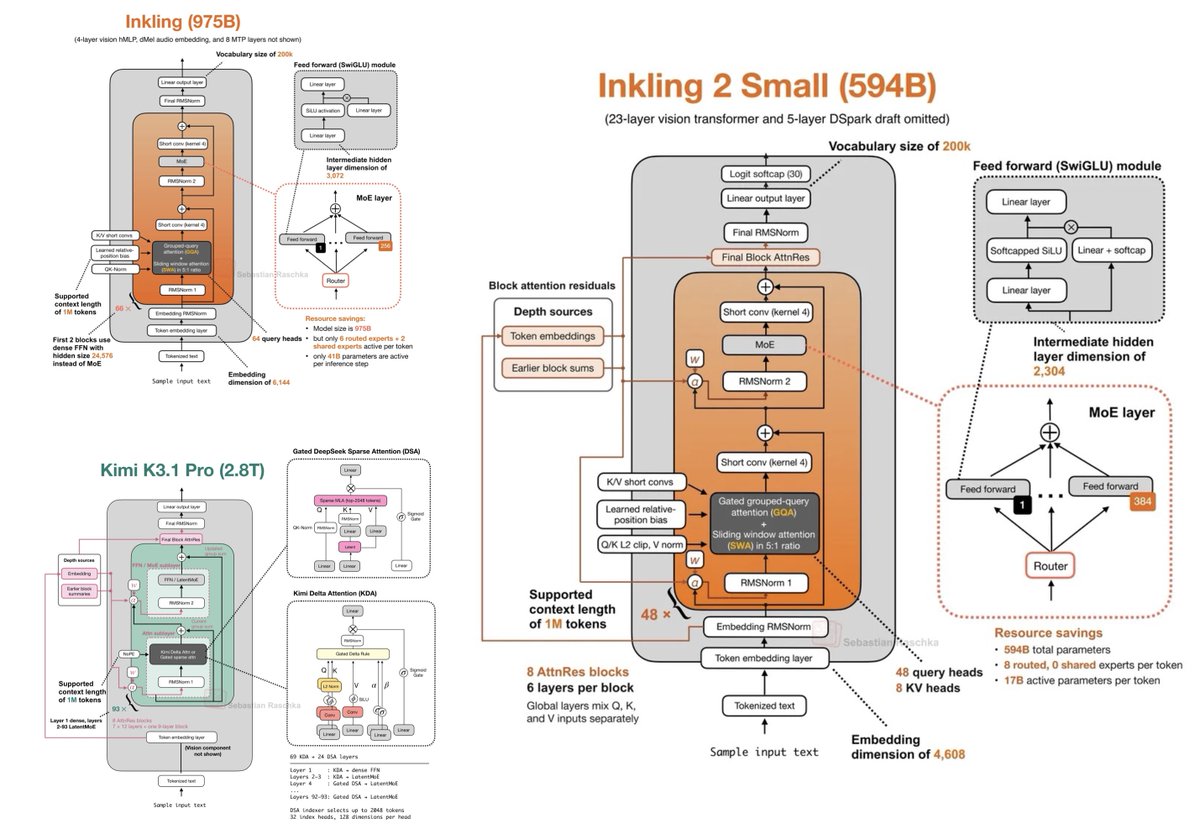
Sebastian Raschka notes that the model uses attention residuals like Kimi K3 without its linear-attention mixture. The Thinking Machines model card describes a combination of local and global attention layers.
Anthropic explains five components of an always-on agent
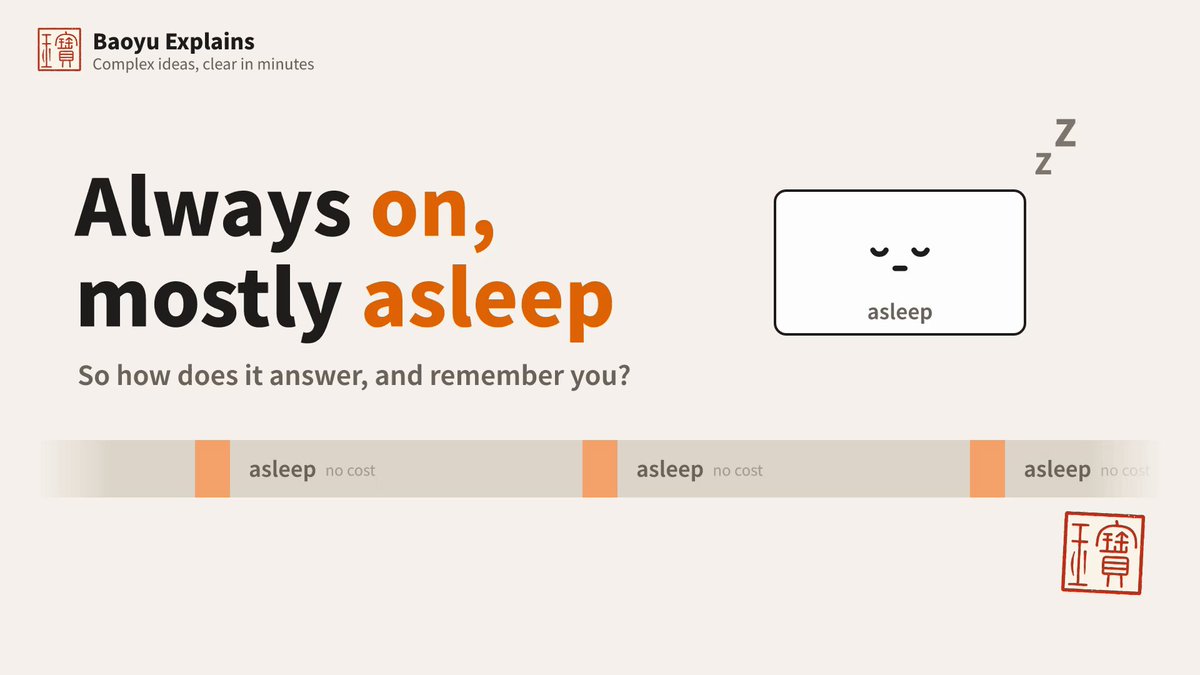
A durable inbox and timers decide when to wake the agent. Memory keeps state across runs, permissions govern actions, and an outbox handles delivery and retries. The system stays available while the model runs only when there is work.
Open-source coding tool fx can delegate work to subagents
Written in Zig, fx is a terminal coding tool that works with local and cloud models. Guillermo Rauch describes using a stronger model for planning and faster ones for execution. The 6.33 MB figure refers to the build he used.
Grok Bot team describes how it tests agent-written code
At AI Engineer Code Summit, Lauren Tan described using executable checks and state tests to constrain coding agents. She reports that her team shipped about 11,000 pull requests in the previous month and reverted about 0.5%. The figures are the team's own.
Rauch puts verification into the agent release loop
His proposed workflow uses the Vercel CLI to put changes behind feature flags, run verification and security audits on push, and have an agent monitor metrics after rollout.
PixVerse adds MiniMax H3 Image
PixVerse says the image model accepts up to 16 reference images and outputs up to 4K, with support for generation from multiple references and detailed edits.
Budget3D explores image-to-3D generation with a token budget
The model uses BudgetAny's adaptive token approach, letting a single checkpoint vary the token count at inference to trade detail against compute. BudgetAny is an unofficial implementation and extension of the BudgetPix paper.
A Blender add-on brings in three motion models
Developer toyxyz demonstrated an add-on that calls Kimodo, MotionBricks, and ARDY from Blender. The developer says a companion retargeting add-on can preview generated motion directly on the target character.
Vidu illustrates how Q4 Preview interprets shot direction

The example combines a character, an action, a camera move, and a mood in a single prompt. Vidu says its earlier recaptioning update helps the model interpret how those instructions fit together.
Creator shares a Claude Skill for consistent character voices

Video creator PJ Accetturo says his team packaged its character voice workflow as a Claude Skill, aiming to reduce the number of attempts needed to get consistent sound.
Mollick uses agents to reconstruct Auden's poetry class
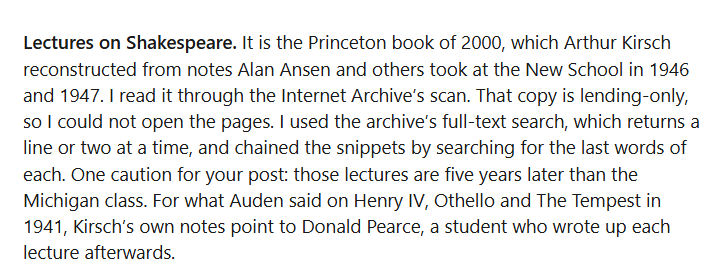
Ethan Mollick says he used Claude Fable 5.2 to reconstruct the 1941 course from surviving material. The agents ran repeated full-text searches of the Internet Archive. The finished work is a reconstruction based on incomplete evidence.
Dotey weighs shared chats against separate agent sessions
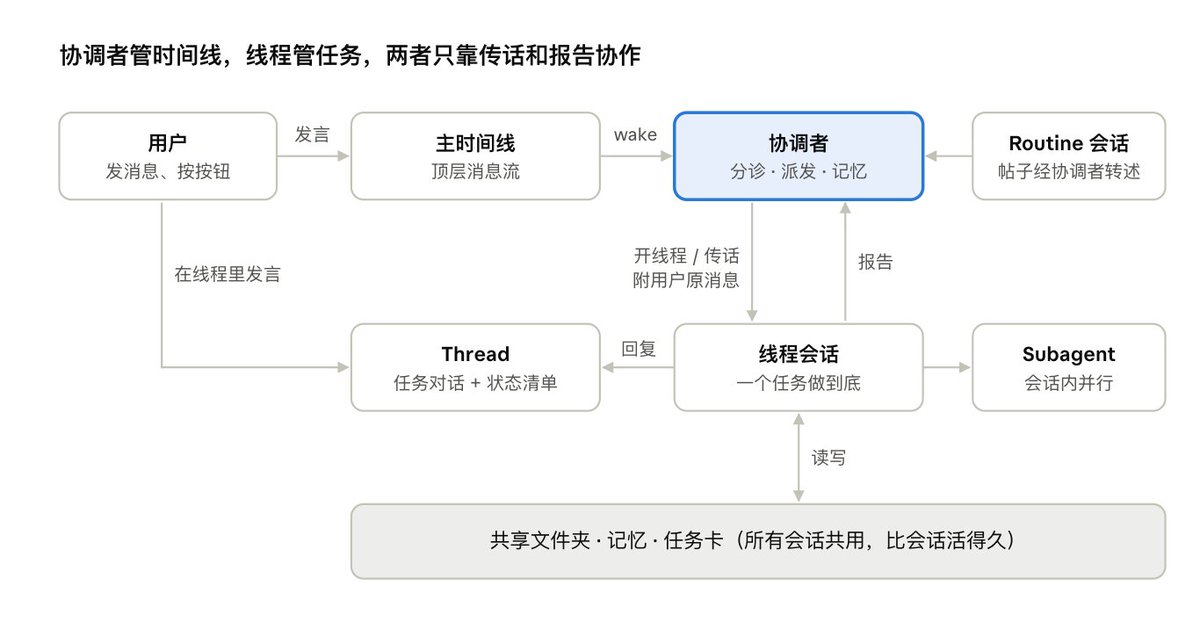
He argues for keeping the overview of a main conversation while letting users open individual subtasks, add context, and intervene while work is running.
Next Token packages nine podcast episodes as a Skill
The team says the Skill helps an agent retrieve arguments and examples from past episodes for research and reports.
Independent developer uses models to make an open-source tactics game
CocoSgt published the Advance Wars-inspired Tidemark on the DeepSeek Harness Game Store and released the code. It can be played in a browser or installed in the harness.
Lambert considers Nvidia's leadership change and open models
Writing in Interconnects, Nathan Lambert argues that scarce compute makes it difficult to translate open weights into cheap inference. He worries funding for open models could contract after Jensen Huang's departure, an assessment of where the industry might go.