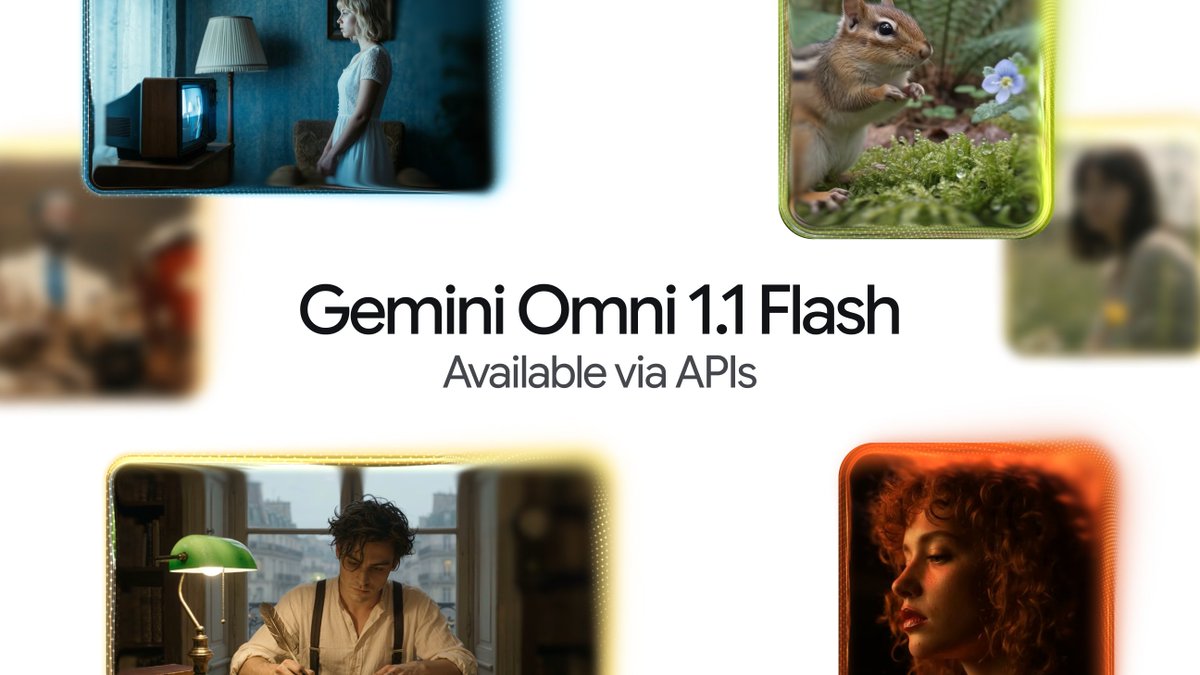
Google Ships Gemini Omni 1.1 Flash for Controllable Video
Aimed at production: faster iteration, tighter control, and more polish for generative video.
Google is rolling out Gemini Omni 1.1 Flash, a generative-video release built for creators who want control rather than a roll of the dice. The model makes scenes highly controllable, shortens iteration cycles, and pushes output toward production-grade finish. It is available to try inside Flow, and Runway has added it alongside its own image and video models.
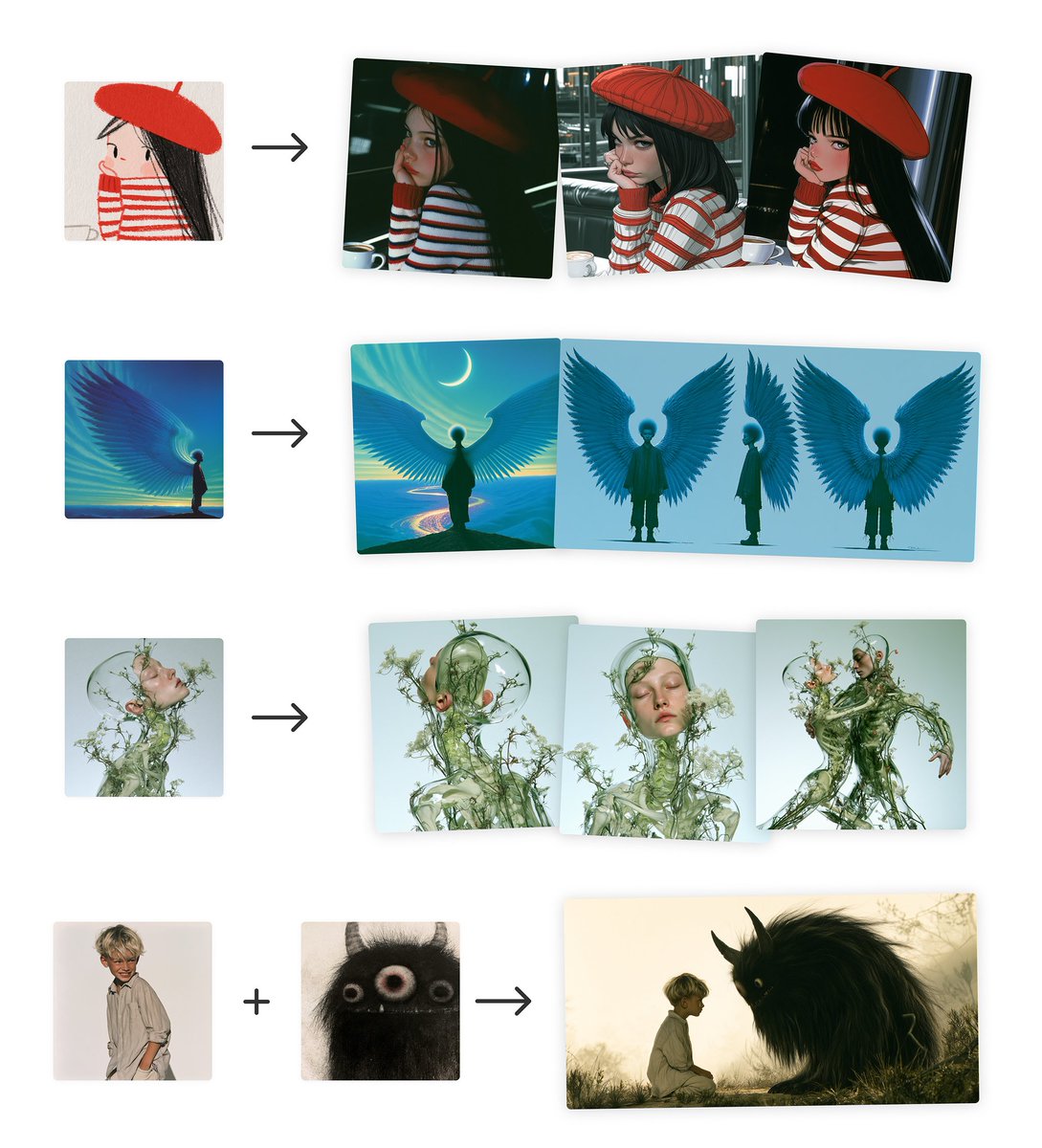
Midjourney Starts Testing Its V8.2 Edit Model
The new model supports instruction-based editing, generation from up to four reference images, brush-based inpainting, and outpainting, and it works with personalization, moodboards, and srefs.
Day-zero support, 744B served
40B active, 1M context, 128K output. Z.ai kept the GLM-5.2 base and scaled post-training.
537.6 tok/s per user on agentic loads
Measured on NVFP4 in real multi-turn agent workloads, inheriting every GLM-5.2 optimization.
Private, US and EU, no data retention
GLM-5.3-Flash launches first, with Claude Code and OpenCode launch flags ready.
GLM 5.3 lands in Perplexity Computer
Built for long-context, multimodal agent work; beats GLM 5.2 on the WANDR research benchmark.
Bionic Agent adds GLM 5.3, 50% off
US-hosted with zero data retention, discounted through Monday.
Tinker API now fine-tunes GLM-5.3
Z.ai's tuning API adds support for customizing the open-weight model.
Rosalind Workbench: Every Scientist, Their Own Research Team
OpenAI's Rosalind Workbench connects scientific questions to specialized models, tools, and reviewable outputs in a single workflow, spanning protein structure, sequence analysis, and sequencing pipelines. Guided tasks, a science viewer, and sequencing analysis let researchers trace a question from raw data all the way to evidence.
NVIDIA Nemotron 3.5 Lightning: Built for Always-On Agents
A compact, customizable open model designed to help always-on agents finish specialized tasks faster. NVIDIA pitches it as lightning-fast to customize and lightning-fast to run.
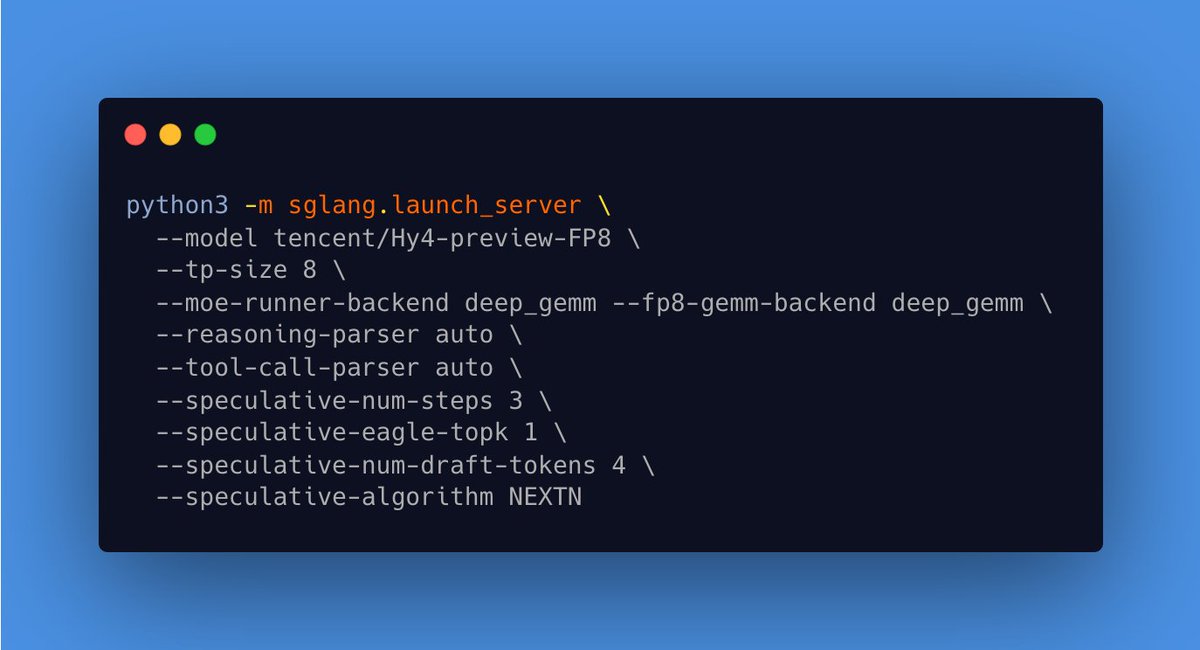
Tencent's Hy4-Preview Arrives With Day-Zero SGLang Support
A 770B-parameter MoE with 49B active, built for long-horizon, end-to-end coding and office workflows. SGLang serves it from day zero.
MTP, EAGLE-3, DFlash or DSpark? A Guide to Speculative Decoding
There is no universal winner, vLLM argues: the best method changes with the model, the workload, and the speculation depth. A new post breaks down five methods and how to enable and tune each in vLLM.
GLM-5.3 is a good model, and as open-weight models keep improving, publishing model cards and doing red-teaming matters more than ever.
Qwen3.8-Flash ships with 1M context
125B and 6B variants, multimodal, now available in OpenCode Go.
MiniMax, Hao AI Lab and NVIDIA ship Fast H3 v1
Built on the FastVideo framework for video-generation acceleration.
fal Research's H3 Max ranks first
Post-trained video model leads on overall quality and prompt understanding.
Wan3.0 tops the Video Edit Arena
Takes the number-one spot in the Arena AI video-edit rankings.
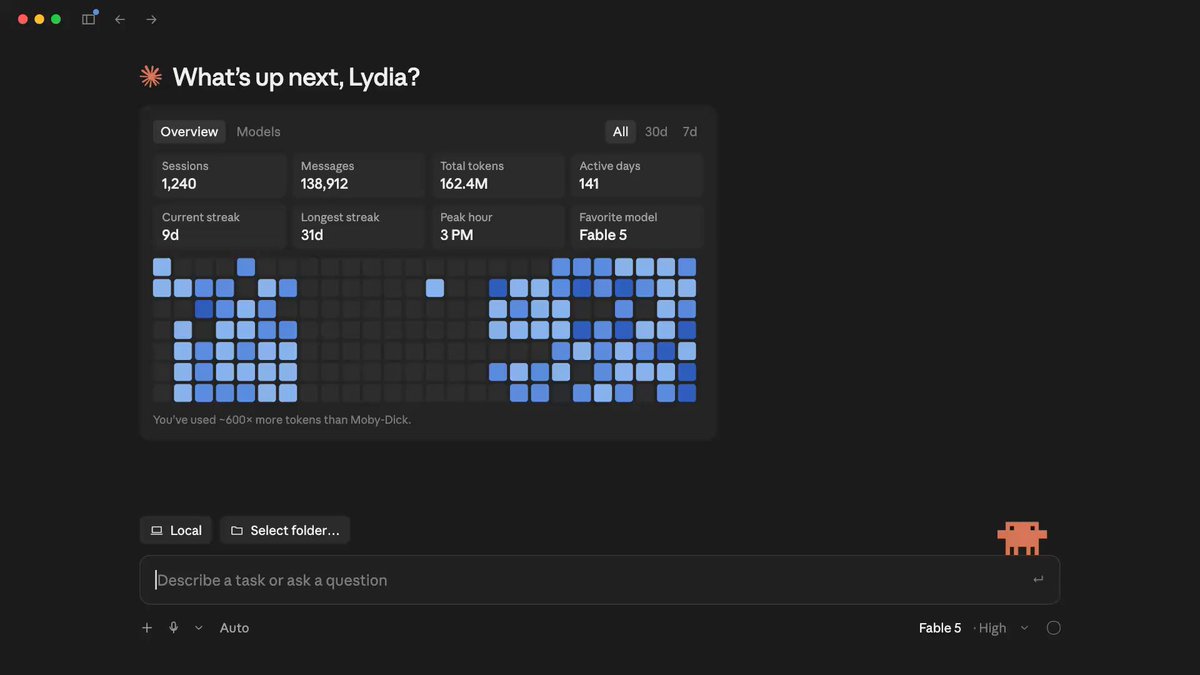
Claude Code resumes terminal sessions
Type /resume to continue a CLI session in the desktop app, context intact.
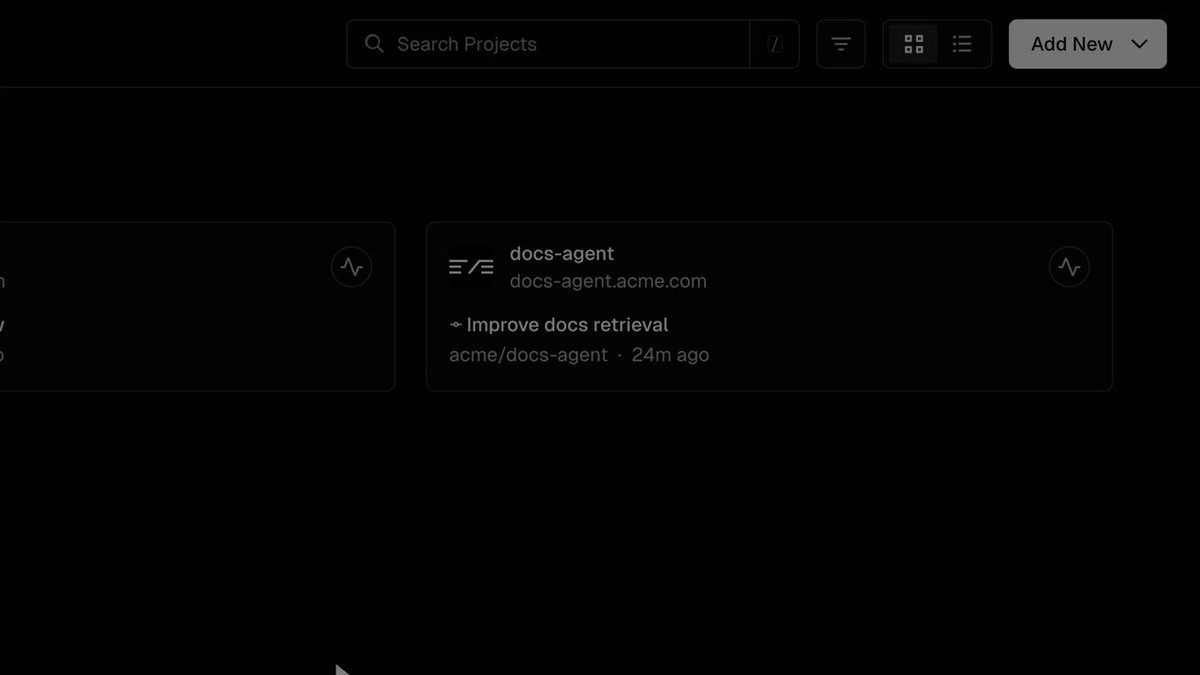
Vercel's eve: ship an agent in a minute
Add a prompt, pick models and MCP connections, deploy to a Git repo you own.
Meta's Muse image API: $0.01 per image
A price-to-quality ratio aimed at production volume.

Codex Appshots read your screen
Summarize Slack threads, fill forms, and act on API references from screenshots.

Adobe Firefly's AI video editor
Edit, enhance, and add effects from any device.
Vidu Q3 Mix fixes video consistency
Reliable prompt-following, character consistency, and lip-sync.
Bionic auto-approves most shell requests
AST parsing, command matching, and a reviewer subagent.
Luma upgrades its upscaling
A sharper super-resolution pass for image outputs.
Intelligent model routing
Picks the best model for the job, with new enterprise admin controls.
Adds Google Omni 1.1 Flash
The newest release sits alongside the platform's image and video models.
DGX SuperPOD powers VISION
TAMU's VISION is the strongest academic supercomputer on the June 2026 TOP500.
Omni to integrate FastH3
Brings the H3 acceleration work into the Omni serving stack.
Launches a WebMCP challenge
A new competition around browser agents and the Model Context Protocol.