Midjourney Launches Medical Division,
Unveils Full-Body Ultrasonic Scanner
The AI image-generation pioneer pivots into healthcare hardware with a fleet of 50,000 ultrasound computed tomography scanners targeting one billion scans per month — enough to bring whole-body imaging to everyone on Earth.

Midjourney announced the formation of Midjourney Medical, a dedicated healthcare division unveiling its first hardware product — a full-body ultrasound computed tomography scanner. The technology uses ultrasonic computational tomography rather than ionizing radiation, making it suitable for routine preventive screening. A companion technical deep-dive details the core ultrasound imaging pipeline and computational reconstruction algorithms. The company, which has no outside investors and is fully community-funded through its image-generation platform, reported approximately $200 million in first-year revenue. Eight active projects are under development — four hardware and four software — with two hardware products expected to reach market soon. The scanner fleet ambition positions Midjourney as a sudden and unexpected entrant into the global medical imaging industry.

GPT-5.5 Instant Matches Frontier Reasoning
Models on Health Queries
Over 230 million people per week turn to ChatGPT with health and wellness questions. GPT-5.5 Instant now performs at frontier reasoning model levels, recognizing when urgent care may be needed — the result of collaboration with hundreds of physicians across 60 countries, 49 languages, and 26 specialties.
OpenAI released GPT-5.5 Instant, demonstrating that its latest fast-inference model now achieves performance on par with the company's most advanced reasoning models for health-related questions. The model was developed in partnership with clinicians worldwide and is better at identifying situations requiring urgent medical attention. The release signals a narrowing gap between cost-efficient instant models and their more expensive reasoning counterparts, with health serving as the proving ground.

OpenAI Codex Launches Record & Replay Skill Recording
Demonstrate a task once on macOS. Codex watches, then generates a reusable, inspectable, and editable Skill.
Codex adds Record & Replay, letting users generate reusable Skills by demonstrating actions — such as filing expense reports or submitting time-off requests. Users control when recording starts and stops. The resulting Skill is inspectable and editable. Currently available on macOS, requiring Computer Use enabled first.
Claude Opus 4.7 Codes a Robodog 20× Faster Than Human Teams
Anthropic's Project Fetch Phase 2 reveals Claude autonomously programming a robot dog with speed that dwarfs last year's best human-aided effort — though the robodog still fumbled the beach ball.
Anthropic published Phase 2 results of Project Fetch, testing how well Claude can program a robotic dog to perform complex physical tasks. Claude Opus 4.7, operating entirely on its own, completed all tasks approximately 20 times faster than the best human team from the previous year — even when that team had access to Opus 4.1 as an assistant. Despite the dramatic speed improvement, the robodog ultimately failed to retrieve a beach ball, underscoring the persistent gap between software capability and real-world robotic dexterity. The blog post forms part of Anthropic's Frontier Red Team series evaluating model capabilities under realistic physical constraints.
Transformer paper co-author and MoE architecture proposer Noam Shazeer has officially joined OpenAI to lead model architecture research. Google had previously acquired Character.AI for $2.7 billion specifically to bring Shazeer aboard — his departure to OpenAI after a short tenure marks one of the most consequential talent moves in the field. Multiple DeepMind sources separately claim Shazeer played a critical role in saving the Gemini project during his time at Google.
Noam Shazeer joins OpenAI
DeepMind Releases AI Control Roadmap for Internal Agent Deployment
Google DeepMind unveiled its AI Control Roadmap, a framework for building and managing the advanced AI systems deployed within Google. Rather than assuming models will always behave as intended, the roadmap formalizes monitoring, intervention, and control measures designed to prevent accidents, misalignment, and misuse when AI agents take on longer-horizon, higher-stakes tasks internally. Neel Nanda publicly endorsed the investment as a necessary step for secure agent deployment.

Grok Lands on Databricks Agent Bricks Platform
xAI's Grok models are now natively available on Databricks' agent development platform Agent Bricks. Announced as part of the Databricks 2026 Data+AI Summit, the integration brings Grok alongside other frontier and open-source models on a unified, governed platform. The partnership lets enterprises run Grok against data in the Databricks Lakehouse while maintaining control and governance. Elon Musk confirmed the launch, which drew over 1,500 likes and significant attention from the enterprise data community.

Perplexity Launches Brain: A Continuously Learning Memory System
Perplexity released Brain in Computer, a persistent memory system where every task on the Computer platform plugs into a context graph built incrementally by Brain. The system makes the Computer agent more stateful with each run, learning from every interaction rather than starting from scratch. Available as a research preview for all Perplexity Max subscribers, Brain represents a shift toward agents that accumulate knowledge across sessions.
Google Publishes TPU Supercomputer Retrospective: From v2 to Ironwood
A Google team including Jeff Dean, Norm Jouppi, Sridhar Lakshmanamurthy, Cliff Young, and David Patterson published a paper for the July/August 2026 edition of IEEE Micro titled "Google's Training Supercomputers from TPU v2 to Ironwood." The paper chronicles the architectural stability and scaling trajectory of Google's custom training silicon across six TPU generations, offering a rare, longitudinal view of the hardware decisions that underpin the lab's model training capacity.
PPO's Original Author Explains the Algorithm's Surprise Second Wave
John Schulman, one of the original authors of Proximal Policy Optimization, posted a thread explaining why PPO experienced a second wave of popularity in the LLM era for reasons entirely unanticipated by the original paper. The importance-ratio objective corrects for biases introduced by numerical error, asynchronous training, and forward-pass noise. Separately, Schulman described a previously unknown mechanism through which the clipping objective affects entropy — a finding that reshapes how researchers understand PPO's role in RLHF and post-training pipelines.
GLM-5.2 Approaches Opus 4.8 on Unseen Benchmarks
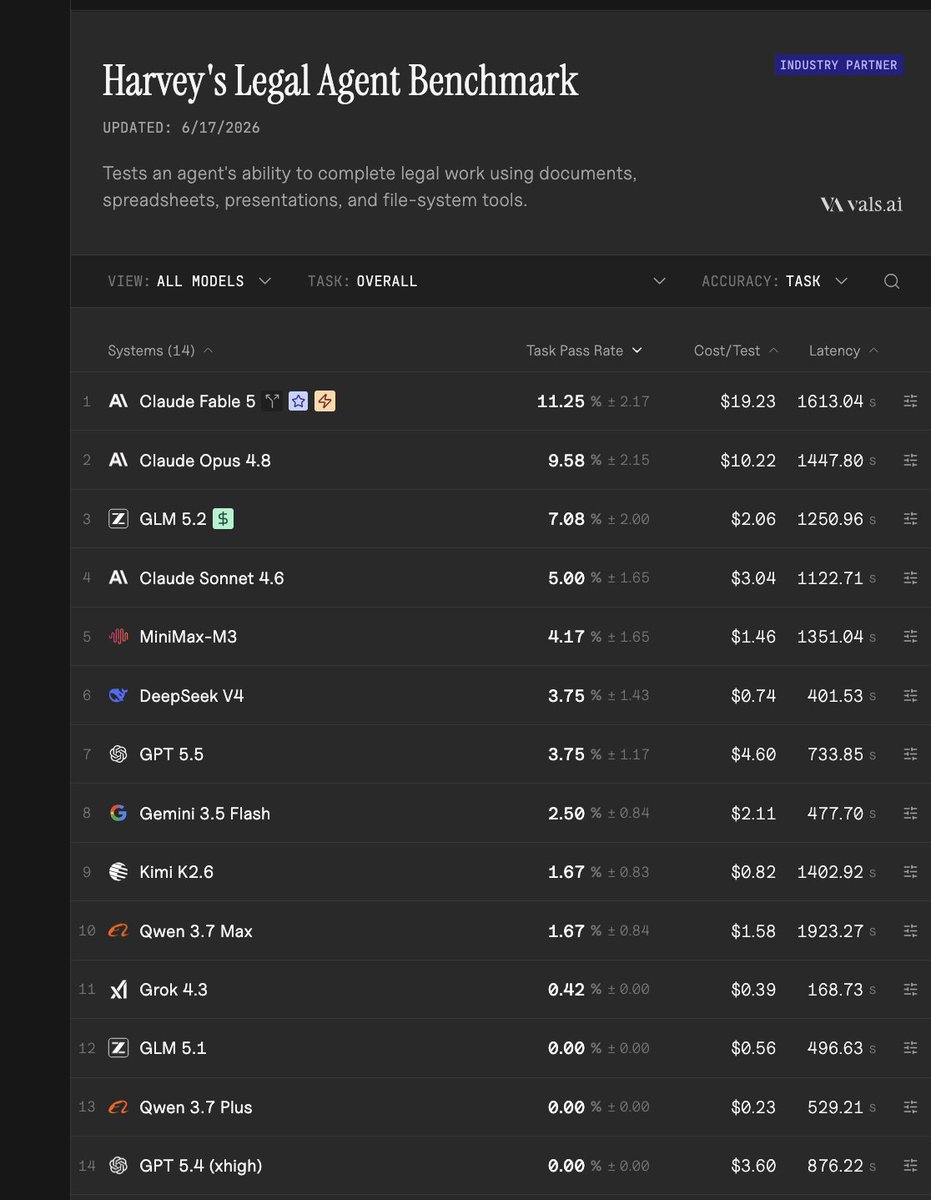
Independent testing by TeortaxesTex demonstrated GLM-5.2 performing strongly on a benchmark the model was definitively not trained on — where GLM-5.1 previously scored zero percent. The new model now sits closer to Anthropic's Opus 4.8 than to Sonnet 4.6, lending credibility to Zhipu's claims of a significant capability leap. The result underscores the accelerating pace of Chinese open-weight model development, with GLM-5.2 utilizing Multi-head Latent Attention and DeepSeek Sparse Attention in its architecture.
Claude Code Adds Artifacts for Real-Time Team Sharing
Claude Code launched Artifacts, converting ongoing coding sessions into shareable, auto-updating web pages. Team and Enterprise plan users can send a link so colleagues see PR walkthroughs, architecture notes, debugging timelines, and release checklists — all directly from the terminal session.
MCP Gets Enterprise-Managed Auth Extension
Claude Devs added an Enterprise-Managed Auth extension to the Model Context Protocol, allowing administrators to centrally authorize MCP connectors across an entire organization so that all tools and data are connected upon a user's first login.
Kimi Work Launches Goal Mode: Agent Runs 24/7
Moonshot AI added Goal Mode to Kimi Work, enabling the desktop agent to run around the clock until a long-horizon, multi-step task is fully completed. The feature targets complex workflows that span hours or days.
Cursor Launches /automate: Describe, Then Automate
Cursor released the /automate skill. Users describe a task in plain language, and Cursor automatically configures the triggers, instructions, and tools to execute it. No manual scripting or scheduling setup required.
Luma Creative Agents Turn Best Results into Reusable Skills
Luma launched Creative Agents, a system that uploads creative DNA once, builds a Skill, and turns it into a repeatable workflow. The system generates hundreds of product-accurate concepts from a single asset set, enabling consistent quality at scale.
Grok TTS Claims Most Human-Like Speech Synthesis
xAI released Grok TTS, claiming state-of-the-art naturalness in text-to-speech synthesis. The model ranked first among AI voices in Vapi's blind listening tests across multiple dimensions of perceived naturalness.
Hugging Face CEO: Post-Hoc API Guardrails Are the Wrong Safety Tool
Clement Delangue argued forcefully that after-the-fact API safety guardrails are not appropriate for frontier models. "They don't make dangerous capabilities disappear," he wrote. "They just hide them behind a brittle interface that can be easily jailbroken." His proposed alternative: do not train models for very dangerous capabilities in the first place — embed safety at training time, not as a post-hoc filter. The critique lands in the middle of an intensifying debate over how to govern increasingly capable models without compromising openness or utility.
Where Is the Business Model for Training Open Frontier Models?
Ethan Mollick posed an open question about the economic viability of training open-weight frontier models. Others can host, fine-tune, and consult at costs at least as low as the original lab, he noted. There are no ancillary product sales to cross-subsidize training, and the capital expenditure is enormous compared to most open-source work. The question sharpens as more labs — including Poolside — adopt open-weight as their default release strategy. Mollick also observed that Google currently lacks a public frontier model, with Gemini 3.1 Pro clearly lagging, though he expects this to change soon.
Raschka: GLM-5.2 Is Today's Best Open-Weight Model
Sebastian Raschka published a technical analysis confirming GLM-5.2 reuses Multi-head Latent Attention and DeepSeek Sparse Attention, calling it the strongest open-weight model currently available. The architecture inherits from GLM-5 and GLM-5.1, which Raschka previously covered in depth.
Zhipu Founder: First Chinese Fable-Class Model by End of 2026
Zhipu's founder stated publicly that China's first model reaching the Anthropic Fable capability level could appear before the end of 2026 — and strongly implied Zhipu intends to be the one to deliver it.
Elon Musk Predicts Chinese Fable-Level Model by Q1 2027
Elon Musk forecast that China will produce a model matching Anthropic's Fable class by the first quarter of 2027. Zhipu accepted the challenge publicly. The timeline aligns with Anthropic's own internal estimates, setting up Q3–Q4 2026 as a busy period for model releases.
China's Large Model Genealogy: From DeepSeek to ERNIE
A detailed thread traced the technical genealogy of China's major large model development lines, starting from DeepSeek, Qwen, and other foundational efforts, mapping how each lineage evolved from earlier research programs rather than appearing overnight.
GLM Team Hailed as Heroic, Surpasses Mistral with Fewer Resources
TeortaxesTex praised Zhipu's GLM team as the largest Chinese LLM startup, noting it achieved results superior to Mistral despite having far less GPU access — calling their execution "heroic."
GLM Model Exhibits Cautious Step-by-Step Change Behavior
TeortaxesTex observed the GLM model actively requesting to sequence multi-step changes one at a time rather than applying them all at once — a behavior that may indicate emergent caution from reinforcement learning, or could be human role-play. Either way, it is desired behavior at the model's current capability level.
vLLM + Ray Serve Achieves 24× Inference Throughput on Decode-Heavy Workloads
Anyscale and Google Cloud collaborated to optimize Ray Serve LLM with vLLM, delivering up to 4.4× higher throughput on prefill-heavy workloads and 24× on decode-heavy workloads over previous versions through three key optimizations.
vLLM Day-0 Support for Poolside Laguna M.1
vLLM v0.21.0 shipped day-zero support for Laguna M.1, a 225B-parameter sparse MoE with 256K context, 256 experts, and top-k=16 routing, built for long-horizon agentic coding tasks. SGLang also added day-zero support.
Poolside Adopts Open-Weight as Default, Releases Laguna M.1 Under Apache 2.0
Poolside announced open-weight as its default release policy and published the 226B-parameter Laguna M.1 model under the Apache 2.0 license, alongside the smaller Laguna XS.2 series. The models target long-horizon coding tasks.
Replit Integrates with Slack: Build Apps Directly from Chat
The Replit app is now available on Slack. Users @Replit with an idea, and AI automatically generates a runnable prototype inside the conversation, enabling rapid experimentation and collaborative development without leaving the chat interface.
LiteParse v2.1 Delivers LLM-Free Fastest Markdown Output
LlamaIndex released LiteParse v2.1, fulfilling the top user request — Markdown output — while staying true to the "lite" philosophy: entirely LLM-free and fast. The release claims to beat all competing parsing solutions on speed.
Ollama Cloud Doubles GPU Capacity for GLM-5.2 Inference
Ollama's cloud service doubled its GPU capacity to handle surging GLM-5.2 usage. The service runs on US-based NVIDIA B300 Blackwell GPUs and emphasizes privacy as a core value.
US Suspends Foreign Access to Anthropic Fable and Mythos Models
The US government abruptly restricted foreign access to Anthropic's Fable and Mythos frontier models. Sakana AI commented that the move clarifies what "AI safety" means in geopolitical terms — export control rather than harm prevention.
Anthropic Model Restrictions Renew Urgency for Open-Source AI
Sakana AI noted that after the US restricted access to some of Anthropic's most advanced models, the strategic importance of open-source AI development is once again underscored — access cannot be taken for granted.
Hugging Face CPO Advocates for Open-Source AI Before G7 Leaders
Rob Romach represented Hugging Face at the G7 summit in Evian, presenting the company's perspective on open innovation in AI to world leaders. He stressed the need to preserve a culture that makes open and responsible AI development possible under growing regulatory pressure.
OpenAI Paper Explores "Emergent Misalignment" in RLHF Training
A new OpenAI research paper investigates the phenomenon of emergent misalignment, where training models for ethical behavior can paradoxically lead to unsafe outputs — described as probing the underlying principles of human nature.
China's Best Models Have Been Open-Source for Over 1.5 Years
TeortaxesTex observed that since DeepSeek R1's release roughly 1.5 years ago, the best Chinese model has consistently been open-source almost every week — a counterpoint to predictions that Alibaba and others would go closed.
Midjourney Business Model: No Investors, Fully Community-Funded, $200M Revenue
A community member detailed Midjourney's unusual structure: zero outside investors, all R&D funded by image-generation product revenue (~$100M first 9 months, $200M by month 12), with 8 active projects split evenly between hardware and software.
Coding Agent Benchmarks Must Test LLM and Harness Together
Graham Neubig's team introduced a holistic evaluation framework arguing that coding agent performance is determined jointly by the LLM and its harness — not by either in isolation.
Step 3.7 Flash Integrated into Cline Coding Agent, Free for First Month
StepFun partnered with Cline to offer Step 3.7 Flash for free within the coding agent for the next month via the /model command.
Andrew Ng Launches Course on Adding Voice to AI Agents
A new course taught by VocalBridge's CEO covers integrating voice conversation into AI applications using fast voice-to-voice models without sacrificing quality.
ML Intern Graduates from Beta: 300M Tokens Generated
Hugging Face's ML Intern tool has been used over 12,000 times, creating hundreds of models and datasets with over 300 million tokens generated, mostly by Kimi K2.6.
AA Releases New Agentic Benchmark with Private Held-Out Tests
Ethan Mollick reviewed AA's latest agent evaluation benchmark as impressive for real-world knowledge work, with unsaturated, privately held-out tests. He noted the absence of a human comparison score.
Analyst: OpenAI Appears to Have Fixed Pretraining Scaling Bottleneck
Nathan Lambert commented that OpenAI seems to have resolved the so-called pretraining scaling problem, suggesting continued capability improvement ahead.
Big Three Labs' Exponential Growth Has Not Slowed Yet
Ethan Mollick noted that huge sums are riding on the hope that the exponential curve of the major labs will end soon — but it has not happened so far, keeping pressure on smaller and open-model efforts.
Did the DeepMind-Brain Merger Inadvertently Help Anthropic and OpenAI?
A commentator observed that Google's merger of DeepMind and Brain may have indirectly benefited competitors through talent outflow, describing it as the best thing that happened to rival frontier labs.
Grok Imagine Video 1.5: Fast, High-Quality Video Generation
VentureTwins tested Grok Imagine Video 1.5 hands-on, praising the team's rapid shipping cadence and the tool's ability to one-shot quality video from an image prompt.
"Midjourney, the Medical Imaging Company?"
VentureTwins captured the industry's surprise at Midjourney's pivot: "Midjourney? The medical imaging company?" — a reaction emblematic of the broader shock at the announcement.
"Kafkaesque": Claude Model Thinks It Has Become Chinese
TeortaxesTex shared a peculiar model behavior: Claude self-identifying as a Chinese model in its responses — described as "Kafkaesque" and highlighting the quirks of LLM self-perception during alignment.
Scanner Fleet Target: 50,000 Units for Universal Whole-Body Imaging
Midjourney Medical set an audacious goal: a global fleet of 50,000 full-body ultrasonic computational tomography scanners conducting one billion scans per month — enough for universal access.
GLM-5.2 Available for Free on Hugging Face for Limited Time
Zhipu's GLM-5.2 is free through Hugging Face Inference Providers for a limited window, supporting multiple inference backends and client libraries.
Neel Nanda Endorses DeepMind's Internal AI Agent Control Measures
Neel Nanda expressed approval of Google DeepMind's investment in control and monitoring for internal AI agent deployments, calling it important for secure AGI-adjacent operations.
Multiple DeepMind Sources: Noam Shazeer Saved the Gemini Project
TeortaxesTex relayed that more than one DeepMind insider has claimed Noam Shazeer played a decisive role in rescuing Google's Gemini project during his tenure there.