OpenAI shares pretraining progress, calls for common safety limits
Sam Altman highlighted OpenAI’s November 22 pretraining post and urged shared limits. Chief scientist Jakub Pachocki proposes using perplexity alongside other measures to guide development boundaries. The reported figures come from an internal code evaluation set, rather than a threshold directly transferable across labs. This remains a proposal, not an agreed industry standard.
LingSante opens weights for a 560B medical MoE
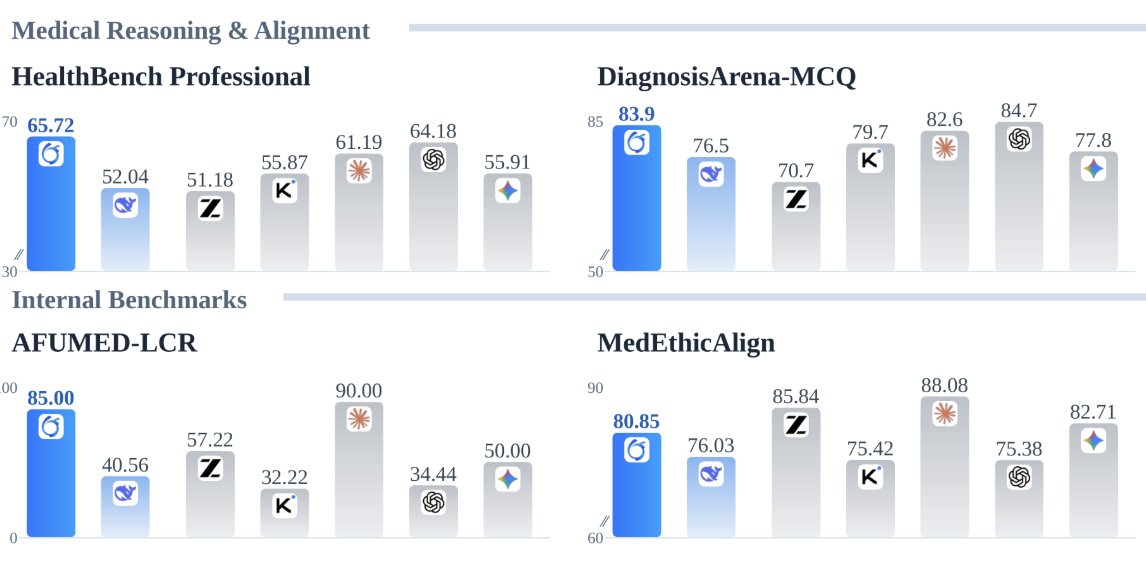
Ant Ling’s official model card lists 560B total parameters, 25B active per token, a million-token context window and an MIT license. LingSante-3.1-flash targets medical reasoning, evidence research and long-horizon tool workflows. Results are developer evaluations; the model is for research and evaluation and must not independently determine diagnoses, prescriptions or treatment.
LingSante-air-VL brings images into medical research
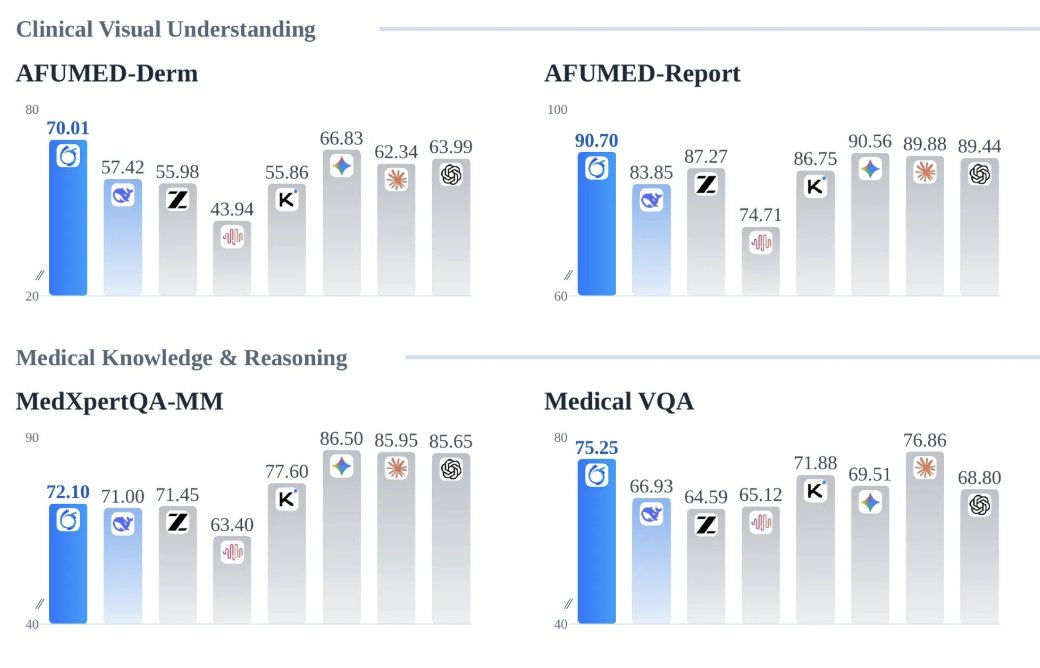
The official LingSante-3.1-air-VL card confirms a native multimodal MoE with 124B total and 5.5B active parameters, text/image inputs, 256K context and an MIT license. Built on Ling-3.0-flash-VL, it targets imaging reports and multimodal healthcare research. Benchmark scores do not establish clinical effectiveness.
MemT-1.0-Pro explores native model memory
@_akhaliq shared MemOS’s announcement of MemT-1.0-Pro, developed with NVIDIA. Official MemT family documentation combines memory blocks with backbone attention so stored experience can influence later generation. Its evaluation also notes that stronger textual-memory systems still lead on detailed evidence retrieval from long histories.
Sakana introduces its still-in-development Sawara series
David Ha reposted chief scientist Takuya Akiba’s introduction to Sakana Sawara, a new LLM series under development. The wording describes work in progress, rather than a fully available release. This excerpt provides no weights, API access or public availability date.
LynnReal-Hand steers video worlds with hand motion
@_akhaliq shared LynnReal-Hand, which combines an initial image, text, hand motion and camera poses to generate interactive video. The project offers full-sequence and three-step causal versions. Its authors report 18.03 FPS at 540p on one H200 for Fast, under a specific warmed test setup; that is not a typical consumer-computer performance claim.
JEPA research balances latent maps and task content
LeCun shared work on world models that learn map-like representations. The researchers propose Slow SVReg to make latent geometry smoother while retaining task-relevant information such as object pose, comparing planning across five visual control tasks. These controlled tasks and reconstructed scenes do not establish a deployed navigation system for unrestricted real environments.
PoolDPP tackles repetitive sets of model answers
A Model of Diverse Sampling from Language Models asks how to obtain a set of outputs that are individually good and collectively different. PoolDPP generates a candidate pool and selects a subset using quality and embedding similarity. The paper reports better tradeoffs on open-ended generation and ambiguous text-to-SQL, and more diversity at roughly the same pass@K on GSM8K.
Evaluation post puts Inkling 2 Mini first on efficiency
Soumith Chintala reposted @p0’s evaluation, which ranks Inkling 2 Mini first on its cost-versus-intelligence efficiency measure and ninth on intelligence. The excerpt does not preserve the complete score or methodology. The result should be understood within that evaluator’s setup.
Tesla Reality View prompts world-model speculation
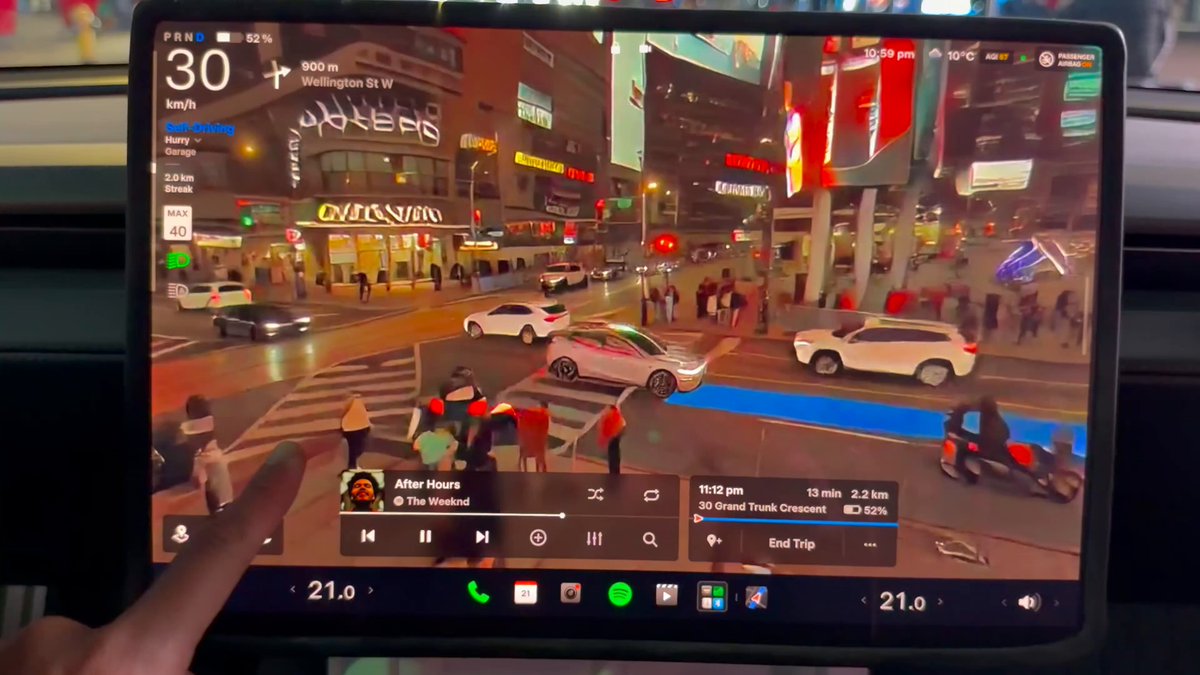
@blizaine showed a photorealistic in-car environment view and described an approximately 1B-parameter real-time diffusion world model sharing visual features with the driving system. The size and architecture remain the author’s claims in this material, without a corresponding official technical account verified here. Visual realism alone does not establish driving safety.
Musk calls FSD V15 an entirely new architecture
Musk described FSD V15 as an entirely new architecture and claimed it drives better than human intelligence. This is the manufacturer leader’s assessment. The post supplies neither independent safety testing nor complete operating conditions and does not establish general or fully autonomous driving.
LeCun challenges the driving “superintelligence” label
LeCun reposted his question: if superintelligence has arrived, why is there still no L5 autonomous driving? The exchange highlights the gap between broad capability labels and specific tasks. The rhetorical challenge is itself not a full capability or safety evaluation of a particular release.
Tesla outlines shared traffic knowledge and Grok input
Musk said Tesla vehicles will share traffic knowledge and combine it with Grok’s real-time X feed. The statement uses future tense, and the collected excerpt does not preserve the full follow-up. This records a proposed direction rather than a feature confirmed as delivered.
PAN 2 demonstrates an interactive driving world
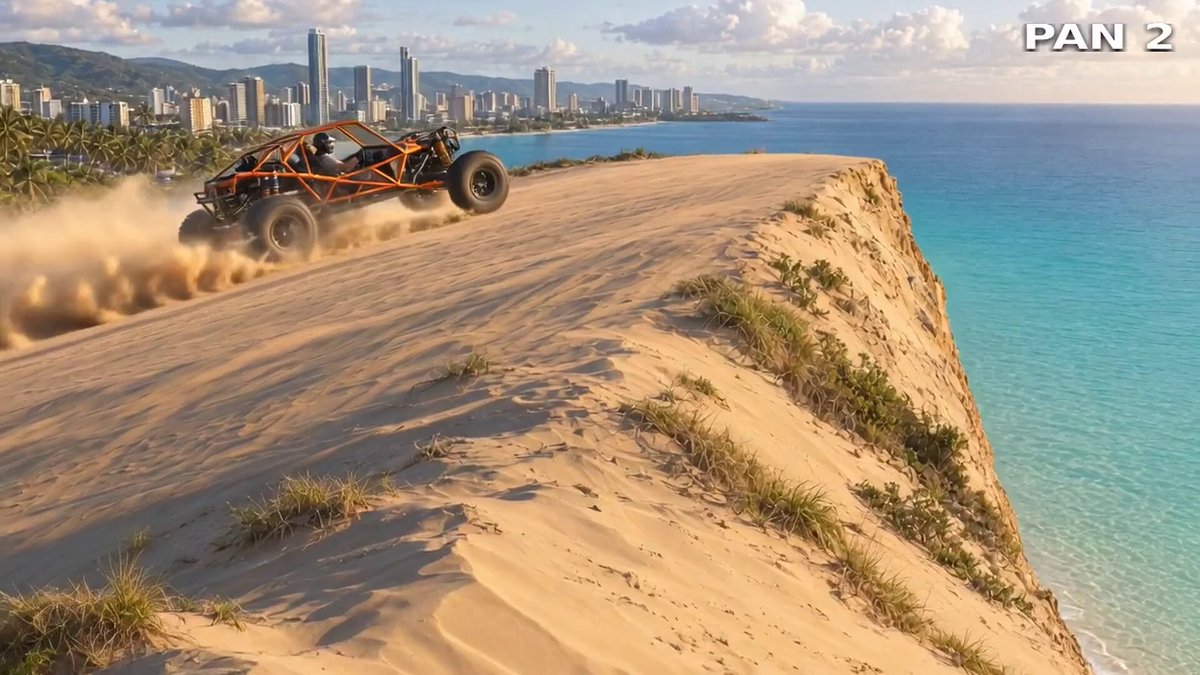
Linus Ekenstam shared a driving demonstration of the open-source world model PAN 2, testing interactions such as driving into the sea and pursuing a motorcycle. His praise for its physical feel is a demonstration impression, rather than validation of real-traffic physics. The example illustrates control and feedback inside a generated world.
Replit Desktop highlights Windows security collaboration
Amjad Masad said Replit worked with the Windows team on a desktop security model and that Christie’s adopted Replit for agentic work. These are company statements. The post does not independently establish the implementation or effectiveness of isolation, permissions and privacy protections.
Perplexity emphasizes a model-neutral agent harness
Arav Srinivas positioned Perplexity as an agent harness compatible with frontier models and said code mode exposes its underlying primitives. “Best” is the product leader’s assessment; the concrete positioning here is model compatibility and access through code mode.
A single Claude agent tackles a NumPy optimization
Amjad Masad reposted a two-hour NumPy optimization experiment reporting a 3.7× speedup from one Claude agent. The excerpt cuts off during the multi-agent comparison and does not specify the workload. It does not show that the entire NumPy library became 3.7× faster across use cases.
Coordinating agent swarms through GitHub Issues
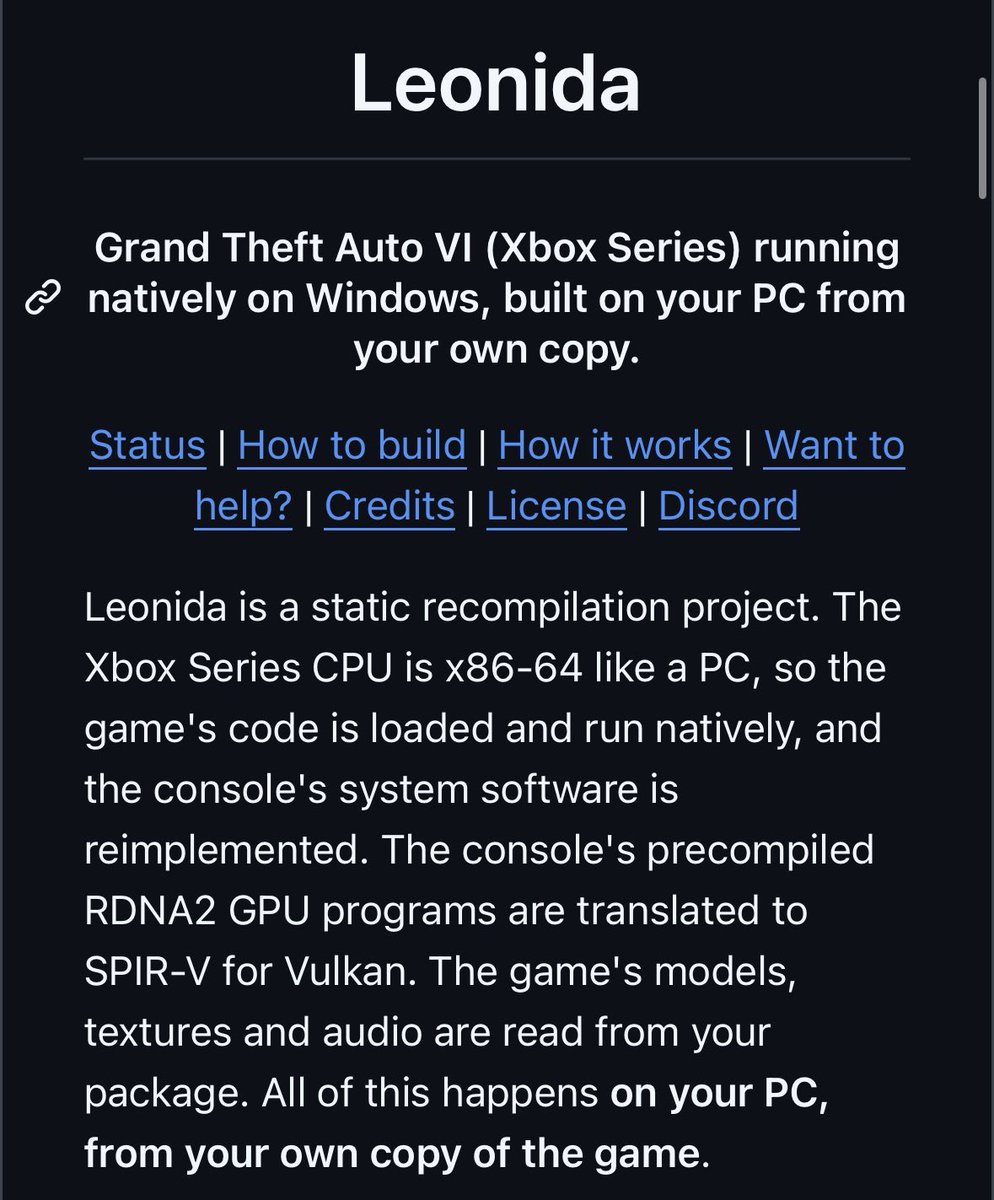
Amjad Masad shared a community effort to recompile a game for PC, focusing on GitHub Issues as a way to assign and coordinate agent-swarm tasks. He suggested it as an open-source collaboration pattern worth exploring. Project progress and output quality were not independently verified in this item.
Long-running agents meet frequent deployments
Swyx shared a Lovable engineering discussion on task history: an agent may run for ten hours while its team deploys every two minutes. The collected excerpt does not preserve implementation details, so this item does not invent a particular isolation or recovery mechanism.
Open Artifact users report third-party API workflows
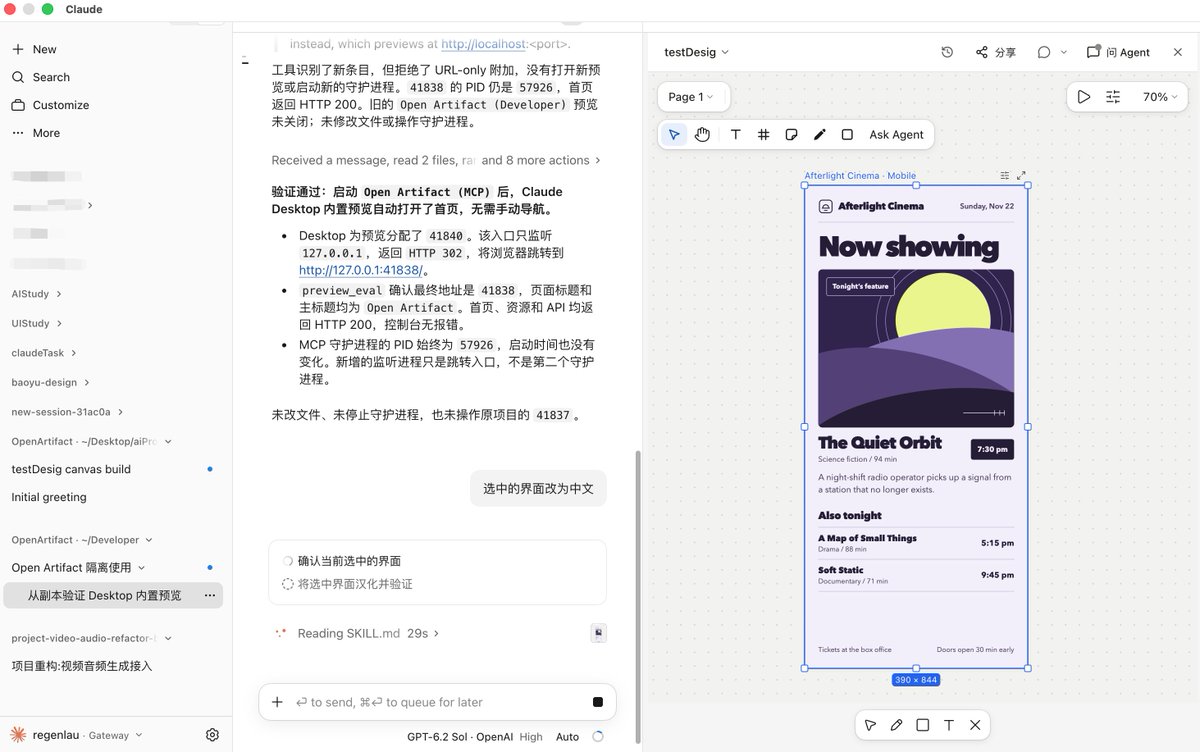
Baoyu reposted a user’s Open Artifact experiment involving third-party APIs and design work. This is a community-project usage report. It should not be read as an announcement that Anthropic added third-party API support to official Claude Code or Claude Design products.
Shared ranking puts Neon atop LiveBench 2.0
Hassabis reposted @AI_Screening’s ranking: Gemini 4 Neon at 87.4, with Claude Fable 5.2 and GPT-6.2 Astra both at 84.9. These figures are recorded from the shared material and were not independently reproduced. A composite score does not cover every real-world task.
Gemini models occupy leading Arena text positions
A ranking snapshot reposted by Hassabis says Google holds Arena’s top three text positions, listing Carbon at 1,527 and Argon at 1,520. The collected text cuts off before the third entry, so its name and score are not reconstructed. A snapshot is not a permanent ranking.
Community report: Maya reaches 144 token/s on a 4090
Teortaxes reported 144 token/s from Project Maya with Inkling 2 Mini on an RTX 4090, while noting about 1.2GB of cache for 32K context. The post does not fully specify quantization or timing methodology. The numbers are recorded as feedback from that personal configuration.
Fewer Inkling loops may not be a free speedup
Teortaxes observed substantial degradation when Inkling-Mini uses one or two loops and argued against simply removing loops for speed, emphasizing 48 effective layers. This is a community technical observation, not proof that the model contains no optimizable redundancy.
Soumith says Mini exceeded kernel-generation expectations
Soumith Chintala said Mini performed better than he expected on a particular kernel-generation use case. The post supplies no complete task, scoring scheme or runtime setup. It is a researcher’s usage impression rather than a kernel-generation ranking.
A researcher questions code RL’s effect on creativity
Lucas Beyer said he prefers GPT-4.5’s linguistic creativity to later 5 and 6 series models, speculating that science- and code-focused RL post-training might affect creative expression. The post presents a personal judgment and hypothesis, without a corresponding causal experiment.
EQA sample color descriptions face scrutiny
Lucas Beyer reposted Ville Kuosmanen’s concern about some EQA tasks, including a possible yellow/blue mismatch in a sample description. The exchange highlights the need to inspect evaluation data itself. One questionable example does not by itself invalidate an entire benchmark.
Gemini Neon builds a mystery across 16 bars
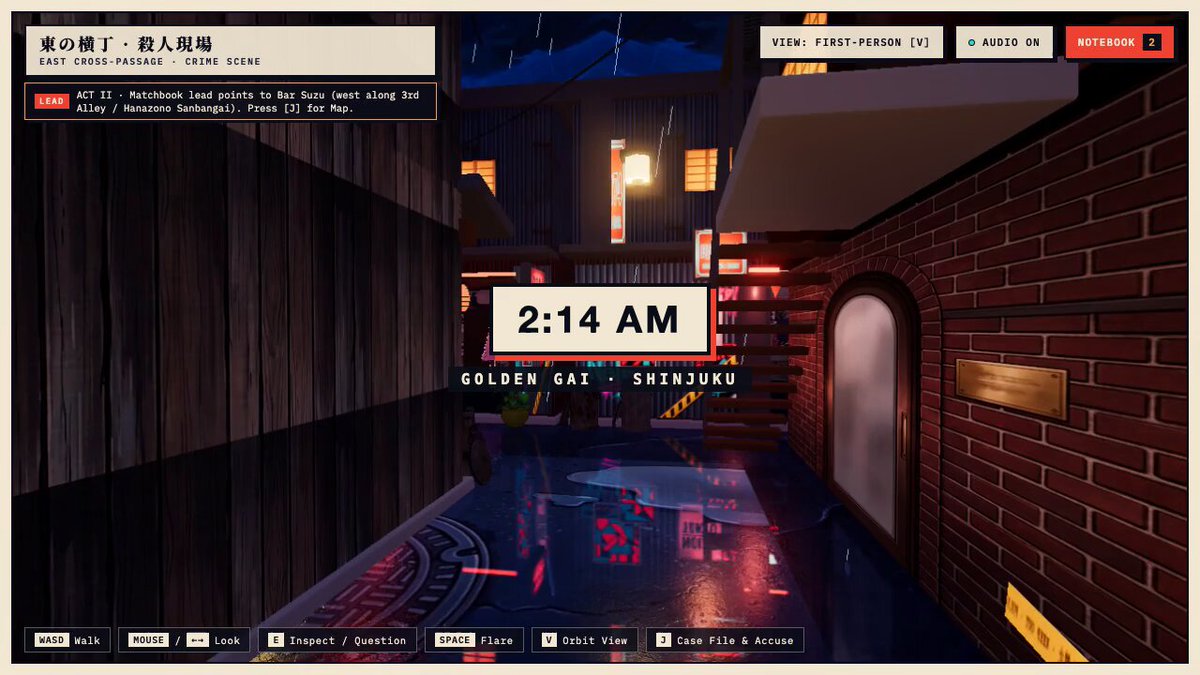
@venturetwins demonstrated a first-person mystery game made with Gemini 4 Neon. The model wrote the story, rendered a Three.js environment, populated 16 walk-in bars with characters and clues, and made a trailer. This is a creator-reported project, not an independent comparison of models’ software-development abilities.
One portrait becomes a photobooth strip
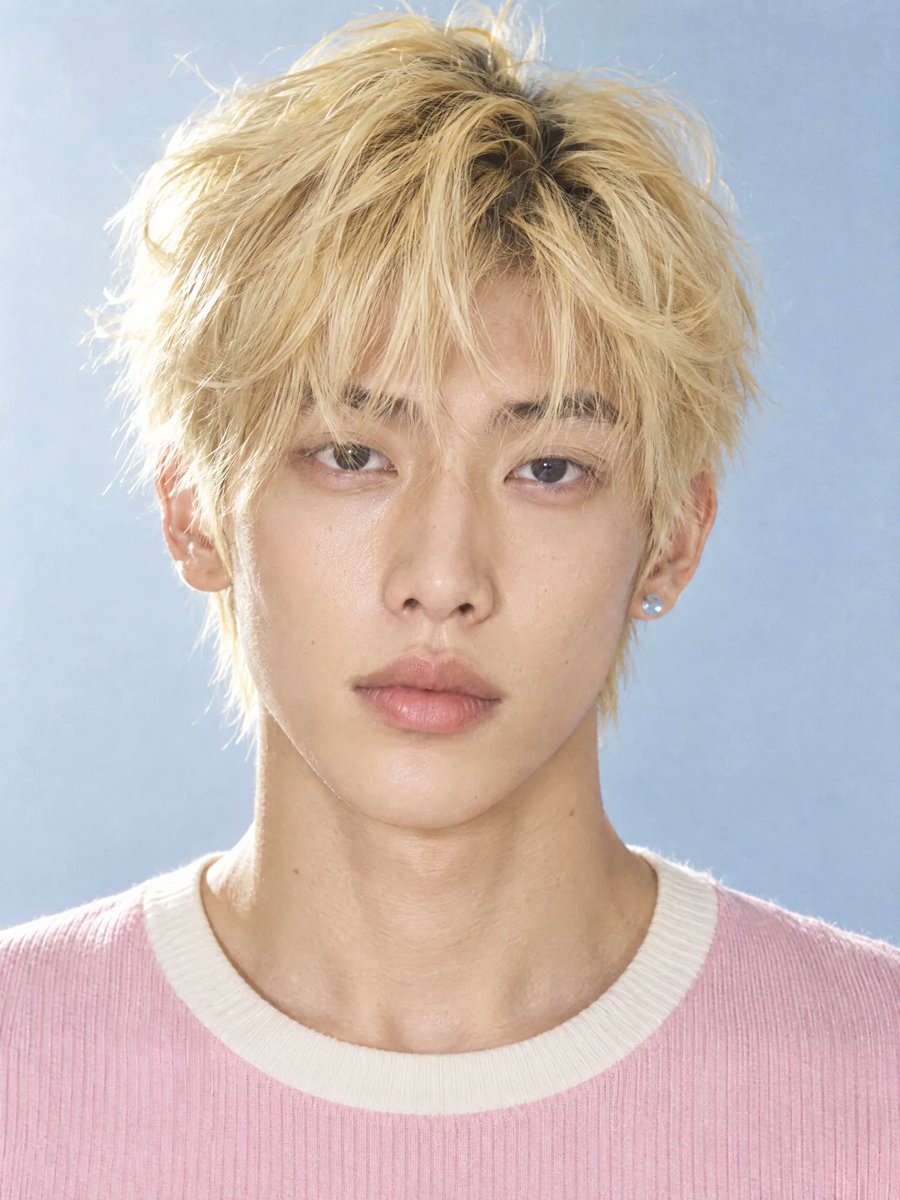
PixVerse demonstrated using MiniMax H3 Image to turn a single portrait into a photobooth strip and pointed readers to the prompt. It is a concrete image-editing example. The demonstrated result does not guarantee the same character consistency for every input.
When an agent says “verified,” where is the evidence?
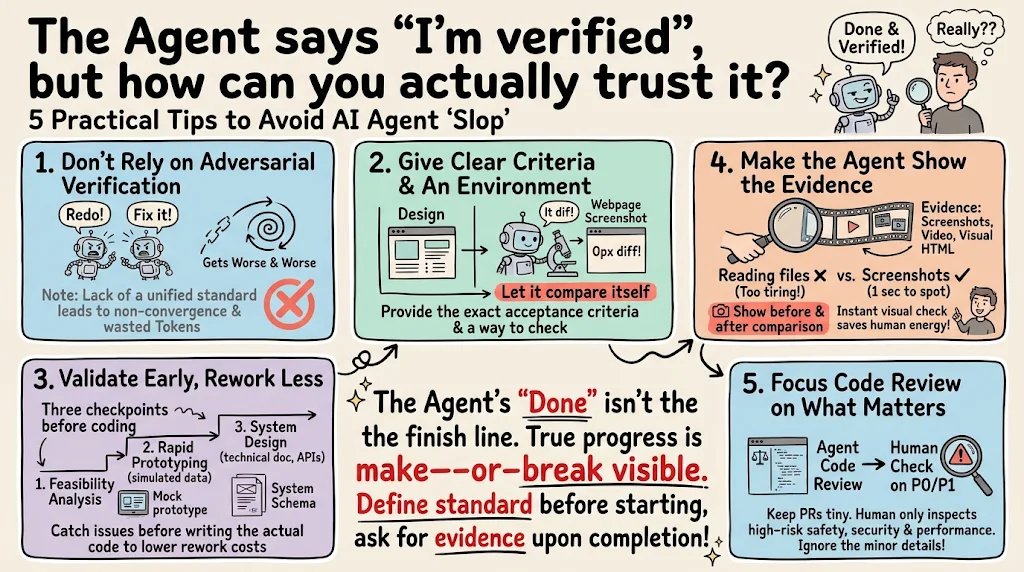
Baoyu discussed coding agents that claim verification is complete but leave problems that emerge after launch, asking developers to rethink acceptance checks. The collected text ends before the concrete method. This item preserves the question and viewpoint without inventing a checklist absent from the excerpt.
AI mathematics should offer human-readable explanations
Guillermo Rauch argued that AI mathematics should deliver papers, walkthroughs, new concepts and insights alongside results. He used the Riemann proof under discussion as an example. This records a position on understandability and does not confirm that the proof has been accepted by the mathematical community.
Researchers ask for full human–agent research traces
Arohan asked Anthropic and Levent Alpöge to release a cleaned end-to-end human–agent communication trace to clarify how models contribute to mathematical research. A request for records is not confirmation that a Millennium Prize problem is solved. The full proof environment and final recognition were not verified for this report.
Does passing formal checks imply understanding?
@lateinteraction reposted Chomba Bupe’s challenge to Claude’s mathematical work: a Lean verification result does not automatically show that the model understands the proof. The discussion separates checkability from understanding; the excerpt is insufficient to reconstruct the complete argument.
Biology cannot simply inherit Lean-style verification
LeCun reposted Patrick Heizer’s reminder that expectations of AI solving biology should account for the absence of a Lean-like formal verification setup. The comparison concerns verification methods: checks used in mathematics cannot simply substitute for evidence from biological experiments.
A call for representative validation data
Arohan reposted Dimitris Papail’s suggestion that OpenAI release a representative validation set as a contribution to open AI science. This is a request for research transparency. The material does not show that such a dataset has already been released.
Fleuret frames AI mathematics as an oracle
François Fleuret offered a different view: AI may function more as an oracle producing mathematical results, while the part humans can understand could become a small fraction of the whole. This is his prediction about AI mathematics, not technical validation of a completed proof.
Stronger AI calls for redesigning human work
Ethan Mollick worries that people may simply retreat as AI capabilities improve. He argues for redesigning tasks and user experience to keep human work central, instead of leaving only peripheral duties such as greeting and tidying. His position still recognizes the unevenness of AI capabilities.
A public guide from language models to agent swarms
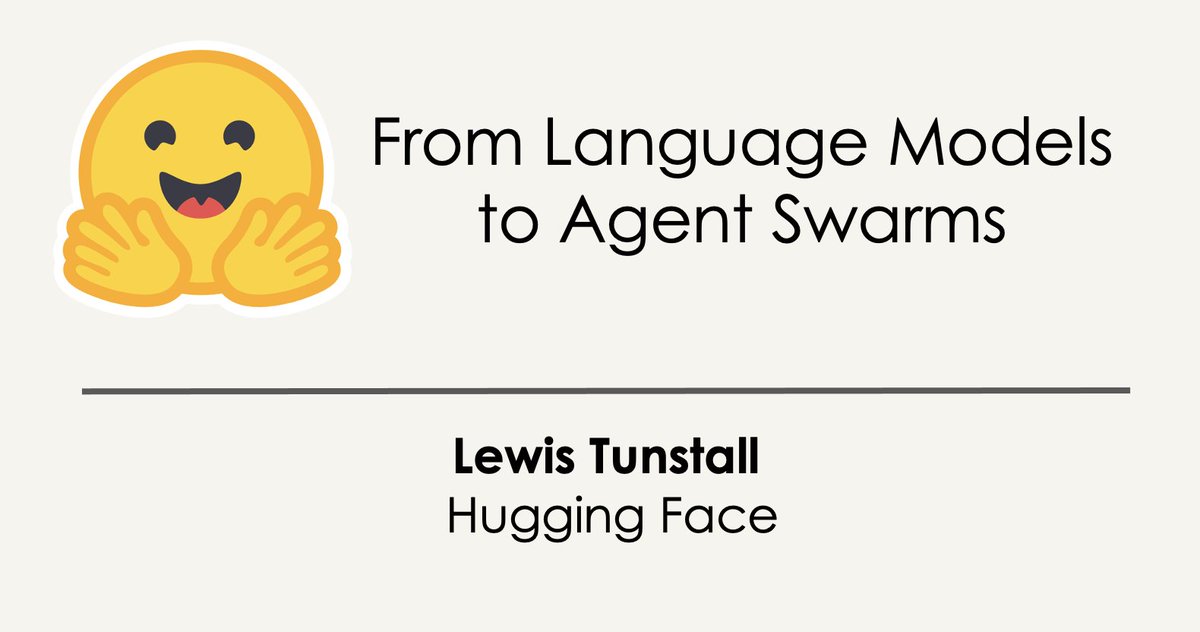
Lewis Tunstall published slides on Hugging Face for a talk to physicists. They connect scaling laws, reasoning models, coding agents, harnesses and automated research, then discuss using communication to steer and train agent swarms. The deck serves as a guide to the technical progression.
Sakana’s Tokyo symposium recordings go online
David Ha shared Sakana AI’s Tokyo symposium recap. The related public program covers world models, LLMs, the AI Scientist and Physical AI, with the full event available on YouTube for readers to revisit the research presentations.
Kling 4 showcases a 4K 10-bit HDR short
Kling’s official account shared an Eight Nights fantasy journey, labeled as made with Kling 4 in 4K 10-bit HDR. This is a creative demonstration, not evidence that every subscription tier and generation configuration supports the same output specifications.
Kling Image 4.0 arrives on Sunra AI
Kling announced that Kling Image 4.0 is now on Sunra AI, using an alien makeover to demonstrate realistic imagery. The update confirms platform availability without providing new pricing or API limits.
PixVerse’s Black Friday offers run through November 30

PixVerse advertises unlimited Nano Banana, free MiniMax H3, up to 90% off Seedance 2.0 and up to 80% off Kling 4.0 through November 30. Maximum advertised discounts do not necessarily apply to every package. Actual quotas and eligibility depend on the platform’s promotion terms.
Musk highlights software, chips and Terafab work
Musk described Tesla’s intelligence software, chip design and Terafab as interesting areas to work in. The short statement lists no specific vacancies, application route or hiring conditions.