OpenAI Sol's Price Cut Makes It Vercel's Fastest-Growing Model
Intelligence is getting cheaper — and the demand for it is proving highly elastic.
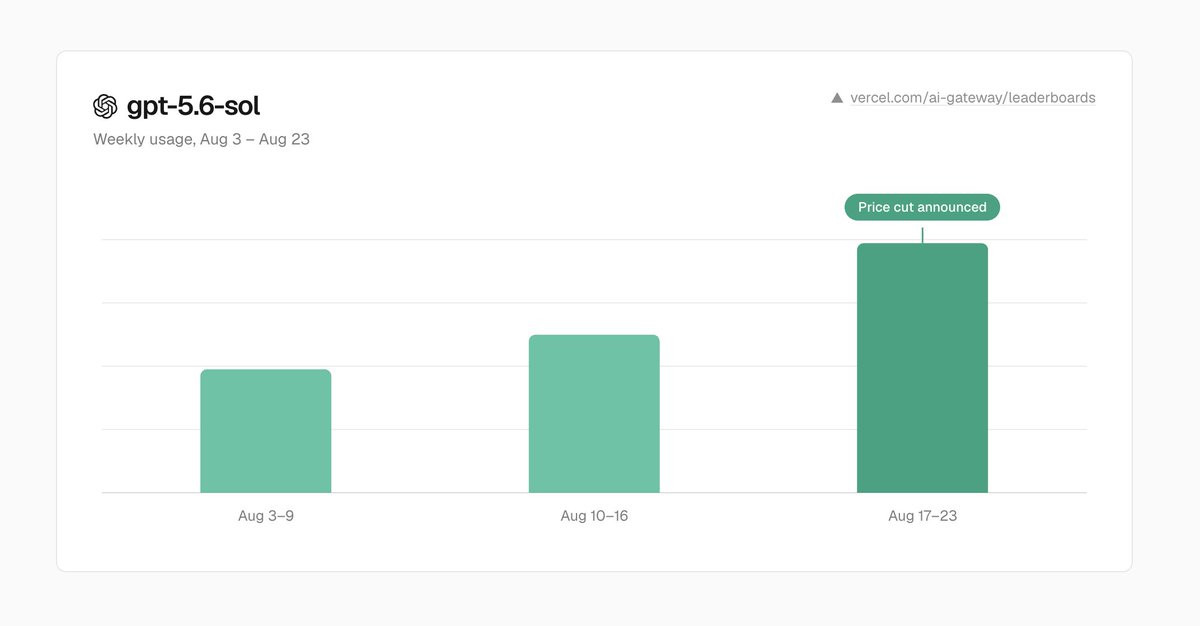
Intelligence is getting cheaper, and Vercel's chief executive Guillermo Rauch has the numbers to prove it. OpenAI Sol's price reductions, combined with discounts on the Vercel AI Gateway, have made Sol the platform's fastest-growing frontier model. The observation points to something structural: demand for intelligence is highly elastic. As inference costs fall, usage grows rapidly — and the platforms that pass savings on to developers capture the surge. Rauch's note lands as the frontier-model market enters a pricing war, with list-price cuts and gateway discounts now a primary competitive lever.
Sakana AI Signs a Defense-Ministry Contract for Intelligence Analysis
The Tokyo lab will research and validate AI capabilities for integrated analysis operations.
Sakana AI has signed a contract with Japan's Ministry of Defense to research and validate the AI capabilities required for integrated analysis operations. The project aims to bring AI into intelligence analysts' daily work — improving information collection, analysis, and systematic management. It follows an earlier contract with the Defense Equipment Agency on command-and-control research, and marks a notable expansion of frontier-lab work into the public sector.
Open source has gone from 28% to 62% of API token share — taking market share from OpenAI and Anthropic.
— data reposted by Yann LeCun
Ox, the Long-Horizon Mini Agent: Careful and Smart, but Cautious
Analysts describe Ox as a long-horizon small subagent with meticulous execution and cautious initiative — "a forward-deployed janitor with a PhD." It solves the tasks it is dispatched on carefully, but is not very ambitious. The same observers expect GLM 5.5 to drive it much harder.
Open Protocols and Unix Are the Keys to Agent Scaling
Vercel's CEO argues that MCP, Skills, and Plugins — alongside the Unix philosophy of small programs that compose by calling other programs — are how AI agents will scale. Open protocols, he contends, beat locked-in platforms.

Ox Alpha Impresses in a Multimodal and Coding Test
A blogger handed Ox Alpha a single reference image and asked it to recreate the webpage using WebGL. The model reproduced the 3D glass texture, perspective, and typographic layout so faithfully that only a side-by-side comparison revealed the difference. It is one of the clearest public demonstrations yet of the model's multimodal-to-code fidelity.
Video Generation Is Nearly 70% of China's AI Tokens
Short-form video and robotics are driving faster growth than coding assistants like Claude Code in the U.S.
AI Terms Need Precision: VLM, VLA, WAM
Jitendra Malik calls for scientific rigor, arguing the terms should not be casually conflated.
Impact Studies Using Only Old Models Need Caution
Ethan Mollick warns that findings tied to older models must state their limitations clearly for non-technical readers.
Conway's Law, Rewritten for AI Collaboration
AI is reshaping the traditional roles of product managers, architects, and QA — and the law still applies to human-machine teams.
Services Should Expose MCP/CLI, Not Built-In Agents
Users only need a few everyday agents; apps should integrate through MCP or CLI instead of forcing their own.
Capsule Networks Are Close Relatives of Attention
Small details decide whether an architecture works in practice — and Hinton was right, researchers note.
AI Slop Is Turning Social Media into an Echo Chamber
François Chollet warns that a growing share of social media is now AI-generated posts liked by bots — "an echo of an echo of an echo."
Why AI Is Fast but Robots Are Slow
Sarah Hooker points to AI's flywheel of data and compute, and explains why physical robots can't easily tap the same accelerants.
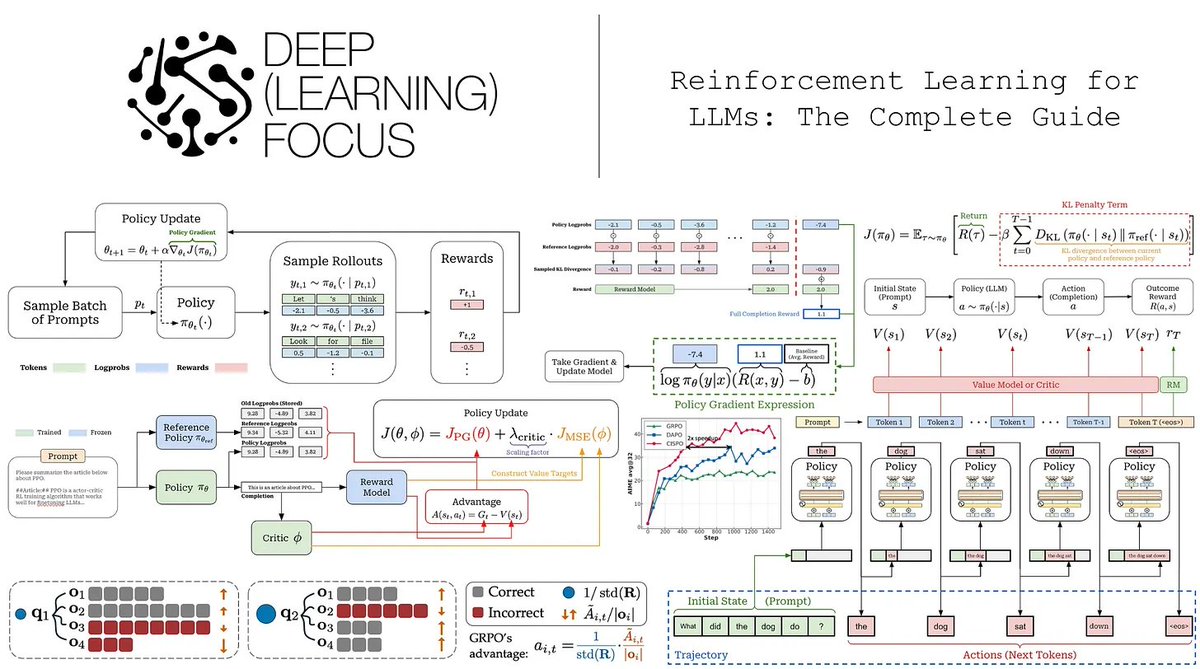
A Complete RLHF Guide, Now Free
The RLHF Book systematically covers reinforcement learning from human feedback, preference tuning, reward models, RLVR, and post-training.
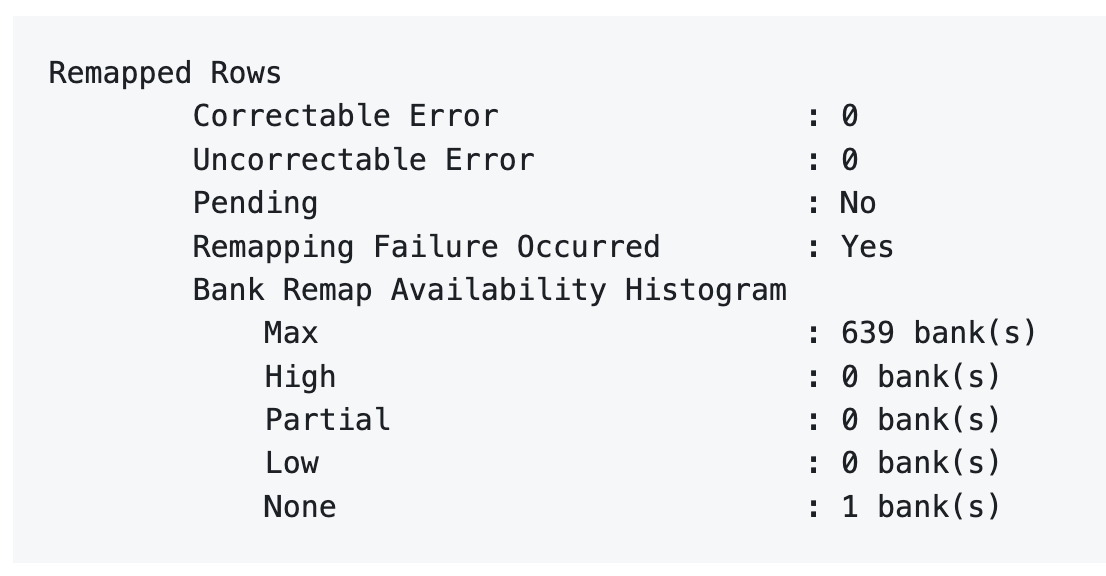
Checking GPU VRAM Row-Remapping Health
ml-engineering adds a chapter on detecting failing GPU memory, deciding when to RMA a card or stretch it with remappable banks.
Voice-Controlled, Hands-Free Codex
OpenAI's developer account teases a livestream where Alex Finn builds hands-free with voice in Codex on desktop and mobile.
A Company Built Inside Grok Bot
A user split Grok Bot into research, writing, and outreach roles to run a company; Musk reposted in approval.
Grok Bot Edits Video, Syncs Music
A reposted demo shows Grok Bot editing an entire video and precisely syncing cuts to the beat.
Filtering vs. Selection for Training Data
Researchers argue filtering is a poor tool for quality control and call for data selection instead.

Ox Alpha vs. DeepSeek V4 Flash, Side by Side
The same prompt and reference image across four models; Claude Fable 5 edges ahead on typography and chromatic aberration.

An AI Trailer on a $450 GPU
A researcher shares a trailer made on a single budget GPU, and the "suspension of disbelief" the process creates.
Can AI Choose for People?
François Fleuret likens intelligence to an organ between mind and reality: it helps execute, but cannot make choices.
Interpreting the Largest Weights
Even when networks break into interpretable parts, the interactions between the largest weights stay hard to decipher.
Consumer AI Is Underrated
Healthcare, government, and finance are where people truly need help — more than flashy demos, Mollick argues.
Grok Bot Is Now Free to Try
The xAI agent is open for everyday users, further lowering the barrier to trying it out.
Stable Audio Open Weights Win Hackathon Praise
Music hackers building on Stable Audio 3.0 stress why open weights matter.
Ollama Teams Up with Poolside and NVIDIA
Open model releases with Poolside, and optimism about Nemotron with NVIDIA.
Replit Imports 36 Skill Packs from GitHub
Developers can pull Matt Pocock's skills straight in to extend reusable AI abilities.
Gemini App Feels Fast with 3.7 Flash
Open, prompt, and go — developers praise the snappier experience.
Open-Source Models' API Token Share Rises to 62%
Data suggests open-source AI's token share has grown from 28% to 62%, taking market share from OpenAI and Anthropic.
As foretold in the prophecy
As foretold in the prophecy
Complete RLHF Guide Released: Covers Reward Models and RLVR
The RLHF Book is a free online book and course systematically explaining RLHF, preference tuning, reward models, RLVR, and post-training for language models.
ml-engineering Adds GPU VRAM Health Check Guide
The open-source project ml-engineering added a chapter on checking GPU memory row remapping health, helping determine when to return a card for replacement or use remappable memory to extend service.
FoloToy Launches AI PASSPORT DIY Wearable Kit
FoloToy opened early bird preorders for its AI PASSPORT DIY wearable kit, aimed at AI hardware and DIY enthusiasts.