DeepSeek open-sources its production inference engine
DeepInfer, the in-house framework behind V4.1-Flash's high-throughput, low-latency serving, is now fully open source — and it may reshape the economics of every model that follows.
DeepSeek has released DeepInfer, the internal inference framework that powers its V4.1-Flash model at production scale. The team frames the move as a way to help the community lower compute costs, reduce energy use, and make AI more accessible. Reaction was immediate: vLLM confirmed the stack was initially built on its project under Apache 2.0 and thanked DeepSeek for crediting the open-source community, while researchers pointed out that the official provider was already strikingly cheap and fast. Analysts estimate token economics could reach a 90% gross margin, reinforcing the sense that inference has become a money printer for labs that invest in serious serving infrastructure.
OpenAI acquires Orchestra Bio
OpenAI has acquired Orchestra Bio, a platform that helps biopharma teams coordinate the complex process of drug development. The incoming team will build on Rosalind, OpenAI's AI models and tools for life-sciences research, to streamline operations and help new treatments reach patients faster.
Claude designs anti-scorpion venom binders
On its science blog, Anthropic describes having a research version of Claude design minibinders against scorpion neurotoxins. Scorpions sting about 1.2 million people every year, and antivenoms are often costly or in short supply — making this an early step toward new treatments.
“Lack of electricity” is an oversimplification. Everything is hard about bringing massive compute online at extremely high speed.
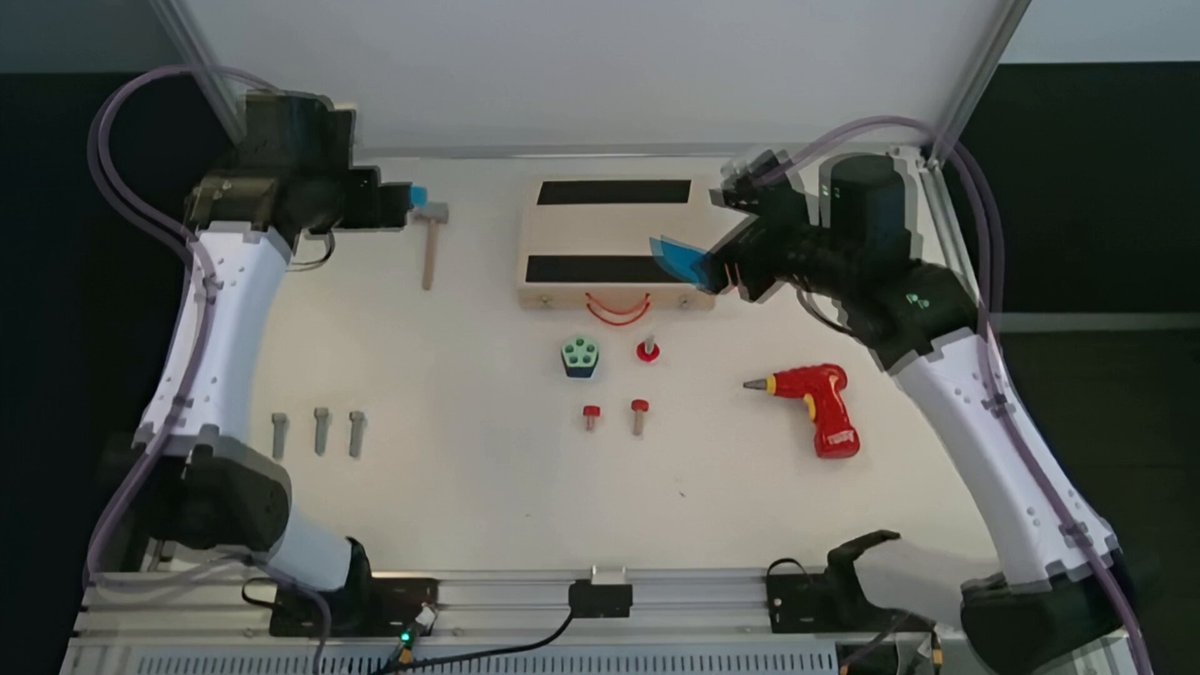
Flora: an open data engine for robots
NVIDIA's Jim Fan has released Flora, an open-source suite of models for parsing the physical world and converting raw footage into training data. The team says it reaches Astra-level performance at 125x lower cost, and the weights are being open-sourced today to power its in-house robotics pipeline.
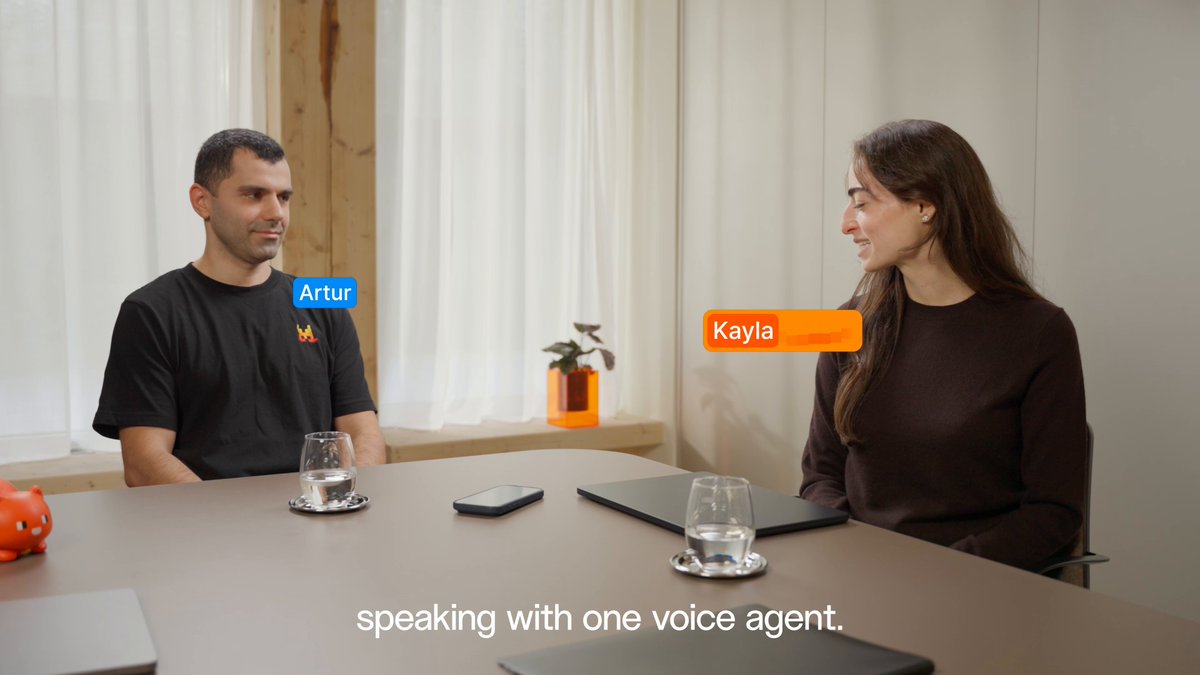
Mistral releases Voxtral 3 speech model
Mistral launched Voxtral 3, state-of-the-art transcription and speech models powering a new voice Agents API. CEO Arthur Mensch added that Voxtral can diarize speakers and detect end-of-turn on the fly, running on your infra or Mistral Cloud.
Vercel launches a durable Agent runtime
Vercel's durable-harness lets Pi, OpenCode, Codex, Claude Code, eve and fx run persistently on Vercel, automatically resuming after failures and running for hours, days or even months.
vLLM confirms DeepInfer builds on it
The vLLM project thanked DeepSeek for releasing DeepInfer under Apache 2.0 and crediting the open-source community, promising to keep improving V4.1 Flash inference efficiency using ideas from the release.
Mollick charts 30 months on the exponential
Ethan Mollick reviews 30 months of AI progress: 180 models now beat GPT-4, 19 can run on a phone, and METR long-task duration climbed from 4 minutes to 17 hours while per-task cost collapsed from 30 cents to 0.04 cents.
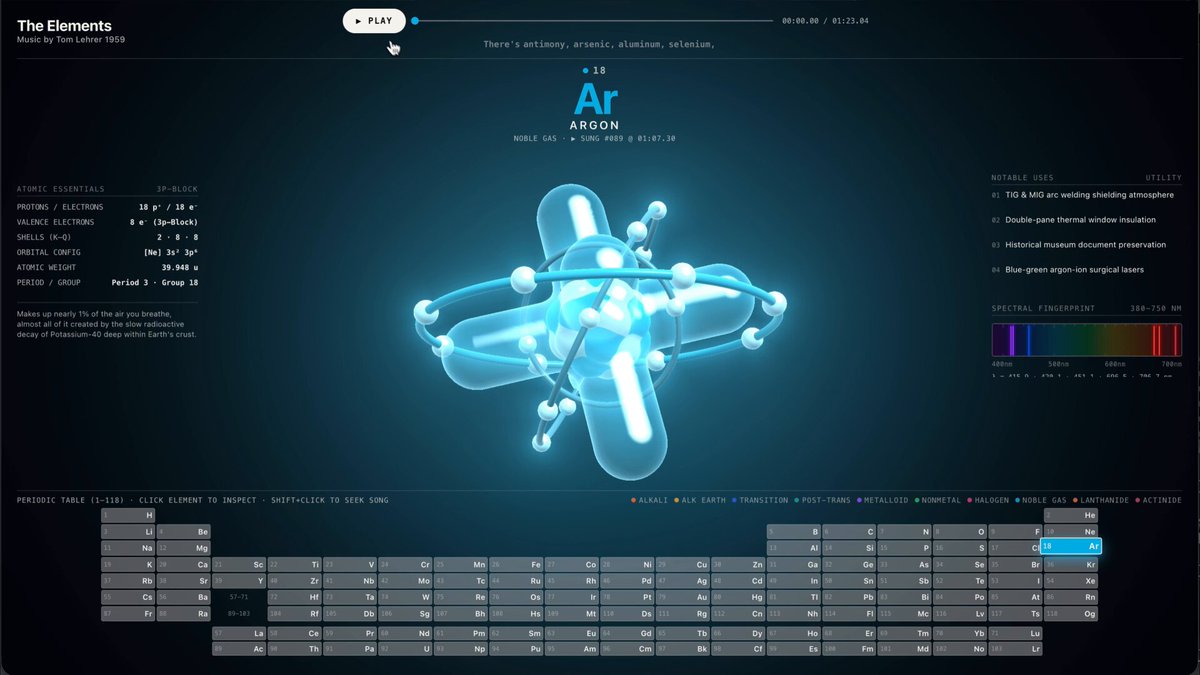
Gemini 4 builds a 3D periodic table

Perplexity Computer runs fully local
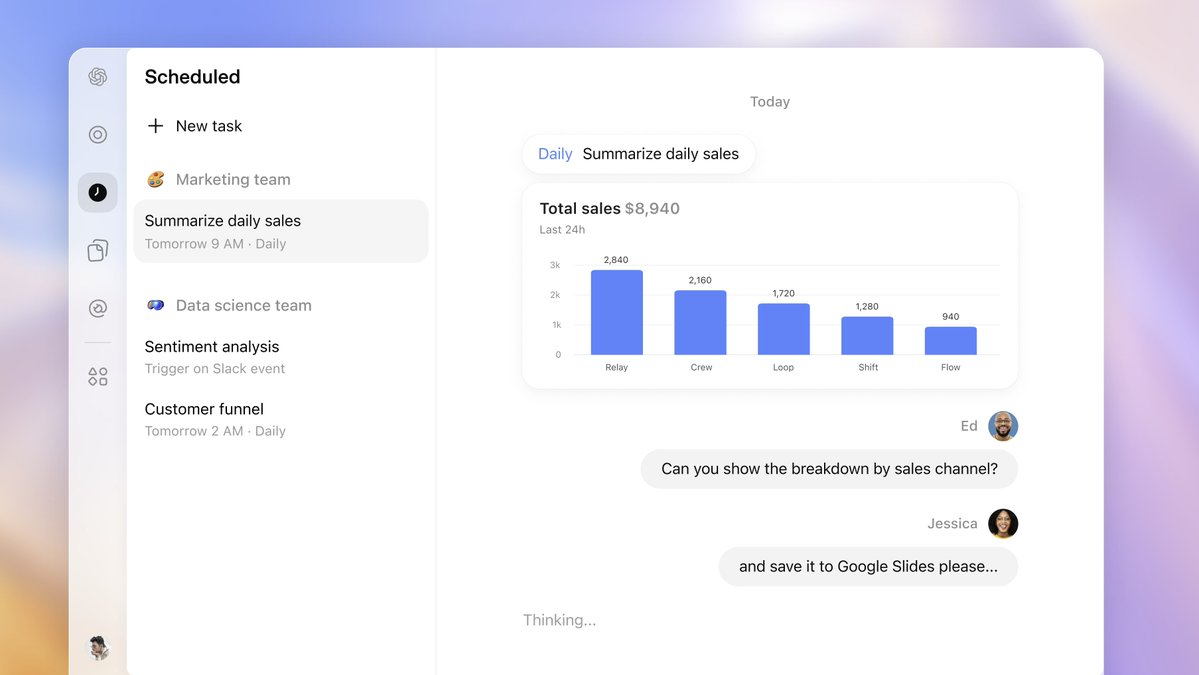
ChatGPT automates team tasks
OpenVLHarness: training-free visual Agent framework
A multimodal reasoning framework combining a capability layer, persistent memory and a coding interface, improving 22 benchmarks across 8 backbones by 9.7–12.6 points on average.
Agent evaluation field guide released
As LLMs evolved into Agents, the authors wrote a field guide for Agent evals, aimed at newcomers and veteran researchers steering the community.
Sakana proposes QD-Rec for recommendations
Sakana AI treats candidates and rationale hypotheses as recommendation units, using Quality-Diversity iteration to improve the diversity and quality of decision support.
A new mutual-information tokenizer
A self-supervised method estimates pointwise mutual information to supervise representations, avoiding dimensional collapse and improving latent tokenization.
Data filtering must follow compute
A neural scaling law accounts for data quality and repetition decay, arguing that data curation cannot be separated from total compute budget.
Neural networks as memory
Sander Dieleman recommends a blog that reads linear layers, MLPs and self-attention through a memory lens.
Runway joins Claude Marketplace
Enterprises can now fold Runway Creative's video, image and audio generation into Anthropic budgets.
OpenAI brings in Aleksander for safety
Sam Altman says Aleksander accepted the request to lead safety and security for the superintelligence era.
Open-weight models face new regulatory shifts
China's MOFCOM plans prior-approval for frontier AI sharing, while U.S. DHS bans DeepSeek as a federal supplier.
A view of AI as normal technology
Arvind Narayanan and Sayash Kapoor argue for a normal-technology safety view after recent loss-of-control incidents.
DeepSeek discloses more on Zhihu
Swyx notes DeepSeek published extra DeepInfer technical detail on Zhihu, beyond what Twitter shows.
Battle Drones: a browser RTS built with Claude
Simon Willison shipped a Command & Conquer-style RTS with 12 major versions and 321 commits, largely written by coding agents.
Luma launches Style Match
Upload 1–4 reference images to restyle while keeping the product and composition in place.
Ollama expands U.S. compute footprint
Ollama scaled its U.S. compute in recent months and toured Crusoe and Redwood Materials sites in Nevada.
Ornith 1.5 122B lands on Ollama
The end-to-end self-improving foundation model can now run locally on your device.
Vidu Q4 Preview sharpens VFX integration
Explosions, smoke, particles, fire and energy effects now integrate with light and motion.
Wan3.0 Prime tops OpenRouter video board
Alibaba's Wan3.0 Prime ranks first and Wan3.0 third, based on real request data.
vLLM and Physis-AI launch PhysisServe
Fine-grained stage pipelining and multi-stream scheduling optimize autoregressive denoising serving.
SGLang adds low-latency kernels
NVIDIA and AMD teams ship specialized kernels via sgl-nvidia-mega and sgl-amd-mono, covering models such as GLM-5.3.
Perplexity Decider leads financial benchmark
Arav Srinivas says Perplexity Decider reaches Pareto optimality on Vals AI's financial ClaimBench.
Kai-Fu Lee on hidden organizational signals
AI can surface signals buried in meetings, chats, code and tickets — but only if it understands an organization's unique semantics.
Voxtral 3 diarizes speakers in real time
Arthur Mensch confirms Voxtral distinguishes speakers and detects turn ends on the fly.
X ships an AI/SI timeline ranking model
Musk says X added an AI/SI ranking model to predict dwell time and a retrieval model for long-form reading, with active seconds hitting a record.
AI cyber risk is an ecosystem problem
Nathan Lambert argues cyber risk may not be unique to open-weight models, requiring a balance between openness and safety.
A roadmap for subjective-task evals
Cameron Wolfe previews statistical and ML tricks for reducing noise in subjective, open-ended task evaluation.
DeepSeek inference: cheap and good
Graham Neubig says DeepSeek's official inference is high-quality and inexpensive, calling DeepInfer a big release.
Steering AI away from automate-and-compensate
A new essay asks how to steer AI away from the automation bargain the public resists, while noting concrete proposals remain scarce.
ChatGPT launches locked chats
Sensitive conversations can be moved out of regular history and unlocked with a PIN or Face ID, for free and paid tiers.
Notion AI moves to credit limits
Business and Enterprise AI is no longer unlimited: 1,500 Standard plus 500 Select credits per person per month from November 2.
Tesla ties equity to Optimus rollout
Tesla is ramping Optimus production, and the latest proxy ties employee equity awards directly to the factory rollout.
Argon auto-iterates via NXCORR
fofrAI has Argon compare pipeline outputs with official images using NXCORR to iterate automatically.
DeepSeek's framework may push prices down
oran_ge says open-sourcing the low-cost inference framework will drive major price cuts across all models.
DeepInfer's heterogeneous limits
One technical critique notes DeepInfer does not optimize heterogeneous environments; 3FS and Dynamo can fill gaps.