OpenAI releases GPT-5.6-Cyber defense model
OpenAI expands its Daybreak cybersecurity program with GPT-5.6-Cyber, a model for advanced authorized defense tasks, putting frontier intelligence in the hands of trusted defenders.
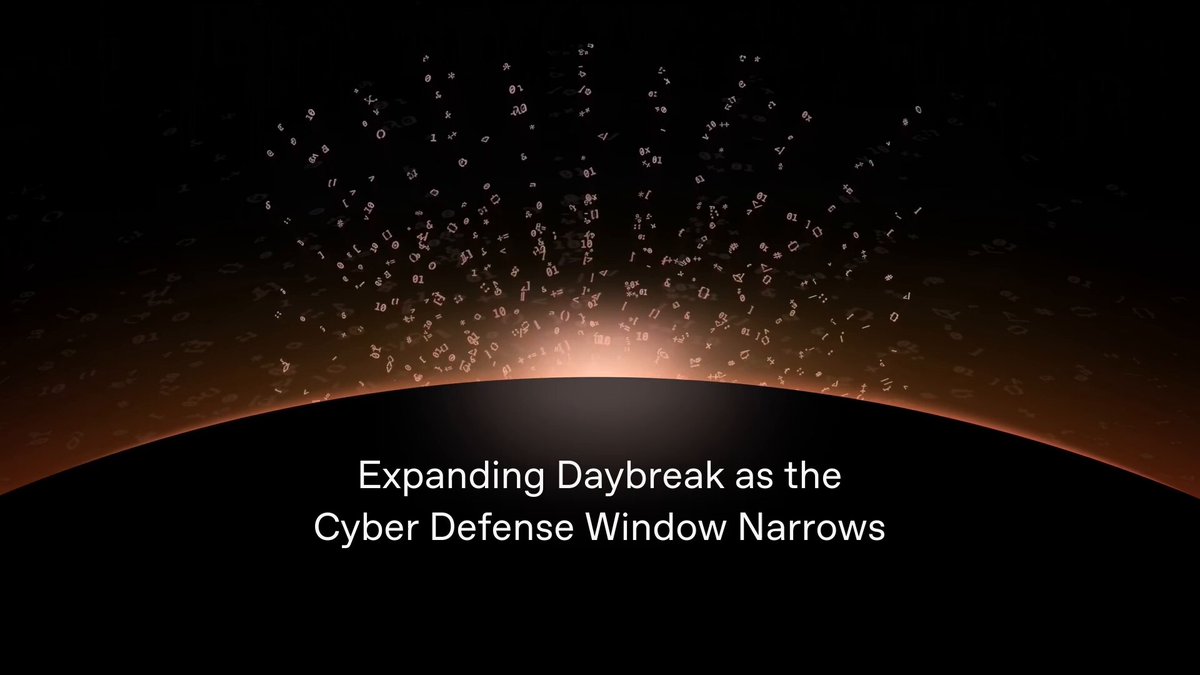
OpenAI announced the expansion of its cybersecurity initiative Daybreak alongside the launch of GPT-5.6-Cyber, a specialized model designed exclusively for advanced, authorized cybersecurity operations. As the global threat landscape continues to evolve at an accelerating pace, the company is placing frontier intelligence directly into the hands of trusted defenders, ahead of potential adversarial deployment. The model is engineered to assist security professionals in identifying vulnerabilities, analyzing attack surfaces, and orchestrating defensive measures at machine speed. By providing defenders with the same caliber of intelligence that attackers may attempt to deploy, OpenAI aims to reshape the asymmetry that has long favored offensive cyber operations.
Research Claude improves Riemann hypothesis zero bound
An unreleased research version of Claude was tasked with tackling the Riemann hypothesis, one of mathematics' most famous unsolved problems since 1859. While the model did not prove the conjecture itself, it made significant strides on a closely related problem: it raised the lower bound for the fraction of zeros of the Riemann zeta function that satisfy the hypothesis from 41.6% to 67.2%. This marks a notable advance in analytic number theory driven by artificial intelligence, demonstrating that frontier models can meaningfully contribute to pure mathematics beyond conventional applications.
NVIDIA unlocks $500B+ in AI compute funding
NVIDIA is partnering with six of the world's leading long-term capital providers to establish independent financing platforms aimed at mobilizing over $500 billion of third-party capital. The initiative is designed to help customers access AI compute at scale, positioning NVIDIA compute as a productive, investable asset class. The move signals a structural shift in how AI infrastructure is funded and scaled globally, bridging the gap between capital markets and the growing demand for frontier training and inference capacity.
Meta open-sources Muse Glimmer 30B agent model
Meta has released Muse Glimmer, a 30-billion-parameter model under the Apache 2.0 license, optimized for on-device, always-on agent workflows. The model is designed to run on a single GPU while delivering strong performance on key agentic benchmarks compared to leading models in its size category. Meta's decision to open-source a model from its Superintelligence Labs marks a major milestone for the local agent ecosystem, enabling developers to run powerful AI assistants entirely on-device without cloud dependencies.
Alibaba open-sources Qwen-MM-Plugins multimodal agent toolkit
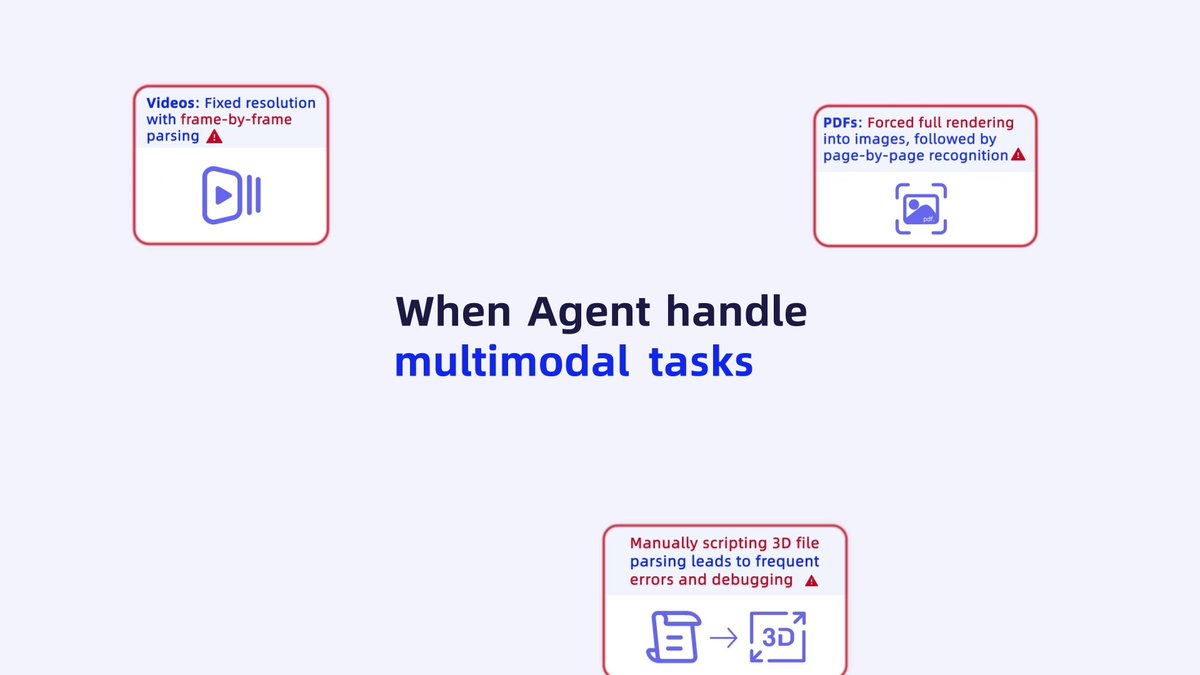
Qwen-MM-Plugins gives any agent framework native support for image, video, document understanding, plus video editing and 3D/CAD operations, turning multimodal models into multimodal agents.
SGLang v0.5.17 adds Kimi K3 and MiniMax-H3
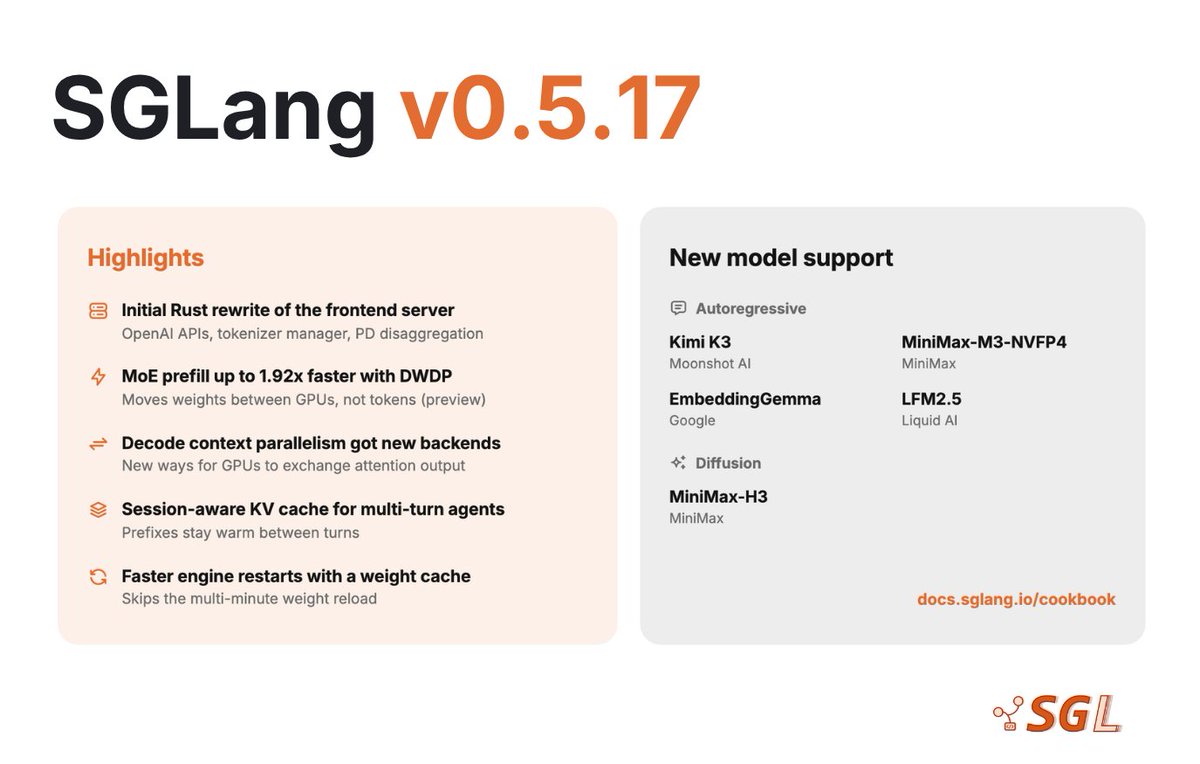
New SGLang integrates Kimi K3 into the mainline with KDA-aware prefix caching, DSpark speculative decoding, and DCP for 1M context, working on both NVIDIA and AMD GPUs.
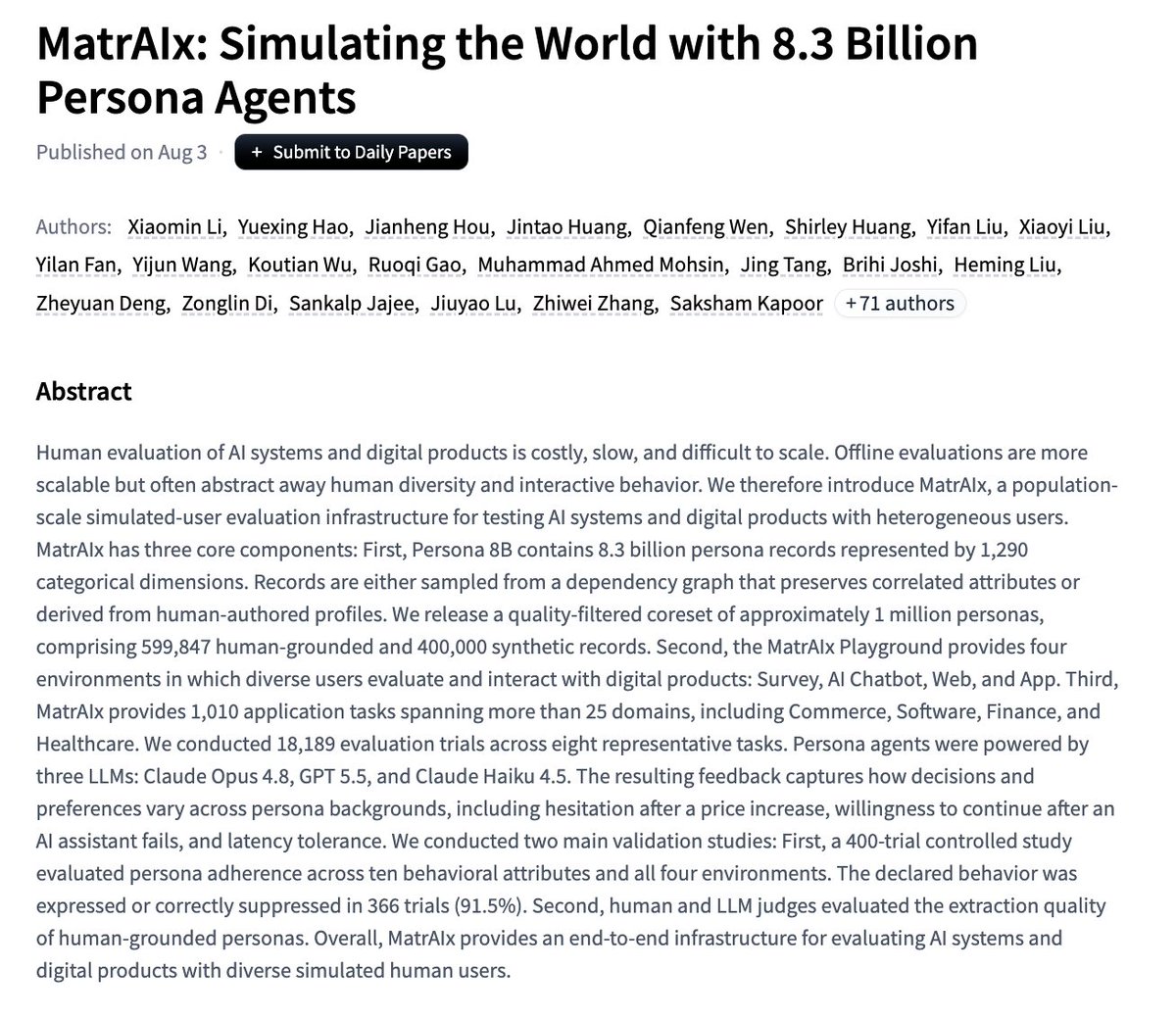
MatrAIx: 8.3 billion persona agents simulate the world
The Persona-8B dataset features 8.3 billion personas across 1,290 dimensions, with 1 million core samples, using GPT-5.5 and Claude to drive large-scale social simulation experiments.
Sakana AI moves into physical AI and robotics
Sakana AI announces its next frontier for recursive self-improvement is physical AI, expanding the Tokyo-based lab's research into robotics and embodied intelligence.
Claude Code auto mode becomes default
Claude Code no longer requires approval for every action; auto mode is enabled by default, and its safety decision mechanism is now publicly documented.
Redis author builds MiniMax H3 engine for Mac
Thanks to open weights, the creator of Redis implemented a Metal-accelerated MiniMax H3 inference engine for Mac, proving the portability and community value of open-source AI.
Coding isn't yet another application domain — it's the meta-skill required for AI to automatically develop its own training material, via symbolic world models. That's how the RSI loop actually kicks off.
François Chollet
Ollama runs Muse Glimmer on Apple Silicon
Muse Glimmer runs locally via Ollama's MLX engine with state-of-the-art performance on Apple Silicon, powering Claude Code and Codex agent workflows.
vLLM delivers day-zero support for Muse Glimmer 30B
30B dense, 128K+ context, multimodal — vLLM ships day-zero support for Meta's first Apache 2.0 open-weights model from Superintelligence Labs.
Perplexity Agent API launches K3 in US
The K3 frontier model is now available for US-hosted inference via the Perplexity Agent API.
Vercel CEO stresses dual isolation for AI sandboxes
Container isolation alone is insufficient — microVMs should isolate compute, and egress firewalls must restrict untrusted code at the network boundary.
Deep dive on midtraining and CPT for domain-specific LLMs
A practical guide on continued pretraining versus midtraining: adjusting data mixing between pretraining and post-training to build high-performance domain models.
Full DiffusionGemma technical report published
Google shares complete training pipelines and insights for diffusion-based Gemma models in the official technical report.
Training data fears slow US open-weight frontier releases
Data concerns may explain why US tech giants hesitate to open-source frontier weights; K3 crossing 1e25 flops is reshaping the calculus.
Why pinned host memory is never freed
A deep technical article covers pinned memory benefits for GPU DMA and the engineering challenge of releasing buffers due to async copies and CUDA graphs.
Simon slams Claude Haiku hallucinations
Simon Willison calls Claude Haiku his least favorite model, citing wild hallucinations, and notes it is now outperformed by similarly priced models like GPT-5.6-Luna. Worse: Claude Code WebFetch still uses it, introducing hallucination risk on every URL fetch.
The real problem with data centers
Compared to the light industries of previous industrial revolutions, data centers don't require many people to run them — though building them takes more. This breaks the trade-off between palpable local negative externalities and palpable local gains, creating a unique political friction.
AI bubble or not, the tech works
I don't know enough about finance to know if AI is a bubble. What I do know is the tech works and that wouldn't stop it. The dot-com bubble burst, and the internet still went on to be even bigger than the hype.
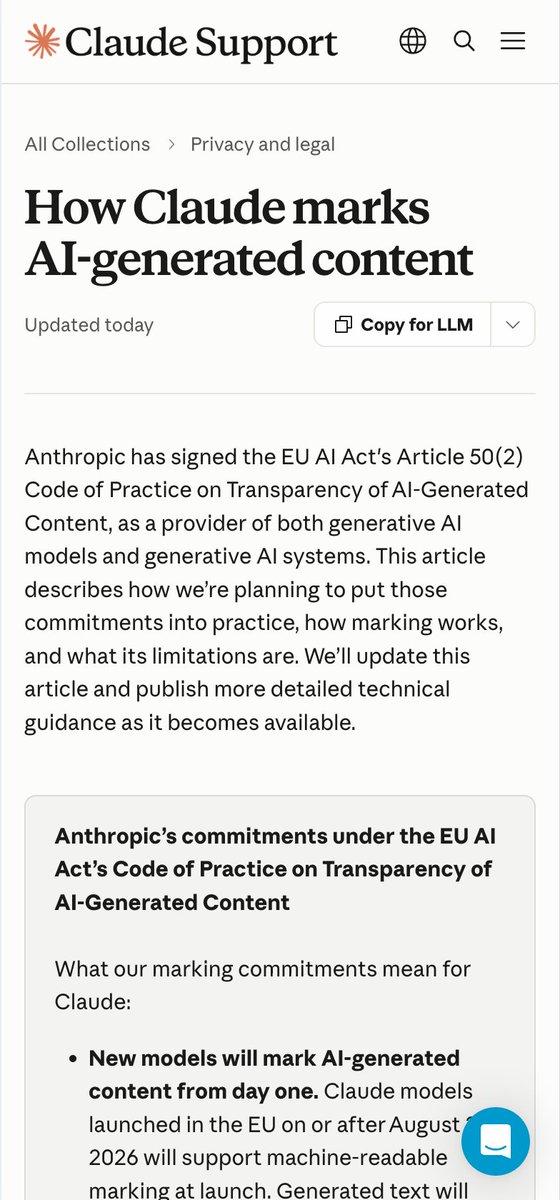
Anthropic adds machine-readable watermarks to Claude outputs
Anthropic announces machine-readable markers in Claude output: invisible watermarks embedded in text and digital signature metadata attached to generated files. Since August 2, all newly released Claude models implement this mechanism, in compliance with the EU AI Act Article 50.
Public info commons for AI agents launches
Inspired by the OpenAI-HuggingFace incident, a public platform for AI agents opens with tell and lookup APIs.
Frontier models can't do truly new research
Even the most advanced models only retrieve and combine literature fragments rather than conduct genuine open-ended research.
Seedance 2.5 arrives on PixVerse
60-second character-consistent, narrative-driven short films now possible; creation contest with cash prizes.
P-Image-Ideogram generates images in 0.6 seconds
Four quality modes to balance speed and detail; now available on Runway.
Claude Opus 5 system prompt adds Fable export note
Anthropic includes Fable export control details in Claude Opus 5's system prompt for post-cutoff questions.
Sandbox egress firewall now free for all plans
Untrusted code must be contained at the network boundary, not just the runtime.
Muse Glimmer 30B now available in LM Studio
Apache 2.0 license; officials call it the strongest model of its size class tested.
Cohere CEO on three demands for open-source models
Users want models that are customizable, affordable, and secure; sovereign products expand to meet these needs.
Responsible AI infrastructure build in Texas
Greg Brockman shares OpenAI's approach to responsibly developing AI infrastructure in Texas.
AI Scientist recognized in Japan CRDS report
JST-CRDS cites Sakana AI's AI Scientist as a representative case for AI-driven full-cycle scientific research.