Grok 4.7 Arrives and Cracks the Agentic-Coding Top Three
SpaceXAI ships its most capable model yet at the same price and speed as Grok 4.6, and the early benchmarks back up the bravado.
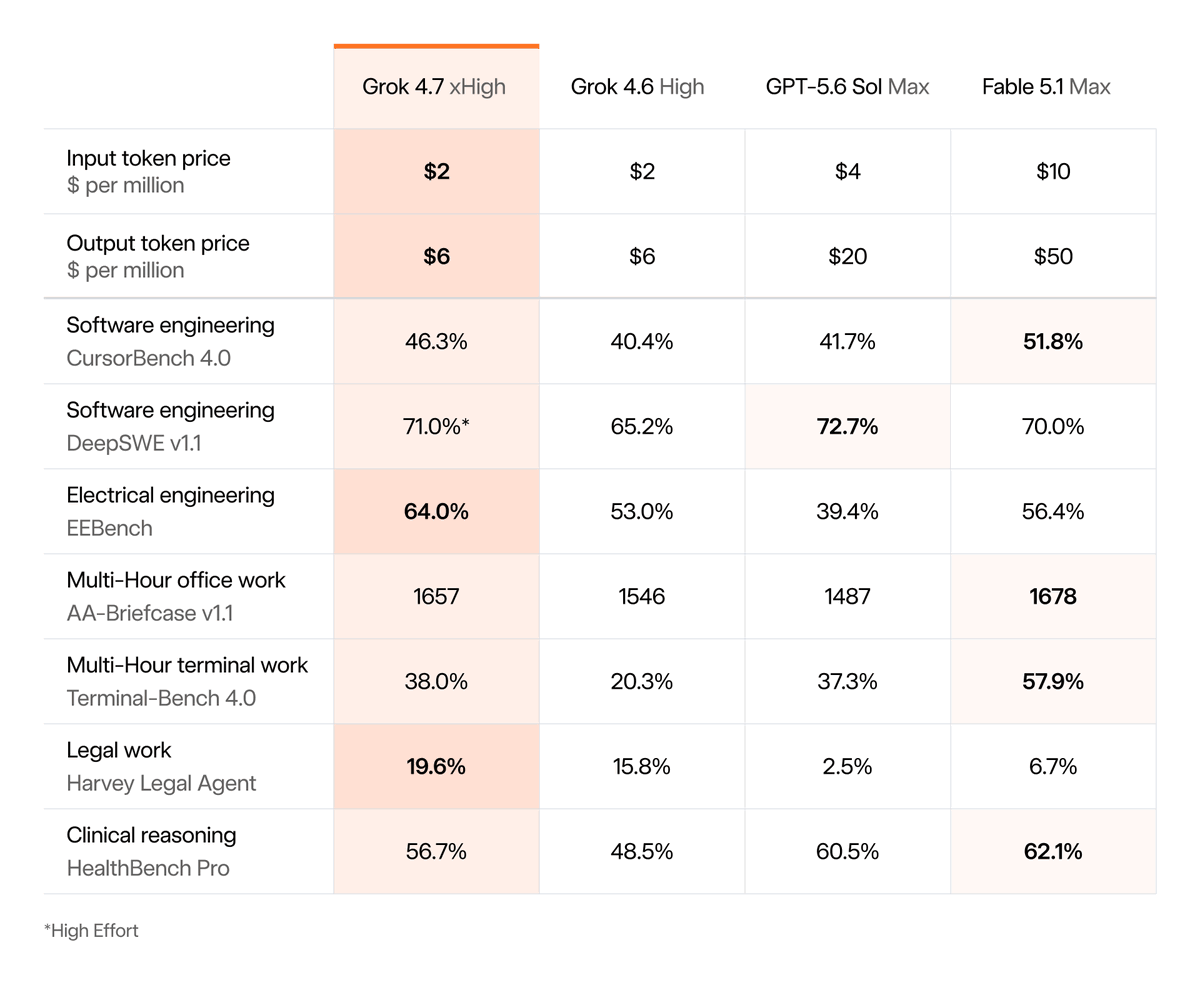
SpaceXAI released Grok 4.7 on Monday, and the first day of reception read like a corner being turned. Musk framed the launch in the terms that matter most to working engineers: the model now places the lab third, behind Anthropic and OpenAI, on agentic coding, and once its speed and lower cost are factored in, it becomes the everyday workhorse.
The supporting numbers arrived quickly. A model card circulated by early testers showed Terminal-Bench climbing from 20.3% to 38.0% against Grok 4.6, alongside gains on long-horizon office work and a near-perfect score on the AA-Briefcase benchmark. Nvidia, which supplies the accelerated compute behind the run, congratulated the team on its most capable model yet for coding and knowledge work. Grok 4.7 is now live in v0 and on Vercel's Gateway at 40% off through September 27.
Xiaomi Opens MiMo-V2.6, the New Open-Weight Frontier
Two natively omnimodal models, Pro and Flash, ship under MIT license with day-0 support across the serving stack.
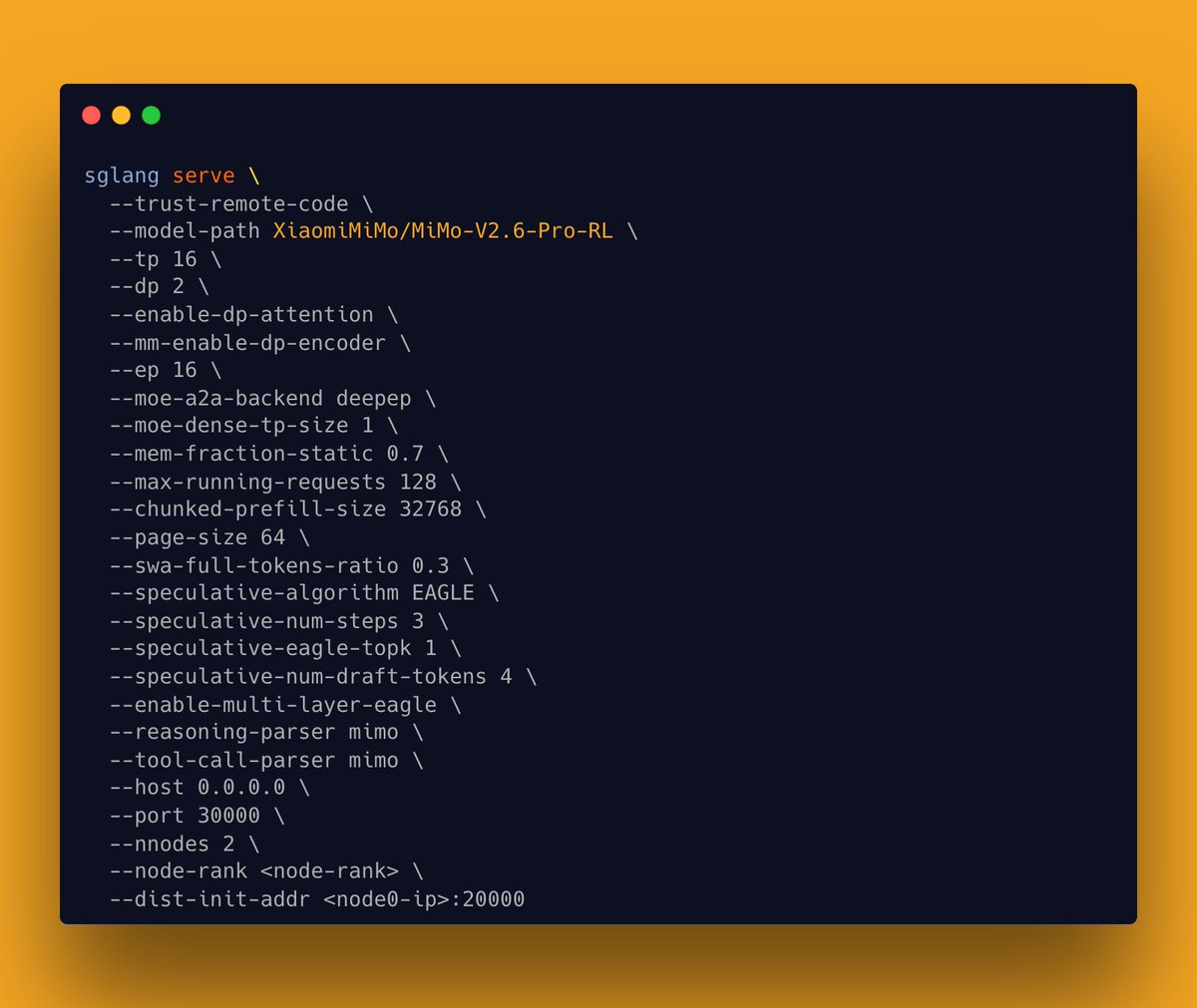
Xiaomi released the weights for MiMo-V2.6 Pro and Flash on Monday, and the open-weights community responded as if it had been waiting all year. Pro totals 1.02 trillion parameters with 42 billion active; Flash runs 309 billion total with 15 billion active. Both fold text, image, video, and audio into a single checkpoint, with a 1M-token context, native FP8 weights, and a built-in DFlash speculative decoder. Artificial Analysis placed Pro at the top of its open-weights index.
The rollout is as striking as the specifications. SGLang and vLLM both announced day-0 inference support, and the team shipped an RL dashboard and a technical report alongside the weights, an unusual degree of transparency for a lab now pushing the open frontier.
OpenAI Says an Internal Model Cracked Navier-Stokes
OpenAI announced that an internal model, which began training on August 28, has solved the Navier-Stokes equations, one of the seven Millennium Prize problems, and cleared more than a hundred long-open problems across mathematics. The company is working with an independent advisory group of mathematicians to decide how to assess and communicate such results responsibly.
The announcement landed unevenly. While some researchers celebrated a historic result, others questioned the pace of disclosure, and a wave of commentary debated whether the mathematical community is ready for the change.
Delegate coding. Never delegate understanding.
François Chollet
Jev: A New Shape of LLM
TypeSafe's System One model takes text and returns floats such as classifications, scores, and confidence, at $0.042 per million input tokens with output free.
Tokenizers v1 Ships a Release Candidate
Hugging Face's Rust rewrite is 3x to 30x faster, with a new opt-out training crate and broad language support.
Qwen-Image-2.1 Goes Live
A 7B native generation-and-editing model with up to ten image references, now in Diffusers and on Hugging Face Spaces.
Perplexity Computer Makes Video
MiniMax H3 and ByteDance Seedance 2.5 now power campaign clips and product demos for Pro and Max subscribers.
Halo Claims 2.8x Throughput
A new open framework for post-training open-source models, with SGLang powering its rollout engine.
ZCode Is Now Apache 2.0
Z.ai's coding workbench ships desktop, browser, and terminal agents under an open license.
A Startup Gave Its Final Product to the Robotics Community
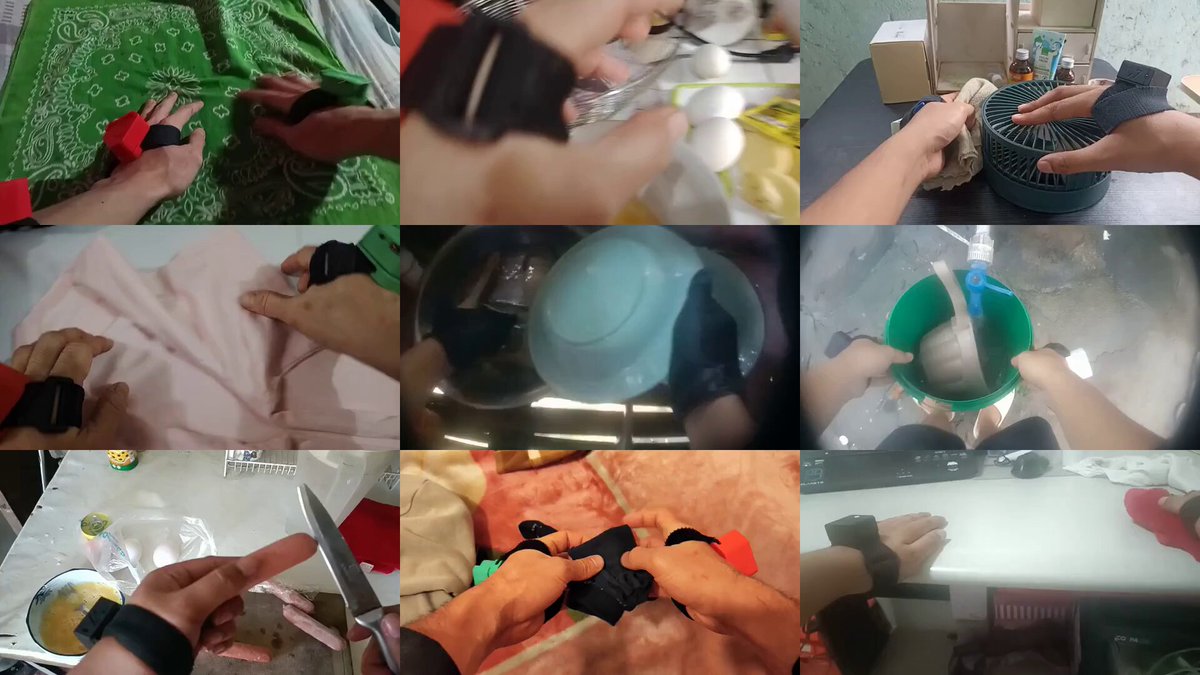
When most companies shut down, their work disappears with them. Eidon AI chose differently. The robotics startup open-sourced 1,274 hours of egocentric video with paired 7-IMU arm tracking, 13,451 recordings of people doing everyday tasks, under CC-BY-4.0. It is a rare and valuable gift to a field where real-world demonstration data remains the scarcest resource.

Firefly's Image-to-Video Tool Is Now Free
Adobe rolled out a free online image-to-video feature that turns stills, sketches, photos, and pictures into motion with fine creative control. It joins a crowded week of image and video releases across the industry.
Dettmers' Lab Goes Fully Open
Tim Dettmers' lab begins an open-source week: two software frameworks and four papers, themed "Frontier AI on Hardware You Own," with SoTA results in autocompaction, autonomous research, and model compression.
vLLM Moves Video Decode to the GPU
PyNvVideoCodec offloads decoding to NVDEC, delivering over 2x throughput at 8x H100 and eliminating the CPU bottleneck for large-scale video captioning.
Genjutsu Controls the Whole Frame
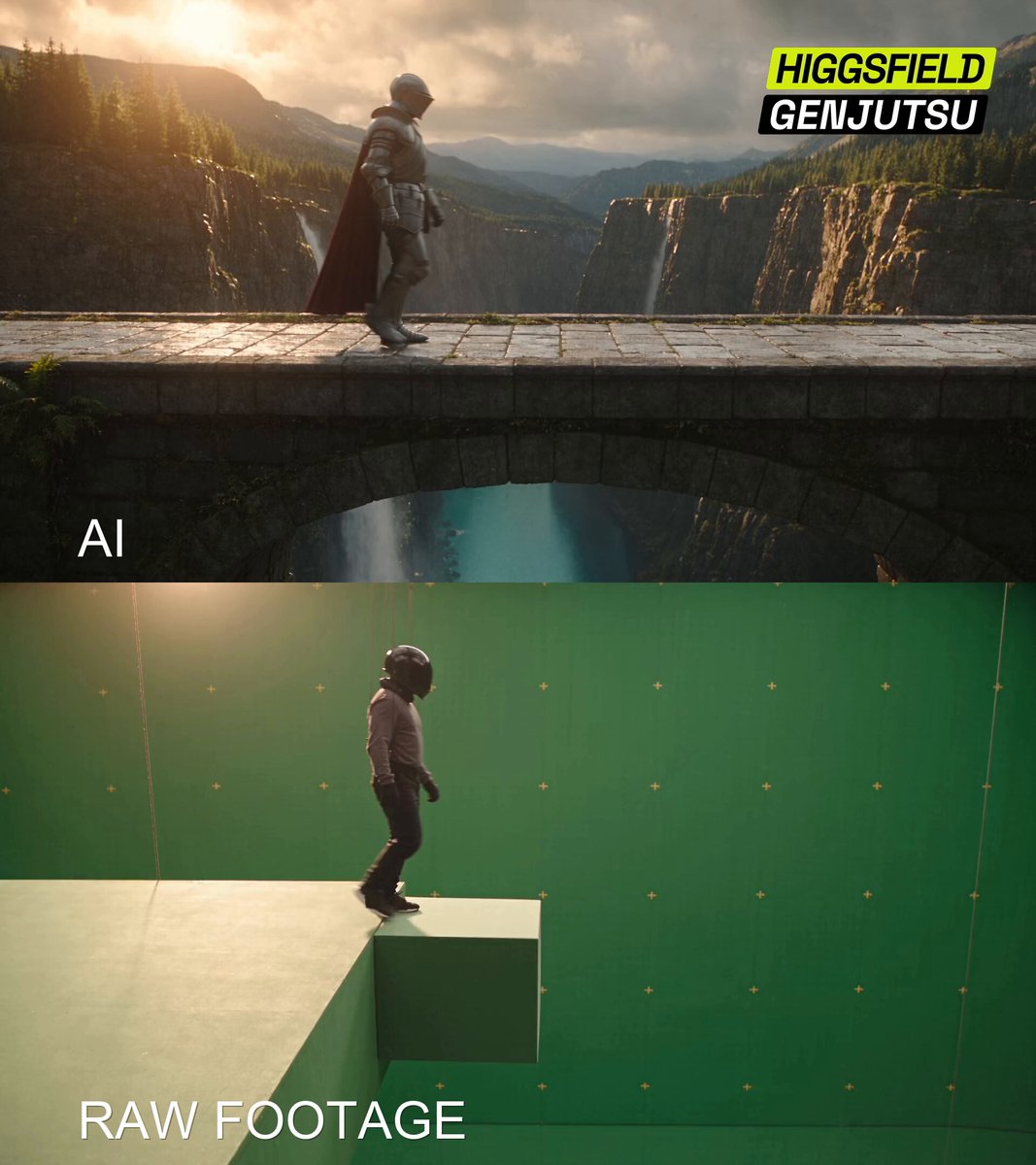
Motion control that repeats acting, camera, and edit one-to-one in any world you choose.
Runway Expands Its Workflows
Compositing, alpha, HDR, depth maps, and RGB depth now live in a single pipeline.
Cinematic Motion in Recraft V4

A new style adds dynamic blur and dramatic movement to every frame.
Grok 4.7 Lands in v0
Vercel's v0 adds Grok 4.7 at 40% off through September 27, for generating and deploying full-stack web apps in minutes.
Qwen-Image-2.1 on SGLang
SGLang-Diffusion serves generation, editing, and transparent RGBA output.
GLM-5.3-Flash Hits 200 tok/s
The faster "flashx" variant is priced at 2.5x the base flash model.
Vidu S2 Edits in Real Time
Switch styles, outfits, subjects, and backgrounds instantly.
Maestro v2.3
Qwen Image 2.1 generation, 30-second H3 clips, and YuE2 music LoRA.
MiMo-V2.6 Tops the Index
Pro debuts at 46 on the Artificial Analysis Intelligence Index.