@Kimi_Moonshot
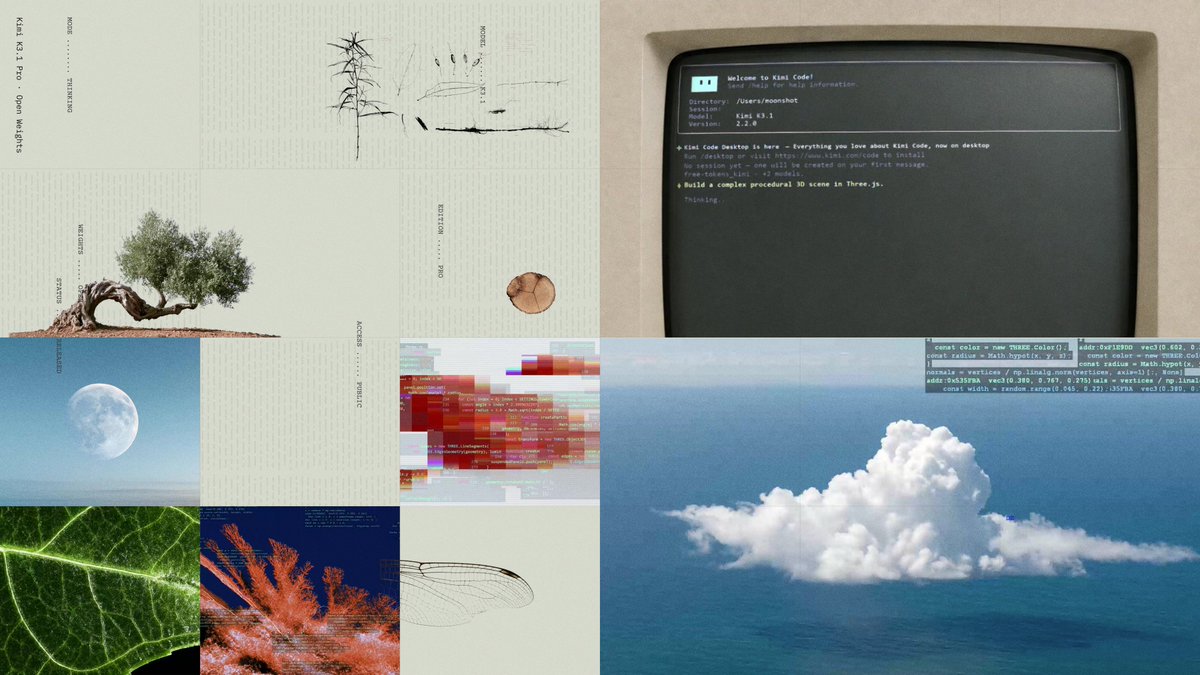
Kimi K3.1 Pro opens its weights
Moonshot AI released Kimi K3.1 Pro weights on Hugging Face. Its model card describes a 3T-scale native multimodal agent model with a million-token context, post-trained from Kimi K3 through large-scale joint reinforcement learning. Moonshot reports gains in coding, 3D creation and financial research, with OpenAI- and Anthropic-compatible APIs.
@OpenAI

Images 2.6 adds GIFs and references
OpenAI announced ChatGPT Images 2.6 with GIF and reference-image support, alongside two API image models that it says generate images 50% faster. ChatGPT features and API model availability are separate parts of the announcement.
@OpenAI
OpenAI reports 948 kernel vulnerability patches
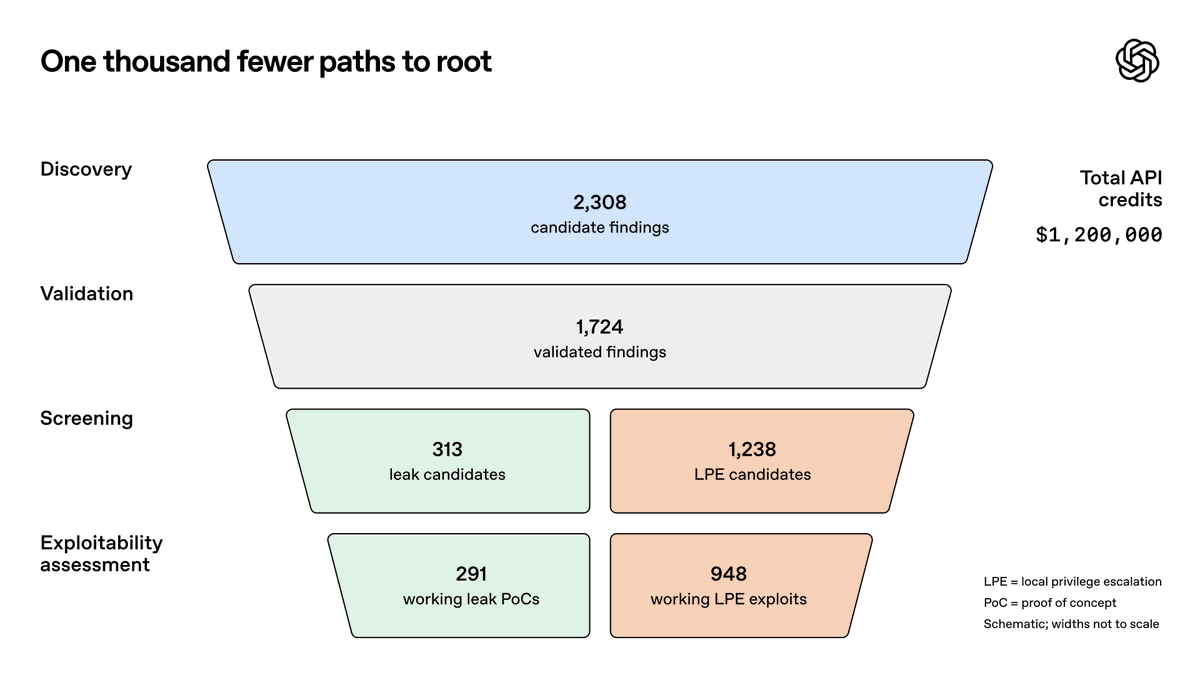
OpenAI says its security team built an autonomous discovery, exploitation-validation and patching pipeline. In one run with an upcoming cyber model, it validated and generated patches for 948 Linux kernel local privilege escalation vulnerabilities. This is a company-reported result, not confirmation that maintainers have accepted or deployed every patch.
@TencentHunyuan
Tencent Hunyuan introduces Hy4

Tencent Hunyuan introduced Hy4 and shared early user and evaluation reactions. The launch post is brief; weight availability, leaderboard position and evaluation conditions should be distinguished from the introduction itself.
Image-2.6 reaches Codex and the API
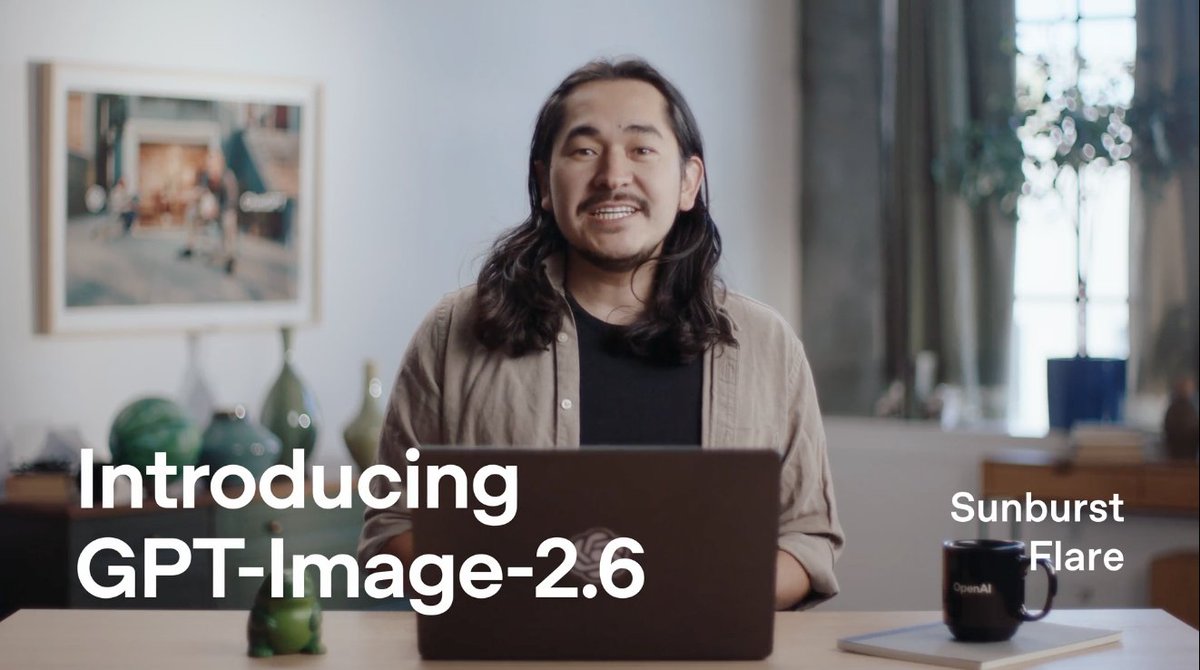
OpenAI's developer team announced GPT-Image-2.6 for Codex and the API. It reports 50% faster generation for Flare and Sunburst, with Sunburst preserving details more consistently across edits at medium or high quality.
vLLM supports Kimi K3.1 Pro on day one
vLLM announced day-one serving support for Kimi K3.1 Pro and its million-token context. The cited 65.7% Terminal-Bench 4.0 score uses the Claude Code harness; it is a model benchmark, not a vLLM serving-throughput measurement.
SGLang reports sparse-attention serving results
SGLang says Kimi K3.1 Pro replaces dense MLA with DSA sparse attention. Its day-one figures include up to 33.7K tok/s per GPU on AgentX and GB300, and 450 tok/s for one user with DFlash2 and MegaKernel. These figures refer to different test configurations.
Kimi K3.1 Pro arrives on Ollama Cloud
Ollama says Kimi K3.1 Pro is available on its Cloud, describing 2.8T total and 104B active parameters for coding, 3D creation and research. It advertises US hosting with zero data retention. Cloud availability does not establish equivalent local-device support.
Kimi K3.1 Pro lands on Nebius
According to @Kimi_Moonshot: Nebius Token Factory launches Moonshot's open-weight model on day one, focused on coding performance.
Agent Arena repost places Hy4 at No. 14
Tencent Hunyuan reposted Agent Arena's statement that Hy4 ranked 14th overall at that time and remained proprietary. The excerpt cuts off during the discussion of weights, so it does not confirm a release date for them.
Ripple-65B Preview is announced
Jeff Dean reposted Ricursive AI's announcement of Ripple-65B Preview, a 65B dense language model pretrained from scratch. The release claims a new state of the art, but the excerpt is truncated and does not establish the full benchmark scope or comparison conditions.
A note on Cognition's model lineage
Soumith Chintala says Cognition's new Flash model is post-trained on Inkling-small. The post concerns model lineage and does not claim Cognition pretrained the base model itself.
Ripple's $32M figure covers full R&D
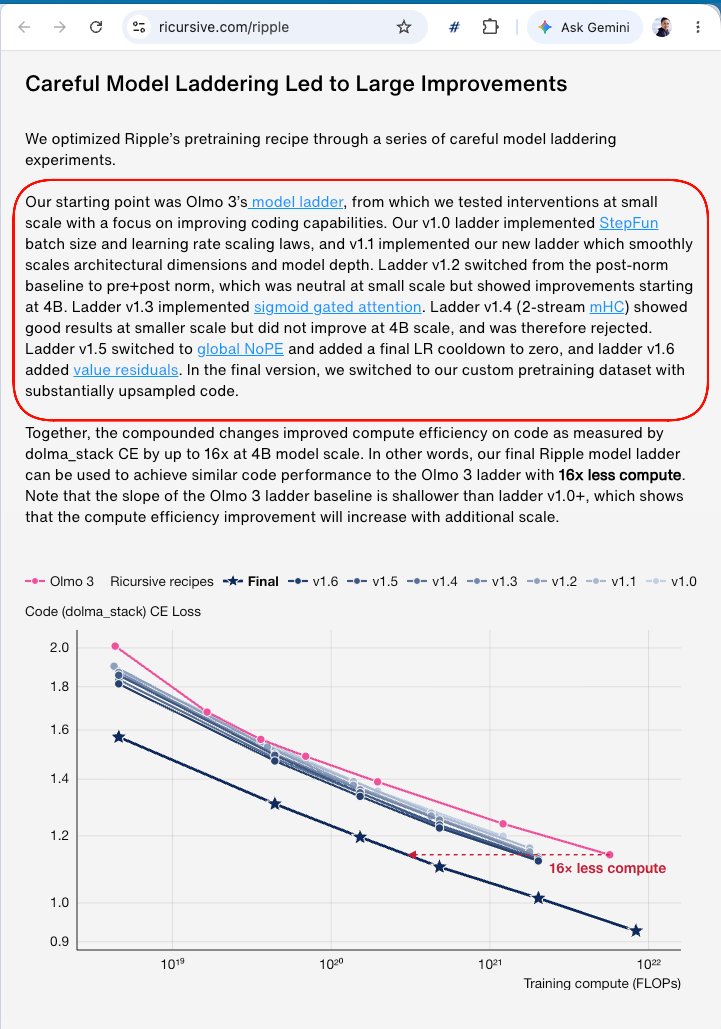
swyx quotes the Ripple-65B Preview team saying development and training cost $32M from scratch, including the pretraining ladder. This is full R&D, not merely the compute bill for one final training run. Comparisons with other models remain the team's claims.
Ripple's cost and performance framing questioned
teortaxesTex questions Ripple's 65B dense scale, efficiency claims and $32M cost framing, including comparisons with V4 Flash. This is personal criticism to read alongside the full-R&D cost explanation and actual benchmarks, not a verified counter-result.
Gemini 3.8 Flash TTS adds voice remixing
According to @GoogleDeepMind: Google AI Studio and the Gemini API add Voice Remixing, allowing customization starting from preset voices.
Cohere Embed 5 and Rerank 5 launch on OpenRouter
According to @cohere: The retrieval models are offered through a single API in Pro/Fast tiers with unified billing, reducing switching costs.
Axion 1.0 releases full open training recipe
According to @_lewtun: The 35B open agent base model provides reproducible checkpoints, 18K SFT samples, and a three-stage training recipe, supporting vLLM/SGLang.
Hugging Face shares an ML Intern reproduction
Hugging Face reposted Niels Rogge's report of reproducing a paper with ML Intern, an open-source harness for AI research and model training. The excerpt does not identify the full paper or its results, so no specific metrics are inferred.
DeepSpeed fixes ZeRO-1/2 gradient preservation
Stas Bekman shared DeepSpeed PR #8949, preserving gradients across request boundaries until the actual optimizer step. The author recommends deepspeed >= 0.19.9; the linked PR supplies the scope of the fix.
Inferact expands Moonshot AI partnership
According to @woosuk_k: Alongside the Kimi K3.1 Pro release, the two sides are expanding collaboration to optimize serving and deployment of the model.
OCRia-1 reports a single-B200 speedup
LlamaIndex reposted Jerry Liu's claim that OCRia-1 document-parsing throughput rose from 285 to about 2,800 tok/s on one B200. The roughly 10x figure is specific to the reported setup, not a universal speedup for every document workload.
LoCo learns when to stop reasoning
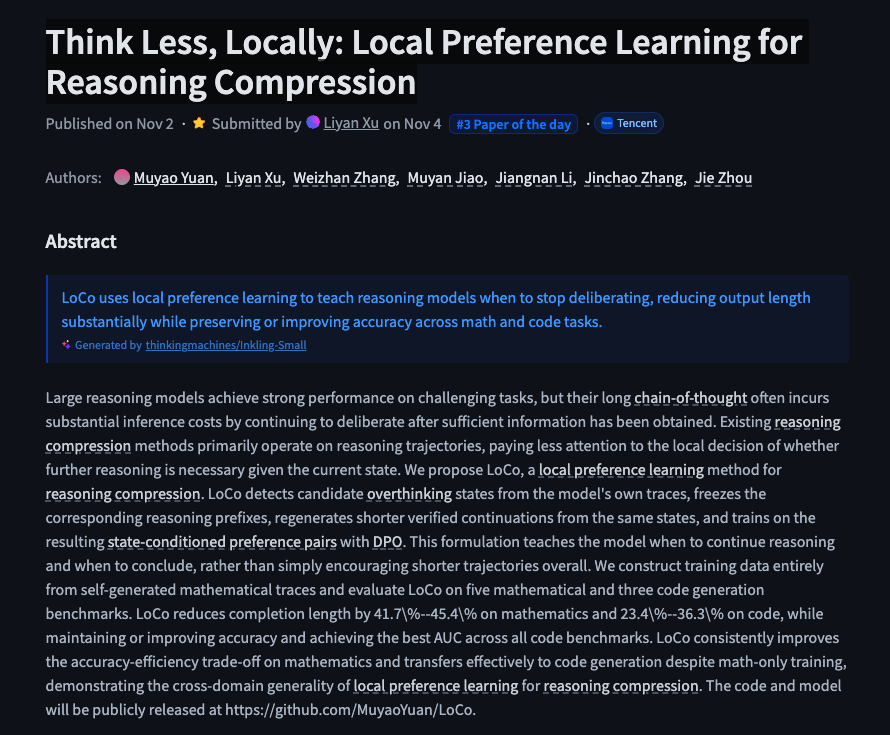
LoCo identifies overthinking states in a model's own math trajectories, creates shorter verified continuations and trains local preferences with DPO. The authors report 41.7%–45.4% shorter math outputs and 23.4%–36.3% shorter code outputs across five math and three code benchmarks, with accuracy maintained or improved within those tests.
RoboColosseum opens real-world robot evaluation
Hugging Face became a founding partner of RoboColosseum. The initiative reports more than 100 real robots and 140 in-the-wild scenes, with every rollout, including failures, open on the Hub for inspection.
Liber-0 explores transfer from human experience
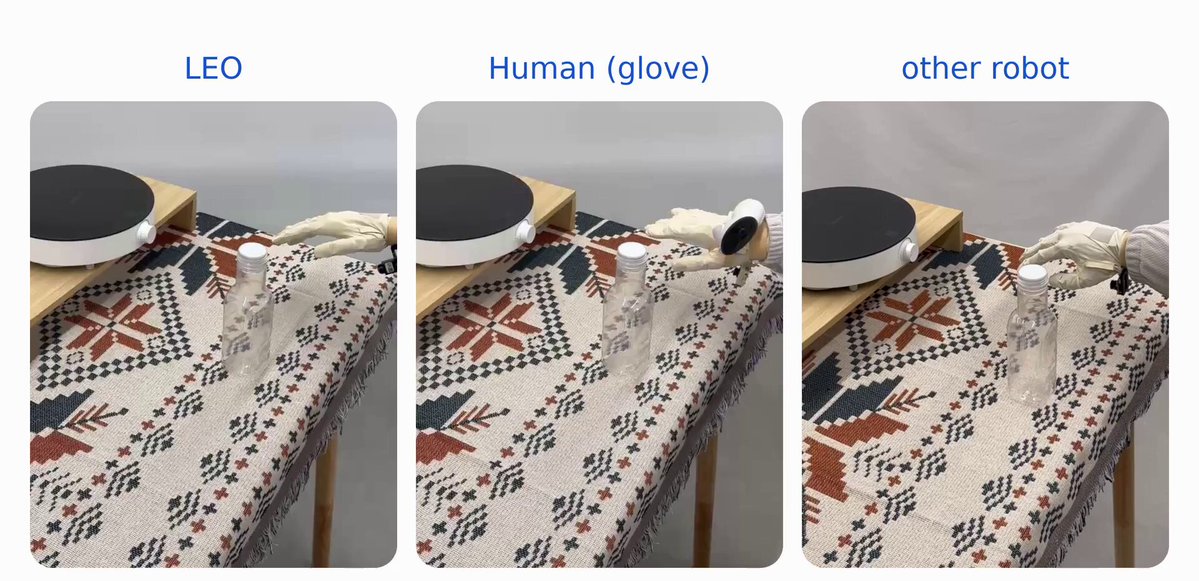
arankomatsuzaki describes LiberAI's Liber-0, reportedly pretrained on over 2.2M hours of human experience. With zero robot demonstrations for target tasks, the post reports 36.0% success across 60 tasks and 600 trials. These are reported results for that evaluation, not arbitrary tasks.
Subagent status updates cost about 99% less
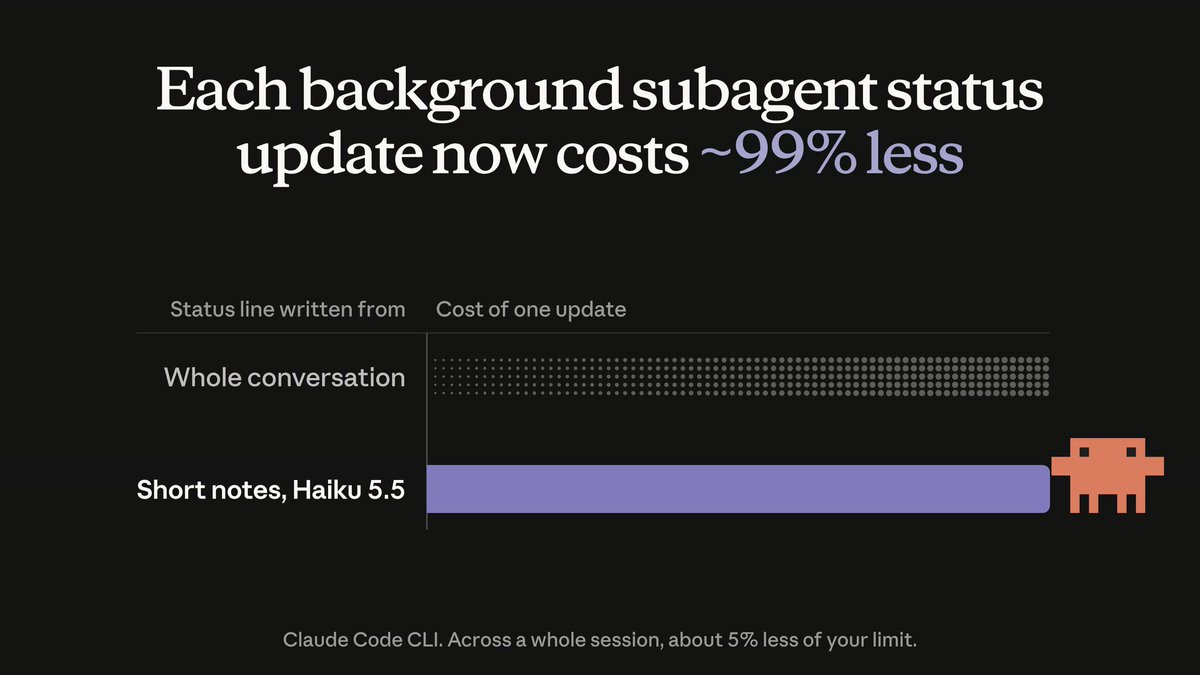
Claude's developer team says background subagents previously reread their full conversation for each 30-second status update. Haiku 5.5 now writes the line from short notes, reducing the cost of each update by about 99%. The figure does not describe total Claude Code task costs.
Mistral demos 133-agent vulnerability triage
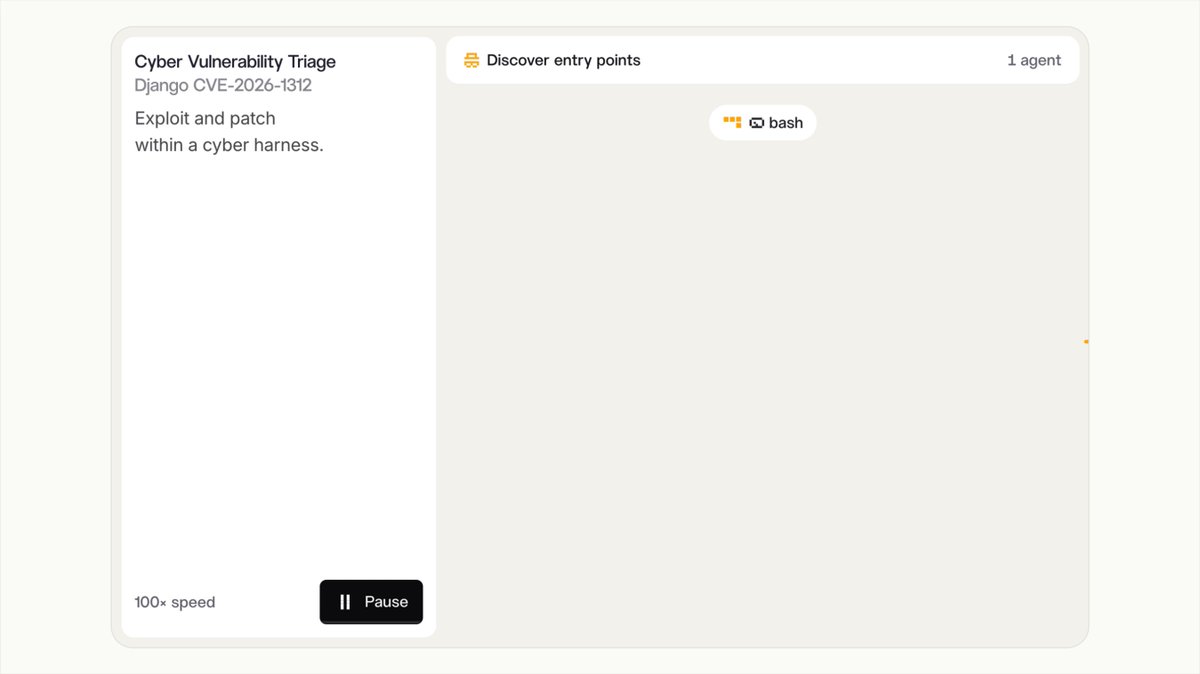
Mistral demonstrated Large 4 on a recent Django CVE: 133 agents mapped code, hunted flaws, tested attack scenarios and confirmed the bug, before Le Chonk patched it. The video runs at 90x speed and is not a measure of real elapsed time.
OpenAI welcomes the Pierre team
Greg Brockman welcomed Pierre Computer to OpenAI and said its open-source developer tools already power parts of Codex. The post emphasizes collaboration around AI software building and gives no transaction value.
Altman shares usage-limit doubling notice
Sam Altman reposted a product-team notice saying limits double for Pro 100/200/500 tiers and Business Premium. The supplied excerpt does not spell out the full product scope or metering rules; account-level terms remain the reference.
Fast Search is coming to the Decisions API
Arav Srinivas says Perplexity is integrating Fast Search into its Decisions API to ground batch decisions in web information. The post quotes $0.001 per search request, but the excerpt cuts off after the Decisions API's $0.02 price, leaving its full billing unit unspecified.
Perplexity shares an ad-buying case study

Perplexity's customer case says Computer managed $30,000 in Meta ad spend for Get Maine Lobster, delivering 3.5x revenue and 63% higher ROAS than its usual ads. It automated creative analysis, production and media buying. These are vendor-reported results for one customer, not a general return guarantee.
Runway Dev plugin comes to Claude Code
According to @runwayml: Developers can generate Runway video, image, and audio API integration code directly in Claude Code.
Synthesia video generation comes to ChatGPT

According to @synthesiaIO: Users can ideate, generate, and automate videos in ChatGPT, taking ideas to finished videos via a plugin.
Perplexity Computer can build animated websites
According to @AravSrinivas: Uses the MotionSites skill to generate websites with WebGL shaders and scroll animations.
Replit user builds ticket-routing app with AI
According to @amasad: An operations lead built an app with Replit that handles support ticket priority, context completion, and workflow routing.
Musk describes Grok Bot shopping
Musk says Grok Bot can research purchases, bring back options, order items, track them and return unwanted goods. The post gives no availability scope, success rate or permission mechanism; this is a vendor capability claim.
A repost shows Grok Bot calling for a quote
Musk shared a user's account of having Grok Bot call an EV-charger installer for a quote and checking usage. The excerpt lacks the full metering figures, so it does not establish a call price.
A Grok Bot Pages tutorial
Musk reposted @mattyp's Pages tutorial, covering examples, sharing, user data and X posts. It is a usage guide and does not establish a first launch that day.
Grok Bot used to organize a prompt library

歸藏 says that, with much of his information already posted on X, a single instruction to Grok Bot created his image/video prompt library. This is one user's workflow report, not a measured general success rate.
Living Brain decouples memory from models
According to @_akhaliq: Provides a persistent memory layer for ChatGPT, Claude, Cursor, Codex, and custom agents.
A repost highlights a 4B computer-use model
_akhaliq reposted Niels Rogge's introduction to Microsoft's Mage-VL-Cowork, a 4B on-device computer-use model, with a community demo. Its state-of-the-art claim is secondhand here; the input lacks full evaluation conditions.
LlamaParse removes usage caps

According to @llama_index: Adds pay-as-you-go and Pro self-serve tiers at $1.50/$1.25 per 1k credits, and existing tiers also lose caps.
Employee endpoint AI agents become a security risk
According to @amasad: The tweet warns that AI agents on employee endpoints may create systemic security risks and require governance.
Brockman adds pipeline cost detail
Greg Brockman says OpenAI found, validated and prepared patches for nearly 1,000 Linux local privilege escalations at about $1,000 per vulnerability. He presents it as an emerging approach to software hardening, adding cost context to the same pipeline announcement.
Keeping Rust build caches in an AI workflow
Baoyu reposted huacnlee's experience that retaining target directories avoided clean rebuilds during AI development across multiple worktrees and reduced machine slowdowns. It is a personal setup report, not a universal disk-optimization result.
Baoyu Design updates its local results hub
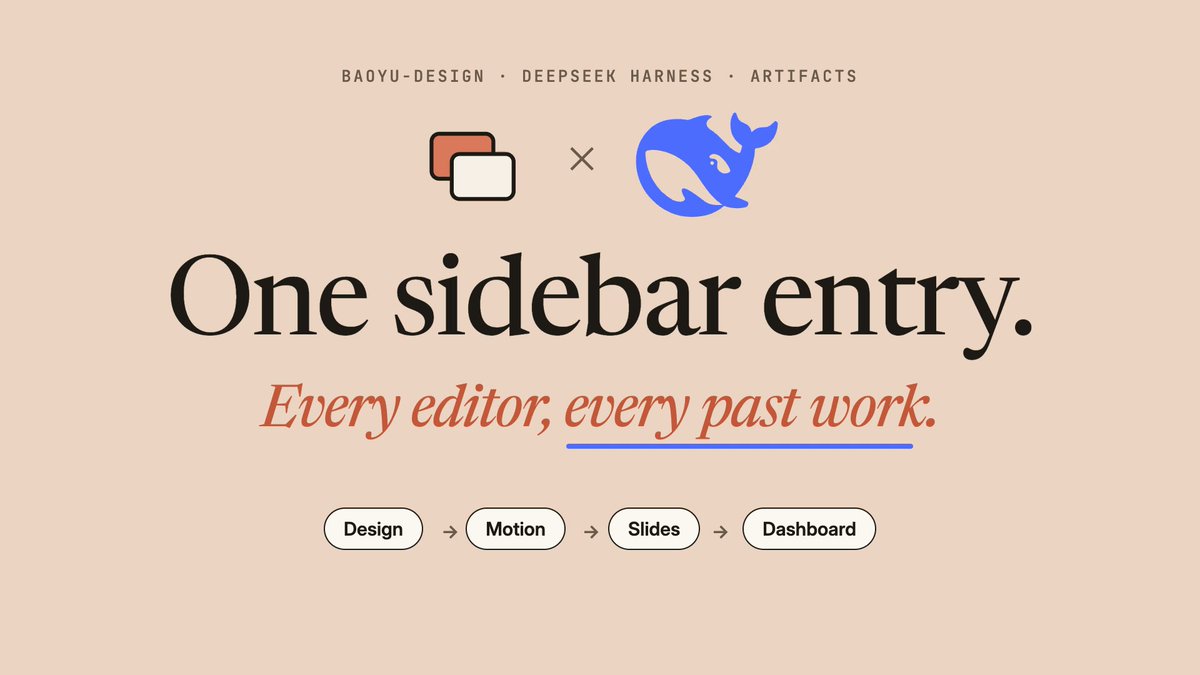
Baoyu describes a DeepSeek Harness plugin update for baoyu-design, adding a common entry for Slides, Design, Dashboard and Motion outputs. The project runs as an Agent Skill and produces self-contained HTML locally with tools including Cursor and Codex.
Cicada brings live translation and notes to macOS
The open-source native macOS app Cicada offers live bilingual subtitles, interpreting and AI notes for calls and streams. Its repository describes use with Zoom, Tencent Meeting, Feishu and YouTube, with translated speech output through a virtual microphone.
DeepMind hiring for AI product engineering
Baoyu shares a Google DeepMind hiring note focused on AI Studio and the Gemini API. The short post lacks role requirements and application conditions, which require the original vacancy listing.
DeepMind Montreal seeks student researchers
S D Ebrahimi reposted Kory Mathewson's call for BS, MS or PhD student researchers at Google DeepMind Montreal. The research description is truncated in the input, so no additional topic is inferred.
ChatGPT helps prototype physical engineering designs
According to @gdb: The tweet says ChatGPT can help non-experts design prototype devices, expanding physical engineering applications.
Training models for a product harness
Stas Bekman reposted Karthik’s argument that product companies should be able to train models for their own agent harnesses, as frontier labs do. The excerpt cuts off before the tool description and does not establish a new service launch.
Claude assists vault-particle research
Anthropic describes its biology team working with Claude to map the first 3D structure of a vault particle from bacterial life. The announcement presents the barrel-shaped protein complexes as a longstanding mystery; the supplied excerpt does not establish that Claude carried out the research independently.
A new NanoJev weight-editing case
Omar Khattab reposted an experiment reporting 65 wins, 34 losses and one draw in 100 head-to-head matches after editing 0.0002% of NanoJev's weights. The task name is truncated in the input; this is a specific experiment, not a general guarantee for weight editing.
MIT weight-space work draws attention
Omar Khattab reposted Gabe Pereyra's comments on MIT research, with the excerpt mentioning GPT-6 Astra reading Qwen model weights. Full experimental details are absent; this does not establish reliable understanding or editing of arbitrary models.
Weight-space methods explored for VLM safety
Omar Khattab reposted researchers exploring weight-space methods for vision-language-model safety alignment. The excerpt cuts off at the test name and supplies no full results, so success is not established.
Handwritten weights for citation classification
Omar Khattab reposted @jacsebl's account of using fable to handwrite weights for a 100K-parameter model that distinguishes real and fake legal citations. No accuracy or independent testing is supplied; the post does not establish a professional legal-verification product.
Harvey supports weight-space research
Omar Khattab thanks the Harvey team for supporting weight-space programming research and mentions its open contributions to related work. The input supplies no funding amount or partnership terms.
A call for weight-editing engineering traces
Omar Khattab reposted @mann_idan's offer to buy traces of engineers modifying model weights and doing related engineering tasks. The excerpt gives neither full terms nor purpose and does not describe a released dataset.
Designing training for compute islands
Arohan's linked article argues that learning algorithms should be co-designed with compute distributed across separate data centers. The post discusses combining data centers below 20MW each; it does not establish a sub-20MW total training cluster or a reproduced cost result.
Making long-running models' notes more readable
@jxmnop reports that models write increasingly inscrutable notes during long runs, and that small amounts of training can improve this. The post concerns note readability and supplies no general training recipe or evaluation figures.
Route Anything explores unified routing
_akhaliq reposted a paper description proposing one router across language models, image/video/speech generators, coding agents and robot policies. The excerpt cuts off after the number 374,401, leaving its statistical meaning unspecified.
Discussing JEPA and LLM representations
Yann LeCun reposted antirez on the Platonic representation hypothesis, JEPA and LLM hidden states. Only the opening is available, establishing a research topic rather than equivalence between representations or a winning architecture.
Energy-based reasoning paper teased
LeCun reposted Alexi Gladstein's preview of Energy-Based Reasoning and its claimed advantage over looped reasoning. The supplied excerpt contains no paper or experiments, so the comparison remains a preview claim.
A media post highlights LeCun's small-model work
LeCun reposted Numerama's coverage of work with Randall Balestriero, referring to a paper posted October 29. The excerpt cuts off in its small-model discussion and does not support a complete claim about reasoning performance.
A JEPA research talk at INFORMS
LeCun reposted Randall Balestriero’s notice of a talk on recent JEPA research at INFORMS in San Francisco. It is a conference announcement, without a full paper or new experimental data in the supplied excerpt.
LeCun on declarative knowledge
LeCun reposted his view that LLMs accumulate substantial declarative knowledge, enabling them to answer many questions. The excerpt cuts off before the rest of the argument; no broader conclusion about reasoning is inferred.
A small test probes Codex and text detection
Arvind Narayanan reposted Sayash Kapoor's small-scale tests suggesting simple prompts let Codex evade Pangram. This is a limited reported result, not evidence that every text can reliably bypass detection.
Kernel agent experiment asks whether DSLs are still needed
According to @Tim_Dettmers: The tweet discusses whether ML compilers and domain-specific languages remain necessary after kernel agent experiments.
Visual symbols may affect model behavior
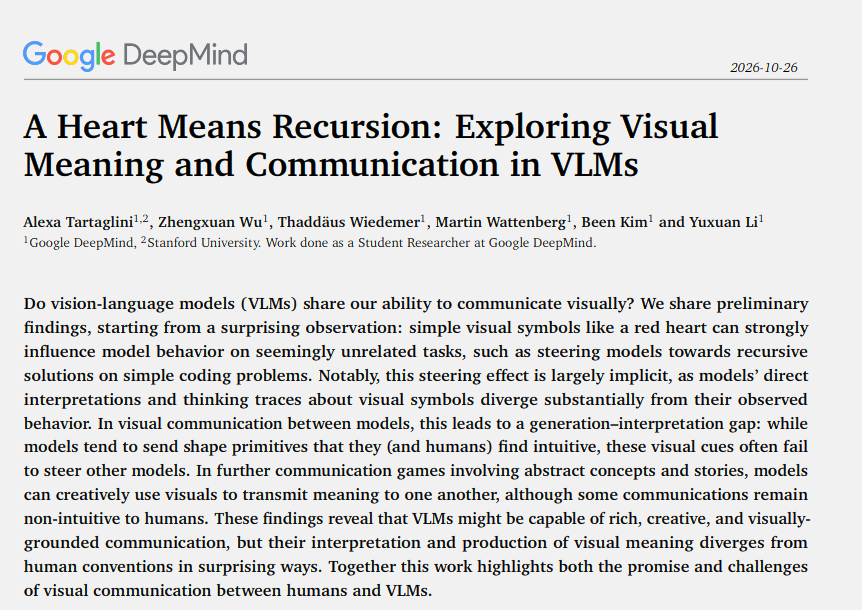
Ethan Mollick highlights an AI-semiotics paper suggesting visual symbols affect models in ways their own chains of thought may not recognize, with reactions differing from human interpretations. This is his reading of the paper, not an independent replication.
Pika H3 Flex launches on the creation platform

According to @pika_labs: It supports faster-than-real-time creative iteration; Creator and Fancy subscribers get 15 free generations daily until November 15.
Pika H3 Flex open weights spawn Turbo LoRA
According to @pika_labs: Within 24 hours of release, the community produced 2-step draft, 4-step fast, and 8-step HD variants compatible with ComfyUI and Diffusers.
Kling 4.0 Flash fully opens

According to @Kling_ai: Available on the website and API, and supports MCP, CLI, and AI plugin integration into video workflows.
Luma launches Character Sheet for consistency

According to @LumaLabsAI: Character Sheet organizes reference images into a unified character sheet, reducing character drift in multi-view generation.
Recraft shows a generation-to-animation workflow

Recraft showcased characters made with V4.1 and animated with Seedance 2.5 inside Recraft. This is a workflow example and does not establish that the integration first launched that day.
PixVerse launches depth-map motion control
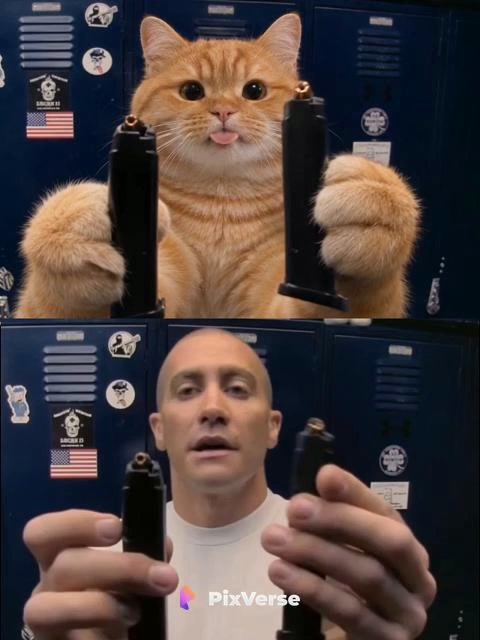
According to @PixVerse_: Upload a reference video as depth control to replace characters, objects, or scenes while generating the same motion.
Kimi 3D Worlds instantly generates walkable scenes
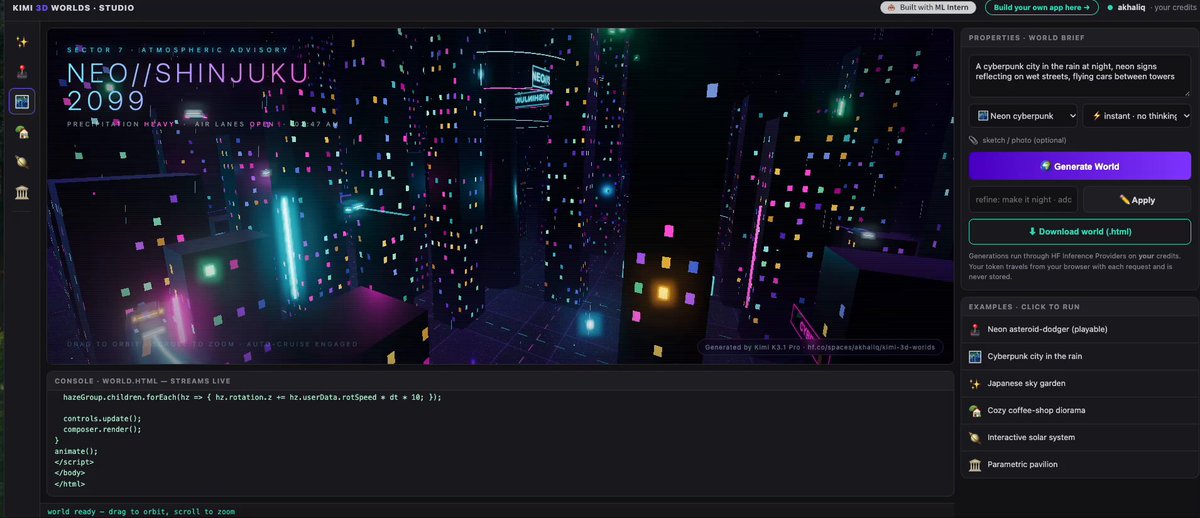
According to @_akhaliq: Input a scene description or sketch to generate a full-screen Three.js 3D world explorable in the browser.
MoviEdit simplifies long multi-shot video editing
According to @_akhaliq: Edit video with text or a single frame and rerender all shots, aimed at long-form multi-shot scenes.
HYPER3D announces prompt-editable rigging
_akhaliq reposted Deemos' HYPER3D Rigging announcement for humans, animals and fantasy creatures, with prompt-based editing. The excerpt cuts off in the detail description, so no specific finger-level capability is inferred.
Kling shares a feature-film shot experiment
Kling highlighted Ash Koosha's use of Kling 4.0, judging generated shots by whether they could belong in a feature film. This is a creative criterion and case study, not a standardized quality benchmark.
Vidu Q4 showcases wuxia aesthetics

According to @ViduAI_official: Generates cinematic scenes such as sunset duels, bamboo forests, and snowfield solos via lighting, composition, and color prompts.
Unreal Engine 5.9 previews AI workflow updates
Tom reposted Unreal Engine's announcement of a 5.9 Preview due the following week, including improved AI workflows and web targeting. A preview announcement is not a stable release.
Tesseract promotes agent-generated 3D content
CoffeeVectors reposted Mirage's claim that Opus 5.5 or Astra can use Tesseract to create 3D outputs with path-traced rendering. “Professional-grade” is promotional wording, with no independent quality evaluation supplied.
Tesseract showcases an interactive character scene

Linus Ekenstam shared a scene made with Mirage's Tesseract, appearing as a game character talking to a fisherman. It demonstrates a creative workflow, without establishing general quality for dialogue, world generation or rendering.
AI copying raises creative-attribution concerns
CoffeeVectors reposted creator Kevin Parry's concern that one-click AI copying makes original authorship harder to identify. It is an industry observation, not a measured platform-wide trend.
AI dialogue needs direction too
CoffeeVectors reposted a creative tip: when AI characters sound unnatural, examine how dialogue is written and directed in the prompt. This is practice-based advice with no quantified performance promise.
A creator comments on Muse video generation
歸藏 comments on Muse's performance in some realistic scenes and suggests free access helps its spread. The input is personal experience, without a full model identifier, availability scope or comparative benchmark.
Glif introduces AI model Claudia

Glif announced AI model Claudia for casting in ads and microdramas, claiming 44M views. Its site describes a chat-based creative agent combining image, video and audio generation; the view count is vendor-reported.
Altman: humans should always control the future
According to @sama: OpenAI opposes relegating humans to a role that AI thinks should be rewarded, emphasizing that humans should always control the future.
Chollet: AI should always be a human tool
According to @fchollet: He says the future worth building keeps AI in human hands and uses it to improve the human condition.
Kai-Fu Lee: AI transformation should target CEO problems
According to @kaifulee: Enterprises can list AI pilots but struggle to state business results; the key is applying the strongest technology to the hardest problems.
Interconnects gathers open-model economics data
Nathan Lambert says a public, free Interconnects dashboard organizes data on the open-model economy, while a new interpretation series will be paid. The dashboard and commentary have different access models.
Working with AI requires continuous recalibration
According to @random_walker: AI capabilities and job definitions change every few months; avoid productivity illusions and threat-driven overreaction.
A repost previews high-volume code delivery lessons
Musk reposted @poteto's AI Engineer talk preview, which mentions 30x more code. The excerpt cuts off in the quality discussion; it is not independently verified evidence of 30x productivity with unchanged quality.
Shopping is an underrated agent use case
According to @elonmusk: The tweet argues shopping is a weekly high-frequency pain point, closer to ordinary users than coding demos and well suited to agent automation.
Andrew Ng shares an AI-engineering jobs signal
Andrew Ng cites a LinkedIn study placing AI Engineer among the ten fastest-growing occupations in seven major economies during July–September. He also promotes AI Dev in New York on November 30–December 1. Top ten does not mean the single fastest-growing job.
Chinese open-model labs deliver weights on time
According to @natolambert: Commentary notes Chinese labs consistently meet weight release timelines; future delays would be a signal.
Maintainability questions also apply to human code
CoffeeVectors reposted a developer's point that discussions of AI-code maintainability should not assume human-written code is automatically maintainable. The excerpt supplies a viewpoint, not a controlled comparison.
AI prompts a rethink of human intelligence
CoffeeVectors shared an attributed Hinton comment that AI is forcing a rethink of human intelligence. The rest of the quote is truncated; the topic is retained without completing the quotation or treating it as settled science.
Unverified: a creator describes Siri app actions
歸藏 says App Intents lets developers choose app functions to expose to Siri. The input contains only this creator's account, without an Apple announcement, version or supported-device list; the specific new capabilities and rollout remain unverified.
Unverified: a Claude product-lead departure report
歸藏 reports that Claude Code and Cowork product lead Cat has left, and relays a denial that IPO lockups motivated the move. No original statement is supplied; the report remains unverified and no cause or internal-company conclusion is inferred.
Baoyu on AI-assisted writing and readers
Baoyu discusses how book creation may diverge in the AI era, including authors using AI to produce work readers still want. The full list is not supplied, so no complete three-category taxonomy is inferred.
Axiom sparks discussion of large-scale AI code
Linus Ekenstam points to Axiom's work around the Stacks Project in discussing AI-code quality at scale. The excerpt cuts off during the project description, leaving methods, coverage and validation results unspecified.
Shopping agents raise brand-visibility questions
Linus Ekenstam observes that people increasingly ask agents what to buy, while brands cannot easily see how choices are made inside those chats. This is a view on agent-mediated shopping, without quantified market share.
A Polsia story: asking an agent to raise funds
Linus Ekenstam says Ben gave an AI access to his inbox with a goal of raising $10M, and that the initial post drew about 100,000 views and helped Polsia gain attention. The fundraising target is not a completed raise.
@oran_ge
When endless coding feels like progress
There is always a next thing to do.
橘子 relates a developer's cycle of asking Claude and Codex for more product changes while spending tokens, questioning the sense of productivity that building creates. This is personal commentary; the story's ending is truncated, so project failure is not inferred.
Unverified: Uber agent-order figures circulate
橘子 relays figures of 320M Uber orders during Halloween week, with agents accounting for 500 delivery orders and four rides. No primary disclosure or counting method is supplied; the numbers remain unverified and do not establish industry-wide agent adoption.
Voyager advertises video-model price differences
_akhaliq reposted Voyager's promotion claiming lower prices than Higgsfield, with Seedance 2.5 cited at half the price. A separate overall “5x cheaper” slogan lacks comparison details; it is not treated as one consistent discount rate.