Meta launches Muse real-time avatar tech
Muse Realtime Avatar turns Meta's real-time voice agent into expressive, interactive avatars — beginning with live conversation.
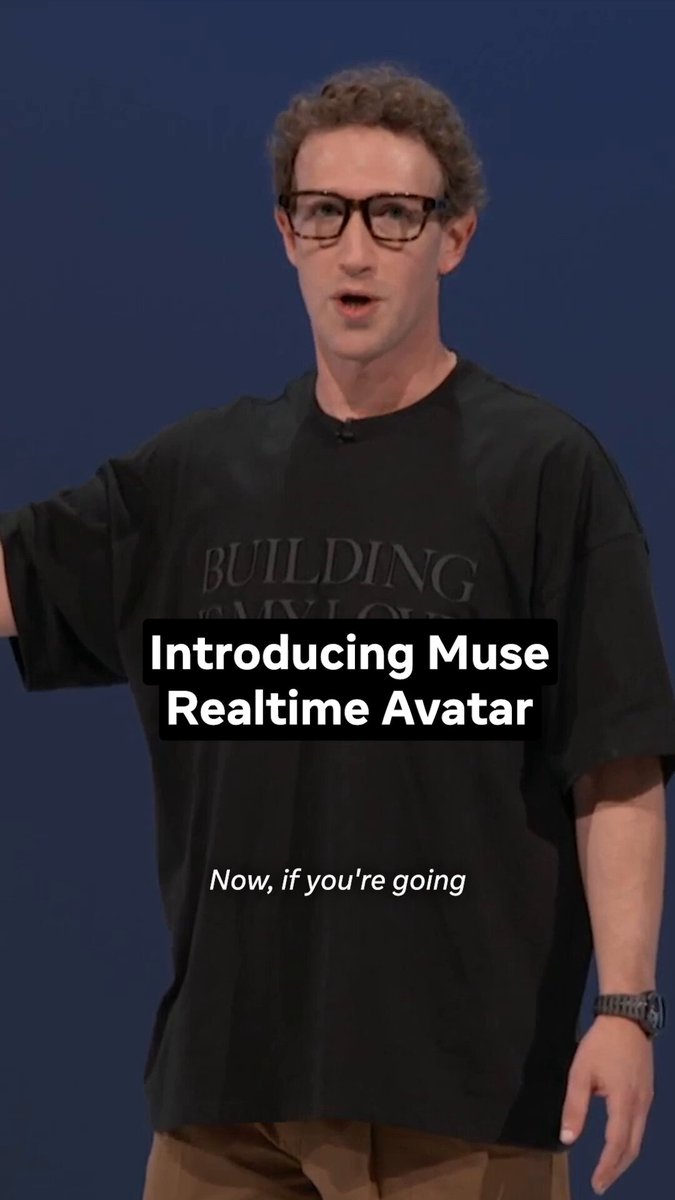
Meta introduced Muse Realtime Avatar, an embodiment technology that upgrades Muse Realtime Voice into expressive, interactive avatars. The first deployment is real-time conversational interaction inside Muse, Meta's personal AI agent that launched earlier this month and briefly overtook ChatGPT in early usage. The move signals that the race for consumer AI assistants is shifting from text and voice toward embodied, always-on characters that can hold a conversation with a face, an expression, and a sense of presence.
Announced on the heels of Meta Connect, the avatar layer follows the same pattern Meta has used with its Muse hardware line: a small, personal device and a companion agent that is always listening. For developers, the announcement opens a new range of interactions — real-time conversation is only the first stop on a roadmap that points toward avatars that can react, gesture, and inhabit mixed-reality spaces.
NVIDIA opens 2,800+ viral protein structure predictions
With Google DeepMind, EMBL-EBI and research partners, AI-predicted protein complexes for more than 2,800 viruses are now openly available.
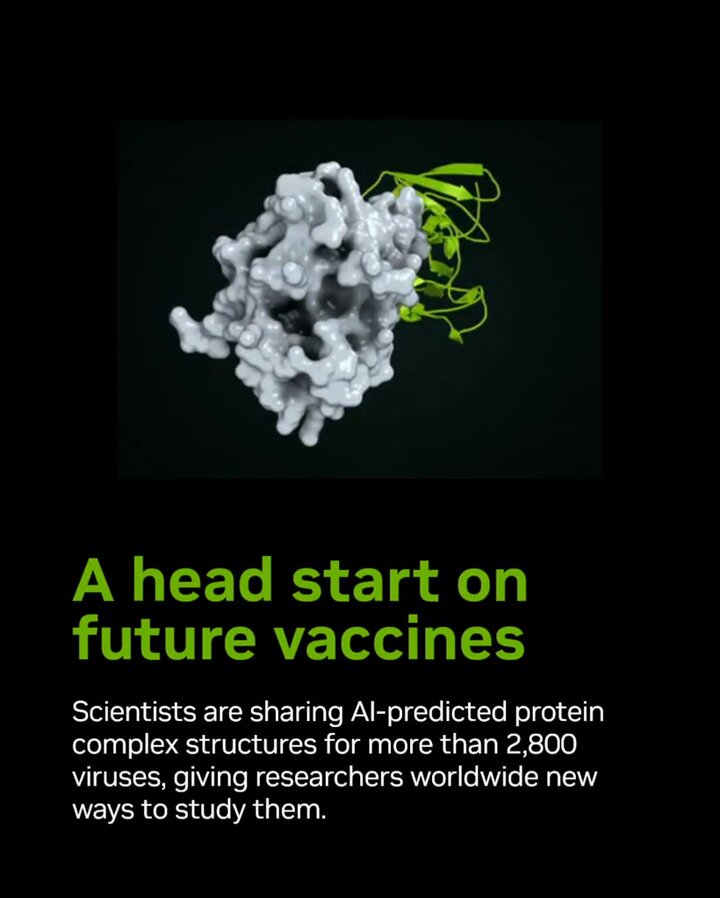
NVIDIA, working with Google DeepMind, EMBL-EBI and a network of research partners, is making AI-predicted protein complex structures for more than 2,800 viruses openly available. The dataset is aimed squarely at pandemic preparedness: rather than waiting for an outbreak to sequence a novel pathogen, scientists can now begin from a pre-computed library of likely structures. It is a concrete example of how AI-predicted biology — the same technique behind AlphaFold-class models — is being converted into public infrastructure for drug discovery and vaccine design.
Anthropic resumes billing for blocked requests
Anthropic said it will again charge for requests that its safety system blocks before the model responds, applying the change only where false-positive rates are low: biology, distillation attacks, and frontier LLM development. The company added that it has faced coordinated attacks on its systems in recent weeks, framing the move as a way to stop absorbing the cost of abuse while keeping legitimate safety enforcement intact.
GPT-6 Astra helps Harvey generate legal documents

OpenAI announced that GPT-6 Astra now provides document structuring for Harvey, the legal AI company, turning stacks of files into organized legal drafts. The pitch is familiar but the target is narrow: let lawyers spend their hours on strategy and judgment rather than on organizing discovery documents. It is another sign that frontier models are being productized into vertical, workflow-specific tools rather than sold as general-purpose chat.
Replit teams with Meta to generate VR apps from a prompt

Replit announced at Meta Connect that describing an app idea is now enough for its agent to build and instantly preview the result, which can then be experienced on Meta Quest headsets or Ray-Ban Display glasses. The partnership collapses the distance between a sentence and a running spatial application, pointing toward a near future where the barrier to building for VR is a prompt, not a rendering pipeline.
Perplexity launches Fast Search API
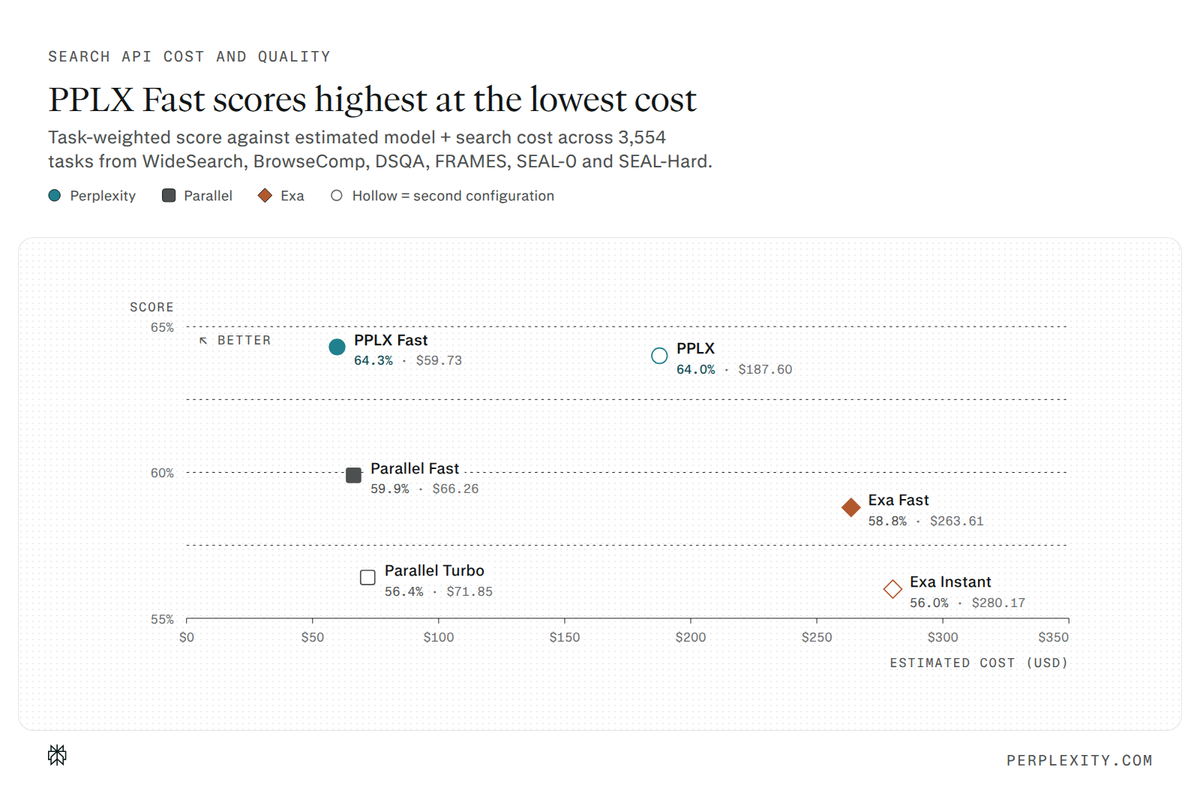
Perplexity launched Fast Search, built on Photon, its in-house Rust retrieval and ranking service, with 95% of search results returned in 230 milliseconds or less. The company says the service was built by a small engineering team working alongside hundreds of agents — a detail that doubles as a product claim and a statement about how AI is changing the economics of building low-latency infrastructure.
"If you believe the risk is coming from 1-3 people in a garage with no money and no compute, you don't understand this technology."
Vercel data: Anthropic's spend share falls to 40%
Two months of Vercel AI Gateway data, shared by Guillermo Rauch, show a sharp rebalancing of model spend. Anthropic remains number one but slipped from 69% to 40% of spend, while OpenAI climbed from 10% to 24% on the strength of GPT-6 Astra and GPT 5.6 Sol. OpenAI now leads in token volume, and the open models Kimi K3 and DeepSeek together captured roughly half of Anthropic's share — evidence that the frontier is fragmenting faster than any single vendor would like.
Anthropic spend share: 69% → 40%
OpenAI spend share: 10% → 24%
Kimi K3 + DeepSeek: about half of Anthropic's former share
Gemini 3.8 Flash posts ARC-AGI-3 results
ARC Prize reported 10.4% on the standard ARC-AGI-3 harness at about $4.4K cost, with an adapted version reaching 35.0%.
Schmidhuber joins Sakana AI as chief scientific advisor
The deep-learning pioneer will work in Sakana's recursive self-improvement lab, advancing physical AI and agent-native world models.
Claude finds new enzyme system in phage DNA
Anthropic says Claude spotted a previously unnoticed CRISPR-like enzyme system, named ART (array-associated reverse transcriptase).
Higgsfield annualized revenue tops $1B
The video-generation platform crossed $1 billion in annualized revenue 18 months after launch.
Gemini 3.8 Live avatars go commercial
Gemini 3.8 Live with Live Avatar is now generally available in Gemini Enterprise for real-time agent interaction.
Hunyuan extends critical batch size theory to online RL
Tencent Hunyuan research generalizes classic critical-batch-size theory to online LLM reinforcement learning.
Tencent's offline translator Hy Translation
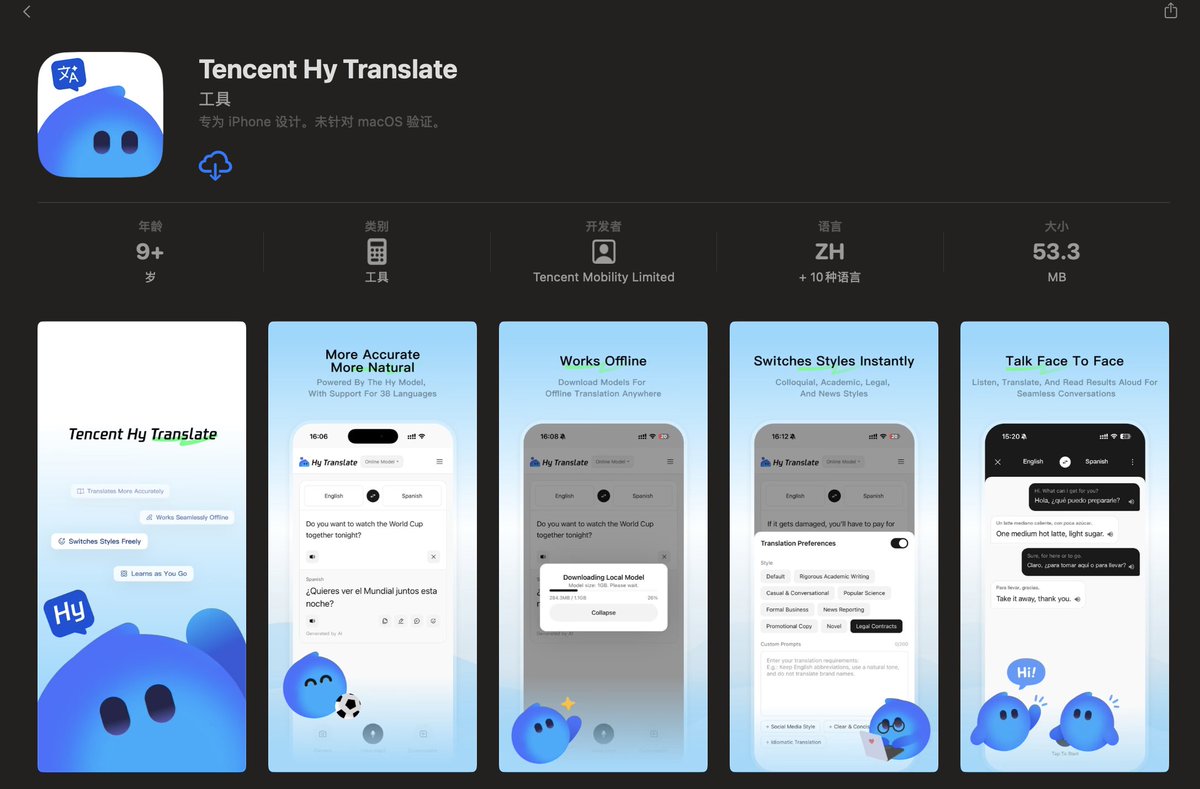
Powered by Hy-MT2, it covers 33 languages and 5 Chinese minority languages, fully offline on-device.
Midjourney updates tiling, inpainting, real-time
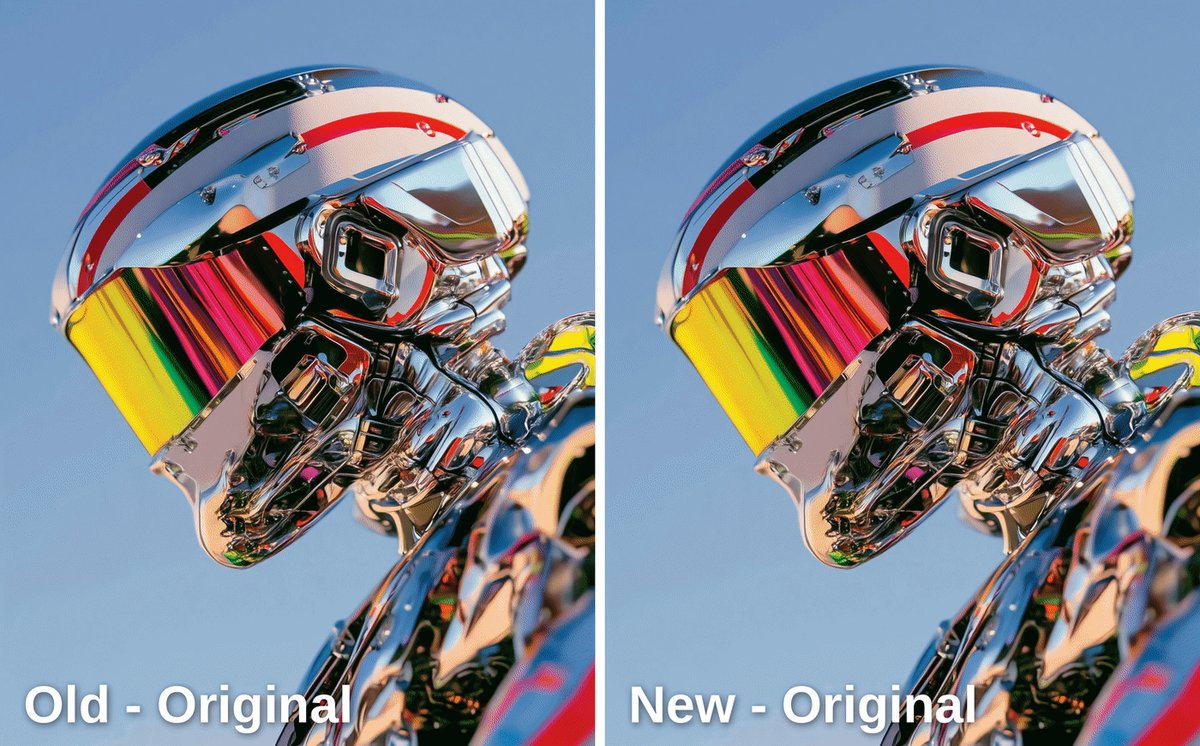
New --tile seamless patterns, selection-only inpainting, and a real-time model preview on the alpha site.
Perplexity Computer lands on AMD Ryzen AI Max

A Windows build runs local AI agents against your connected apps and files, entirely on-device.
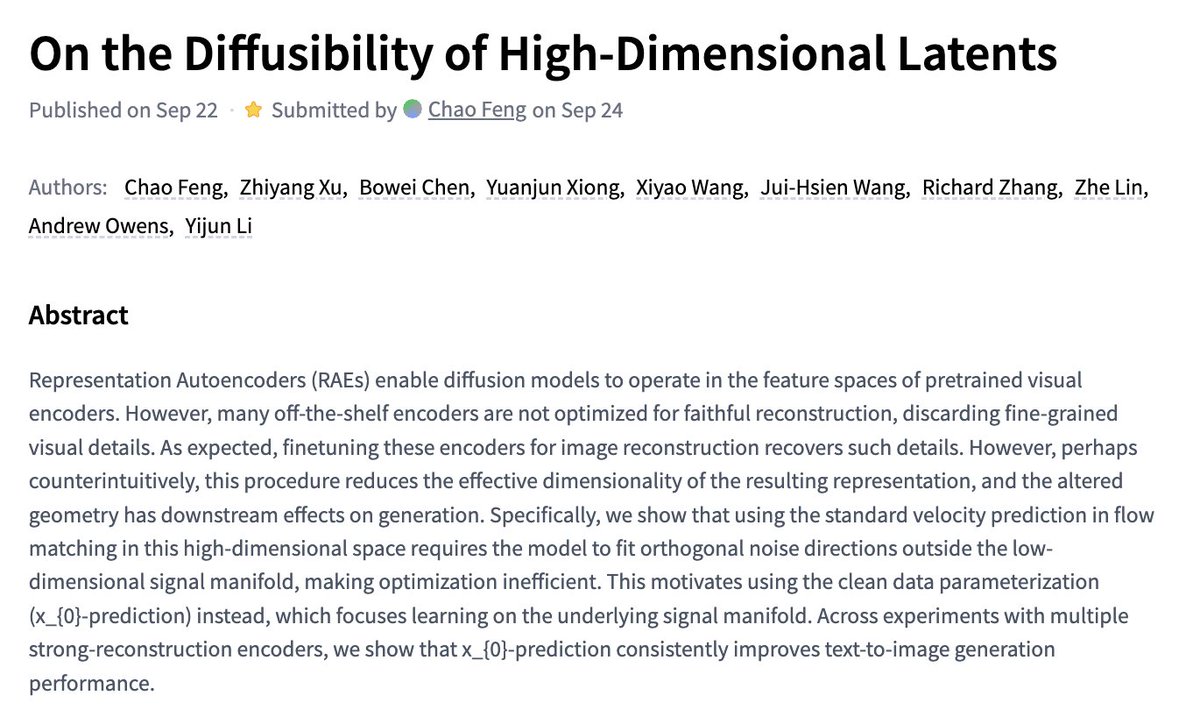
Why high-dimensional latent spaces are hard for diffusion generation
New research on representation autoencoders argues that flow matching in high-dimensional latent spaces is forced to fit noise directions outside the signal manifold, which drags down optimization. Switching to x0-prediction — a clean-data parameterization — refocuses learning on the manifold itself and consistently improves generation quality across several strong reconstruction encoders. The finding is a practical recipe for anyone scaling latent diffusion to richer visual representations.
Apple ships a Qwen3.5-9B fine-tune
A Hugging Face model tuned to turn long documents into concise content.
Pruna speeds up Qwen-Image by 6.3×
Few-step LoRA adapters cut generation from 40 steps to 5 or 8.
Contrastive language model CLM appears
A new organization on Hugging Face with a reranker and an 8B model.
Kai-Fu Lee on open vs. closed models
Data sovereignty looms large for countries beyond the two AI superpowers.
Wan3.0 runs end-to-end video from one prompt
Cinematic motion, 1080p output and generated sound in a single workflow.
Pika API aggregates 120+ models
Grok Bots call Seedance 2.5, Wan 3.0 and GPT-image-2 through one key.
Runway adds Draft mode for Seedance 2.5
Explore faster with fewer credits, then upgrade favorites to full quality.
Muse can now build apps on Replit
Meta's agent generates working applications directly inside Replit.