@GoogleDeepMind
DeepMind reports weaknesses in legacy RSA
Human-guided agents help stress-test legacy cryptosystems.
Google DeepMind says human-guided models helped stress-test encryption and uncovered two major weaknesses in legacy 1024-bit RSA systems. The announcement concerns particular older systems; it does not establish that every RSA configuration or modern cryptosystem has been broken.
@AnthropicAI
Anthropic examines the components of agent memory
Anthropic’s engineering post explains that Claude must decide what to remember before knowing what will happen next. Its “dreaming” process organizes learned information, corrects mistakes and makes relevant memories easier to retrieve later.
@johnschulman2
Inkling 2 Small arrives with alignment lessons
John Schulman announces Thinking Machines’ Inkling 2 Small. The accompanying training write-up also examines safety and alignment, offering context on how the team studies and constrains model behavior alongside capability gains.
@soumithchintala · via @arcprize
ARC Prize reports verified Inkling 2 Small results
Soumith Chintala shares ARC Prize results: 81.7% on ARC-AGI-2 at $0.27 per task, and 96.5% on ARC-AGI-1 at $0.08 per task. These figures apply to the named benchmarks and evaluation settings.
@OpenAI
BioBasicsBench tests routine laboratory analysis
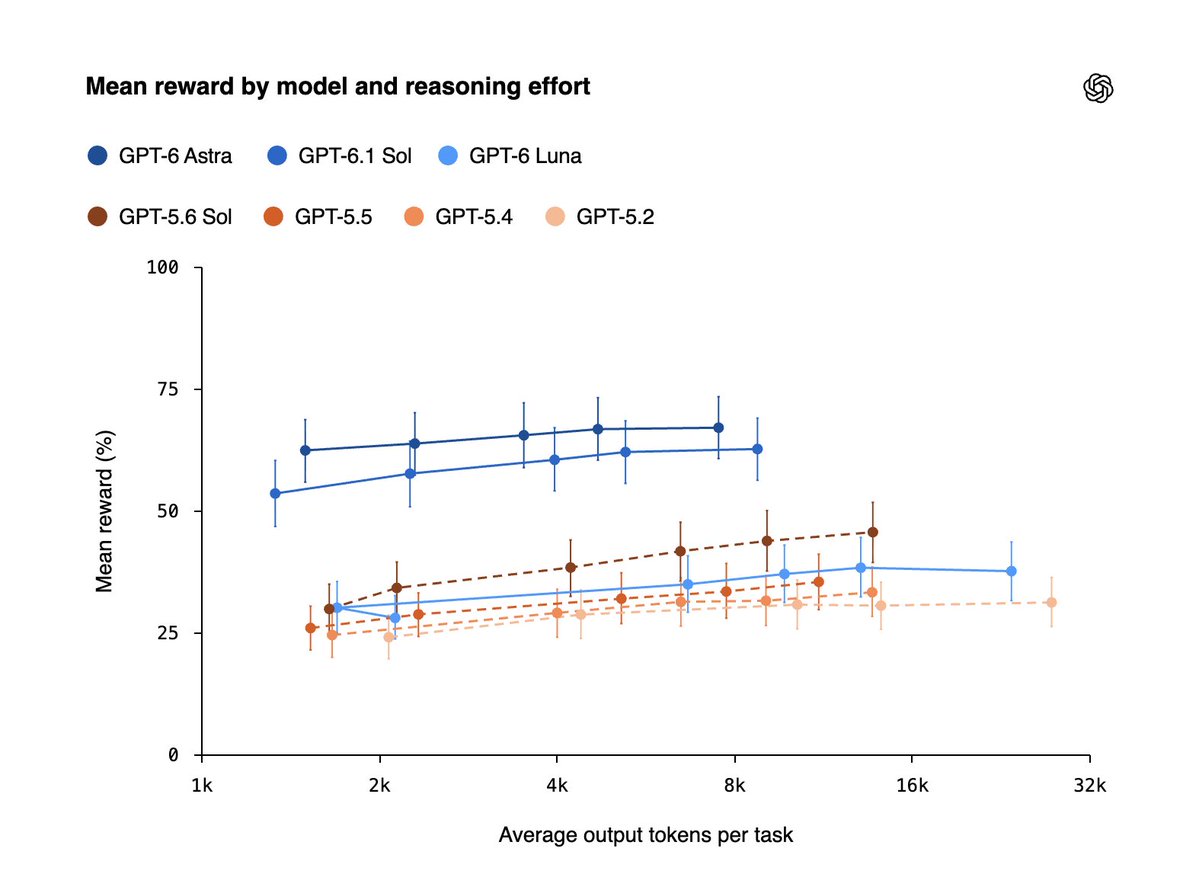
OpenAI and enzyme-design company Ligo introduce BioBasicsBench, drawing on 100 tasks from real experiments to test agents’ interpretation of raw laboratory data and related analysis. The available announcement does not provide complete model scores to reproduce here.
@ClaudeDevs
Claude Code cloud sessions can retain repo environments
Claude’s developer team says cloud sessions for Pro, Max and Ultra can identify dependencies, network access and API-key requirements, then retain the environment for reuse. The team says keys are stored securely without exposing their contents to Claude.
Meta brings Muse Wonder specialist models into its apps
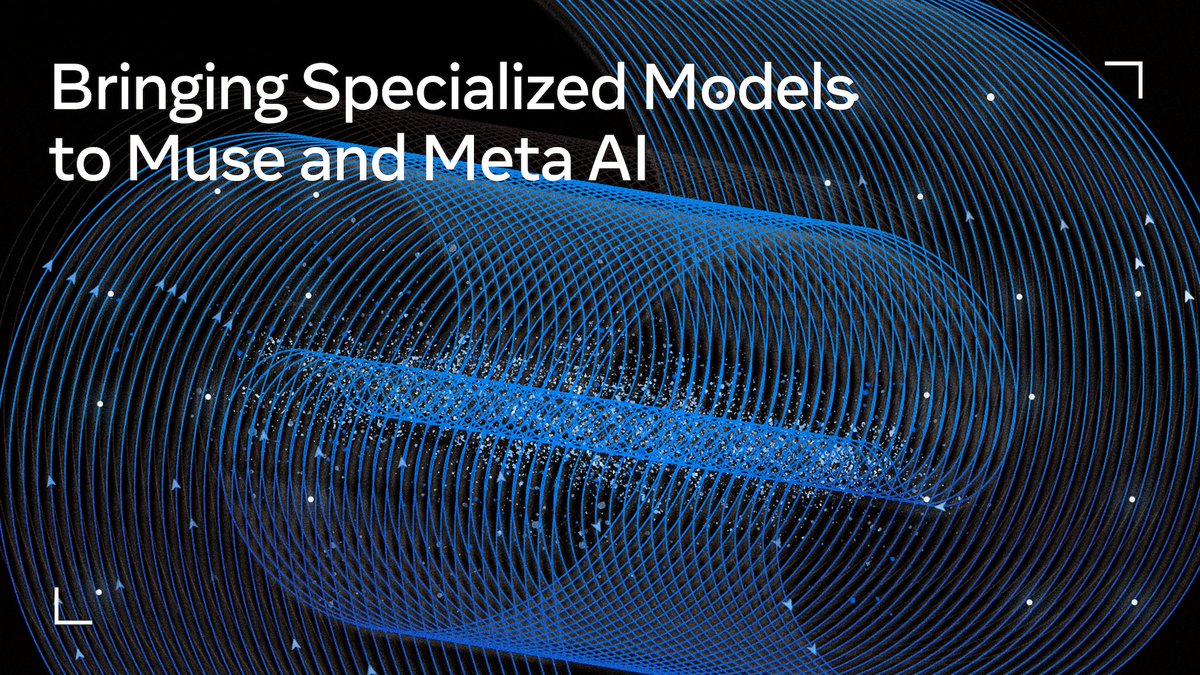
Meta announces specialized models trained using Muse Wonder for Muse and Meta AI, mentioning Active Memory. The available post cuts off during its remaining feature list, so a complete capability inventory cannot be inferred.
MiniMax M3.1 Flash becomes available on Fireworks
MiniMax says M3.1 Flash is available through Fireworks AI. The two companies also plan a San Francisco event about how it was built; this announcement contains no new comparative performance figures.
Voxtral 3 detects when a speaker has finished
Mistral highlights Voxtral 3’s end-of-turn detection, which helps developers identify when someone has finished speaking and build more responsive voice interactions.
Hunyuan reports first place among open-weight APEX-Agents models
Tencent Hunyuan’s account reports first place among open-weight models on APEX-Agents. The short post does not supply a full score breakdown or evaluation configuration for comparison.
Community project Qwen Concept 27B is open-sourced
Clement Delangue shares a developer’s announcement of Qwen Concept 27B, built with direct weight-space edits inspired by recent research. This is a community project; its name does not establish an official Qwen release.
Inkling 2 Small leads open weights on DesignArena
Soumith Chintala shares DesignArena’s report that Inkling 2 Small ranks fourth overall and first among open-weight models. The positions refer to that leaderboard at the time of the announcement.
Thinking Machines emphasizes model customizability
Soumith Chintala says the team spent substantial effort studying customization and designed Inkling 2 Small to be competitive under fixed data and budget constraints. This describes the team’s training and customization priorities.
Small-model safety work spans training and safeguard evasion
Thinking Machines describes proactive safety monitoring during training, internal and external testing, and work to understand attempts to evade safeguards and build appropriate protections.
Team says pretraining took less than three days
Soumith Chintala shares an infrastructure-team account that Inkling 2 Small took slightly under three days to pretrain. That figure covers pretraining, rather than the entire research and post-training process.
OpenDesign compares Hy4’s design score and estimated cost
Shunyu Yao shares OpenDesign results placing Hy4 0.1 points behind GPT-6.1 Sol at 41% lower estimated cost. Both comparisons belong to that design benchmark and should not be generalized across tasks.
Nace AI introduces Drex multimodal decision models
A researcher introduces the open-source Drex family and technical report, reporting that Drex Max ties GPT-6 Sol on Decision Bench v4 and scores strongly on DecideBench. The available post does not provide the full evaluation configuration.
North 2 adds reusable, shareable agents and skills
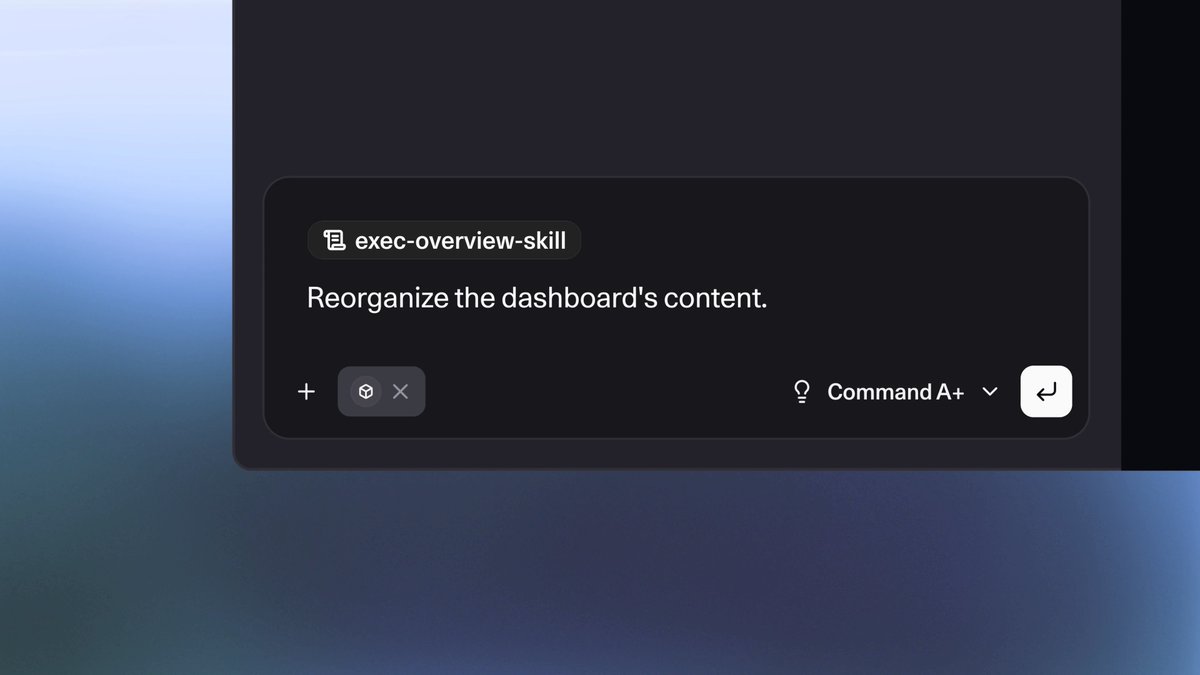
Cohere highlights reusable agents and skills in its upgraded North 2 platform. Users can share these capabilities with teammates to reduce repetitive work.
OpenDirector offers a local short-film workbench
Project material describes ThinkFlowLab’s OpenDirector as a local workflow covering short-film generation, editing and export. It uses vLLM-Omni to work with multiple models.
Harness Leaderboard compares model-running frameworks
Clement Delangue shares Joel Niklaus’s Harness Leaderboard, intended to help developers choose a harness for running models. The available post does not include a complete ranking to reproduce.
Harness adapters aim to improve model-framework fit
Lysandre’s team shares work on harness adapters to help models cooperate with their execution frameworks. The short announcement establishes a direction, rather than universal compatibility.
CRUX-in-a-box supports evaluations lasting weeks
Arvind Narayanan shares CRUX-in-a-box, open-source infrastructure for running and monitoring weeks-long agent evaluations. Evaluation infrastructure does not by itself demonstrate a model’s performance in those runs.
Replit connects financial accounts through Plaid
Replit describes its Plaid integration as a way to connect financial accounts and build tools around personal or business needs through a no-code workflow.
Replit founder describes custom-kernel protection
Amjad Masad says Replit’s custom kernel build avoids 96% of Linux zero-day vulnerabilities and points to its sandbox design. This is a company claim; the post does not supply the sample or measurement methodology.
Hugging Face supports streaming training runs
Hugging Face announces live streaming of training runs. The brief post supplies no further configuration details, but offers a direction for teams looking to make their training process visible.
DSPy GEPA uses historical Slack data to optimize prompts
Omar Khattab shares a practitioner’s account of training prompts with DSPy GEPA and historical Slack data, emphasizing their fit to a team’s context. This is an observation from a particular implementation.
Perplexity demonstrates a Teammate making game mods
Arav Srinivas describes GTABot, a Teammate tasked with continually creating GTA mods. One example rebuilds a region in Minecraft from a community map at one block per meter.
Runway integrates GPT Image 2.6

Runway announces GPT Image 2.6 with faster image generation, GIF creation, SVG export and editing intended to preserve characters, products and brand details. The performance description comes from its product announcement.
GPT-Image-2.6 supports personal and team GIF creation
OpenAI’s developer account demonstrates GIF creation with GPT-Image-2.6 for individuals and teams. The post does not announce new pricing or usage allowances.
Higgsfield Miracle previews recoloring and text editing
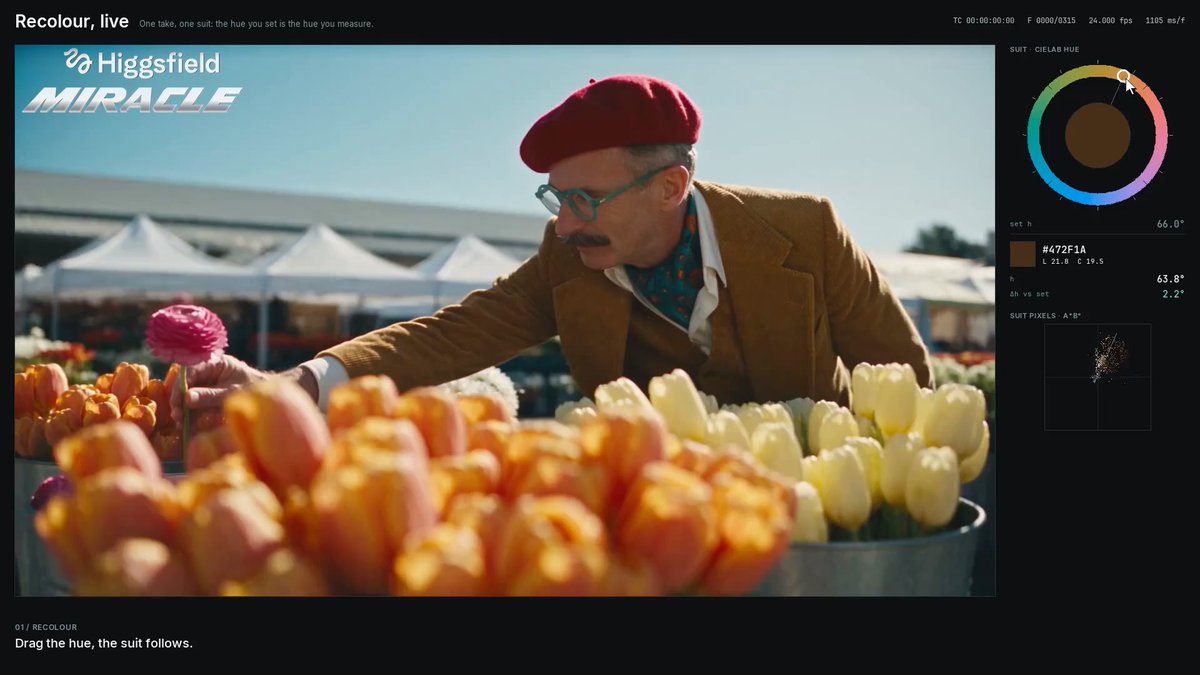
Higgsfield previews object recoloring and live text editing in Miracle, with Higgsfield MCP integration described as coming soon. Its “zero-frame” latency description is a promotional demo claim.
Higgsfield demonstrates a Claude-made documentary

Higgsfield says Claude and its MCP workflow automated the script, shots, narration, music, effects and editing for a ten-minute dinosaur documentary. The description of broadcast-ready quality is the company’s assessment of its demonstration.
Recraft Vary separates composition changes from detail edits

Recraft Studio introduces Vary: select an image, then use Vary direction for new compositions or Vary details for smaller changes, without writing another prompt.
Recraft recaps logo and visual-annotation updates
Recraft Studio’s October recap also mentions Logo Maker, Visual Annotations and six image and video models. A monthly recap does not mean all of those features launched on the day of the post.
Seedance 2.5 joins Adobe Firefly

Adobe announces Seedance 2.5 in Firefly and invites users to try it free. The linked page returned a JavaScript requirement rather than product details, so pricing, allowances and rollout scope were not verified from it.
Kling 4.0 short film demonstrates racing scenes

Kling AI’s original short Redline uses Kling 4.0 to demonstrate fast motion and cinematic scenes. It is a creative showcase rather than a standardized performance evaluation.
Vidu Q4 Preview shows a cloud-themed video

Vidu demonstrates Q4 Preview with Taste of the Clouds and provides an invitation code in its post. The example showcases the preview model’s visual-generation capabilities.
PixVerse Canvas adds GPT Image 2.5
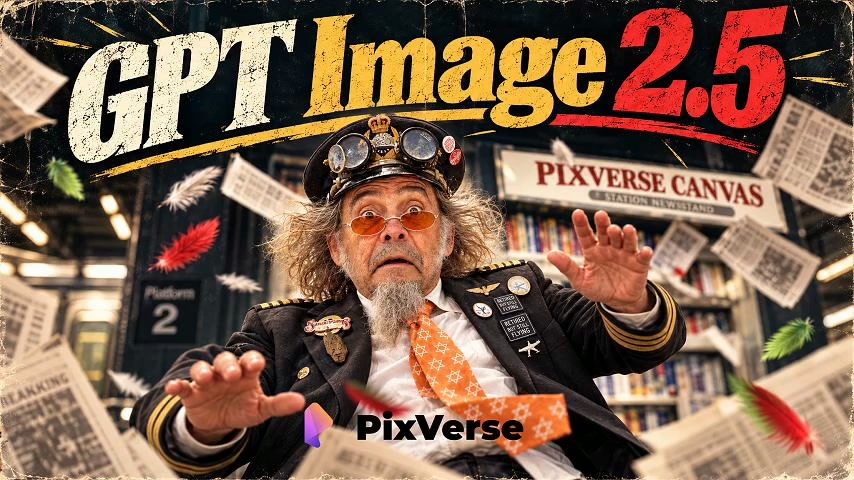
PixVerse announces GPT Image 2.5 in Canvas for ad concepts, lookbooks and storyboards, highlighting edits to clothing, props and backgrounds alongside character consistency.
Gemini Omni Flash 1.2 supports fifteen-second video
Martin Nebelong shares a product lead’s announcement that Gemini Omni Flash 1.2 is rolling out with video generation up to fifteen seconds and deeper cinematic control. The truncated repost does not establish a complete feature list.
Anthropic examines AI’s role in scientific modeling
Anthropic’s science blog discusses AI’s changing role in explaining and predicting real-world systems, including the firing of individual nerve cells. The available announcement introduces the research direction without complete experimental results.
CulturalRiddles tests models with cultural puzzles
Cohere Labs reports testing 28 AI models with human-written cultural riddles and finding substantial gaps in cultural understanding. The available repost does not show every model’s scores.
Muir allocates linear-attention gates by sensitivity
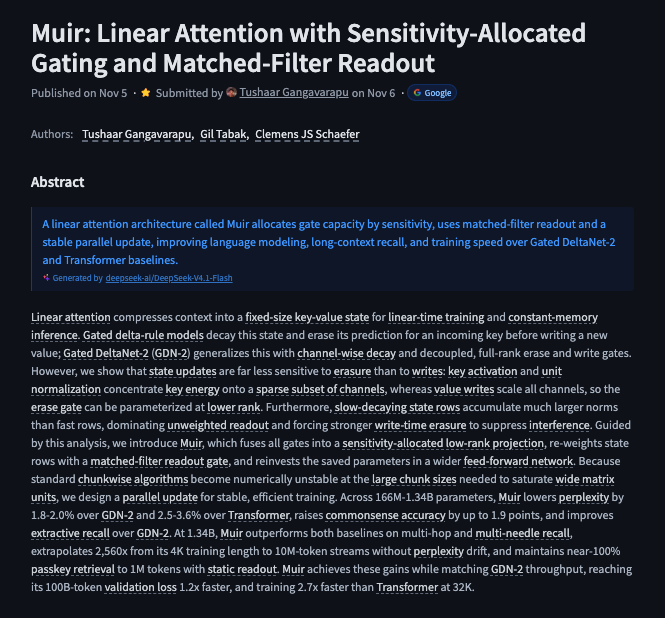
The paper combines low-rank gating projections, state-row reweighting and matched-filter readout, reallocating saved parameters to wider feed-forward networks. Its authors report perplexity improvements over GDN-2 and Transformers at 166M–1.34B parameters.
Youdao R2T2 preserves stable prefixes in streaming ASR
Confucius4-R2T2 post-trains Qwen3-ASR-1.7B on 1,500 hours of Chinese and English audio. A longest-stable-prefix mechanism avoids rewriting earlier output; the paper reports low latency with strong recognition quality and releases weights and code.
TailSteer targets drift at the end of denoising
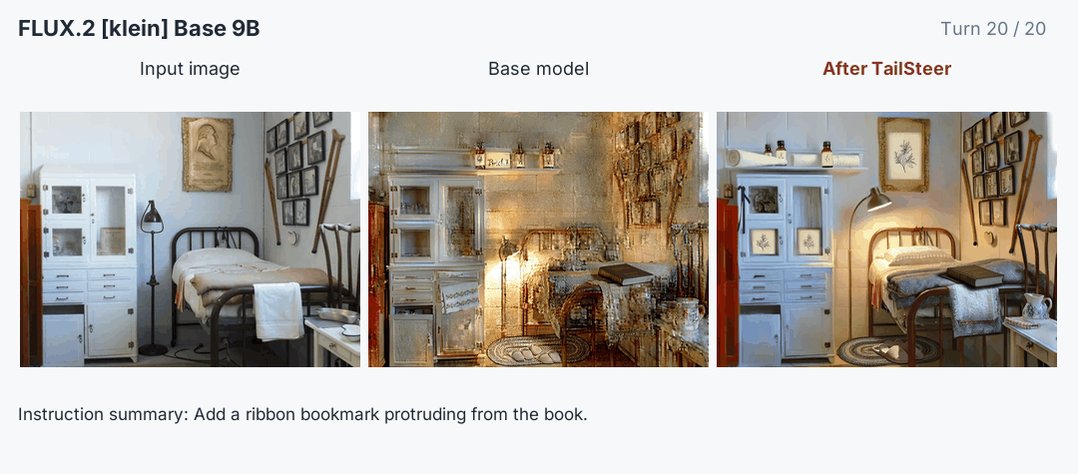
The training framework keeps early denoising close to the base model and learns fidelity corrections at the trajectory’s tail without human-labeled editing pairs. The paper reports lower accumulated drift over fifteen to twenty edits with FLUX, SenseNova and Qwen models.
OPAL lets language-model agents rewrite optimizers during training
Reactive Optimizers introduces OPAL, which inspects a training run and rewrites executable optimizer code, including parameter-group rules, schedules and precision. The authors report matching or exceeding fixed recipes on selected untuned tasks and discuss additional compute costs.
Large models guide reinforcement learning for small retrievers
Omar Khattab shares a technical account of a large model continually guiding reinforcement learning for a 0.4B-parameter retriever. The repost cuts off before the comparison target, so it does not support a sweeping claim of outperforming all larger models.
Researchers discuss Full Bandwidth Transformer
Arohan cites ByteDance experiments suggesting a Full Bandwidth Transformer variant may approach a model twice its size. This concerns a particular experiment, rather than demonstrating that every configuration halves compute needs.
ByteDance Seed publishes liquid-correction data
A research post highlights MLIP-liquid-corrections on Hugging Face, providing BSSE and ATM correction labels. The truncated announcement does not establish the dataset’s scale or achievable accuracy.
LeRobot v0.7.0 is released
LeRobot announces v0.7.0 and mentions workflows ranging from terabyte-scale data to prompting robots. The available repost does not include a full changelog.
Möbius links motion understanding and generation
A researcher introduces Möbius, a unified motion-language model connecting human-motion understanding and generation. The available repost does not provide complete task coverage or benchmark results.
Community account describes Liber-0 robot tests
Linus Ekenstam reports that Liber-0 faced 60 tasks across 600 trials without training on demonstrations collected specifically for those tasks. Reported success was 36% overall, 63.5% for pick-and-place and 34% for other manipulation; these remain attributed experimental figures.
RGBMocap workflow turns video into motion assets
A creator shares using RGBMocap to extract motion from video, mentioning a local MiniMax H3 workflow and a character-swap LoRA. This is an individual workflow example, rather than a guarantee across inputs.
OpenAI and industry partners outline a cyber-harm framework
OpenAI, Frontier Model Forum and member firms propose identifying when bypassing AI safeguards could enable serious cyber harm, then prioritizing stronger protections for those cases.
SGLang reports throughput under two concurrency conditions
SGLang reports over 420 tokens per second per user at low concurrency and over 31,000 per second per GPU at high concurrency on GB300 NVL72. These figures describe different workloads, rather than a single operating point.
Inferact reports more than seven trillion tokens daily
Woosuk Kwon shares Inferact’s statement that its platform serves more than seven trillion tokens per day. This is platform-disclosed traffic, rather than an independently audited total.
vLLM supports Kimi K3.1 Pro on TPU v7x
Inferact announces work with Google to provide day-zero Kimi K3.1 Pro support in vLLM on TPU v7x. The available repost does not supply throughput or cost comparisons.
NanoDC introduces solar-powered autonomous inference sites
CoffeeVectors shares LiquidEnergy’s description of NanoDC as a solar-powered autonomous data center for AI inference. The available post lacks verifiable capacity, cost and sustained-operation figures.
Secondhand Ramp account describes slower token-spending growth
Dotey cites Ramp figures showing enterprise token spending rising 42% month over month in July, 1% in August and 0.2% in September. These concern spending in the stated sample, rather than token volume; the underlying statistics and valuation rumors were not independently verified from this item.
Jeff Dean and colleagues support open-science funding
Jeff Dean announces work with Laude Institute and fellow computer scientists to fund exploratory open-science projects. The post does not state an aggregate funding amount.
Longevity Grok organizes personal research materials
The project describes Longevity Grok as a personal longevity research team running on Grok Bot, with health records, research briefs and appointment preparation. Clinic and laboratory editions require early-access applications.
Interfaces shift toward supervising and interpreting work
Runway co-founder @c_valenzuelab observes that interfaces are moving from places where people directly make changes toward places where they supervise agents and interpret the resulting work.
Arav sees git as a shared record for collaborating agents
Perplexity’s CEO expects agents to invoke other agents increasingly often. He argues that version-controlled code and execution traces can support collaboration around a compounding git record. This is his architectural perspective.
Perplexity describes changes in internal agent use
Arav says median weekly agent-hours received by employees have reached seven times September’s level, with one in five employees receiving more than forty hours weekly. Agent runtime does not directly measure human work saved or output gained.
Generating code still leaves the question of what to improve
Vercel’s CEO agrees that coding is solved while bugs remain, arguing that teams can spend tokens on endless refinement, including changes nobody needs. His point concerns judgment about value and problems.
Community critic questions the limits of file-based memory
Teortaxes argues that using stronger models to organize more Markdown files can work well while remaining limited by pretraining. This is a critique of agent memory, rather than an established capability ceiling.
Hardware comparisons need an explicit operating target
Teortaxes cites Vera Rubin versus GB300 throughput ratios of 5.0x at 260 tokens per second per agent and 1.7x at 80, discussing interaction speed versus maximum throughput. Full measurement configurations are absent from the post, so the cited figures remain unverified here.
Dotey applies screenshot evidence to agent PR reviews
Dotey describes requiring screenshots of changed features with pull requests to encourage actual execution before review. He is applying the same practice to AI agents; this is a team-workflow observation.
Mollick distinguishes market swings from AI adoption
Ethan Mollick argues that a potential pullback in AI stocks would not automatically change enterprise adoption or technical progress. This is his view of industry development, rather than evidence for a market forecast.
A creator describes roles for seventeen Grok Bot helpers
A creator lists Grok Bot assistants for an animated series, books, Japanese study and work. The example illustrates personal task decomposition without an independent efficiency evaluation.
Loop-agent specifications can become internal details
Dotey shares an engineering view that spec and task files can remain internal to a Loop Agent while people provide discrete, rough inputs. This is a design position about dividing work between people and agents.
Open robotics lets later work build on shared progress
Clement Delangue argues that open source lets students, researchers and startups build on years of progress and contribute back, rather than concentrating robotics capability inside a few black-box systems.
Plugin maintenance includes automatic-update mechanisms
Dotey notes that building a DeepSeek Harness plugin also required implementing plugin updates himself. It is a practical observation about maintaining developer tools.
Latent Space introduces a Reducto PDF workflow episode
Latent Space previews a cooking-show-format episode about Reducto AI’s PDF processing workflow. The fetched page contains only a channel description, so unseen video details are not reconstructed here.
Weta FX executive discusses an AI strategy for film
CoffeeVectors shares Variety’s reporting on a Weta FX executive describing changing attitudes toward generative AI and the need for an AI strategy. This remains an attributed perspective, rather than proof that an entire industry has completed its transition.