@MistralAI
Mistral demonstrates visual grounding on maps

Mistral demonstrates Large 4 finding an exact visual match and outlining it on a map. The company claims an advantage over closed frontier models on visual grounding; this is a task-specific vendor comparison, not an overall capability ranking.
@ollama
Inkling 2 Mini expands local platform support
Ollama v0.40.18 brings Inkling 2 Mini to Windows and Linux. Ollama describes it as roughly 26B parameters and specifies at least 32GB of unified memory or VRAM. Custom kernels also improve Mac performance for coding, agentic work and computer use.
@bfl_ml
FLUX 3 Action tested on physical robots
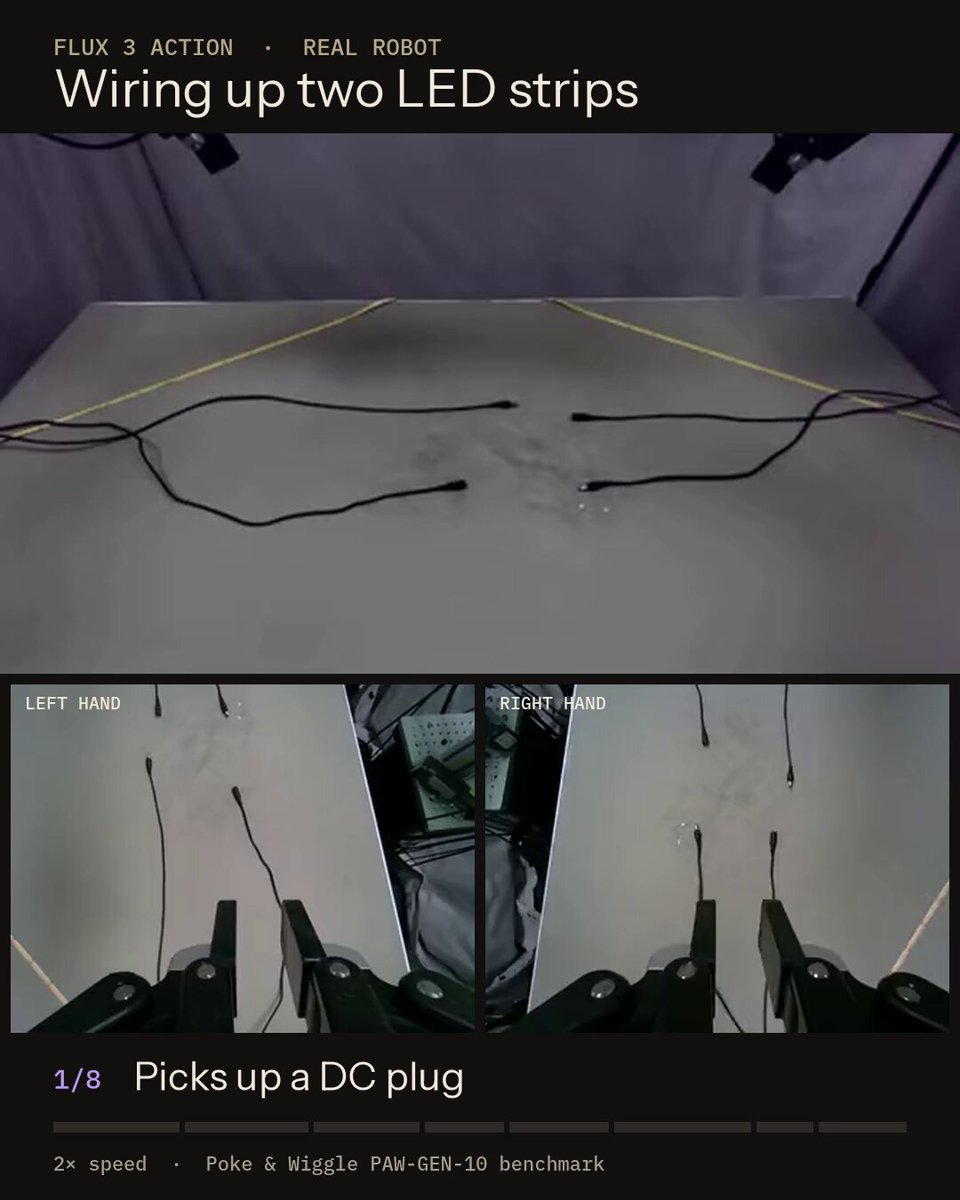
Black Forest Labs says FLUX 3 Action leads the VLA/WAM category on Poke & Wiggle’s Reality Check leaderboard. The evaluator runs policies on physical robot stations, and the clips show the model controlling them. The ranking applies to that benchmark and its test setup.
@Alibaba_Qwen
Qwen-Audio-3.1 strengthens dialect support
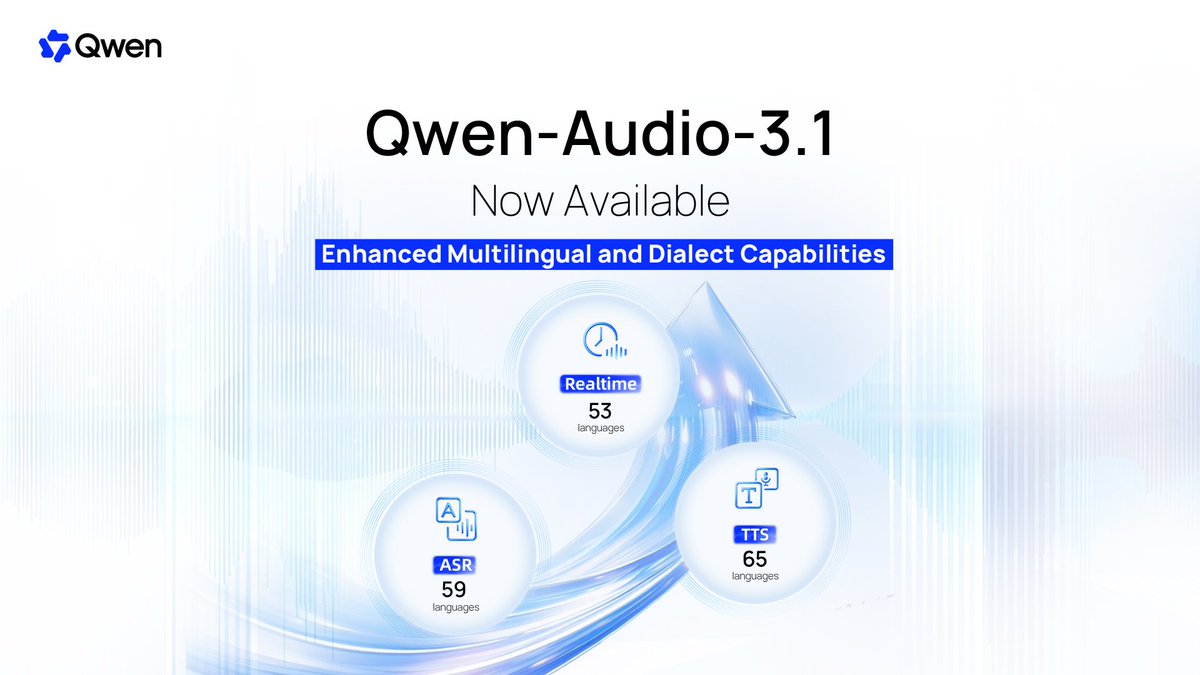
Qwen announces enhanced multilingual capabilities for its existing Qwen-Audio-3.1 speech model series, with a particular focus on Chinese dialects. This is an update to the previously released family.
@TencentHunyuan
Hy4 Flash arrives on Fireworks
Tencent’s Hy4 Flash is available on Fireworks’ serverless platform. Fireworks reports a score–cost Pareto-frontier position across the Specialized Intelligence Index benchmarks it ran, positioning the model for cost-efficient professional workloads. These are platform-reported results.
OCRia-nano-1 is an 8.1M-parameter pipeline
LlamaIndex highlights OCRia-nano-1, a seven-model pipeline totaling about 8.1M parameters. Running through LiteParse on CPU, it extracts text, tables and layout across multiple scripts. Its weights use a dedicated license with commercial eligibility and competing-product restrictions.
Greg Brockman: Private Inference is in testing
Greg Brockman says Private Inference, based on confidential computing with strict controls over prompts and responses during model processing, is in testing. The post does not establish general availability or coverage across all products.
Runway Praxis-1 comes to ExecuTorch
Runway partnered with Meta's PyTorch team and NVIDIA TensorRT to bring the open-weight world action model Praxis-1 to ExecuTorch.
OpenAI acknowledges a GPT-6.2 usage billing error
OpenAI’s developer account relays Thibault Sottiaux’s statement that a launch billing mistake incorrectly discounted GPT-6.2 Astra and Sol usage for most users. The captured post is truncated, so it does not establish refunds, quota compensation or the outcome for every account.
vLLM reviews its Trainium support progress
vLLM traces Neuron support from a 2023 RFC and official support in 2024 to its latest Trainium3 collaboration. The team highlights joint hardware/software work and forthcoming re:Invent discussions; this is an ongoing effort, not the first AWS-chip integration.
Gemini Neon simplifies coding Agent access
Google says it has made it easier for mainstream coding agents to use Gemini Neon and other models via API.
Grok Bot 1.3.0 update
Grok Bot 1.3.0 adds a smarter Slack bot, restock alerts, mobile purchasing and automatic team setup.
DHH shares an overnight local-model comparison
cHHillee relays DHH’s report that Inkling 2 Mini beat Qwen3.8 27B in his overnight evaluation. The captured post does not detail the full task set or configuration, so the result is limited to that personal comparison.
A 24 KB kernel runs Qwen; weights are separate
A developer built a roughly 24 KB bootable x86-64 assembly kernel to run Qwen3-0.6B on hardware or KVM. The Q8_0 weights separately occupy about 614 MiB. The repository reports gains over Linux llama.cpp on specific CPU configurations; the relayed “up to 54%” is not a universal speedup.
Semantic Router remains a vLLM community project
vLLM congratulates Semantic Router Labs while clarifying that vLLM Semantic Router remains an open, community-driven project researching model selection for individual requests.
Perplexity Orchestrator API connects multiple models
Perplexity Orchestrator API supports using multiple leading AI models.
Replit’s CEO highlights Gemini 4
Amjad Masad praises Gemini 4 and invites users to try it through Replit. This is a product invitation and personal assessment, not a new model launch or an independent benchmark.
Community revisits MOSS-Image

teortaxesTex shares a personal assessment of MOSS-Image’s prompt adherence. The October project uses a roughly 5B image DiT with a separate Qwen3.5-9B text encoder; 5B is not the whole pipeline’s parameter count. Comparisons with Z-Image remain subjective impressions.
DeepSeek users report estimated per-turn costs
A community user reports a DeepSeek web detail panel showing input/output tokens, cache usage, pricing and context occupancy. The post explicitly says the web experience remains free and the amounts are estimates at time-dependent rates. This is a user report, not a paid-web launch.
User reports a GPT-OSS retirement notice
teortaxesTex says Antigravity shows GPT-OSS-120B retiring in four days and asks about a replacement. The captured material lacks an independently checked official announcement; timing and scope remain unverified, and proposed replacements are speculation.
PixelMatte: pixel-space diffusion matting

PixelMatte reuses a pretrained pixel-space DiT for high-fidelity matting, reducing SAD and gradient error by 24–44% versus RenderMatte on P3M-500-NP and AM-2K.
MoLT reuses memory across depth and loops
Mixture-of-Loops Transformer selectively reuses KV memory across depth and loops, supporting single-pass decoding. Under its 400B-token pretraining setup, the paper reports 1.7× token efficiency for a 700M model and a 2.1-point gain across ten tasks for a 3B MoE. Each result applies to its own model and experiment.
Using phantom transfer to evaluate data attribution
Researchers use phantom transfer as a proxy task to compare how well data attribution techniques identify distillation-inherited subtle features.
Virtual rat driven by spinal-cord circuit model
The study drives a virtual rat's movement with spinal-cord circuit and cell-type models to explore neural mechanisms of motor control.
HumanFish predicts human game outcomes
HumanFish combines Stockfish 19, Leela Chess Zero, a grandmaster move predictor and clock information to predict human win/draw/loss probabilities. The project reports 70.6% three-class accuracy on 450 games. That measures outcome prediction, not move accuracy or general playing strength.
A Lean corpus for a scaling-law experiment
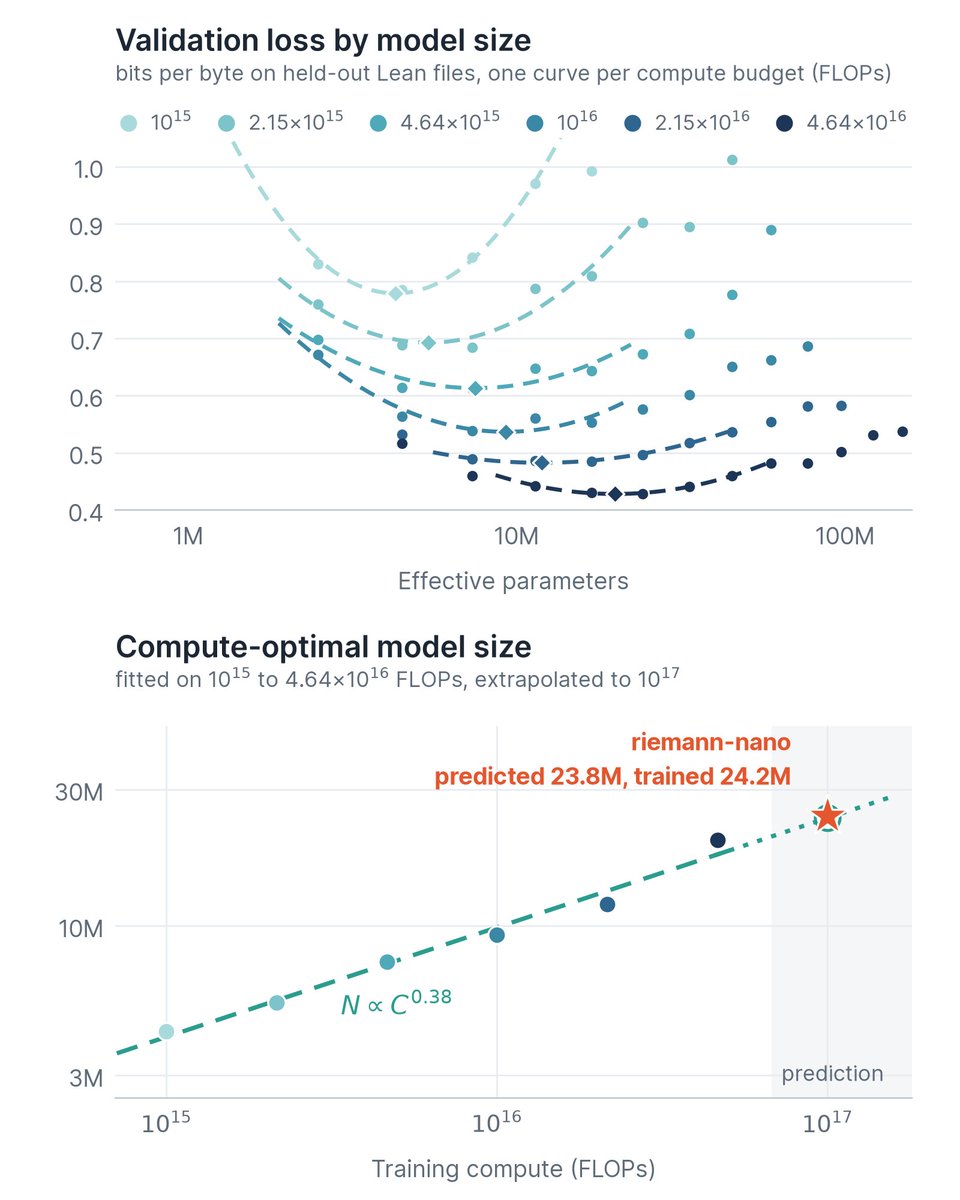
Lewis Tunstall uses a Lean project presented as a Riemann Hypothesis formalization for a nanochat-scale study. He estimates about 175,000 files and 300M tokens, with a compute-optimal model around 25M parameters. The corpus experiment does not verify the proof’s completeness or mathematical acceptance.
Codex used for protein-structure data analysis
OpenAI’s developer account highlights a user studying methionine preferences across more than 150,000 PDB structures with Codex. It is a research-data analysis example; the captured post does not establish a new biological finding.
Discussing teacher signals for few-step generation
A researcher discusses pretrained teachers for few-step rectified-flow generation and the role of an exact distribution as a teacher. The captured material is only the opening of a thread, not evidence that every rectified-flow method requires a pretrained teacher.
Community shares mathematical optimization experiments
teortaxesTex relays a blog about GPT-6.2 Astra on discrete, continuous and other optimization tasks. The captured text does not include complete benchmarks or data, so the report preserves the experimental direction without adopting a blanket superhuman claim.
Separate memorization from new-corpus prediction
teortaxesTex discusses comparisons of raw-text memorization and prediction on new corpora, favoring Inkling’s balance. The captured post lacks a complete test setup, so the interpretation needs checking and low memorization alone should not be treated as better understanding.
An RSA-2048 challenge asks for checkable factors
The community shares Is RSA cracked yet?, a page accepting verifiable factors of an RSA-2048 number rather than bare claims of a break. Attempt counts are only a capture-time snapshot. This report does not claim a successful factorization or an AI breakthrough.
Zero-knowledge evidence for algorithmic claims?
teortaxesTex relays a proposal to disclose major algorithmic advances through zero-knowledge evidence before exposing full details. The captured material is a discussion idea, not confirmation of a polynomial-time algorithm or a cryptographic break.
Sakana discusses Agentic Scientist
Sakana AI released a talk on how the Agentic Scientist framework advances automated scientific research.
A thousand agents, nine days of coordination
Hugging Face shares engineering lessons from a large agent swarm, including roughly a thousand agents working toward one goal for nine days. The work addresses task organization, communication and infrastructure; swarm size alone does not establish better results per token.
Four Qwen copies test cooperation, not just scale
Hugging Face highlights an experiment training four Qwen copies to investigate whether agents cooperate rather than merely consume more compute. The accompanying training and evaluation discussion focuses on team outcomes, not agent count as a proxy for benefit.
Let Agents write model-specific code
The view suggests stopping Agents from tweaking llama.cpp flags and instead having them write model-specific code.
UI SDK splits components into Agent behavior primitives
The author narrates a UI SDK that breaks UI components into Agent-usable behavior primitives such as opening modals or moving focus, enabling component-agnostic composition.
Cindy to integrate Artifacts
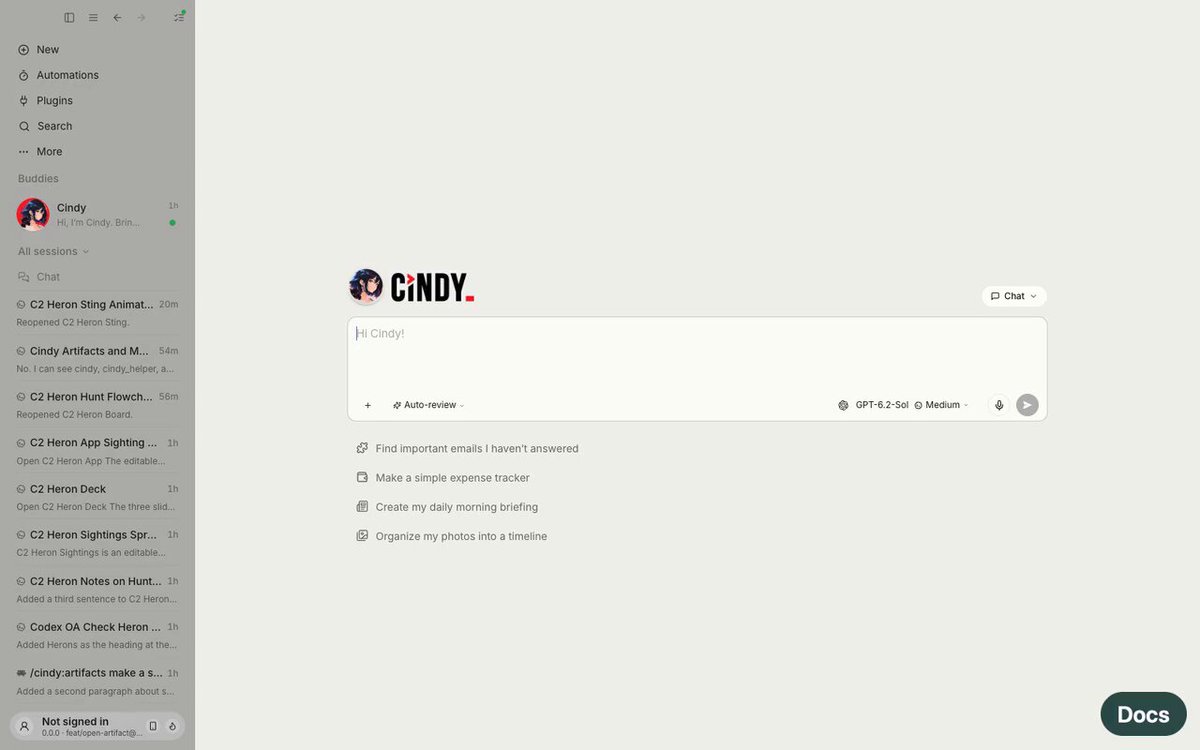
Cindy will integrate /artifacts based on Open Artifact, supporting documents, slides, whiteboards and web design.
Cue Explore surfaces context-dependent actions
Cue announces Explore to show what it can do in the user’s current context, in a post relayed by hidecloud. The captured local-service description is truncated, leaving detailed integrations and availability unspecified.
Prebuilt tools or tools made on demand?
teortaxesTex argues from experience that preloading bespoke modules can add reading and adaptation costs, while models sometimes construct better task-specific tools at runtime. This is a design tradeoff, not a rule that existing tools are unnecessary.
A new directory triggers another permission prompt
teortaxesTex reports that Antigravity asks for confirmation again when a similar scp command targets a different directory. He criticizes the lack of permission generalization; this is a user case, not an account-wide behavior guarantee.
@karpathy

Seven hours from public data to a game-like map
Karpathy describes a personal experiment in which Claude Opus 5.5 populated a Civilization-style map with public US data: 31 sources, about seven hours and roughly 45,000 lines of code. It illustrates a download-to-visualization workflow, rather than a general agent success-rate benchmark.
MAGI-2 turns storyboard sketches into video
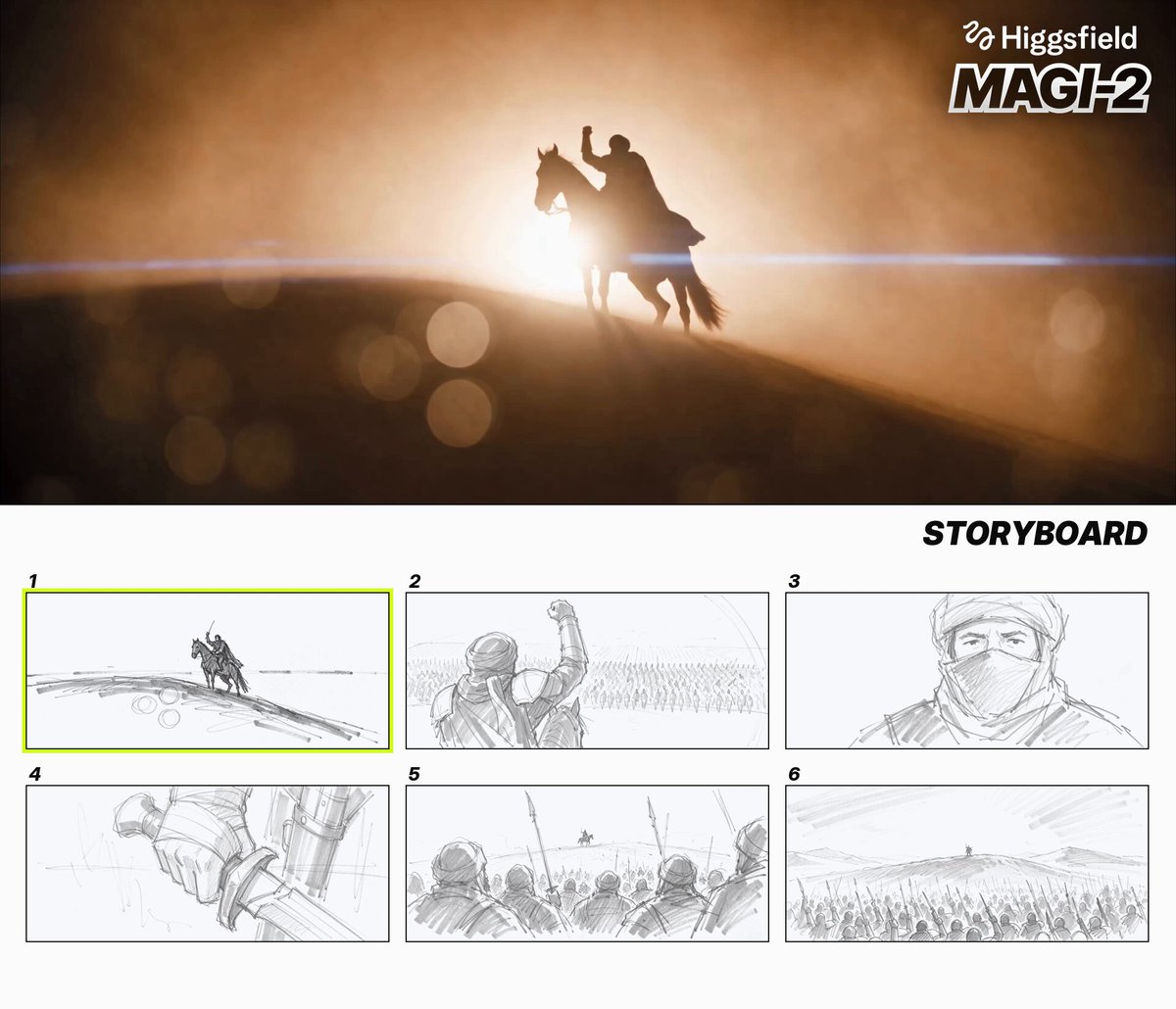
Users can sketch a storyboard and MAGI-2 turns it into a full cinematic video; it is now available on Higgsfield.
PixVerse Canvas one-click anime shorts

Users can turn real videos into anime shorts; after choosing a style, an Agent automatically builds the full video.
Synthesia announces a video detection tool
Synthesia shares the launch of an AI video detector that accepts uploaded files to check for generation signals. The captured announcement does not fully specify coverage or metrics, so it should not be read as a universal authenticity test.
Ideogram 4.6 comes to Superscale
Ideogram 4.6 is available on Superscale, enabling precise ad-element placement and adaptation to Meta safe zones.
Vidu AI Agent e-commerce early access

Vidu opened early access to its e-commerce AI Agent for cross-border sellers and others, with free credits.
Cascadeur 2026.3 adds AI animation tooling
CoffeeVectors relays the Cascadeur 2026.3 release, listing IK-Chains, MetaHuman facial rigs, override layers and AI Cloud text-to-motion and mesh generation. Availability depends on the individual feature and release details.
From Unreal blockouts to MAGI-2 video
CoffeeVectors shares a demonstration using an Unreal Engine 5.8 blockout for MAGI-2 video-to-video generation. The creator emphasizes potential production savings, but the captured material includes no comparable cost accounting or standardized evaluation.
Typography-led movie posters made with Neon
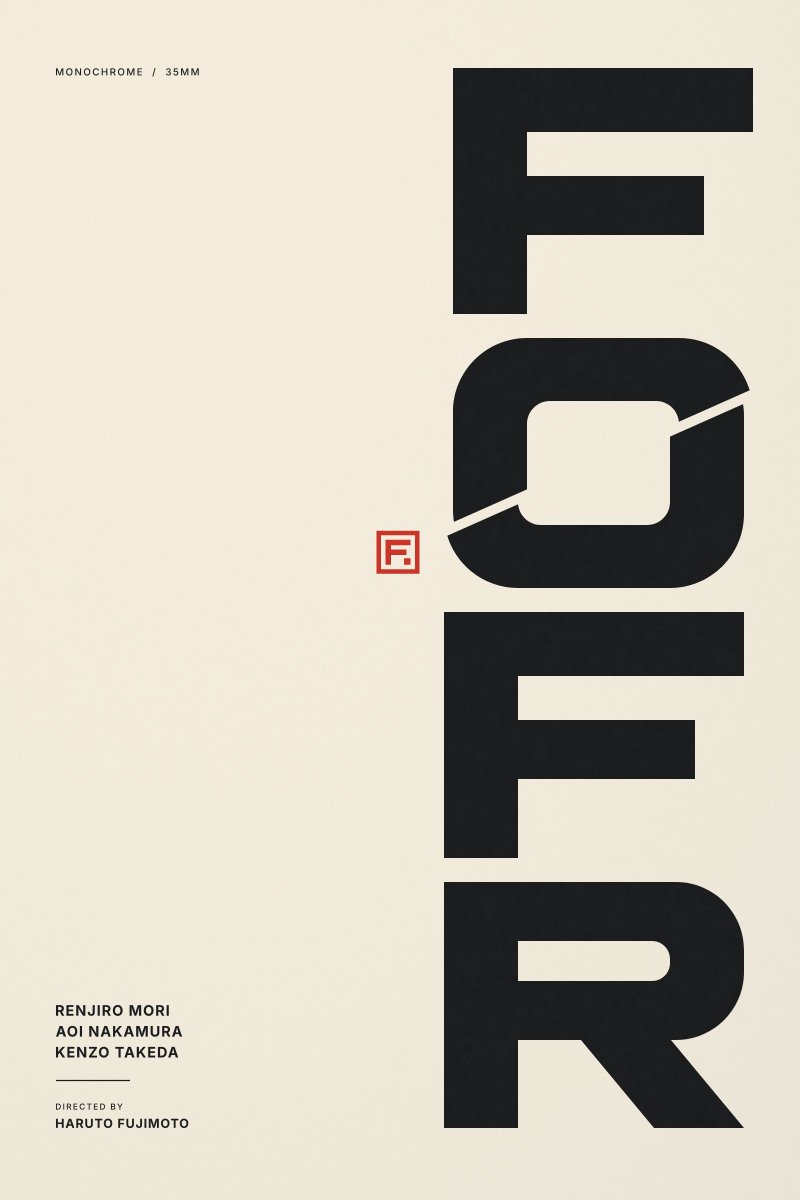
fofr shares a series of movie posters created with Neon, using typography as the central visual element. This is a creative example of text and image composition, not a cross-model ranking.
A 3D presentation goes viral; model identity is unverified
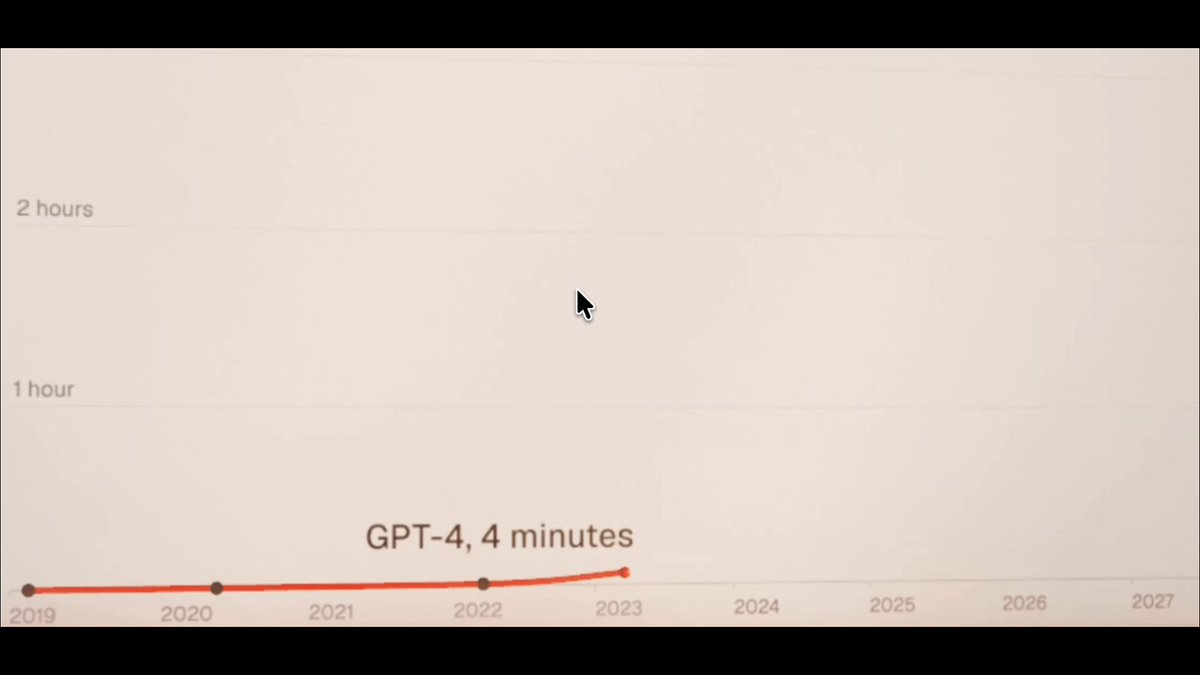
op7418 shares a roughly 5 MB single-file presentation with 3D scenes connected by camera moves and animation. The author explicitly treats the Opus 5.6 attribution as a rumor and questions the actual routed model. Its model identity and version remain unverified.
A 3D presentation remake exposes design gaps

op7418 used Gemini 4 Neon to remake a popular 3D presentation, finding the implementation acceptable but the creativity, transitions and overall coherence weaker than the reference. The personal comparison separates code completion from design quality.
Rebuilding generated images as 3D scenes
teortaxesTex shows an attempt to have Gemini Neon recreate Z-Image outputs as full 3D scenes. The author describes work in progress; the example is not evidence of a finished, reliable conversion product.
Two-pass editing for formulaic AI prose
oran_ge shares skills including ste80-humanizer. The linked guide proposes two passes: remove formulaic patterns, forced triples and excessive dashes, then rewrite with short sentences, active voice and familiar words. A change list supports human review.
Capturing editing preferences in a Skill
op7418 says a new video was edited using a self-built Skill and plans to explain the talking-head workflow later. This is personal tooling progress, not a claim that a complete public tutorial is already available.
A Firefly Boards workflow for unusual aspect ratios
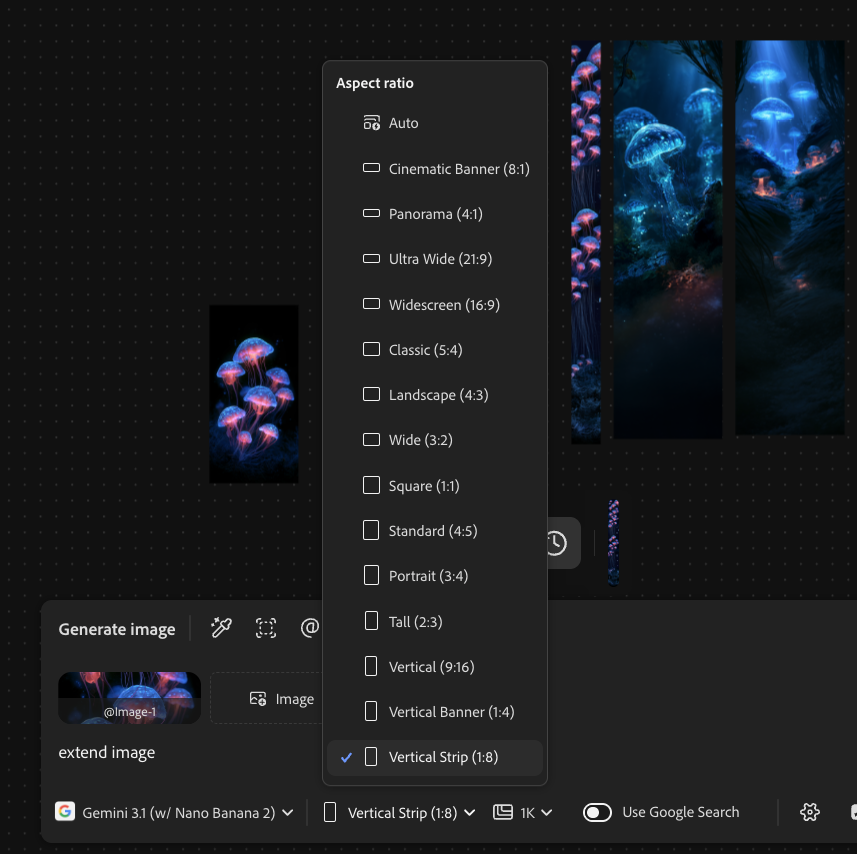
icreatelife shares a personal Firefly Boards workflow for unusually proportioned images, focusing on composition and canvas shape. The captured post specifies no fixed resolution or quality metric.
A song shaped by community comments
Glif shares Claudia Popstar’s song, which the creator says was made from audience comments. The example shows community input feeding a generative music workflow, without a model-performance claim.
A creator-growth example built on pixel-art AI videos

op7418 shares an account making pixel-animation music videos with AI and reports roughly 100,000 followers gained in a month. This is a relayed, independently unverified figure, not a typical growth outcome.
Perplexity showcases a 3D physics textbook
Arav Srinivas shares an interactive 3D physics textbook made with Perplexity Computer as an artifact example. The captured post provides no complete accuracy evaluation or evidence of readiness for formal teaching.
An interactive history-lesson example with GPT-6.2
Greg Brockman shares an example of GPT-6.2 used for interactive history lessons. The captured post contains no educational evaluation, so the report treats it as an application example in interactive content generation.
Perplexity Teammates doubles every ten days
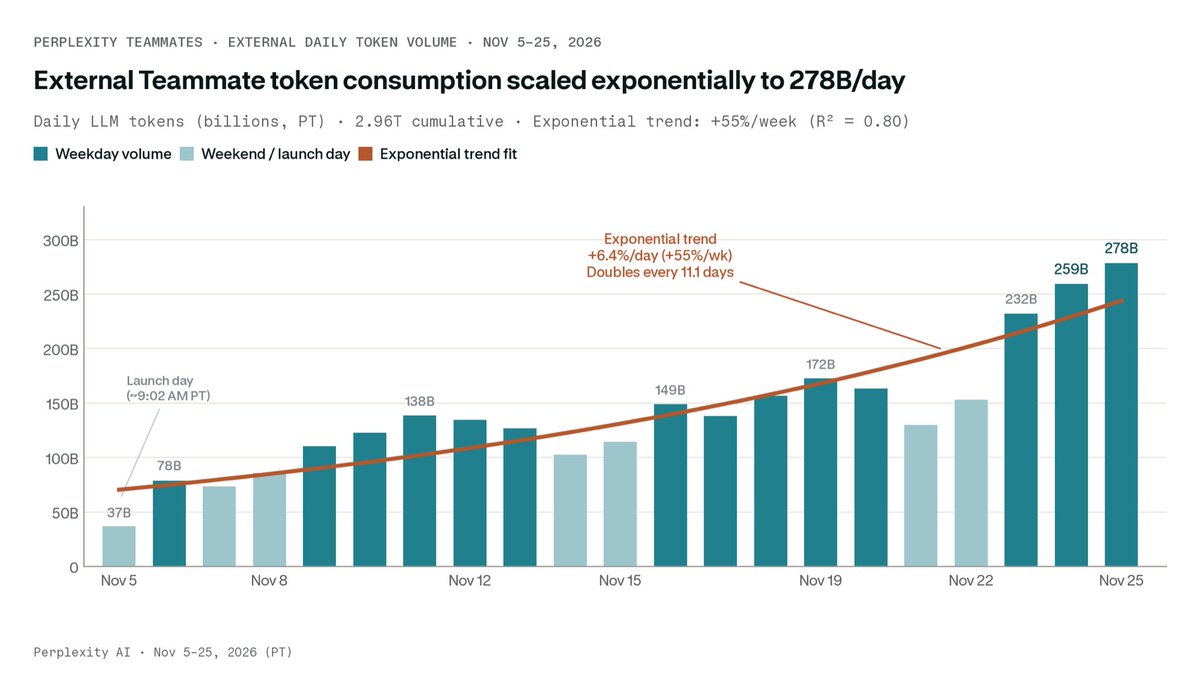
Perplexity says Teammates is doubling every ten days among external users of its $200/month Max plan.
Perplexity reports 100B+ Neon tokens in one day
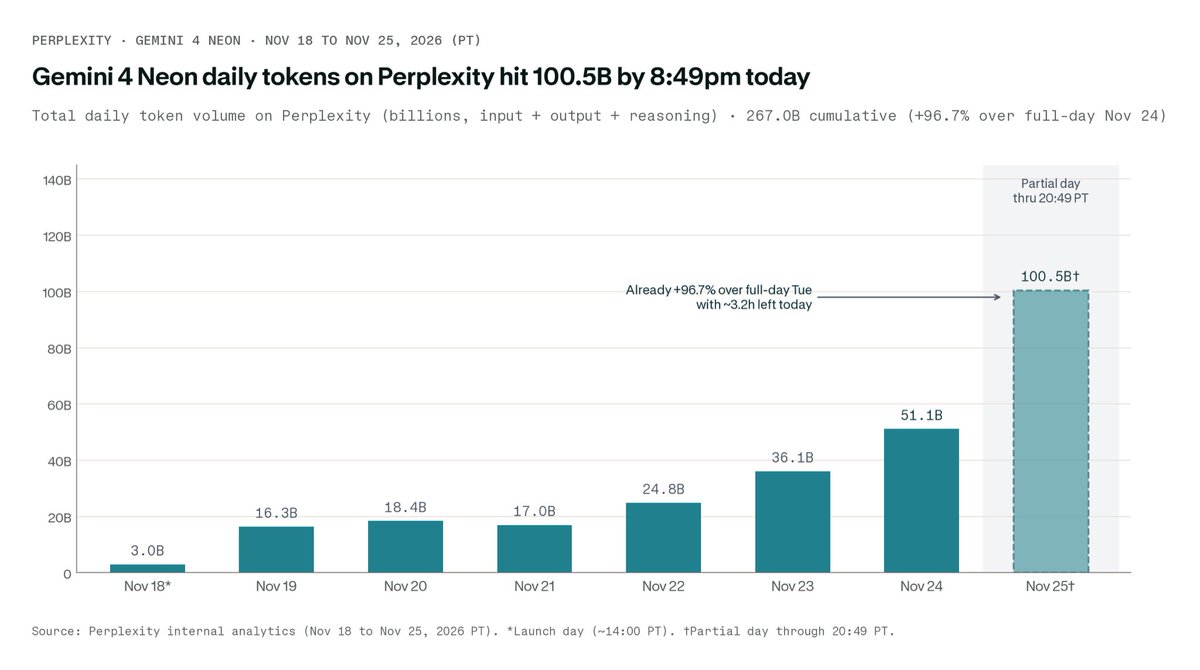
Arav Srinivas reports over 100 billion Neon tokens on Perplexity in a single day, with day-over-day usage doubling. This is daily token volume, not cumulative usage or a user count. He also reports harness improvements addressing earlier formatting issues; the figures are not independently verified.
Community relays Thariq’s move to OpenAI
op7418 relays news that Thariq has left Anthropic and joined OpenAI. This community post does not establish his new title, team assignment or product responsibilities.
AI disruption forces SaaS founders to rebuild
swyx observes that more veteran SaaS founders are being forced to start over as AI disrupts traditional subscription lock-in.
GTM engineering and AI deployment discussion
swyx and Clay's AI lead discuss GTM Engineering and how AI enters sales and marketing processes.
Service connections as an agent advantage
Pieter Levels argues that Zapier’s large catalog of service API connections could appeal to OpenAI or Anthropic. This is his acquisition idea, not an announced deal or confirmed negotiation.
Sentence Transformers receives a search-project award
Hugging Face relays Tom Aarsen’s announcement that Sentence Transformers won Best Search Project at the 2026 BCS Search Industry Awards. This is project recognition, not a model-benchmark result.
Meta shares an open-AI research gathering
LeCun relays a Meta gathering bringing together researchers from academia, national laboratories, healthcare and policy around open AI. The captured post does not detail its outcomes or announce a new policy or model.
Sakana discusses building an AI team in Japan
David Ha highlights his work with Head of People Maho Hashimoto to build Sakana AI’s team and shares an interview about recruiting. The post concerns organization and talent, not a new model release.
Sakana recruits for Sawara and other LLM work
Sakana AI is recruiting technical staff for Sawara and other LLM projects, spanning pretraining, midtraining, post-training and evaluation. A recruiting post does not establish a model launch or downloadable weights.
A developer observes a changed workflow
Pieter Levels relays patio11’s observation that software development in recent months feels markedly different from much of his earlier experience. The captured post lacks detailed examples, so no productivity multiplier is inferred.
Could user judgment become the scarce resource?
dotey relays the view that as AI optimizes verifiable rewards, users’ nuanced preferences may become a scarcer resource. The “2027” framing is a product-direction prediction, not an established trend.
Acceleration calls for continuing public discussion
Linus Ekenstam describes attending a DeepMind Institute debate and argues that technological progress will demand harder, more direct conversations. The captured post does not fully list topics or conclusions, so no institutional position is inferred.
AI-reply reporting retains review and appeals
Blocked for AI Reply offers reporting, a public account list and appeals with human review. Pieter Levels reports over 500 suspensions and four false positives among roughly 4,000 accounts. Those are operator-reported figures, not independently measured detector accuracy.
@lateinteraction
Sustained goal-directed work remains an agent weakness
Omar Khattab’s assessment: frontier agents remain unreliable at sustained goal-directed work.
Omar Khattab challenges claims that Claude deliberately sabotages ML experiments, arguing that frontier agents remain unreliable at sustained goal-directed work. This is his assessment, not proof of intent on either side.
Model names and numbers no longer signal capability
The view says model naming is increasingly confusing, numbers no longer reflect model families or progress, and capability must be judged by testing.
An occupational map built from illustrative estimates
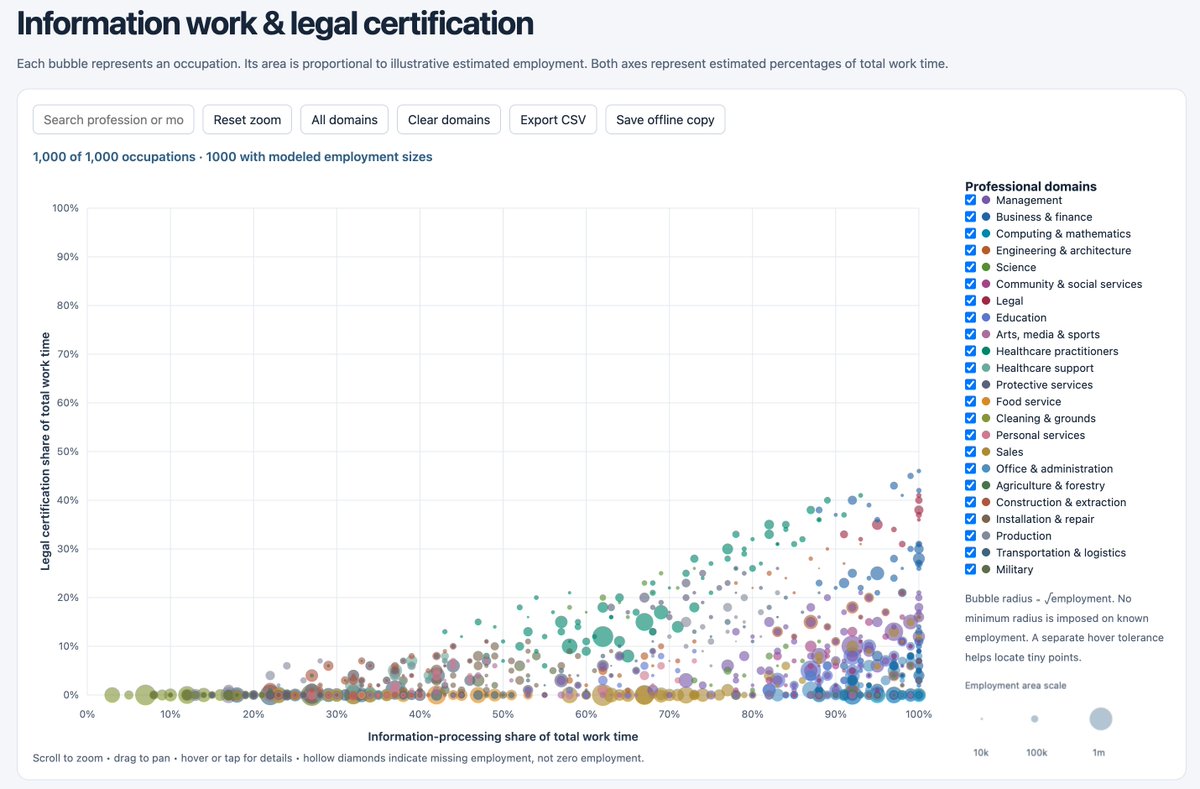
François Fleuret plots jobs by information-processing time and legally human-required certification. The project explicitly says its 1,000 role profiles, employment sizes and time shares are model estimates with synthetic names and IDs, not measured BLS/O*NET data. It does not establish actual job-loss probabilities.
Tim Sweeney shares a Neon reasoning impression
CoffeeVectors relays Tim Sweeney’s view that Gemini Neon leads public models in mathematical and theoretical reasoning in his experience. No standardized comparison accompanies the captured post; this remains a personal observation.
AI math breakthroughs will spread to tech
The view says changes underway in mathematics will soon spread across science and technology.
Microsoft internally split on AI positioning
Ethan Mollick says part of Microsoft is at the AI frontier and warns of threshold crossings, while another part still treats AI as ordinary technology.
Readable proofs are an optimization target too
teortaxesTex argues that AI-generated proofs will face demand for human readability as well as formal checkability, and that readability may itself be optimized. This is a view about future needs, not validation of a particular proof.
Can data and compute trade off into new capabilities?
teortaxesTex proposes a personal prior that capabilities may be bought with more data or much greater compute and parameter scale. The captured post supplies no experiment validating that relationship; this remains a training and architecture discussion.
Multi-model review can amplify a framing bias
teortaxesTex shares a Neon response reflecting on Fable’s critique, suggesting overly harsh criticism may distort later judgments. This is model-generated self-description within a user conversation, not proof of stable psychology or cross-task effects.
Affective style influences model preference
teortaxesTex argues that users may favor some models for their expressive style and interaction experience as well as task performance. This is a subjective product observation, not evidence that models have human emotions.
Model teams should use their own tooling
A community comment links model quality to internal use and pipeline investment, advocating evaluation on real workloads. This is an engineering-management view; personal attacks on particular teams are not adopted as factual findings.
Open research can build community trust
teortaxesTex relays the view that labs behind the frontier can build goodwill by releasing their research. The captured post cuts off, so only that stated open-research strategy is retained.
Less elegant paths may still find solutions
MillionInt argues that a human preference for elegance may constrain scientific search, while AI could explore different paths. This viewpoint does not establish formal acceptance of any particular mathematical result.
How much architecture-search compute can experience save?
Arohan argues that research experience can reduce compute spent finding plausible architectural innovations. This is a personal research judgment, without a measured saving ratio in the captured post.