Industry · Nvidia
FT: Jensen Huang discussed a possible return to Nvidia
The Financial Times cited people familiar with discussions about returning as CEO. Nvidia has not announced his return.
Nvidia disclosed on November 12 that its board had accepted co-founder Jensen Huang’s resignation as president, chief executive and director, with CFO Colette Kress taking over as interim CEO. On Sunday, the Financial Times reported that Huang had discussed a possible comeback with confidants. Kress remains the interim chief executive named in Nvidia’s filing.
@AravSrinivas · Workplace AI
Perplexity shares internal agent runtime figures
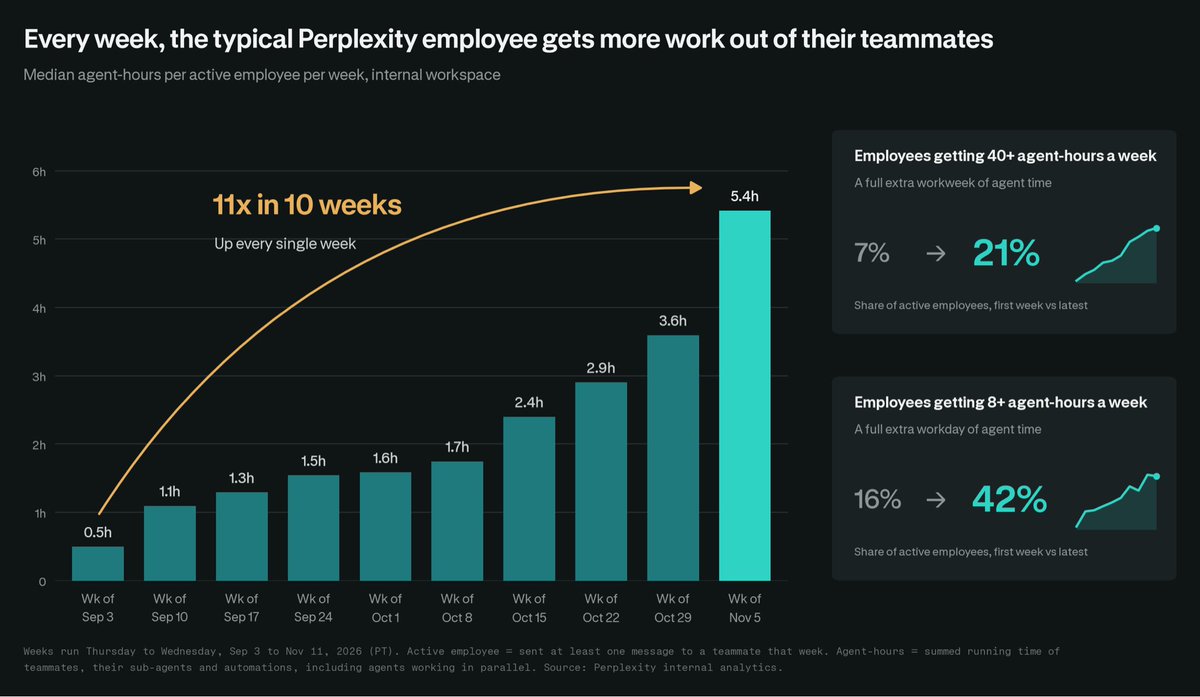
CEO Aravind Srinivas says the median employee’s weekly Teammate agent-hours reached about 11 times the September baseline, up from roughly seven times the previous week. The figures measure elapsed agent runtime. Agents can run in parallel, so these hours cannot be converted directly into hours saved by employees.
@rauchg · Interface engineering
A UI demo reuses 14 interaction behaviors
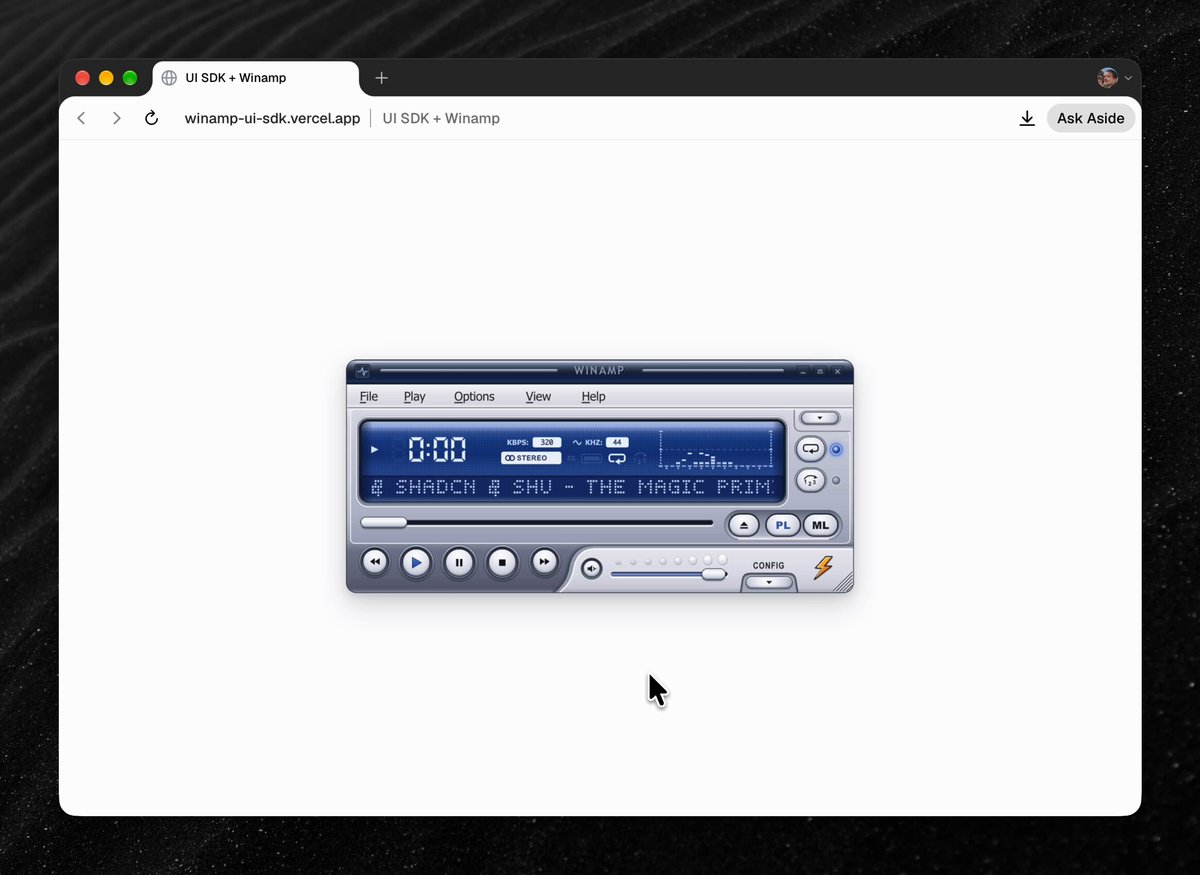
Guillermo Rauch showed an interface he built with fx and Gemini Argon. He says two prompts produced a page using native Web Components and reused 14 UI SDK behaviors, including window resizing, dragging, switching menus on hover and moving focus within a toolbar. The count comes from this demo.
@rasbt · Model internals
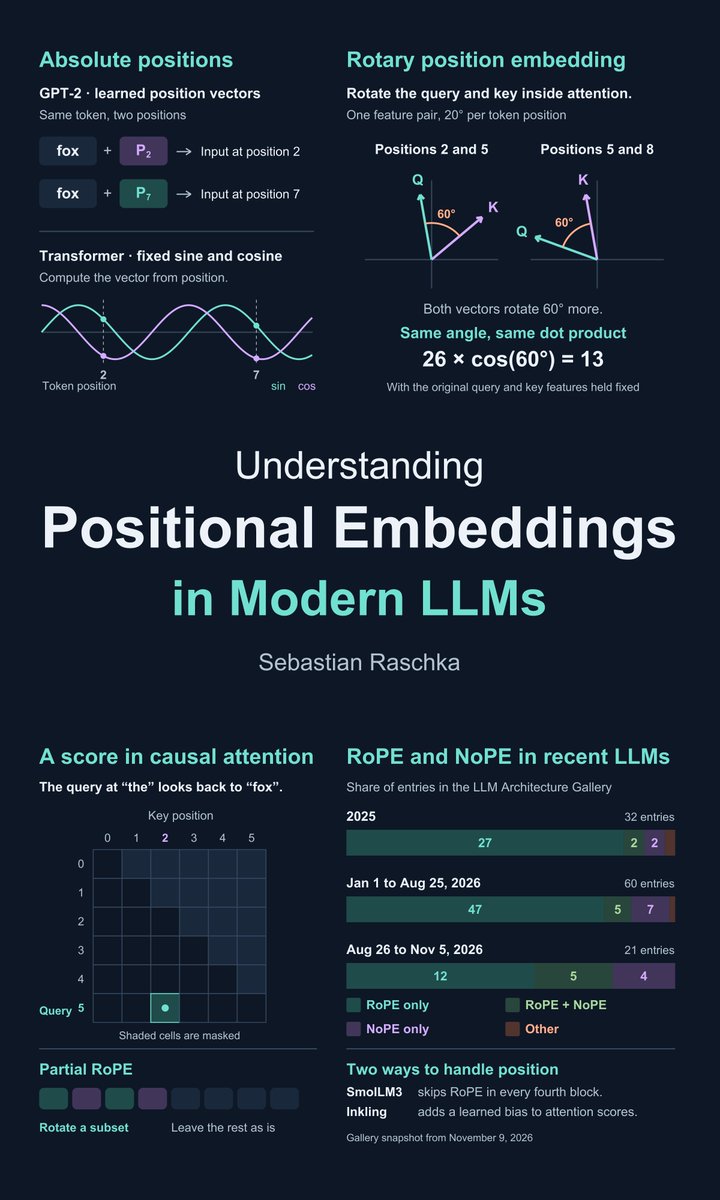
Understanding RoPE from scratch
Sebastian Raschka’s new tutorial begins with absolute position vectors and uses code to show how rotary position embeddings (RoPE) change queries and keys in attention. It then compares choices in recent open-weight models: rotating only some dimensions, skipping explicit positional encoding in some layers, and mixing approaches across layers.
A Gemini swarm builds a Blender model
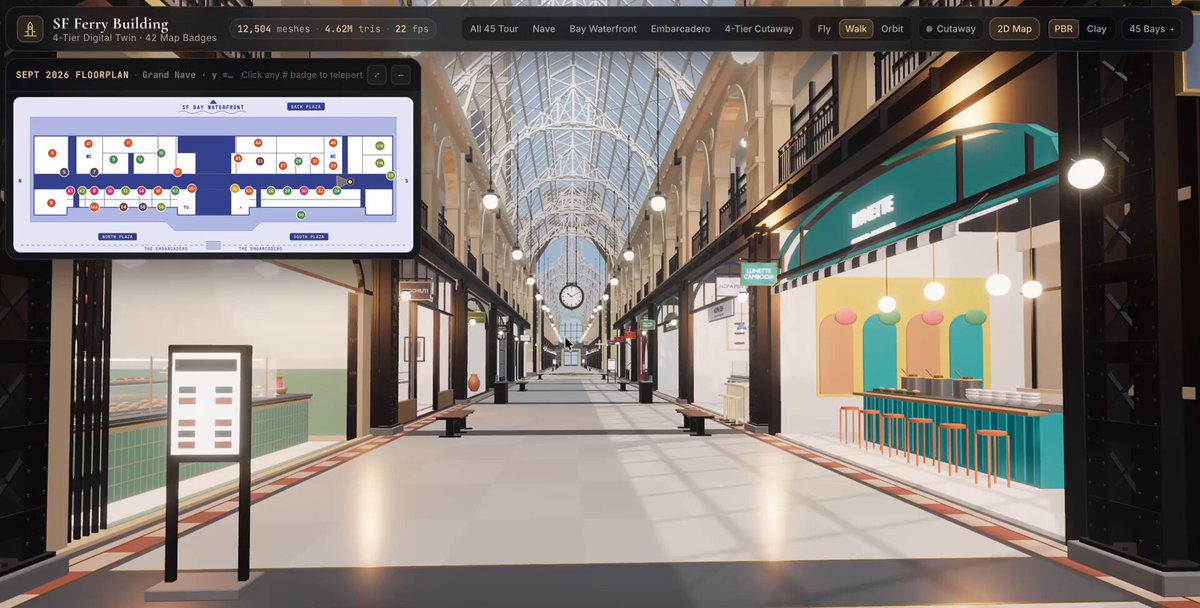
A creator asked Gemini 4 Carbon’s /swarm for a 3D model of San Francisco’s Ferry Building. In the demo, 12 agents researched, planned and wrote Blender Python scripts in parallel, then reviewed one another’s work on a shared message board. The post provides no speed or quality benchmark.
Hugging Chat sessions can become dataset traces
Hugging Face’s Abubakar Abid says users can now publish a Hugging Chat session as a Hugging Face Dataset Trace. The trace is private by default, with the option to make it public for others to use as an example of model interaction.
Mollick looks back at how he built a benchmark analysis
Ethan Mollick says he used about four prompts with Fable 5.2 to build the analysis and charts for a benchmark he shared earlier. He estimates similar work in Stata would have taken days a few years ago. This was his own experience with one analysis, without a timed comparison.
PixVerse adds Seedance 2.5 Flash
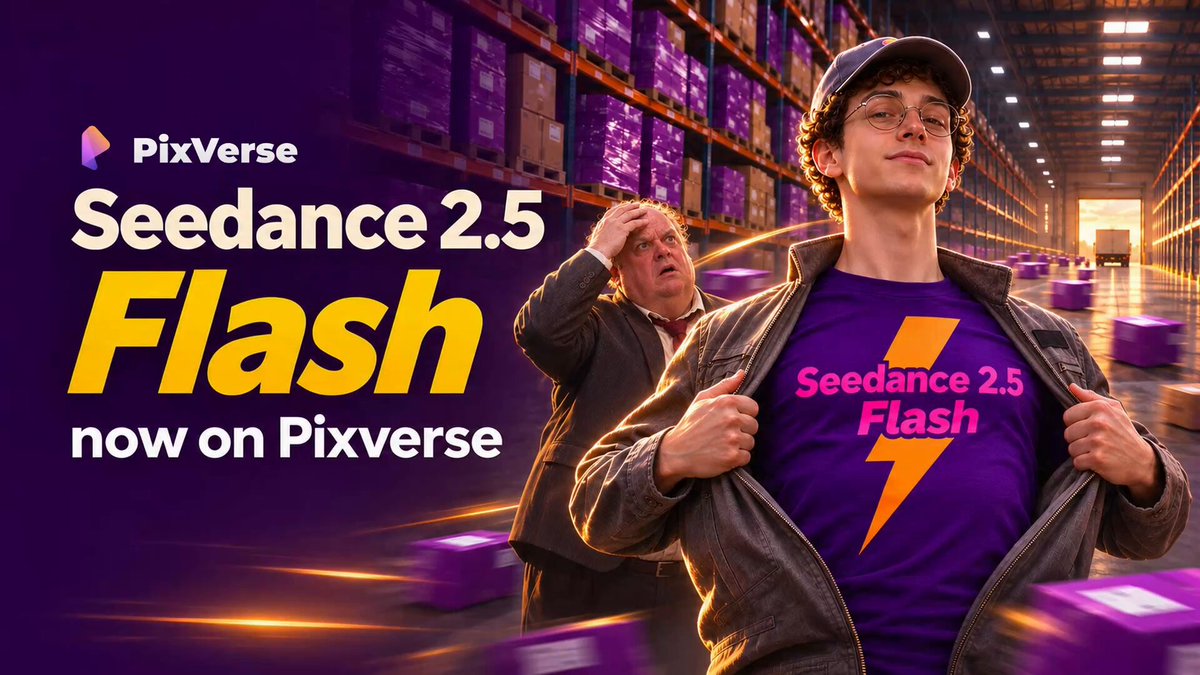
Seedance 2.5 Flash is now available on PixVerse. The platform says it generates nearly twice as fast as its Seedance 2.5 option and uses about 36% fewer credits for 720p video. Those figures come from PixVerse’s comparison.
Vidu demos interactive characters from still images

Vidu uses virtual tutors and hosts to illustrate how apps could use S2 Avatar. The company says the model turns a character image into an avatar that can speak, respond and perform actions, without training a separate model for that character.
OpenRouter offers temporary free access to Recraft Flash V2
Recraft V4.1 Flash V2 has a free text-to-image endpoint on OpenRouter. The listing says the free version goes away on November 28. This endpoint takes text prompts and does not accept reference images or style references.
Using Premiere to lower unwanted music in generated video

When Seedance 2.5 added music despite a request to leave it out, a creator used Premiere’s Enhance Audio to separate dialogue, ambience, music and effects, then turned down the music layer. Adobe’s documentation confirms that source separation can run on the device.
@recraftai
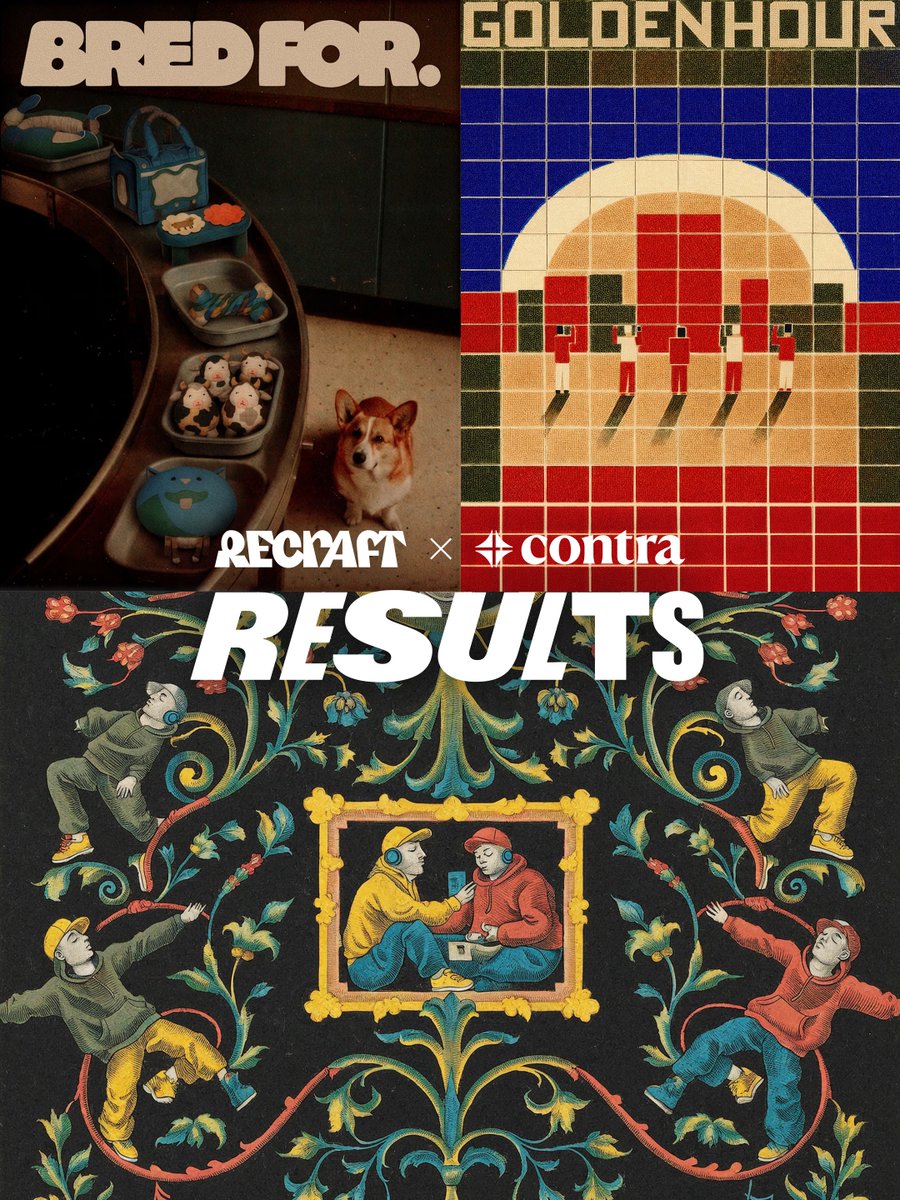
Old prints find new uses in generative design
Recraft and Contra announced the winners of a challenge that started with museum archives. Participants took old prints, paintings and engravings and reworked them using Recraft Styles. The showcase gives readers examples of how different creators adapted archival material.
Kling shares a look behind an original short

Director Alex Duloz explains how he used Kling 4.0 to give My Favorite Night of the Year a Halloween look while keeping it from feeling like a horror film.
The tools behind an episode of Babushka

The creator shared a clip and listed the tools for this episode: Adobe Firefly Boards, Seedance 2.5, Claude Opus 5.0, Grok Bot and Muse AI. The post does not detail which shots or steps each tool handled.