US Government Forces Anthropic to Shut Down Claude 5
The US executive branch ordered Anthropic to disable worldwide access to its Claude 5 model (Fable/Mythos), marking an unprecedented escalation in AI governance and triggering an industry-wide debate on open-source, security, and government overreach.
The forced shutdown of Anthropic's latest Claude 5 model by the US executive branch represents a turning point in AI governance. The move came after Amazon reported model vulnerabilities to the White House, raising fears of export controls on model weights. Critics argue Anthropic's years of existential-risk messaging helped create the political climate that made this intervention possible, while open-source advocates warn that frontier models face a regulatory vacuum with no clear legal framework. The incident signals that future releases of powerful models may increasingly be subject to ad-hoc executive decisions rather than transparent, predictable processes.
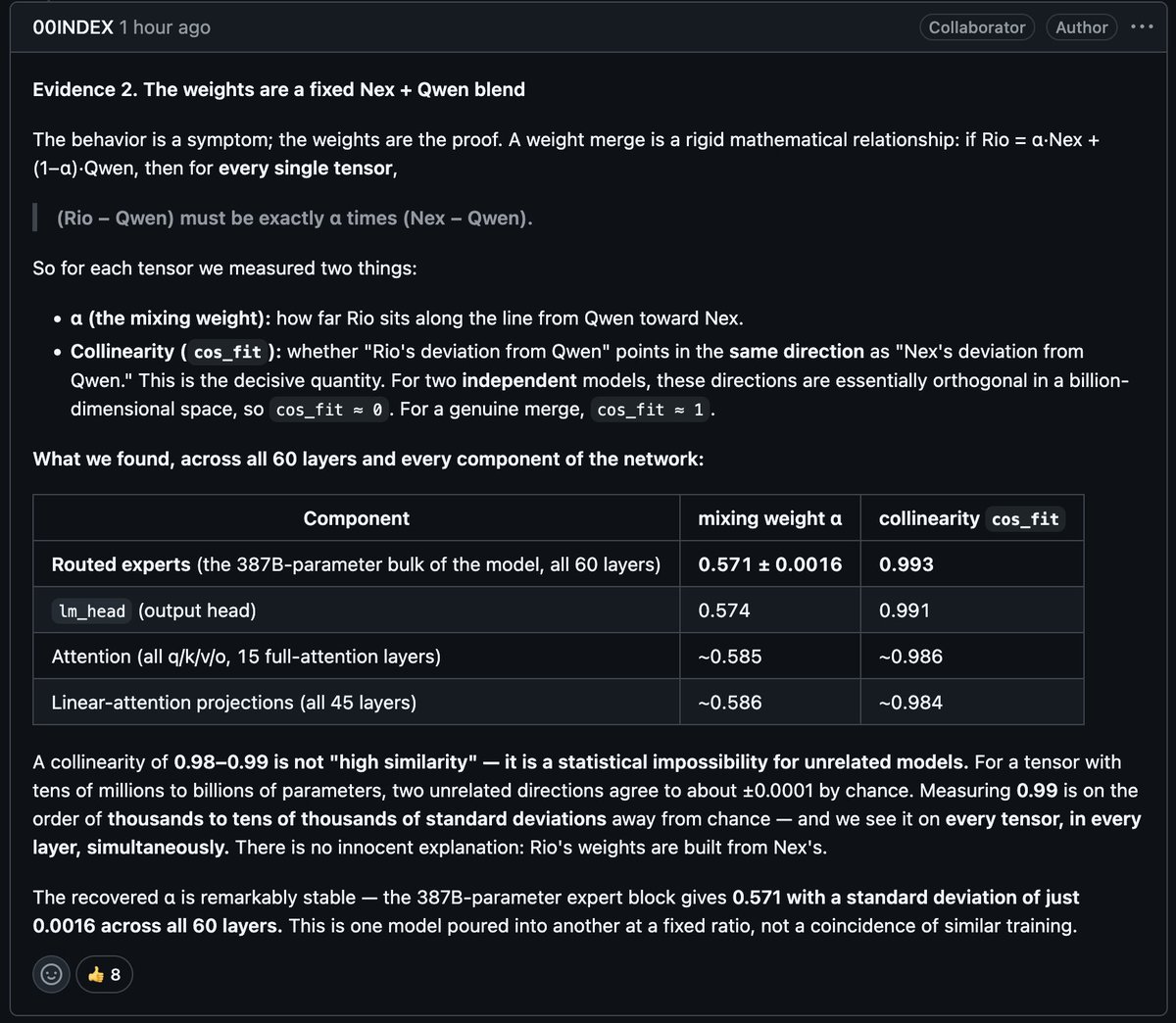
1000× Faster LLM Fine-Tuning Discovered by Brazil City Employee
A municipal employee of the Rio de Janeiro city government has accidentally discovered an LLM fine-tuning technique that is 1,000 times faster than traditional methods, drawing global attention and challenging the assumption that frontier research belongs only to well-funded private labs. The method builds on Qwen 7/2 with additions including SwiR optimizations.
Rio City Government Releases Open-Source Model Rio 3.5 Open 397B
The IT company of Rio de Janeiro's city government has post-trained Rio 3.5 Open 397B based on Qwen 7/2, achieving state-of-the-art results among open-source models and surpassing several closed-source counterparts on multiple benchmarks. The release underscores the growing role of public-sector institutions in open-weight AI development and marks a new chapter in decentralized frontier research.
Zyphra Releases ZONOS2 Real-Time Voice Cloning Model
Zyphra AI released ZONOS2, a next-generation real-time TTS model with high-fidelity voice cloning, now open-source and positioned as the most advanced speech synthesis system in the industry.
Cohere Launches North Mini Code, Stresses AI Sovereignty
Cohere released North Mini Code for efficient code generation, with its co-founder calling for AI technology to be owned and controlled by users rather than dependent on proprietary APIs.
Step 3.7 Flash Multimodal Reasoning Model Lands on DeepInfra
Jieyue Xingchen's open-source multimodal reasoning model Step 3.7 Flash is now available on DeepInfra, supporting agent coding, tool use, search, and vision workflows with private endpoint deployment.
Replit Launches Parallel Agents to Build Multiple Apps at Once
Replit's new feature lets users run multiple agents concurrently to build websites, mobile apps, and videos simultaneously, dramatically boosting development throughput.
Kimi Releases K2.7-Code Agent-Focused Model
Moonshot AI launched K2.7-Code, built on Kimi K2.6 and focused on coding and agent tasks, now available via Together AI for enterprise deployment.
Pyodide 314.0 Enables WASM Python Extension Packages on PyPI
Pyodide now allows C, C++, and Rust Python extensions to compile to WebAssembly and publish directly to PyPI, simplifying browser-side AI toolchain deployment.
OpenRouter's Fusion API achieves Fable 5-level intelligence at half the cost through a composite model approach, reshaping the economics of frontier AI access.
Grok Build Now Renders Math Formulas in Terminal
Grok Build updated to natively render math, formulas, and LaTeX in the terminal, improving the developer experience.
DeepSeek V4 Pro Tops Together AI in Latency and Speed
DeepSeek V4 Pro became the champion in both latency and speed on the Together AI platform, surpassing all competitors.
Gemma 4 12B Surpasses 4 Million Downloads on HuggingFace
Just one week after release, Google's Gemma 4 12B model exceeded 4 million downloads, becoming the most popular new model.
Chinese Open-Source Models May Face Comprehensive US Ban
Analysts warn that a major performance leap in Chinese open-source LLMs could trigger full national security bans on Chinese models.
US Risks Becoming an AI Walled Garden
Commentary warns that US users may be confined within closed AI systems, calling for vigilance against power concentration.
AI Regulation Enters a Turbulent New Era
Recent events signal the start of a turbulent AI policy period, urgently requiring an open ecosystem to counter potential overreactions.
General AI Models Outperform Specialized Medical AI
A new paper shows general large models surpass specialized medical AI on healthcare tasks, triggering debate about medical AI benchmarking.
AI Models Inherit Strange Habits from Predecessors During Self-Training
Google DeepMind researchers found new models inherit abnormal behaviors from predecessors when used to train the next generation, explaining why models from the same family feel similar.
Satya Nadella Proposes 'Token Capital' as New Corporate Framework
Microsoft's CEO argues that in the AI era, companies must manage both human capital and token capital — the AI capabilities each organization uniquely owns and builds.
ICML 2026: Strictly Proper Loss Functions for DPO
ICML 2026 accepted a poster proposing a theoretical foundation for improved preference optimization through strictly proper loss functions.
Seven Frontier Models Benchmarked on Automated Research Tasks
Researchers evaluated seven frontier models across ML engineering, prompt engineering, and other automated research categories.
Open Frontier AI Workshop Gathers 100 Researchers in San Francisco
An in-person meeting brought together researchers from DSPy, NVIDIA, Stanford, and Mistral to advance frontier openness, scheduled for June 30.