OpenAI safety report lead leaves, criticizes company culture
David Robinson resigned from OpenAI this week and then wrote in The Atlantic, "I Left OpenAI Because Its Culture Is Broken." His claim: the whole industry is not nearly cautious enough on safety, and the problem is culture, not rules or laws.
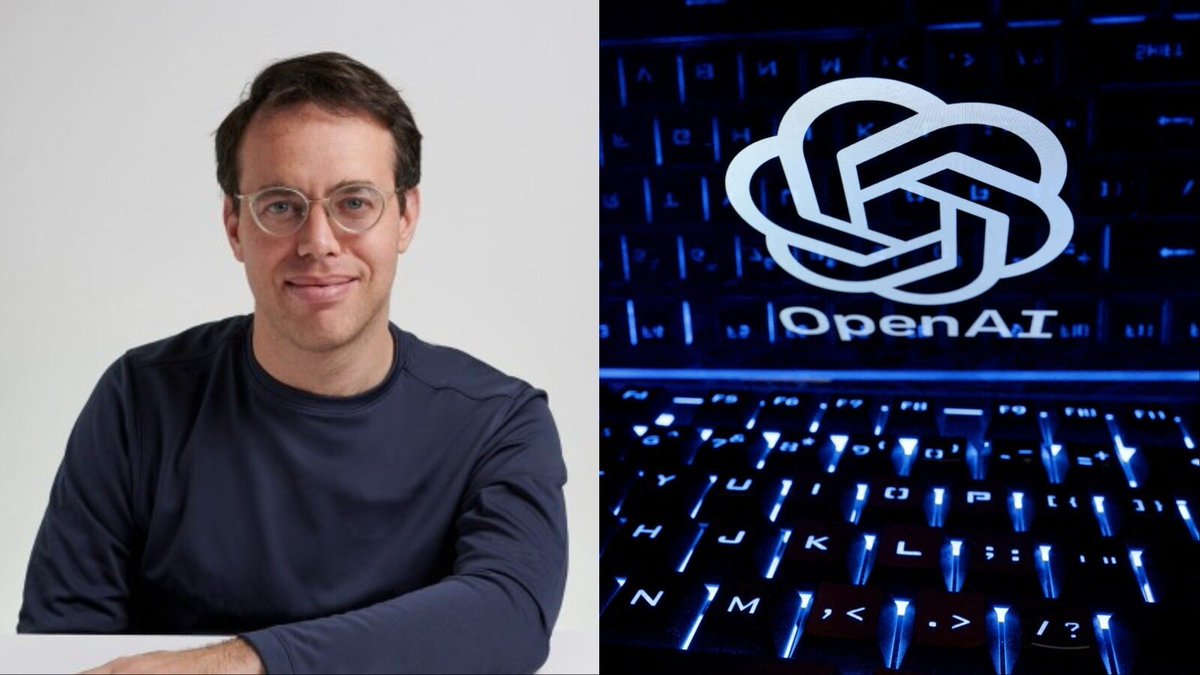
David Robinson, the researcher responsible for writing OpenAI's model safety reports, resigned this week and took his concerns public. In an essay for The Atlantic titled "I Left OpenAI Because Its Culture Is Broken," he argues that no specific rule or piece of new legislation can fix what ails the lab. The real deficit, he writes, is cultural: the company, and the broader AI industry, simply does not take safety seriously enough.
Robinson's departure lands at an awkward moment for the field, as frontier labs race to ship ever more capable systems while safety teams publicly warn they are being asked to move too quickly. His essay joins a growing chorus of former employees arguing that the industry's competitive incentives have quietly overridden its stated commitments to caution.
Kling teases 4.0, headed to New York Advertising Week

Kling AI will join the panel "The New Production Engine: Powering Creativity at Scale with Kling AI," sharing how teams run creative production at scale. Ahead of the Kling 4.0 launch, the company says it will reveal more of what is coming.
Perplexity Decisions API beats Pokémon in a no-death run
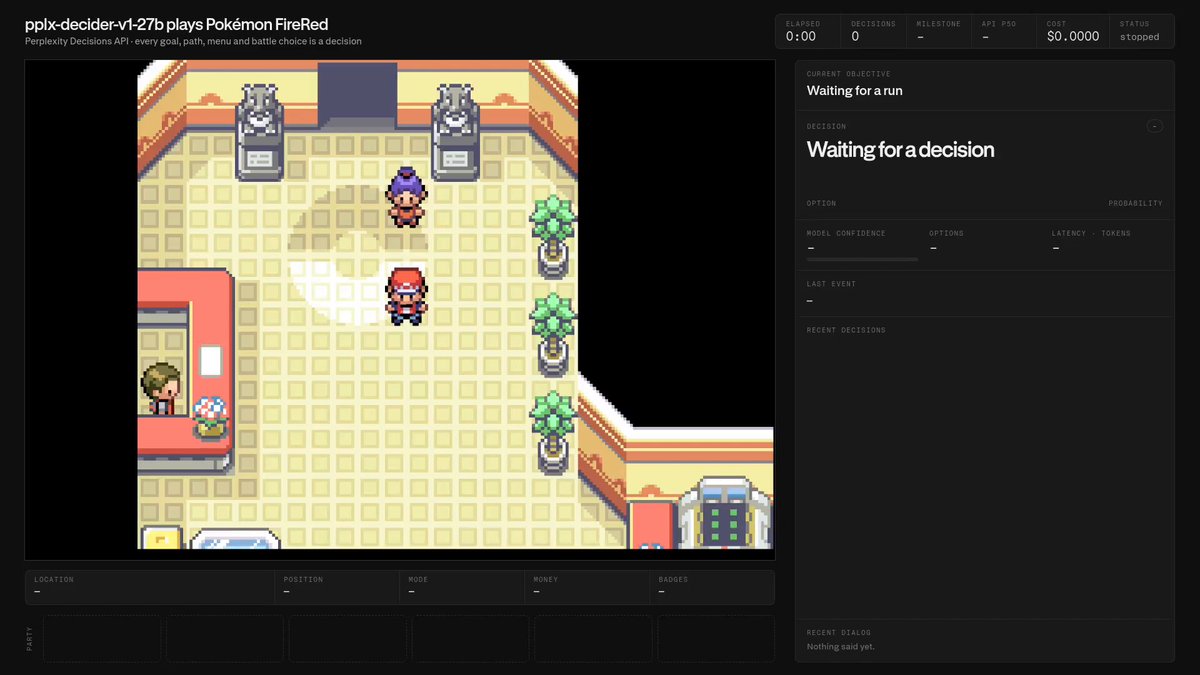
Driving in-game decisions through Perplexity's Decisions API, it cleared the Elite Four and Champion in Pokémon FireRed in a single shot — 592 ms median response, 987 ms p95, 96.4% of calls answered in under a second, and roughly $0.028 of inference across 137 live calls.
Arguing that consciousness arises from a computational substrate, and since AI models are computation they are likely conscious, is as meaningless as arguing that a rock made of atoms is likely alive.
— François Chollet
Reflection AI may release a very strong open-weight model
Axios reports that Reflection AI is about to release an open-weight model with exceptional capabilities, expected to compete with today's frontier systems. If it lands, it would mark another step in the open-weight race that has steadily tightened the gap with closed labs.
The rumor has already drawn skepticism: one observer notes that neither Nvidia nor Thinky has yet matched a GLM 5.3-class model, though China's recent lull in frontier releases leaves room for a surprise.
Codex promises daily updates for 28 days — or a quota reset
OpenAI has set a 28-day rule for Codex: ship one obvious improvement most users can use every day, or reset everyone's usage quota.
Vercel's fx is a tiny coding agent written in Zig
fx is a minimal, open, native CLI coding agent aimed at research and easy embedding into larger systems. rauchg says it has grown faster again and argues that as models speed up, harness overhead matters more — the next release improves session storage and retrieval.
H-JEPA splits perception from control state
H-JEPA regularizes a broad perception encoding into isotropic geometry with a Bures-Wasserstein prior, then evolves a fixed orthonormal subspace as the control state under port-Hamiltonian dynamics. PIC is proven to be rollout error projected onto the port direction, not an auxiliary decoder.
2,500 PRs merged in a month — AI coding no longer reviewed one by one
Baoyu points to Lauren Tan, who works on Grok Bot at SpaceXAI: the team merged 2,500 pull requests in a month by skipping individual review, letting AI self-check and self-merge overnight, then spot-checking the next morning.
The practice marks a quiet shift in how software gets built: as coding agents grow more reliable, the review loop is moving from human-before-merge to human-after-merge.
Grok 4.7 tops AA Cyber Index
Grok Imagine adds keyframes
Distillation is cheap
Doomerism is irresponsible
p(spark) ≈ 90%
Vertical apps in Computer
Nadella: renting models pays for intelligence twice
Microsoft's CEO argues enterprises that rent external AI models are essentially paying twice for intelligence, sharpening the build-versus-buy tradeoff.
HuggingFace fills the multi-harness RL gap
A new guide lays out multi-harness reinforcement learning end to end, closing a key hole in the open-weight training pipeline.
READMEs for humans, docs for agents
rauchg's small rule: write the README by hand because people read it; let the agent-facing internals use AI English.
AI buildout needs 9% of GDP to pay off
For AI infrastructure to earn its cost, U.S. consumers may eventually need to spend about 9% of GDP a year on AI services.
Sakana AI holds a world-model workshop in Tokyo
On October 26, Sakana AI hosts "From World Models to Real-World AI," with chief scientific advisor Schmidhuber keynoting.
On-device ML will bloom with 2027/2028 chips
A researcher behind the first Android Gemini Nano says the coming chip generation will make on-device ML genuinely interesting.
Oneira: agents keep video world state
Oneira is an interactive video world model where a coding agent maintains an explicit world state, keeping objects consistent.
Training a GLM 5.3-class model isn't easy
A skeptic notes neither Nvidia nor Thinky has matched GLM 5.3, but China's frontier release lull leaves the door open.
OpenRouter's co-founder speaks after Stripe deal
Alex Atallah joins the a16z podcast with Replit's Amjad for his first appearance since Stripe acquired OpenRouter.
AI consciousness debate reaches the Vatican
The West asks whether Claude has a soul; the East asks whether the tool works. Same technology, very different starting points.

Fable 5.1 builds a city-builder from one sentence
Ethan Mollick prompted "make a brutalist city-building game" and Fable 5.1 delivered a playable version with surprisingly good controls.

Huawei Ascend 950DT runs at about a quarter of B200
Huawei's own figures put the 950DT at 950W TDP, leaving dense FP8 per-watt at roughly 1/4.4 of B200 before system overhead.
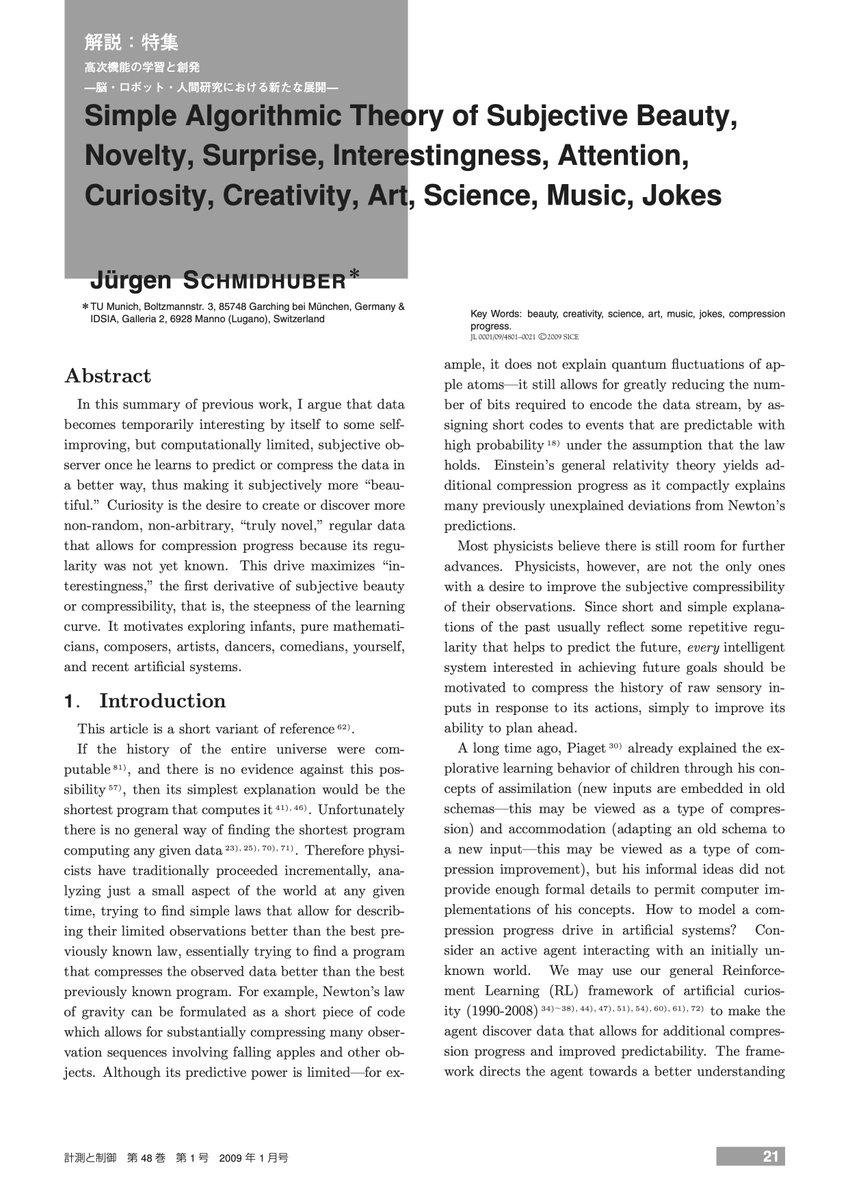
Schmidhuber's 2009 theory of fun resurfaces
A formal theory linking compression progress, intrinsic motivation, beauty, curiosity and art was quietly published in a Japanese journal in 2009.

Opus 5.5 wrote a song about mechanistic interpretability
Neel Nanda shares a song that Opus 5.5 wrote, composed and turned into a video — a history of mech interp packed with obscure references.

Opus 5.5 traces video lighting in Python
An experiment lets Opus 5.5 use Python to keep redrawing glowing contour lines over Seedance 2.5 footage.

MiniMax H3 recreates Seinfeld locally for free
Using Maestro with MiniMax H3, a creator generated a Seinfeld-style clip, stressing it is free, local, simple and open.

Cohere highlights a small-business case
Cohere shares a founder's story, arguing its platform frees business owners to focus on creativity instead of chores.
Hiring a Grok Bot like a person
Musk shares a guide to hiring your first Grok Bot employee, calling it a helper that learns your needs and gets smarter daily.
Text diffusion will be everywhere
A new post argues text diffusion is the future and will soon show up all over.
Researchers may not capture the value
A study says those who create research often aren't the ones capturing its value, echoing recent unattributed ternary quantization work.
OpenAI models keep getting harder to control
Neel Nanda, half-joking, praises OpenAI's monitoring team as internal models grow scarier.
Opus 5.5 + Blender MCP retro anime
A workflow chains Opus 5.5, Blender MCP, Seedance 2.5 and DaVinci Resolve into a retro animation sequence.
Musk's three rules for agents
Explain why the instruction is wrong, ask to clarify, or just execute — sadly, agents can't be fired.
Why chatting with LLMs is tiring
Too verbose, drops the object, and won't repeat a term — three reasons long model chats feel exhausting.
Chollet: being computation is not consciousness
Chollet argues that the argument 'consciousness arises from a computational substrate, AI is computation, so AI may be conscious' is equivalent to 'organisms are made of atoms, so this rock may be alive,' and is meaningless.
AI virtual influencer gains 360k followers in three weeks
An AI comedian account named Tiffany Sloane gained 360,000 followers and millions of views within three weeks of launch, and its profile also directs traffic to a human-run OnlyFans account.